1 free read left. Create a free account for unlimited reading + AI research.
Create free accountArticle Deconstructor of Fun
1 free read left. Create a free account for unlimited reading + AI research.
Create free accountArticleDeconstructor of Fun
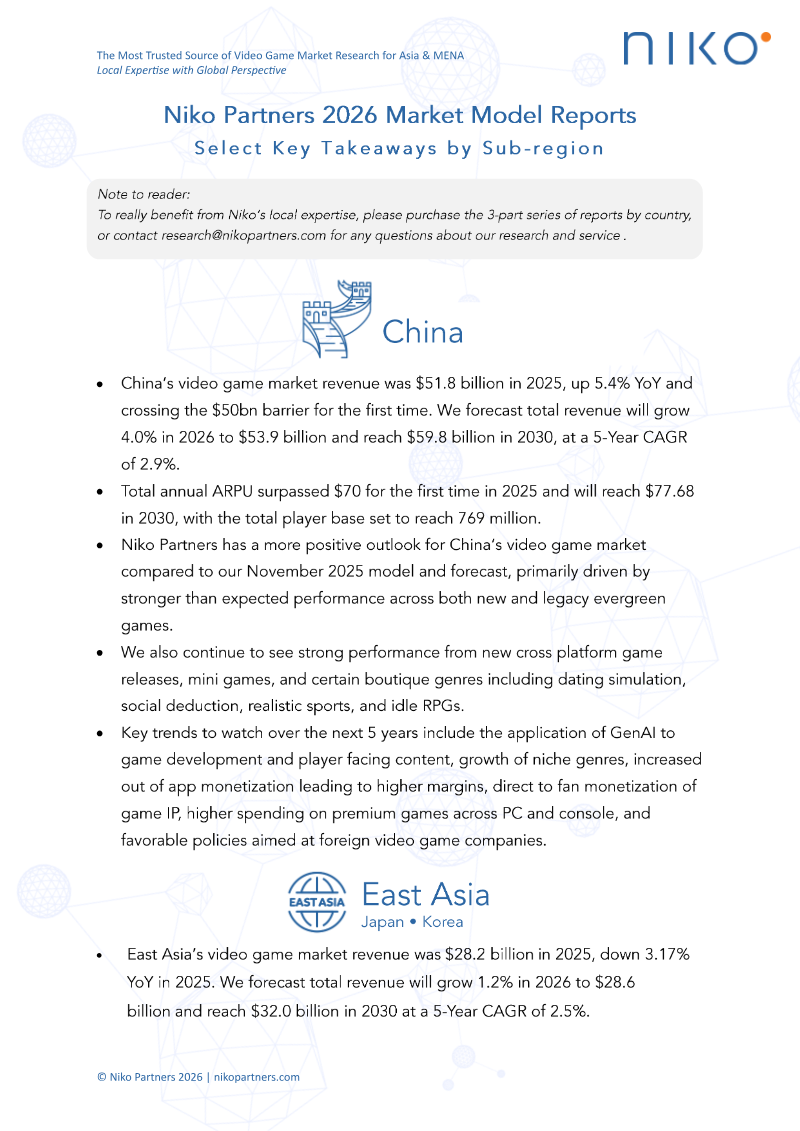
The region's gaming market is projected to grow from $88.9 billion in 2025 to $103.6 billion by 2030. Player numbers are approaching two billion.
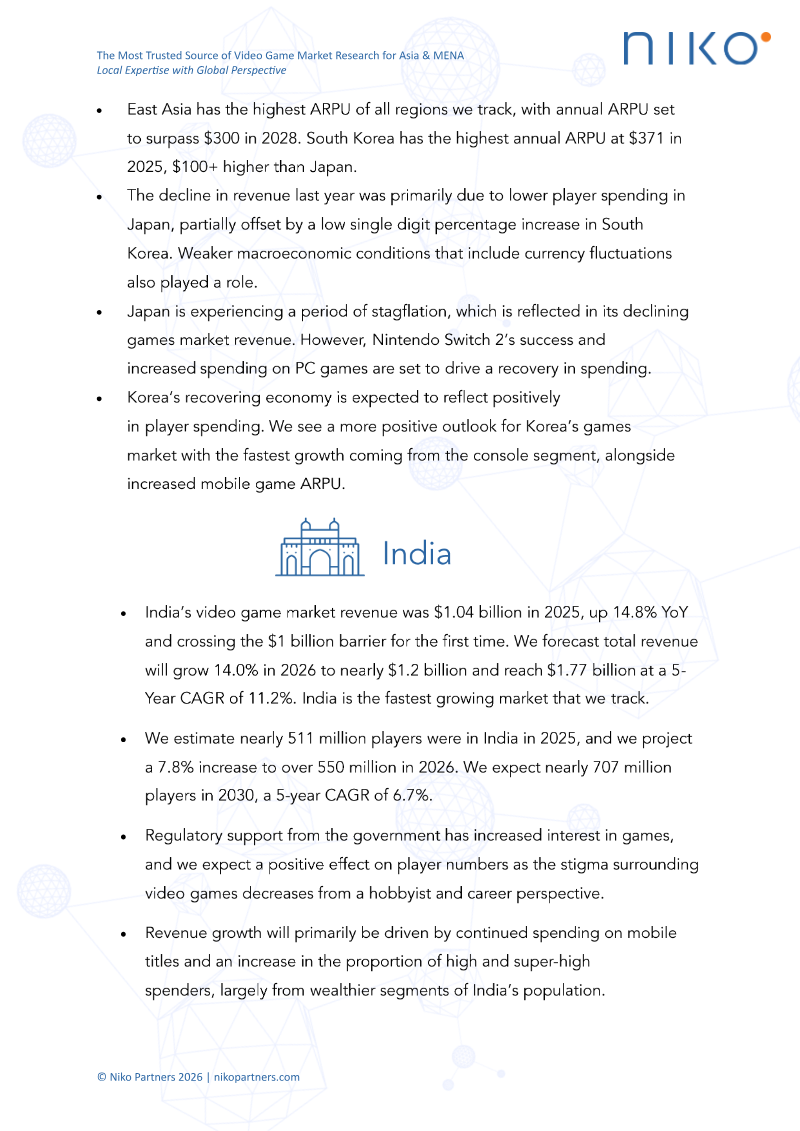
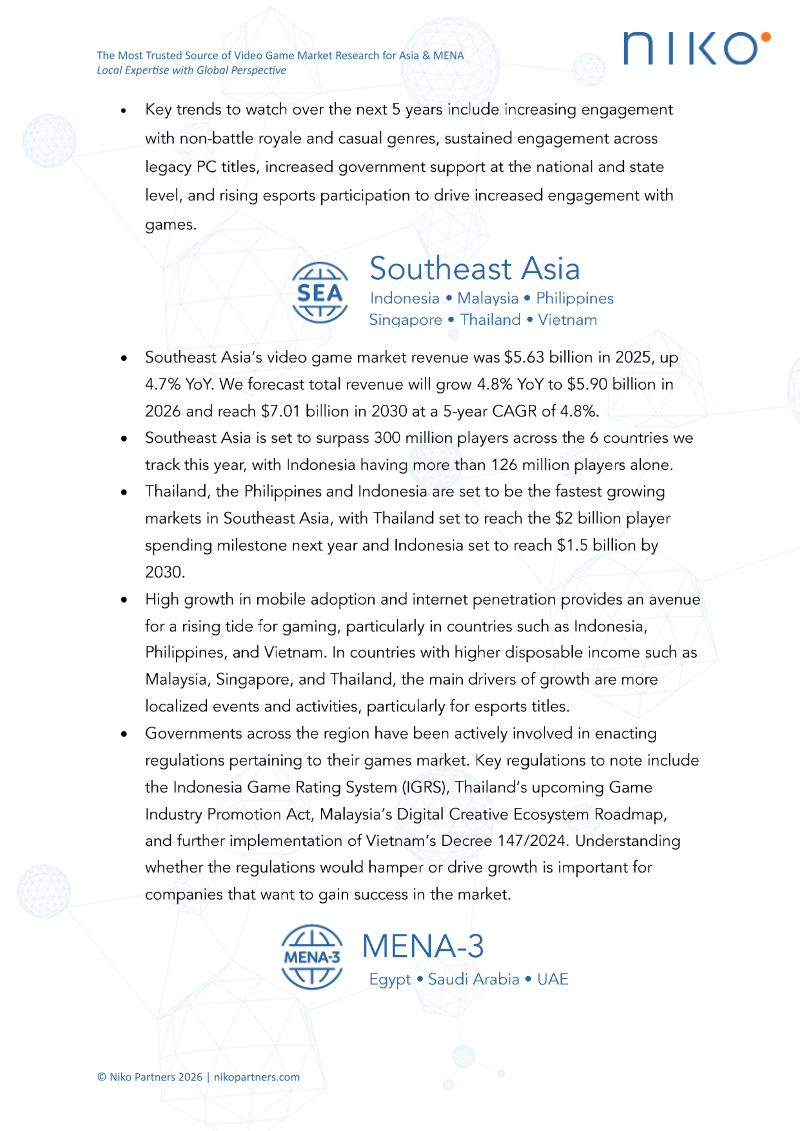
The analysis highlights that Asia’s gaming market is projected to grow from $88.9 billion in 2025 to $103.6 billion by 2030, a 3.1% CAGR, with player numbers approaching two billion. The region’s revenue is dominated by mature markets—China, Japan, and Korea—which together account for 88.6% of the regional share in 2030 but exhibit modest growth rates (China 2.9%, East Asia 2.5%). Emerging markets such as India, MENA-3, and Southeast Asia drive the majority of growth, with India’s player base expanding by roughly 200 million while revenue rises from $1 billion to $1.8 billion, yielding an average spend of about $2 per player versus $371 in Korea.
A significant behavioral shift is observed: over 30% of players across the 13 markets now prefer to transact outside the app, a trend that has already increased out-of-app revenue shares in Southeast Asia from 21% to 38% between 2022 and 2024. This early adoption of direct-to-consumer models suggests that Western publishers should prioritize building such capabilities sooner rather than later.
Growth is also emerging in non-mobile segments, notably PC and console markets in Japan (8% growth), mini-games within super apps in China (nearly 20% of mobile spend), and Switch 2 sales. Genre shifts are evident, with India moving beyond battle royale into casual titles and China embracing dating sims, social deduction, realistic sports, and idle RPGs.
The player demographic is broadening: women now represent 42% of players, with rapid gains in India and MENA-3, while raw player growth is strongest in India, Indonesia (projected 144 million players), and Vietnam (68 million).
Finally, generative AI is viewed more positively in Asia; studios report development efficiencies but caution against player-facing applications that may provoke backlash. The overall takeaway is that while mature markets retain most revenue, emerging regions offer growth opportunities for studios willing to adapt to local preferences and leverage direct-to-consumer strategies.

Deconstructor of Fun · 2026

Deconstructor of Fun · 2026

Deconstructor of Fun · 2026

Deconstructor of Fun · 2026

Deconstructor of Fun · 2026

Deconstructor of Fun · 2026

Deconstructor of Fun · 2026

Deconstructor of Fun · 2026

Deconstructor of Fun · 2026

Deconstructor of Fun · 2026

Deconstructor of Fun · 2026

Deconstructor of Fun · 2026
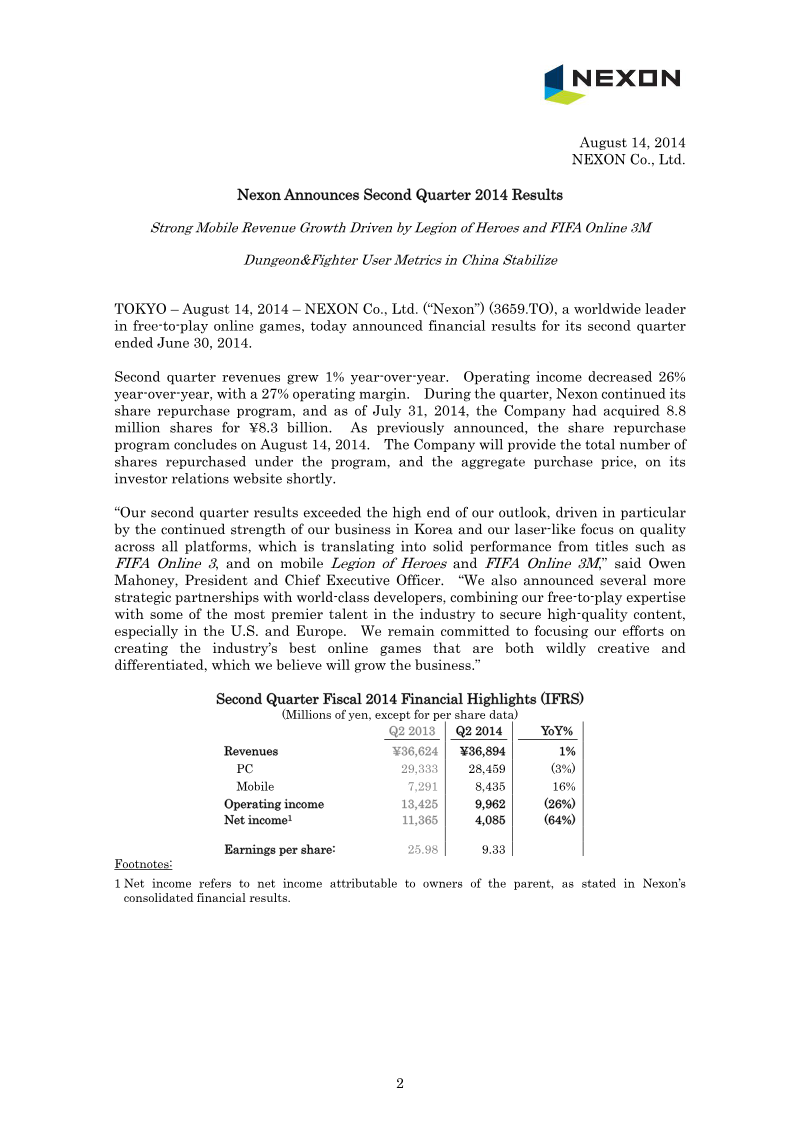
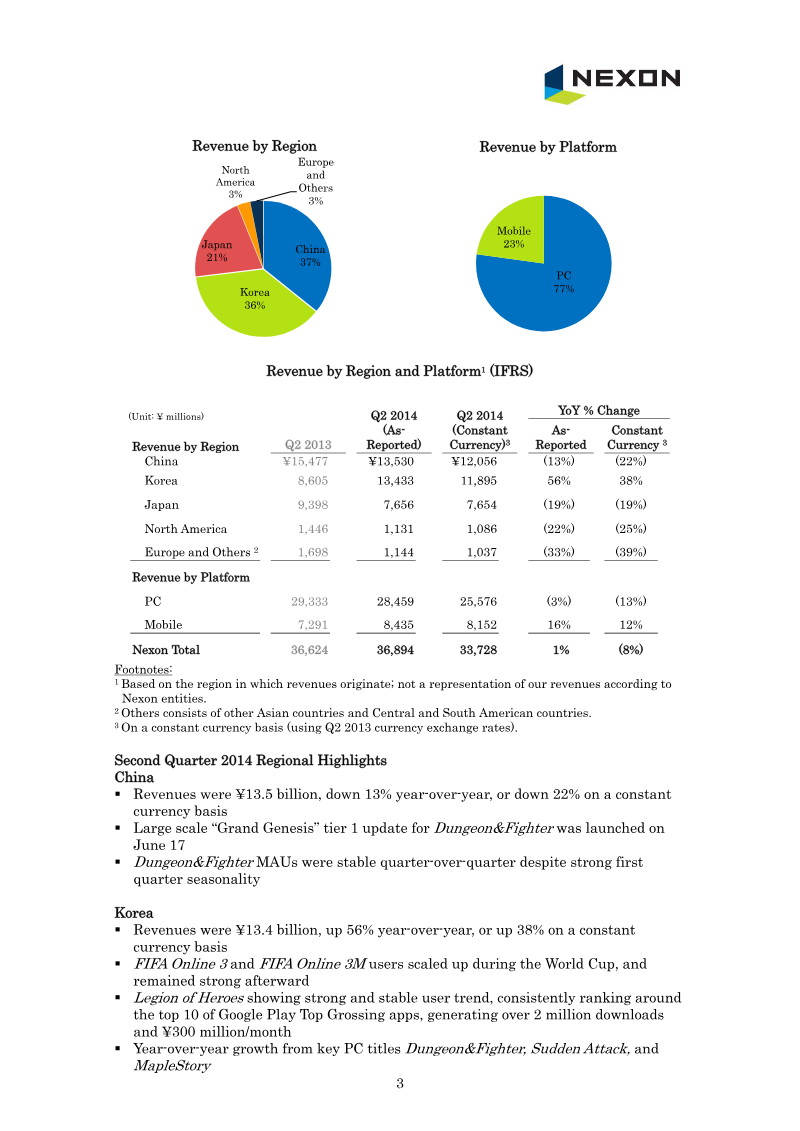
NEXON Co. · 2025