Key insights
6 slides
Player base
Female participation has reached near parity in India.
Female players now make up 49% of the total player base as of August 2026. This is up from 43% in 2023.
Platform preference
Younger players favor user-generated content platforms.
Younger demographics are increasingly shifting toward platforms like Roblox and Minecraft. They favor integrated social interaction and minigame-based loops.
Market share
Non-battle royale mobile titles expanded their market share.
Non-battle royale mobile titles expanded their market share from 53.2% to 62.8% over the past three years.
Payment method
UPI is the dominant transaction method for players.
The Unified Payments Interface is utilized by 84.6% of players. Credit card usage sits at 31.5%.
Distribution bypass
A notable segment bypasses standard app stores.
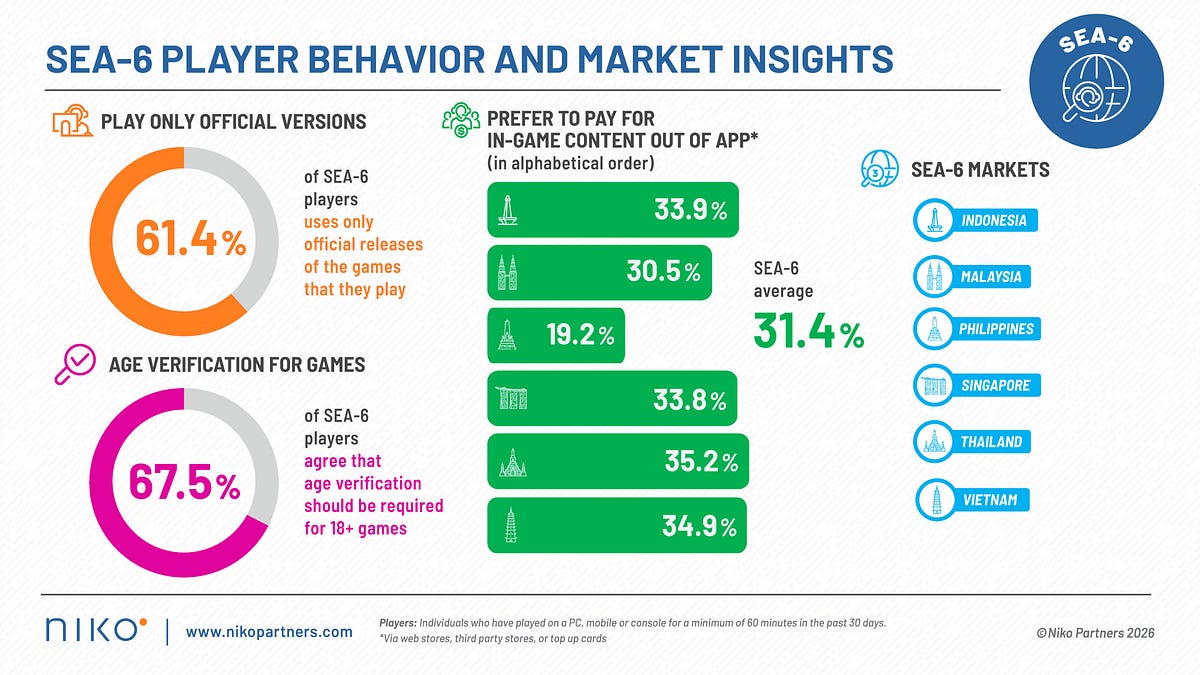
31.5% of the market bypasses standard app stores. They use web stores, third-party platforms, and top-up cards instead.
AI sentiment
Sentiment toward generative AI has cooled.
Sentiment has shifted toward increased caution among both players and developers. This is attributed to economic anxieties surrounding potential job displacement.
1 / 6
Ask AI about this report