Key insights
6 slides
The headline
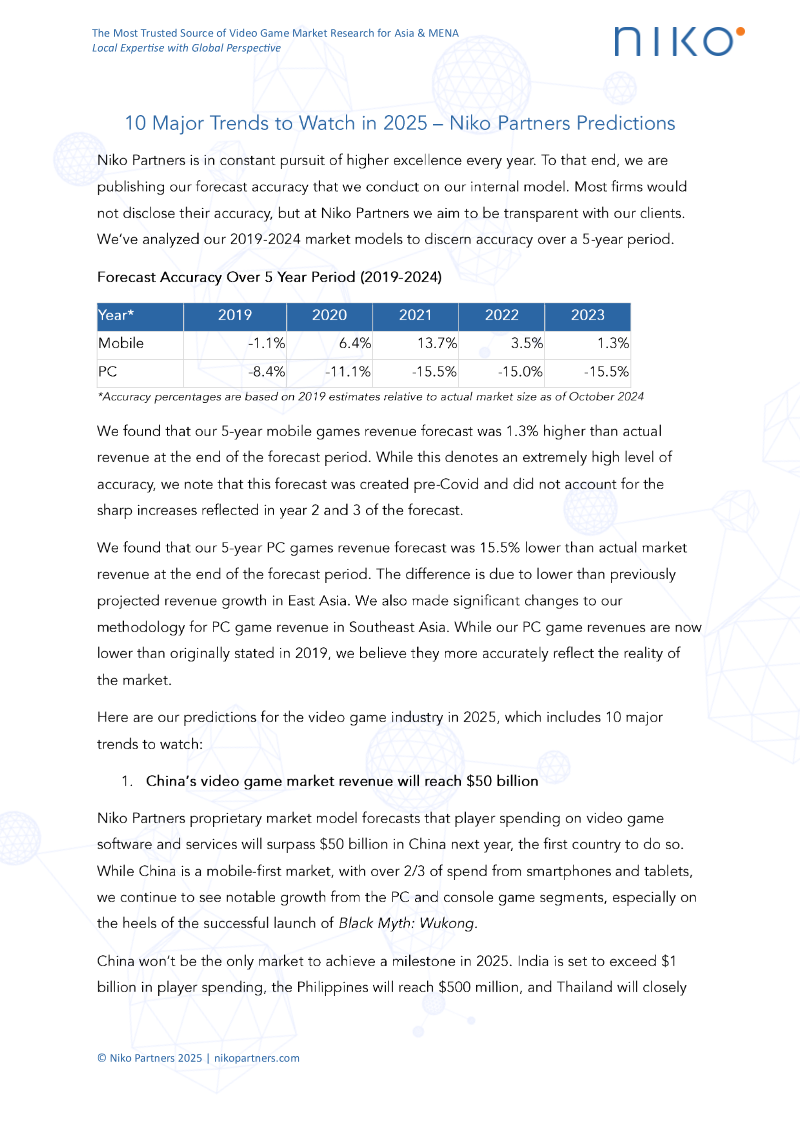
Asia and MENA gaming markets are projected to exceed $100 billion by 2030.
Combined revenue is projected at $103.6 billion with a 3.1% CAGR from 2025 to 2030. The 13 tracked countries account for roughly 46% of global gaming revenue.
The core
China, Japan, and South Korea contribute $91.7 billion in 2030 regional revenue.
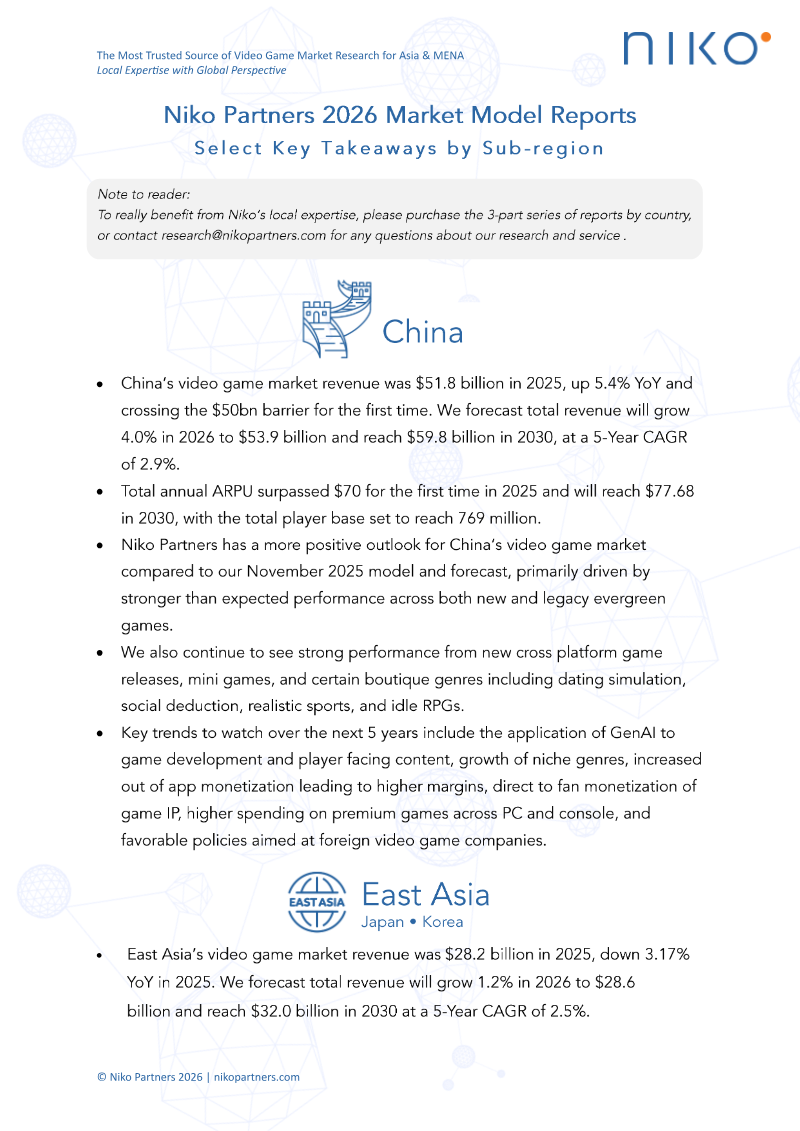
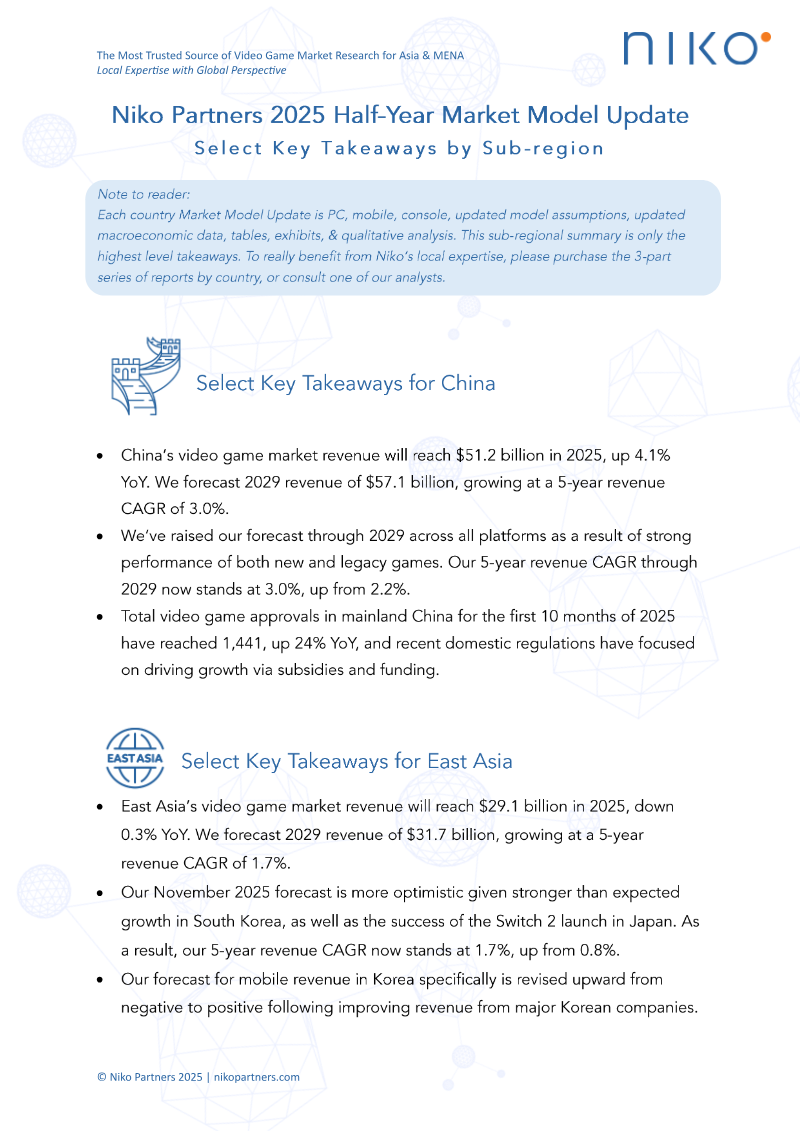
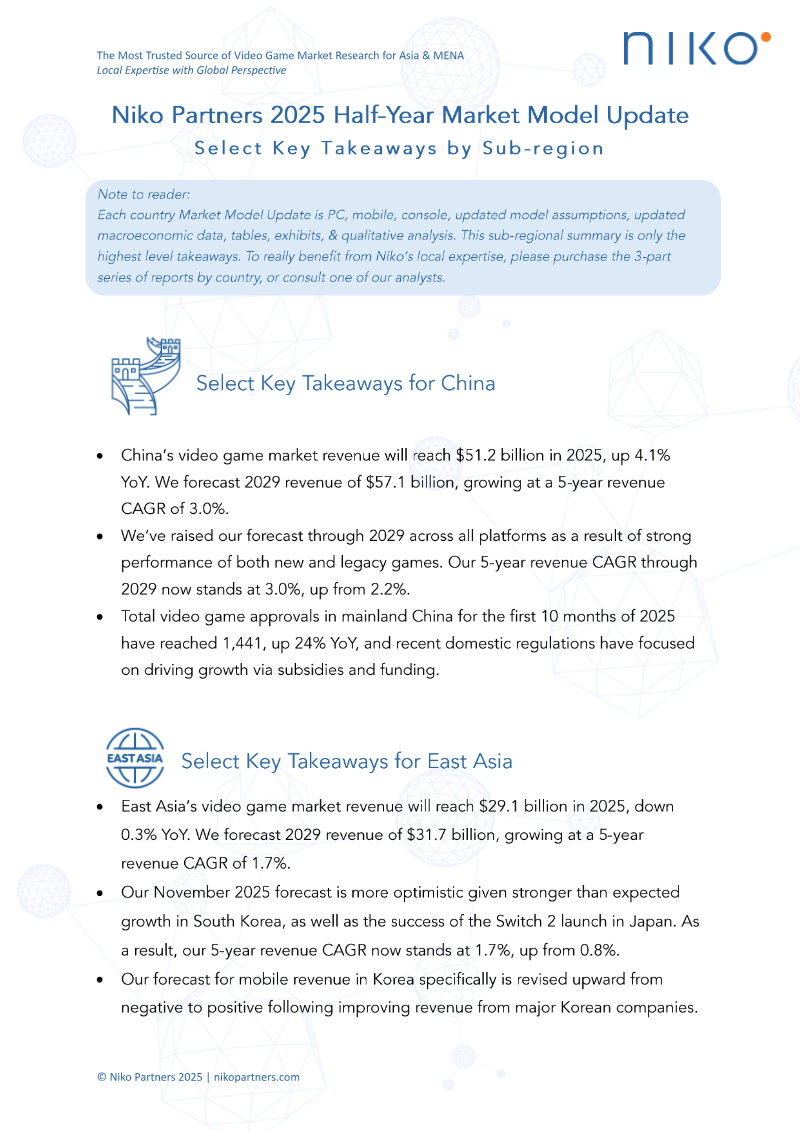
China’s market reached $51.8 billion in 2025, surpassing the $50 billion threshold for the first time.
Market concentration. China, Japan, and South Korea collectively contribute $91.7 billion in revenue by 2030, which accounts for 88.6% of the total regional market.
$91.7 billion
2030 revenue from China, Japan, and South Korea
- Share of Asia-MENA total
- 88.6%
- China's 2025 market size
- $51.8 billion
Fastest growth
MENA-3 is expected to experience the fastest growth at a 6.5% CAGR.
The region is projected to reach $2.94 billion by 2030. ARPU is projected to rise from $10 in 2025 to $38 by 2030, with UAE alone reaching $100 ARPU.
Player expansion
India’s player numbers are set to grow from 511 million to 707 million.
India’s market grew 14.8% in 2025 to $1.04 billion. Revenue is projected to reach $1.77 billion by 2030 at an 11.2% CAGR.
Recovery
East Asia is forecast to recover to $32 billion by 2030 after a 2025 decline.
Japan and South Korea saw a 3.17% decline in 2025 but are forecast to rebound at a 2.5% CAGR. South Korea’s ARPU is projected to exceed $300 by 2028.
Regional driver
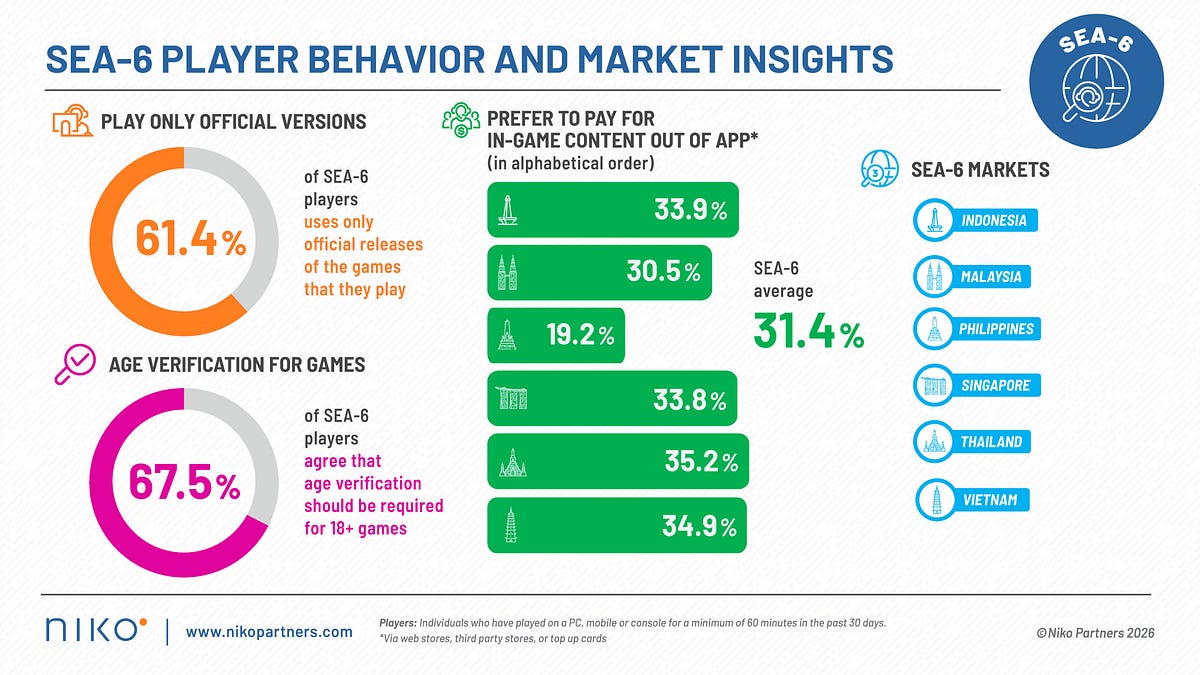
Southeast Asia is projected to reach $7.01 billion in revenue by 2030.
The $5.63 billion market in 2025 is expected to grow at a 4.8% CAGR. Growth is driven primarily by Indonesia, Thailand, and the Philippines.
1 / 6
Ask AI about this report