VideoDeconstructor of Fun
Puzzle Monthly #6: Disney Solitaire's Big Win, Playtika's Earn-Out Trap and Solitaire vs Puzzle
23 Sept 202641 min video

Transcript
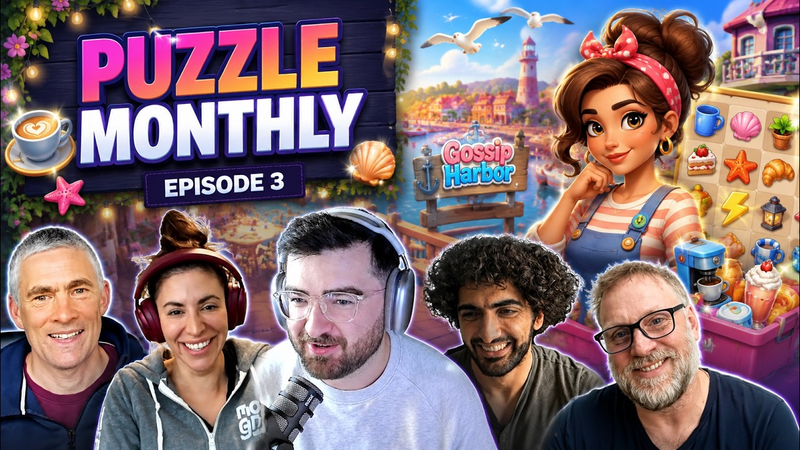
[music] Hello and welcome to Puzzle Monthly. I'm your host AC, chief product officer at Rotate Lab. And today with me, as always, I have Laura,
Laura Torto, puzzle afficionado, uh, currently working at Minecraft.
Tom,
I am experimenttor at the experimentation group and super pleased to be here. And congrats on the raise, AC.
Yeah, thank you. Thank you. And finally, David. Hi, my name is David Nelson. I'm a former professional poker player.
Nice. That's that's good enough. [laughter] Uh,
pick one one of the card any of them.
Today's discussion is going to be also about some type of card game, Solitaire, Disney Solitire, but we want to start the episode by addressing one of the audience questions that we've got and is coming from Saba GKI. She's a founder and CEO at Gabigo and her question was the tier one gap is the part I'd love to see unpacked further. If a game scales
as well but struggles in the most expensive markets, so tier one, is it purely a UA and payback problem or is some of the intent being lost between the ad promise and the first satisfying session? Store friction, loading, onboarding and creative to game mismatch can all make a strong game look economically weaker than it really is. The question is basically why am I seeing success in tier three or tier 2 markets but my game is not just registered in tier one markets. I mean first you look at unit economics what are the CPIs and what kind of eCPMs or what kind of monetization am I seeing? If it's an admonetized game you need to look at how often you're showing ads. You may need to show more ads in tier one to make up for higher CPIs than you are in other tiered markets. And then I think you should also look at direct competitors. If you're maybe operating in non-tier one markets, maybe there aren't people spending actively in them and so you can get low CPIs and there's not a lot of uh competition and then you move into a tier one place and maybe
there's a competitor going right at you with high CPIs able to monetize at a high rate, able to handle longer paybacks and you're not getting them. Otherwise, if it really is a mismatch like you're suggesting, then you should just test new creatives and test new, you know, store creatives and iterate quickly on that and experiment as quickly as possible.
Now, moving on to the meat of the discussion. Disney solitary. I'll come clean right off the bat. This is my least prepared episode. Solitaire is way out of my area of interest and actually solar isn't even like categorized under puzzles, which is actually like deserves its own discussion. Solare is more puzzled than merch.
I mean, first of all, like, did you ever use a Windows machine? How did you not play solitire? Like, there's a serious generation gap here. Serious gap.
Yeah. I mean, literally hours on Windows machines in factories playing solitaire. I mean, come on, man.
As a player,
[laughter]
as a professional, no. like as a player, yeah, I have I spent some time with Salt Hair games, but as a professional, it's way out of my let's say comfort zone. So I'll be the one that's asking the dumb questions so that like we can discuss all sides of the equation and I'll actually let Tom start the discussion because currently it is reported that Disney solar become became so big that it became uh impossible to swallow for playa and right now play is trying to sell its like most profitable probably game to another acquirer because of their like financial issues and the earnout that was baked. into the agreement that they signed when they were acquiring Super Play, the makers of Disney software. So Tom, you have more. Maybe you want to take us there. Yeah, thanks AC. This is super interesting actually. S great context around this discussion as to why Play Seeker have
got this like gem, this thing which is absolutely firing, but it looks like they might have to sell it. So back in time 2016, so there's this consortium called led by Giant Network who bought Playa from Caesar's Interactive $4.4 billion and then a couple of years later took out some pretty hefty loans totaling just shy of 3 billion like 2.8 8 billion in loans which they used to pay dividends to the buyers, the consortium. And so that debt now has set on Playa's balance sheet almost completely untouched which gives them this massive liability each year where they have to pay off the interest. Then Playa by Superplay which is funded by former Playa staff and Superplay/Platica launches Disney Solitaire which does
incredibly well and basically completely blows up the earnout. So the purchase was 700 million up front plus an earn out of up to 1.25 billion because it's doing so well. Then they're obviously kind of maxing out this money they have to pay to the founders which is just like causing the massive financial problems on top of the debt payments and the fact that none of their other games are performing particularly well. This kind of 1.1 a.5 billion of debt is reaching maturity. They're going to have to refinance it. I think it is 2028 2029 at assuming well at the moment rates are higher than when they took the original loan out which would then make it more expensive and so yeah they've just ended up in this like really kind of tricky situation where bought this team who are just m hit
after hit including Disney solitaire making tons of money but they're just not in that situation I guess forcing them into this position where they're consider having to consider selling the thing which is working so well for them to 10 cent. So that's the context to keep in mind around this discussion of of of why this one of the reasons why this might be happening.
Super interesting.
Who needs real housewives and we have Tom's take.
Exactly.
Yes. [laughter] Tom's take.
I feel like I need bigger hair to do it. [laughter]
Bring the two things together. One thing that I couldn't really understand in this whole drama is that okay the game became larger than they initially estimated or expected and now they are facing these earnout issues. But isn't play also the party that's providing the UA funding for the game as well? So couldn't they see the game's performance beforehand and actually
controlled it at least to a certain extent or is it just like okay play had their own budget without any kind of like external interception and that's the reason it was set from the get- go. I do know that in the most recent earnings they have talked about pulling UA back massively
and so they obviously couldn't be in a situation where we're like we're just not going to spend anything on the game then, right? Like
most likely there's something in the contract where they have there is a good faith thing I'm sure where they they have to keep spending on the game. So, what it looks like is they're they're spending enough to be able to kind of fulfill the contract and and make the earnouts, but they're kind of like pulling back before they shoot themselves too heavily in the foot. when you can see it in the charts that the downloads have dropped off quite a lot, but actually the revenue hasn't followed it one for one
and so it shows that the game is performing well enough that they've got players inside it who are sticking
around and and playing and they're able to kind of monetize them and make the most of them without having to like keep on throwing UA cash on there.
Yeah, makes sense. Makes sense. Yeah,
I'm sure in an ideal world they would want to keep spending, right? Like you'd want to make the most of it.
Yeah. the signal of a like a healthy game is you stop or not stop but decrease your spending but the revenue kind of flat lines despite the decreased us. Yeah, I think that's a that's a good take
in sickness and in health in soft launch and in live ops through every meta shift and every platform policy change. That's the kind of loyalty vibes built between your game and your players. AI powered targeting, a real metalayer rorowass optimization that actually compounds. That's what makes Vibes the fastest growing loyalty platform in mobile gates till churn do us apart. Vibes vybs.co.
[music] Unless you've been living under a rock, you know this is web store rumbringer. 70% of top [music] apps are using a web store. And the best ones, they're doing it with app charge. Do you want a $20,000 inapp purchase? [music] Yeah, app charge does that. Do you want to pretend that subscriptions are still a viable monetization strategy for games? Yeah. App charge even lets you do that. They get what high average revenue per paying customer means. And they're [music] already doing over half a billion in transactions a year. So, are [music] you going to be the first to do a $20,000 AP? Don't accept microtransactions. Embrace macrotransactions. Learn more at appcharge.com. [music] All right. Maybe Laura, if you want uh you can take us through the kind of the history of the solitaire space and how the like space evolved within the last 10 to 15 years and then we can talk
about why Disney solitire became this big.
Okay. So I made a intro slide which we can use next time and we're talking about Disney solitire. So one thing I wanted to start with in terms of history I did I did not go through a timeline. I did not create like this game was launch as this time blah blah blah. I I wanted to start to conceptualize the numbers and kind of benchmark them against how big they actually were. Solitaire is not really a puzzle game. Well, or it's more of a puzzle game than merge is what I think you said. I mean, we can talk about that another day, but for the time being, I want to figure out how big is this actual market? How big is Saltier? Because everyone's saying, "Oh my gosh, Disney is Solitaire's knocking out of the park. What does that mean?" So, I looked at the market size, revenue by game genre for from our sponsored sensor tower, and I did the top 10. Well, actually, let's be fair, the top 10 was what I could the maximum number I could show up. And I was like, "Oh, where is it?" That category doesn't make it to the top 10. It actually makes it into the top 12. So, I had to take another look. So, I just looked at puzzle.
Let's start arguing now.
Let's argue
now.
Yeah.
So, this chart is [ __ ] And the reason this chart is [ __ ]
is because it's revenue.
It is just
and this is the freaking core of this story is that Solitaire, the king of solitaire, which you haven't talked about yet, and I decided to wait here until we're live. [laughter] No warning beforehand,
but they do send a deck in advance. [laughter] The
mobility is the company to look at. Mobility Wear is the giant insolitaire, something like 10 million. If you try into their games, they cross-promote all of their solitire apps. They've got tons of them. They're just piled. There is no monization in it. It is all ads and there's like buy no ads, which makes a little bit of money, but that's it. So, the the usage is big and I'm guessing there's like a p It's like sedukco. Suduko is the same thing, which we're not talking about meowoku. There are attempts right now active and you see
them all over the place of people trying to make Sudukco into an inapp purchase viable thing and it's been going on for a long time. Let's go back into like the king history. One of my favorite pyramid solitire saga
that's in here.
I love it. Yes, I know. [laughter] I know. I know it is. I know it is. But like the reason we don't see it as much is because of the nonmonetization stuff. So we looked at DAO. It does better. Still doesn't do that well. Why doesn't it do well? It's because they can't afford to acquire users. And that's like the crux of the issue with this business. These kind of games have done like they've done relatively well. Like pyramid does okay, but like a lot of people that want to play solitire, they play solitire. Whereas if you've got a match three game and you're showing ads, you're probably getting great eCPMs because all the other match three games are trying to advertise. So I mean you there's money to be made. Solitaire has been like a backwater. You get some people to play solitire and they like other things like match three, but you can't get the super solitire people out of there. So engagement is just kind of okay. And nobody's found a really good way to monetize the core.
Yes, you're that what you said is entirely fair. I was just when whenever
we see games go live, we're like revenue is the top metric. And you're right, it shouldn't always be that. Sometimes it downloads, sometimes it's acts of users. Some games have, you know, not so high revenue, but then they they have like an art food that's unreal. And we've seen that with some of the other games we discussed.
But I just wanted to size this cuz like um in my mind, everyone's going crazy about how how good it is. And I just wanted to put it like take all these really big numbers because you don't look at them all together. You kind of forget it is a big number, but is it the biggest? What I'm trying to prove is no.
Yes. Yes. Yes. No. No. You're I mean you're completely right. Yeah.
Let's see. Okay. So look at tabletop where where all of the solitire games live. You can still see this is not I mean when they say it's coming for puzzle that's literally trying to build drama cuz I I don't think it is yet. Maybe one day but not today.
No. What [clears throat] would it need to do to come for puzzle? Like what would
like for me the answer is the core needs to monetize better and
is that core the right core like it does it have the this is like the philosophicals of game design and how it
works towards human motivations and tapping into what players want to do and what they want to spend on it and how good they're able to connect the ability to spend at least designers or or and product managers are able to connect those motivations to features and mechanics in game that drives that and is the story different from downloads and the answer is no. It kind of in terms of rankings, it's about the same. Like this is not a story where like, oh my god, there's magic number of downloads for tabletop that is unseen compared to puzzle. No, that's not the case either. I looked at specific game subg genres just to again put this all in context. And so solitaire is this this navy blue line. It's like 5%.
This I just looked at this from all the time. It's the easiest button to click in sensor tower and I clicked it.
Yeah. And I mean you see in that chart the merge too. I mean that's the thing that's actually kind of coming for puzzle if anything right
in my screenshot alligator mouth in green there
is an alligator mouth
sorry for the screenshot I wanted to show the numbers for a recent date and that's why it's blocking this beautiful alligator mouth I just wanted to show
these are the top soliter games by revenue 2004 and you're not really meant to I just want this is what the general graph looks like top games
the 10th one
that's it right there that's mobility that's like the biggest solitary game with like three million DAO, like three times anyone else's. And that's where its revenue is at, which of course is without ad revenue. So with ad revenue, maybe it moves up to like, you know, I don't know, third or something like that, but still nowhere near the big guy, the couple big games. Yeah.
No, go ahead. I want you to jump in. It's the whole top games because I got a little lazy is Grand Harvest is number one. Then Tiki, which is by Scopi, Bishum, Triaki by Me to On which I'm not super familiar with, Solitaire Cruz, and then Pyramid. This is where Pyramid makes it its debut. Um, but yeah, and so I'm going to switch to 2025. And you can see the biggest difference. The order doesn't actually change that much except for two newcomers. So you still have Grand Harvest at the top. Then Disney's coming back. It's it's coming
and swinging. You have Scopies TP and then you have Candy Solitary making an appearance followed by the Meto on Tri Peak Game and Fishum. So [laughter] the top graph is the last 12 months. Since 2024, Solitaire has had almost the same top games dominate by revenue. There hasn't been that much change since Disney Soliter came into the picture. And just as a reminder, it released in April. So you can see that they're doing they're doing they're doing quite quite well. And they came in with like it's not just they came in and they scaled slowly. It looks like they came in with a bang. So this is the whole thing with rabbit holes. This is why you can't leave me to put these together. I'm like, well, what should I include? And then I go, why? [laughter] But my first question was, why does everyone have the same type of solitary game? And I don't have a good answer for that, but everyone goes from Tri Peaks. And I was like looking at, oh, this is helpful. What's the average win rate? And I'm surprised they took something so low. And maybe this segus into a good
good topic for us to discuss because usually when you take like a base mechanic, you take it as inspiration. you take kind of the essence of it, but then you make changes to make it work in a mass market mobile free-to-play game, right? So, I look at 16% and then we've all worked on puzzle games. What is like when you say think of an average success rate for like any type of puzzle game you worked on, what is the what's the benchmark you normally work with is
fails are bad news now. So, like Disney Solitire is I mean I haven't played super deep into both of them, but it is Domino Dreams. It's not a solitire game really either. I mean solitaire I don't know I don't know if you guys had grandmothers but I had a grandmother there's a tons of different solitire and like everybody's like you know there's one from here then I used to play well and this one I learned in Colorado and all these different things anyway but it's if you look at the launch dates right dice dreams does huge like does really good for them domino dreams nothing doesn't do I had the launch dates October 2019 for dice dreams and then beginning of the year 2023 for Domino Dreams and then I mean to me this
starts to look like the old Ingress Pokemon Go on a much smaller level of course, but like there's a core game they made. It works. Okay. And it's like, well, what if we had Disney IP and called this Solitaire instead? What would happen? And I'm like, well, I'll tell you what happens. You like 6x the revenue. That's I mean, something like that, right? Well, no, not 6x. Well, four four times the revenant is what you make. And that's basically that's basically what it is. It's domino dreams. Poor gameplay. And then not quite because there's only like a solitary thing with dominoes. There's there was two. But once you've made the choice with domino pops and you only have the one to relate to and you have to put that on and I guess there's two. So it's slightly different but like the board's the same, the structure is the same. It's the Domino skin reskin as a solitary game. There's nothing better than already having a basic baseline for what kind of uh success rates are needed and how to tweak a game because it's much easier to tweak one that you already have a thousand levels for with actual user data.
Oh, 100%.
So, I think one of the reasons they could go so fast is they probably already had a massive base of levels with a bunch of user data that they could easily tweak and set up and and go. I'm just gonna I just pulled up Domino Dreams. And I'm glad that you brought that up because Okay, I again I did these for scale, Candy Crush, and and Royal Kingdom. I think I made my point. Let me take them off. [laughter] Here's Disney Solitire, Domino Dreams Revenue. This is just the last 12 months. They did they might have used it as a base, but there's something different that they did. Otherwise, they would have seen some I mean, know you know the IP.
I mean, you're right. It's not that big if you're used to Candy Crush and Minecraft, but yeah. So, here I think what you Here's what I think the story is. This is my my guess. I mean, I don't know them. They're incredible. They've made three incredible games and they've made great money. Wonderful company. You start to extend your IP and you're like, I'm going to do IP stuff. And what we're looking at is something we've discussed a few times ago. I make Royal Match now. I'm going to make Royal Kingdom. And what happens to the second game in your IP? It's like half the size of your first one. Same. We see it again. I
swear the speed of light will change and we'll find out that that's not a constant before we discover that the second game in the IP is half the size of the first one. That's more likely to be a constant. So what I think happens here is they basically realize, okay, somewhere around that like July 1st mark, this game is not going to get as big as we were hoping for. And like the IP doesn't really create huge like opportunities for us. and somebody's like, "Man, I know some IP that could make a difference."
Yeah.
And just tailor it. Call it something else because you don't want to call it Dominoes. Cassita is a bigger opportunity. And then you go for
I would agree with that. And then just because we love our sponsor, if I did recommend Sensor Tower to a friend, I give it a extremely likely. [laughter] I'm really glad you brought that up because we're bringing we're taking into account the history of what Super Play is built and then we can marry that quite nicely to what was happening in the market and what solitire games existed. So I picked a couple and I'm
pretty sure at least one of us in in some form has played some of these. I want you to high level. So Tiki Solitaire is Scopely. This launched in 2014 and it's like it's what we know and love. Saga map. You're going through you're playing levels. as you're progressing through the saga. It's tri peaks plus like a social casino economy is what I classified it as.
It's quick. It rewards for speed. And then I started looking at the more I played these games, the more I started to compare what the payouts were. So the reason I say social casino economy is you have to pay to play. And you know, like in Dave and and all the games we've worked on, when you play a level in a puzzle game, you don't spend the hearts unless you lose. you still have that heart here. You put it's like you're at a table in, you know, in Caesars or wherever it is. You have to put down money to play. And I thought that was really interesting. And it's also really confusing because when you win, you win. It seems like you win back what you put
down plus a little extra. But I tend to forget what I put down. So I leave thinking, oh my god, okay, I won one, you know, 1,294 coins, forgetting that I actually paid already thousands to play. So, without actually manually tracking them in an Excel sheet, I was trying to track what the general payouts per game were. And I think I clocked this one at like okay, you earn between 30 and 80% back for one level one. And now this scales that's I made it a wide range because depending on which game you're playing, that antie amount scales immensely.
Just to bring back online I mean poker I played online poker professionally for a while. I worked in online poker professionally for a while. I mean, I remember I had access to all the like users data and I had people in one of the places I was working at. I remember the guy telling me before I started to work there, he was like, "Dude, I'm up like a 100,000 bucks on that site." I was like, "Oh, that's really cool." And then I knew his username. So when I joined the company, I could just go in and check the database, dude. It's like down $50,000. And I mean, it's just exactly the mechanic you're talking about. You don't think about the deposit, you think about the cash out.
It's one of the best ways to do it. And this mechanic should probably be used more in social puzzle games. I think this is an amazing find.
When you ask like what solder needs to become like puzzle actually rival puzzles, I I was thinking this is one of the things that it needs to get rid of because it's just confusing. Like as a puzzle player, I am playing to play the level and then I'm like getting paid. But like as a puzzle player, this is quite confusing for me. like this. This makes this makes the whole kind of like flow for me a bit more kind of like interrupted each time I need to pay. But it's like it makes me think about playing the level and then it makes me think more about like paying for the end game offers and all of that stuff because now I'm making like comparisons and I'm calculating stuff and it makes me think more and then it drives me away from any impulse purchase I could have made.
[laughter]
That's what I think Disney does super
well is that it it's it it's so generous and so actually is it
you can get quite deep in the game. I've got to like a level 10 and something
and I haven't run out of coins yet and I've got so many coins initially. Something which I I thought was really cool about it is how frictionless the spend is. So you don't have like an endgame point. You don't have a fail point. It just kind of it's just like, "Oh, do you want some more cards?" And so you have to pay for more cards, but do you want them? And so it's just so easy to be like, "Yeah, cool. I have them." Which obviously makes it like super easy to end up spending money and then ratcheting up the kind of investment you made in that level and therefore, you know, changing the calculation about do I want to pass this or not.
I want you to look at the EGP placement on all these. And EGP is endgame purchase. So this is this image here at the top is your standard level and then the bottom one is in a fail state.
Yeah, I'm going to wait for the end game of end game purchase discussion.
So So the next one I looked at was Grand Harvest. This came out three years after same thing. I mean everyone's like, "Hey, I like a saga map. Seems to work with solitire players. Then they changed. They have this crop mechanic. It's like farming harvesting meta. You you know you get coins by harvesting your grain over time. It's like a retention mechanic. When I played this though, I found high level looking at it. This the payouts were even lower than when I won a level. This felt like the highest lose rate for me. I lost most often in this game.
And it felt like there was a push that she used the boosters. Like there was I there was definitely a feeling of this game where the economy the level design economy was set up quite differently. And you can see here they moved EGP right next to it and there's like a little coin that spoil five more cards for your fail. [laughter]
Very cool. Yeah,
I had to look at Candy Crush because three of us worked at King. So Kings is this one's really interesting. I took this as this is a Grand Harvest Foundation plus obstacles, bonuses, and events. And now, let me just all of them have events, but they have like kind of the events you you know and love and you see in the other King games. They made some changes to this. So, they have a more advanced streak mechanic where not only do you get streaks for cards played that reset once you choose a nudes card, but you get streaks depending on the color. So, I was like, "Oh, that's cool." And then in the game itself, they added this mechanic called a hold slot. And once I figured out how to use it, this basically negates the use of undo in my opinion. You don't really need to use undo. You can just put your card in hold and be like, "Oopsy," and then go back and be like, "Fixed. I don't have to spend money on the booster itself." The other thing I think that was actually no, that was their main mechanic was that hold mechanic. That's their I think their big USP. If you did like the proven better, new, that's
their new mechanic that they added in that.
I didn't love it to be honest. It kind of adds a bit of complexity to it where I'm just like,
do I use it now? Doesn't make the game more fun. It makes it a bit more puzzly, a little bit more tricky.
Which maybe what we should do is take solitire and put it at the core of a really hardcore midcore game with like a 4X game. [laughter] Don't get centric.
Can I Can I say as well the card designs these like why why the candy characters like this this is that's not good information. You want a nice big Q there for the queen, the J there for the jack to make it super easy to navigate. Like what? Yeah, I don't know. Again, it just made it more difficult for me where I'm just like squinting at my tiny little iPhone 12 mini like, is that a queen? Is that a key? I don't know.
I agree with you. I agree with you.
Side point.
That's fault. That's King's fault that you buy a [ __ ] iPhone mini apparently. I guess [laughter]
it wouldn't make that much difference if I had like a mega huge phone. But
yeah, it's just like a I don't know. I don't get it was a a weird decision.
And now we're going to move to Disney. So, I played this and I went in just like, "Oh, man." All right. I don't know. It's probably the same thing I just played across the three four other games.
I actually [laughter] really liked I liked parts of it very much. I was surprised. Their meta ties like when you take an IP like not you know well-known beloved IP, you're holding something very precious to people and you have to figure out how to use it appropriately. They did a damn good job. I'm like singing along when they're when the you know the the stories that you when you fill out the meta and you design it's very royal kingdom esque it's very quick snappy you complete a scene it animates in it looks magical just like the Disney magic you you come to expect and it's
saying a kunaata to me and I'm like I like this I can get down with this board looks very similar and looking at this they don't have that the hold mechanic as the as Candy Crush does and then I look at the EGP Again, it looks similar to the the I mean, Candy Crush one, this is very similar. It looks like they made a move to change how people interact with more cards with Scofly did that. So, I'd give that to Scofley. But looking at this, when I played all of them, aside from polish and the quickness, one thing that we know is keep them in the game. Keep them in the place where you spend. That's like the designer's mantra. Candy Crush has some of the slowest meta progression and just in terms of animations played. I'm sitting there tapping my footage going going crazy being like, "Oh my god, just please put down the Eiffel Tower in Candyland. I want to go back to play." And I feel like Disney Solitire got that right. Do I think the reason that you know they're soaring? No. But I think it contributes to it.
Compared to Grand Harvest,
more live ops, it felt like to me and much more streaky. just a whole pile of streaks which obviously kind of leverages up the cost of failure massively. It just it felt more kind of to me the whole package felt like they had looked at Grand Harvest and been like we're going to royal match this. We're going to make it super generous. We're going to put loads of streaks in there, some modern live ops and just make a kind of like game where we get players like deep into it and then monetize. What's this? [music]
Guessing where your users come from? That's so 2010. Absly [music] is like having a cheat code for mobile marketing. Pinpoint attribution, real-time insights, and analytics that actually make sense. Stop flying blind and start flying smart. [music] Apps flyier because your data is your best co-op partner.
Saturi, it's the Japanese Zen Buddhist
term for sudden enlightenment. that flash where everything clicks. We're told that Heroic Labs team had theirs when they realized that most studios run live ops like a horoscope. Vague, kind of generic, same advice for everyone. So, they built Sattorii, realtime experimentation, player level personalization, events that actually respond to player behavior, save to your old live ops stack, and Konichiwa to Sattorii from heroic labs. Stay ahead of the competition with Sensor Tower, the trusted source for mobile marketing intelligence. Whether you're tracking trends, benchmarking performance, or scouting the next big hit, Sensor Tower delivers the data that drives strategy. [music] Dominate the charts with Sensor Tower. So, one thing that I noticed while playing business alter is I don't know
if if it was like an intentional thing on their behalf or if it's just me kind of playing the role of a man with a hammer like treating everything as a nail, but the level funnel looked quite similar to like a mash tree game with respect to I had a super super easy like on boarding up until level 50 60. It was super easy. I got to know the like meta, the IP itself. The first episode was like finished in like about 10 minutes or something like that. And then once they started like increasing the difficulty after level 60 to 70 70 I want to say after the solder started increasing difficulty of the levels after like level 60 or 70 the amount of close wins amount of new wins was more than just like coinc coincidental. like I I was failing the level for the first time like with I don't know five to six cards on the board and the second the the second time that I tried it I had
only like two cards or maybe three cards on the board and that became much much much more kind of like attractive for me to purchase it. The the feeling that I got after playing Disney Saltier was like closer to any other puzzle game compared to the previous Saltier games that we discussed. I think from a core core game play experience core gameplay perspective they took the puzzle market into consideration much more than the previous soldier titles on the market.
Dom you brought this up and I'm glad you did. I had Lud who is Laura Claude help me analyze some of the [laughter] the live ops because this is where I think if we're going to try to answer question why Disney solitire this is where we need to look. So, I had to do some counting because it does it faster than me. And it it has access to my sensor tower. So, it goes in, pulls up, and I'll show you just quickly. This is their Playliner. And this is all the top games we just went through and they show
the live op schedule. So, I had to basically consolidate this into, okay, tell me what you think. Then I went through and edited. [clears throat] So, Disney solitaire for events per week averages about 20 to 25 to 30. They have a huge variety of themes. They have a huge number of live ops.
They're Disney themes creating another content layer. It's high variation of types of events. So everything from like win streaks to collaborative to competitive to beat this faster team everything they had. They had gotcha. That is probably one of the big things. And as as you've all said, it's very it is streak heavy. They lean into those streaks. They it's like they they made puzzle games for a very long time. The rest of the three, if I was to look at Disney Solitire, they're you can tell they're still experimenting by the variation in their calendar. They're still trying new things. I did not get that impression, and maybe they are. It's just my read. I did not get that impression looking through the charts from the remainder. Great Harvest is averaging about 17. They're mostly farm
themed. They're like clockwork. They're very predictable. It's like they found their schedule and they love it and they're sticking with it. Tiki has about 15. They have daily micro offers, but they think their variety is pretty good. They have a club focus, so they'll, you know, focus on social daily offers. There's a subscription push. It feels like though unlike Disney, they do monet like monetization pushes over content themed narrative content in the Disney universe that you're you're kind of you're going for. So they're I think they're maybe losing the magic a little bit in and the disconnection between game and and live live operations. And Candy Hush surprises me, paying her solid terror. They have 12 and they're mostly price promos. They have a seven event treadmill weekly leagues price promo offer is not themed. No gotcha. Actually, none of them really have gotcha except for Disney solitire.
Can we maybe talk about like a meta thing here, which is kind of interesting. So like Grand Harvest and Tiki old games, right? I mean,
they were probably relatively sharp when they came out, but like you know, it's
been a while. But like if you show kind of an interesting thing if you look at the other two games that you've got on that list, you've got two world like famous IPs, Disney and Candy Crush. Disney's solitire game, right, is not made by Disney. It's made by a game company who is highly motivated to make some cash. And Crush's game is made internally by the IP owners. Maybe the IP owner shouldn't be making the next Candy Crush game.
Maybe we have to learn to let go of our babies and let them go flourish elsewhere.
Yes, I'm not trying to trash my my sweet home king, who I love and respect and will forever be grateful for. And I know there are some actually great people that are heading back into King to look at new game, start making new games again. Some ex King people that are heading back in. But I mean there is a whole history of this that can be talked about on Twig or whatever it has been talked about on Twig about what happens when Disney tries to make its own games and it never works well. The IP owner
itself is maybe too concerned with the IPishness of things to really go after the business and really understand how to actually get this business to work. And it it could be Candy Crush out there was made too much by people that have lived in the Candy Crush world. are used to the match three world and aren't pulling the proper lessons and pushing forward. Obviously like taking the Domino's dreams lessons and putting it in solitary works.
Exactly.
Take the Candy Crush ones and put them into solitary doesn't seem to work as well. But I think there's also like an IP thing. I mean if you're going to try to extend an IP, maybe you need a new raw team or an external team trying to drive it better.
Yeah, I think that's a valid point in that.
Probably also like a team thing as well now, right? like Disney's kicking off doing super well and so you're going to you're going to be able to justify having lots of people on it making more money whereas Candy Solitaire within King is like not going to be a team which is particularly well resourced
anymore.
Yeah. Yeah. Again, I mean Disney Solitire is built on top of already works.
Yeah. I wonder whether also with um Tiki and Grand Harvest whether there might be some tech pet stuff in there. Those are old games. I wonder whether it makes it harder to ship stuff
in in those times way back when in the you know the dawn or the rather the renaissance of mobile gaming like we I don't I don't remember ever building to scale like bu building with the expectation we were going to have live events that we would have to have all these layers and architecture that would work. So yeah, they defin in my mind most of those games adapting them to the presence and the reality that is today in terms of how you run a mobile freeto-play game, it is very different than the games that we built in the the early 2010s through the 20 even like up to 2027, sorry 20 2017.
Yeah. I mean it's hard to imagine. I mean, pet rescue was like shoved out of the door like as quick as possible and like nobody just like get it out doesn't matter and it's still around and you
know I found out recently that it's still being worked on. I got a really nice message from somebody king that they're still working on it cuz I said something like oh man
you know too bad that it's dead and nobody cares and I don't know
wrote to me and told me that it's not and there are people releasing stuff and they care about it.
I made made me very happy
along with pet rescue. So I I think the question is do you think salsa is coming from coming for puzzle or not?
Not yet. It's on it. It's trying
just [laughter]
I mean the problem isn't the core.
I think there's interesting stuff in solitaire that people in puzzle could learn from. Definitely. I would definitely recommend having a play of Disney solitaire. Like it's really
it's really wellm made. Yeah.
Subtle gambly nature of it and the low friction around the end of levels is like it's cool. It's interesting. I mean, if you're tired of playing puzzles and you still want to play a puzzle game, I think, yeah, this is a nice way to kind of take a break from puzzles by playing a kind of a puzzly type of game.
Yeah. Anyway, so I think that was it for this episode. Thanks so much for listening to this one. And like I like I said in the beginning, if you have any questions or any episode suggestions, just shoot us a line and we'll try to take that in the next episode.
See you everyone. Bye-bye.
Cheers, guys.
Right. You did it. You made [music] it to the end of the episode. As a fan of the show, it would help us out if you'd subscribe and leave us a review on the podcast service of your choice. [music] Those stars and likes, while in small action on your part, mean a lot to us and help to grow the show. More importantly, [music] are you a member of the Deconstructor of Fun Slack group? If you have 5 years or more of games [music] industry experience, go to deconstructorofund.com/slack and apply to join. Join the games industry best professional community filled with peers always willing to lend a hand or subscribe to our newsletter [music] to get all the latest insights from the deconstructor of fun content creators. Thanks for listening.
Auto-generated captions from YouTube — names and numbers may be misheard.

















Comments