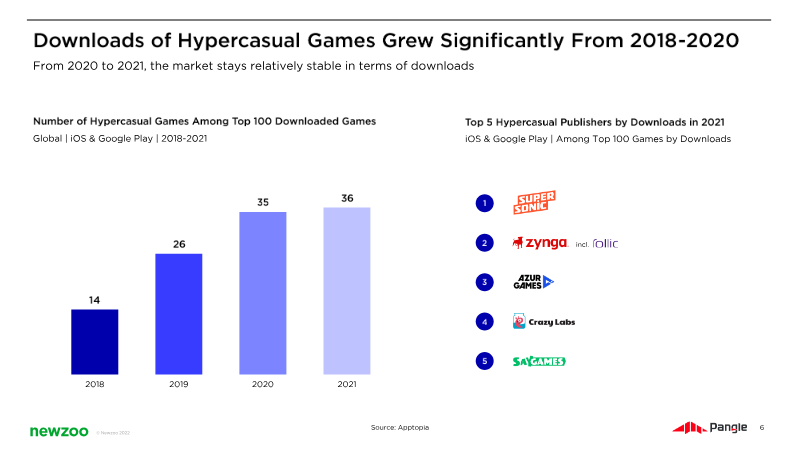
This represents a 157% increase in volume for the genre since 2018. Hypercasual remains a dominant force in the global mobile game market.
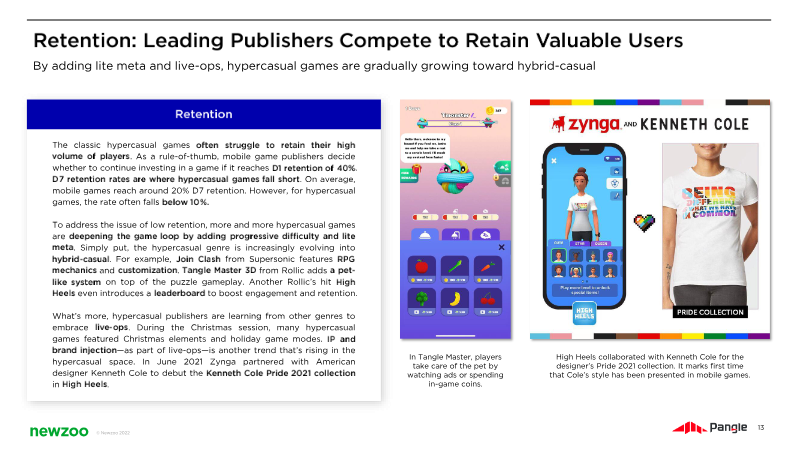
These new models integrate deeper meta-features, live-ops, and in-app purchases.
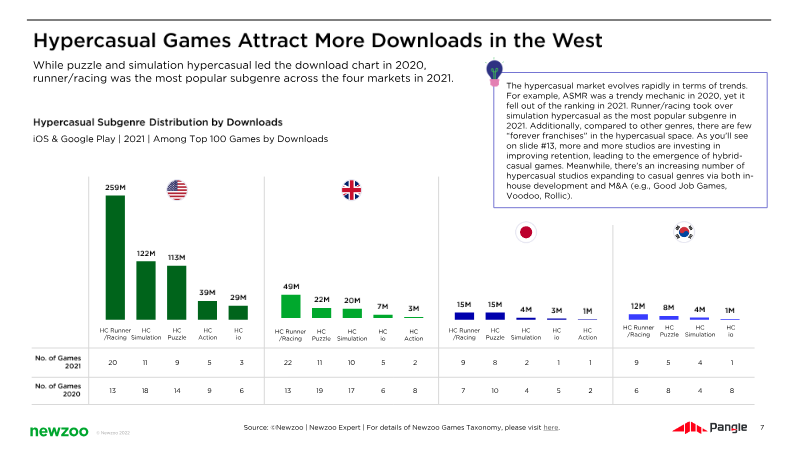
This shift displaced simulation and puzzle titles, which previously led the charts.
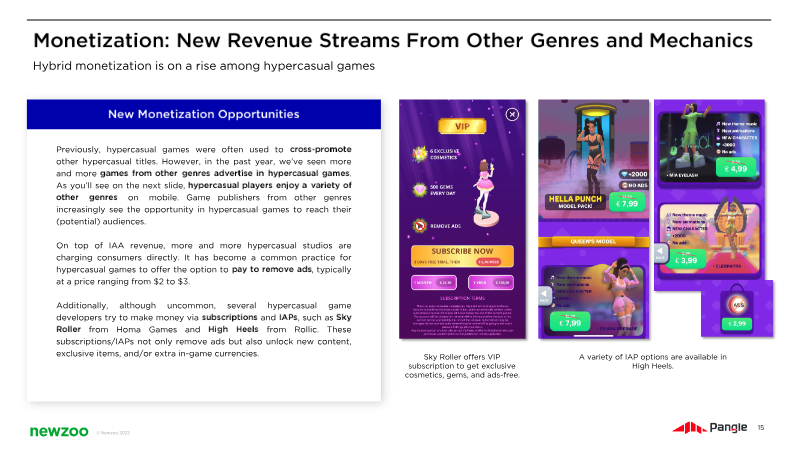
New approaches include subscription models, gacha systems, and cosmetic items.
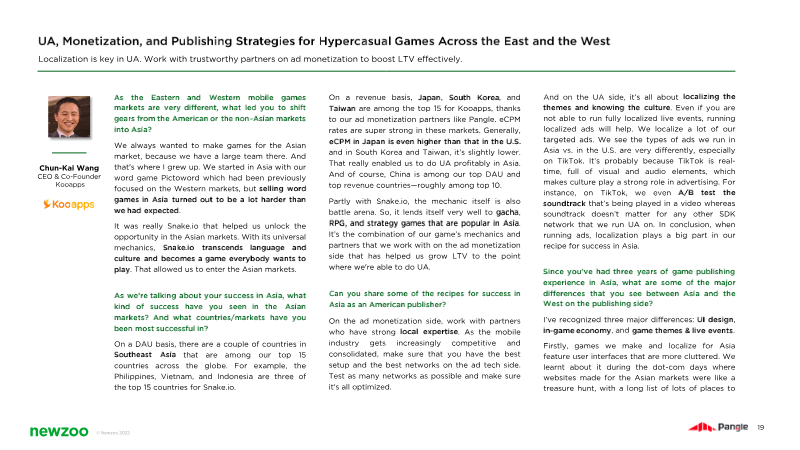
Asian markets often favor information-dense interfaces, contrasting with the minimalist UI preferred in Western markets. Cultural relevance in design is critical for success.
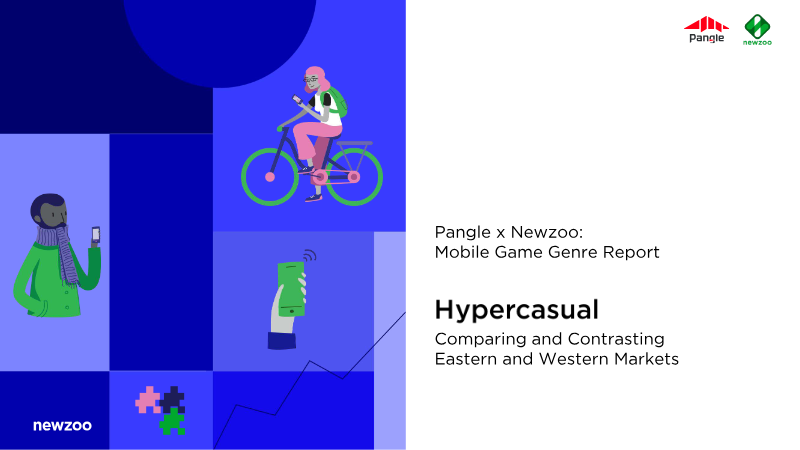
The hypercasual mobile game genre remains a dominant force in the global market, characterized by simple, accessible gameplay and a reliance on high-volume user acquisition. In 2021, hypercasual titles accounted for 36 of the top 100 most downloaded mobile games globally, representing a 157% increase in volume since 2018. While the genre maintains a strong presence in both Eastern and Western markets, it is significantly more prevalent in the U.S. and U.K. than in Japan and South Korea. The genre is currently undergoing a structural evolution, with many developers shifting toward "hybridcasual" models that incorporate deeper meta-features, live-ops, and in-app purchases to improve long-term player retention.
Data indicates that runner and racing games emerged as the most popular hypercasual subgenre in 2021, displacing simulation and puzzle titles that previously led the charts. User acquisition strategies are increasingly focused on retention-based optimization rather than simple install counts, as developers seek to maximize customer lifetime value. Monetization remains heavily weighted toward in-app advertising, with interstitial videos serving as the most widely adopted format. However, successful studios are increasingly diversifying revenue streams by integrating subscription models, gacha systems, and exclusive cosmetic items to supplement ad-based income.
The analysis highlights significant cultural differences in player preferences and design requirements between regions. Western markets generally favor minimalist, intuitive user interfaces, whereas Asian markets often respond better to more complex, information-dense designs. Furthermore, successful localization—including culturally relevant live events and ad creative—is identified as a critical factor for publishers seeking to scale in the competitive Asian landscape. By leveraging data-driven ad networks and adapting to regional nuances, developers can effectively navigate the evolving hypercasual ecosystem and sustain growth in an increasingly consolidated market.