1 free read left. Create a free account for unlimited reading + AI research.
Create free accountWhitepaper Journal of Games Criticism
1 free read left. Create a free account for unlimited reading + AI research.
Create free accountWhitepaperJournal of Games Criticism
Distilling the key insights…
Ludic spolia serves as a critical framework for understanding the development and reception of Sid Meier’s Civilization: Beyond Earth. By repurposing the game engine, mechanics, and assets of its predecessor, Civilization V, the title functions as a modern architectural palimpsest. While developers primarily employ this practice for pragmatic economic efficiency and brand continuity, the resulting dissonance between the two titles creates a unique space for critical engagement. This process of recontextualization forces players to confront the familiar systems of the original franchise within a radically different, hostile environment, thereby exposing the underlying ideologies of the series.
The transition from the linear technology trees and deterministic progress models of the core franchise to the non-linear technology webs and nuanced affinity systems of Beyond Earth represents a significant ideological shift. By evolving traditional mechanics—such as transforming the barbarian and ideology systems into alien and affinity frameworks—the game challenges the Enlightenment-era biases and colonialist narratives inherent in the original series. This design strategy moves the gameplay away from a singular, teleological path toward a more philosophical, choice-driven experience that demands a critical re-examination of historical progress.
Ultimately, the reuse of established game systems acts as both a development necessity and a symbolic argument. The tension generated by these repurposed elements encourages players to interrogate the authority of the original series, suggesting that future innovation must be built upon a reflective understanding of the past. By subverting the expectations established by Civilization V, Beyond Earth demonstrates that ludic spolia possesses an inherent, ambivalent power capable of undermining the rigid structures of its predecessor while simultaneously expanding the franchise's thematic scope.
Each row is a game or company this document names, each column a document, oldest first. A mark means that document names it. Select a row to see those documents.
Journal of Games Criticism · 2026
Journal of Games Criticism · 2026
Journal of Games Criticism · 2025
Journal of Games Criticism · 2025



Journal of Games Criticism · 2025



Journal of Games Criticism · 2025
Journal of Games Criticism · 2024
Journal of Games Criticism · 2024
Journal of Games Criticism · 2024
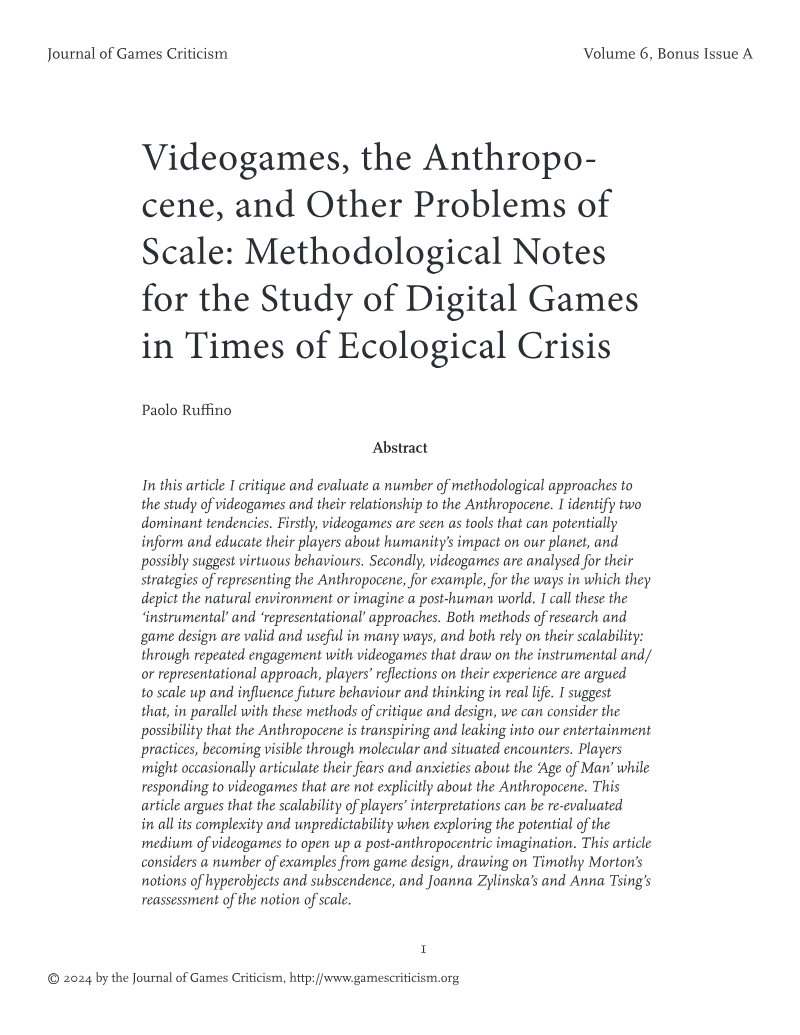
Journal of Games Criticism · 2024
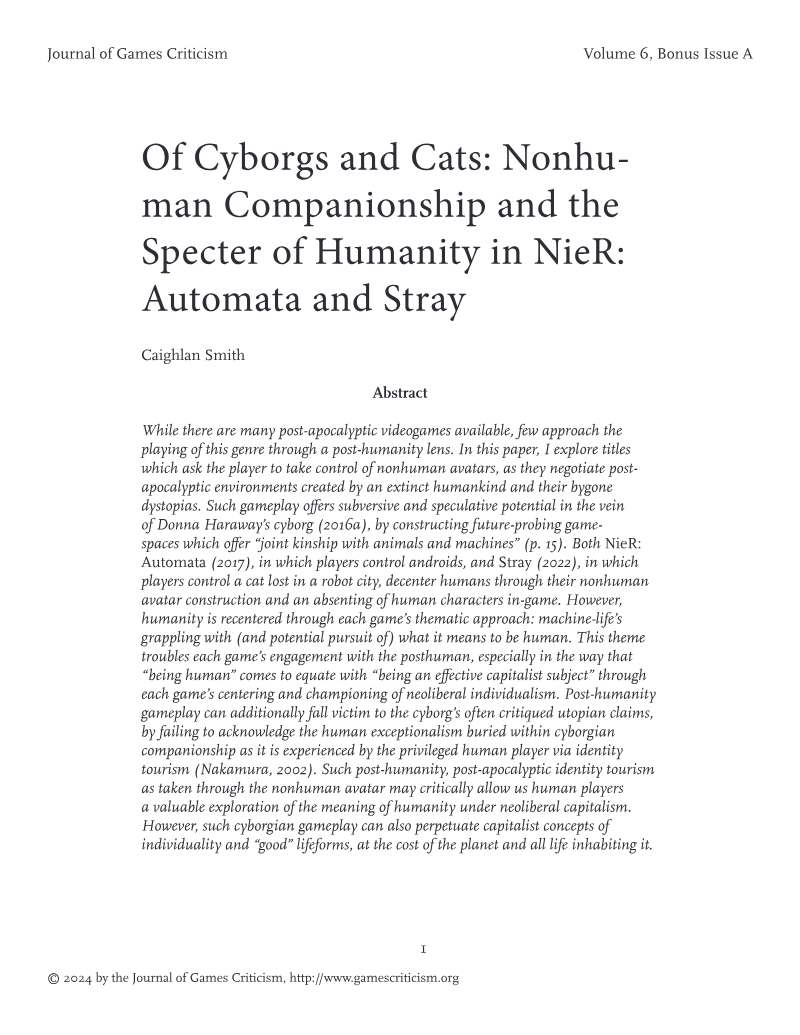
Journal of Games Criticism · 2024
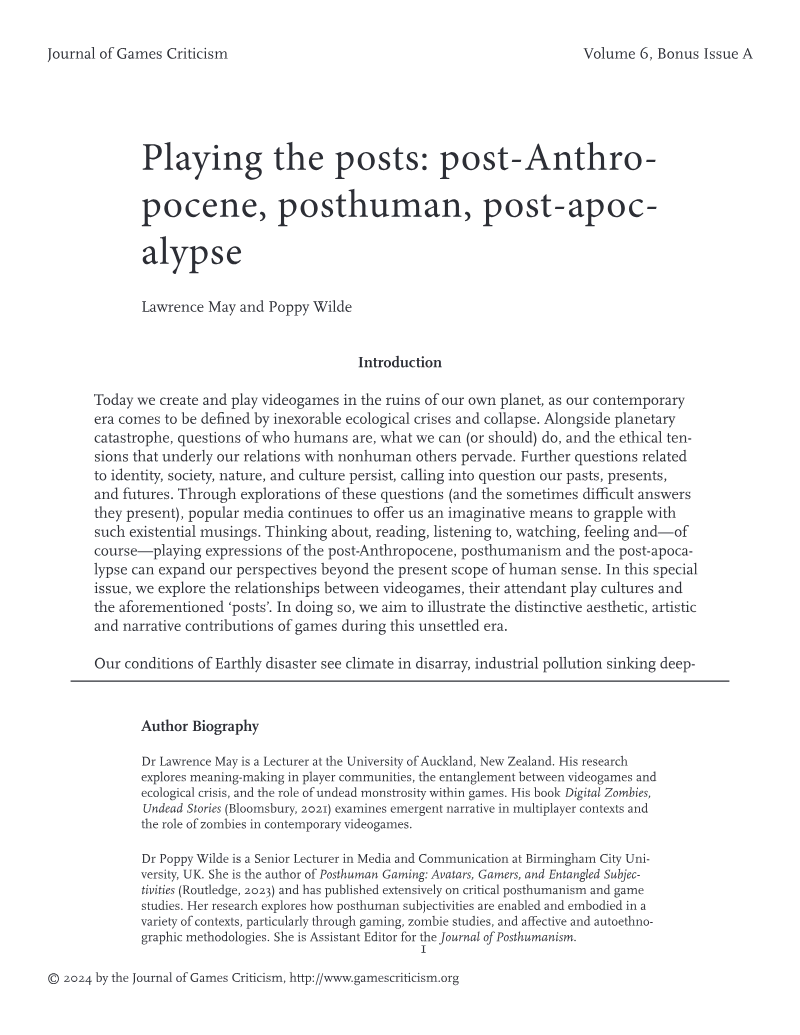
Journal of Games Criticism · 2024
DiGRA · 2026