1 free read left. Create a free account for unlimited reading + AI research.
Create free accountWhitepaper Jagiellonian University
1 free read left. Create a free account for unlimited reading + AI research.
Create free accountWhitepaperJagiellonian University
The eighteenth-century brigand's Slovak origins were often muted in twentieth-century Polish culture, especially through the 1973 television series.
This paper examines a corpus of independent video games that feature Janosik, the folk hero of the Polish-Slovak borderlands, and considers how these works draw on Góral (Highlander) cultural tradition in the northern Carpathians. The authors argue that the representation of Janosik and Góral culture in games is shaped by nearly two centuries of aesthetic and political appropriation by the surrounding nation-states, and they ask which elements of the legend and Góral heritage these games select, omit, or reconfigure. The work is framed as a qualitative, game-language analysis rather than a quantitative study, and it situates the games within the broader history of how Góral identity has been claimed by Polish, Slovak, Austro-Hungarian, and even Third Reich discourses.
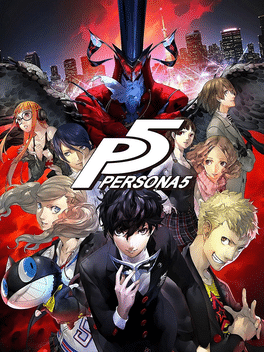
The games analyzed include the Polish Janosik platformers from Mirage (1994) and Retrovibe (2020, with a 2024 sequel), the Slovak action-adventure Juro Janosik (2021), and the Polish sabre-fighting simulator Hellish Quart (2021), which substitutes a Janosik analogue named Yendrek. The paper also considers the tabletop role-playing games Corny Groń and Beyond Corny Groń, along with mainstream titles that use Janosik as a secondary figure, such as Eventide 2 and Persona 5: The Phantom X. Analysis covers attire, combat styles, linguistic markers, backstory, interface design, and soundscape.
The historical argument centers on the figure of Janosik himself, a Slovak-born eighteenth-century brigand whose legend was reshaped in twentieth-century Polish culture, especially through the 1973 television series, and whose Slovak origins were often muted. The authors frame Góral "invented tradition" as an ongoing process that continues to inform contemporary creators. They conclude that independent game production may offer a means of reappropriation and of articulating cultural autonomy for Góral communities, although the authors treat this as a potential rather than a demonstrated outcome.
Each row is a game or company this document names, each column a document, oldest first. A mark means that document names it. Select a row to see those documents.
European Conference on Games Based Learning (ECGBL) · 2026
European Conference on Games Based Learning (ECGBL) · 2026
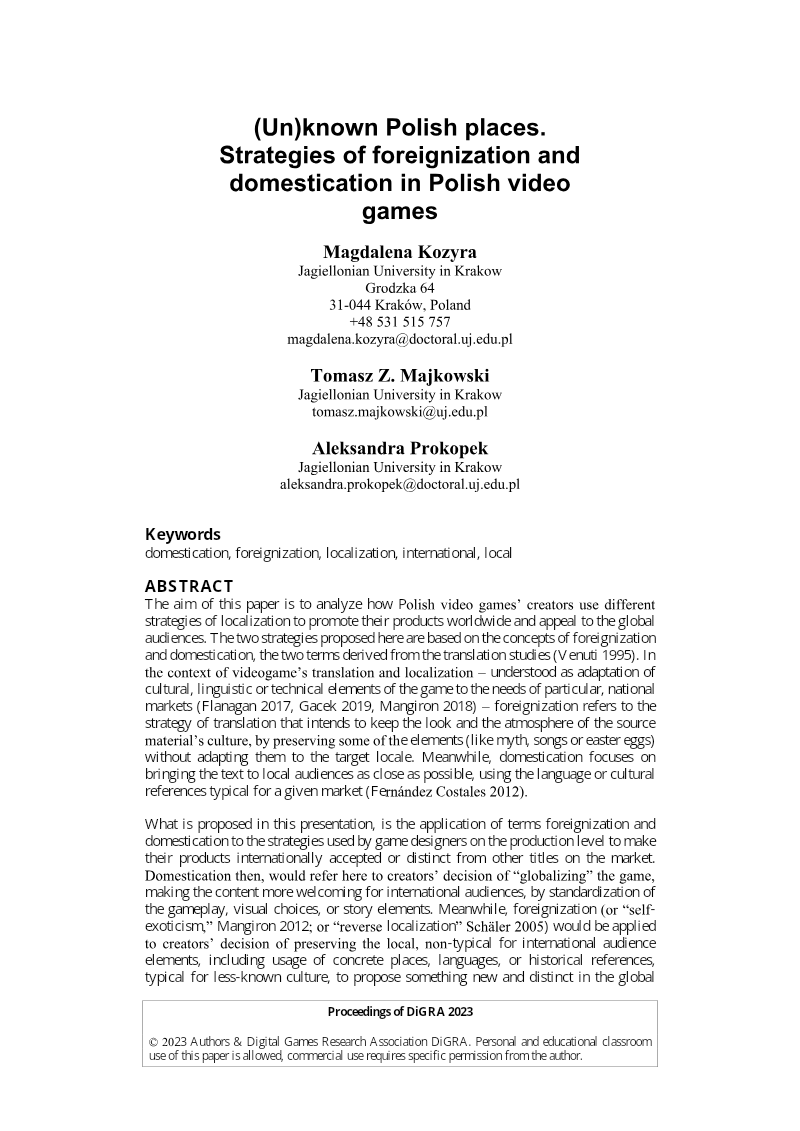
Jagiellonian University · 2023
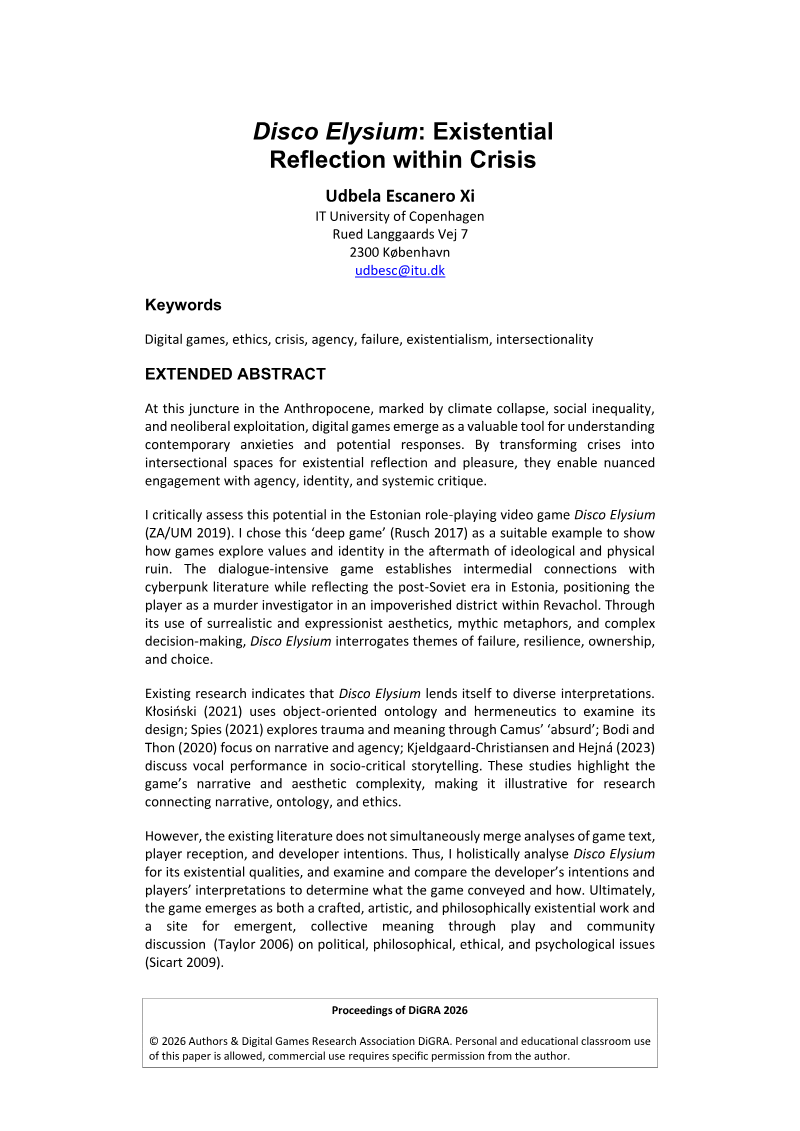
European Conference on Games Based Learning (ECGBL) · 2026