Games and companies in this document

Connections
Each row is a game or company this document names, each column a document, oldest first. A mark means that document names it. Select a row to see those documents.
More from ETC Press
View all
Report
How Video Games Can Make You a Better Journalist
ETC Press · 2023
Report
Playful Testing: Designing a Formative Assessment Game for Data Science
ETC Press · 2022

Report
Digital Playgrounds: Our Kids & Video Games
ETC Press · 2022
Report
Black Games Studies: An Introduction to the Games, Game Makers, and Scholarship of the African Diaspora
ETC Press · 2021

Report
Save Point: Reporting from a Video Game Industry in Transition, 2003-2011
ETC Press · 2021
Other
Teaching the Game: A Collection of Syllabi for Game Design, Development, and Implementation
ETC Press · 2021
Report
Intrinsic Rewards in Games and Learning
ETC Press · 2020

Report
Night of the Indigenous Devs 2019 Proceedings
ETC Press · 2020

Report
Broke: How I Made Poverty a Game
ETC Press · 2020

Report
Proceedings of the 2019 Esports Research Conference
ETC Press · 2020
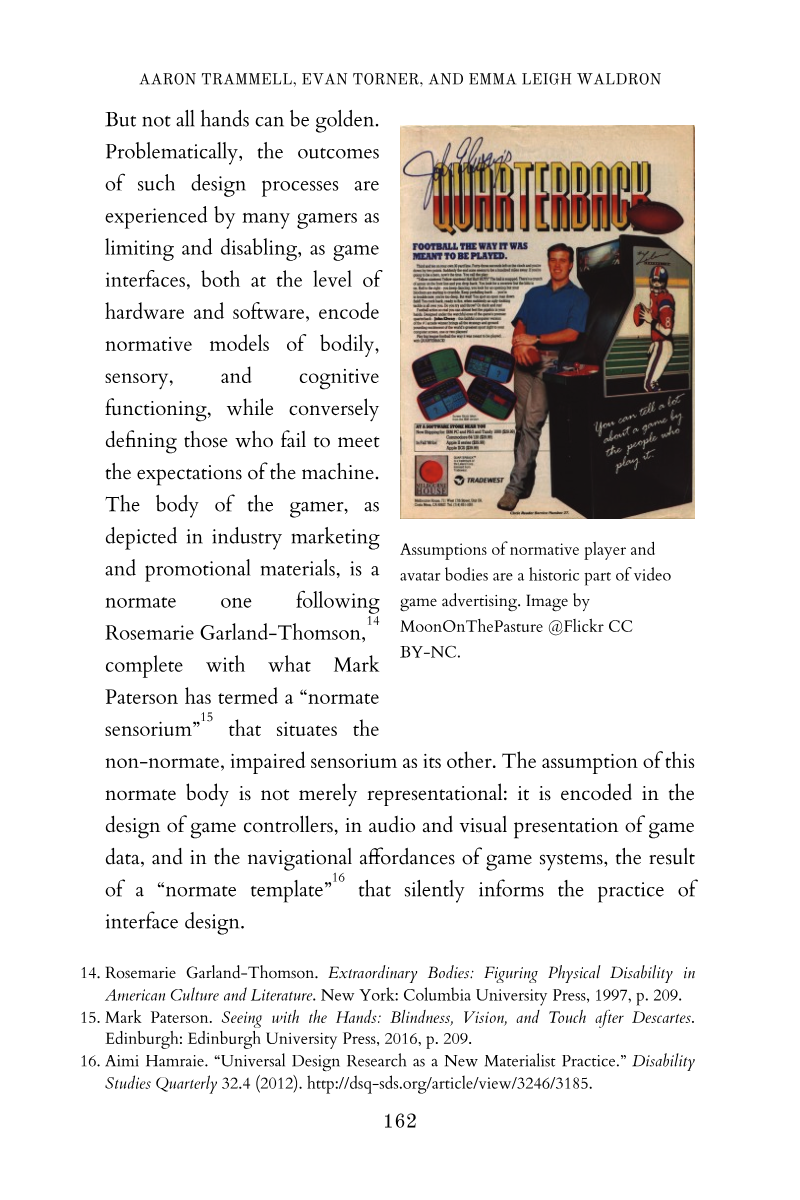
Report
Analog Game Studies, Volume IV
ETC Press · 2020
Report
Gameplay, Emotions and Narrative: Independent Games Experienced
ETC Press · 2019