1 free read left. Create a free account for unlimited reading + AI research.
Create free accountReportETC Press
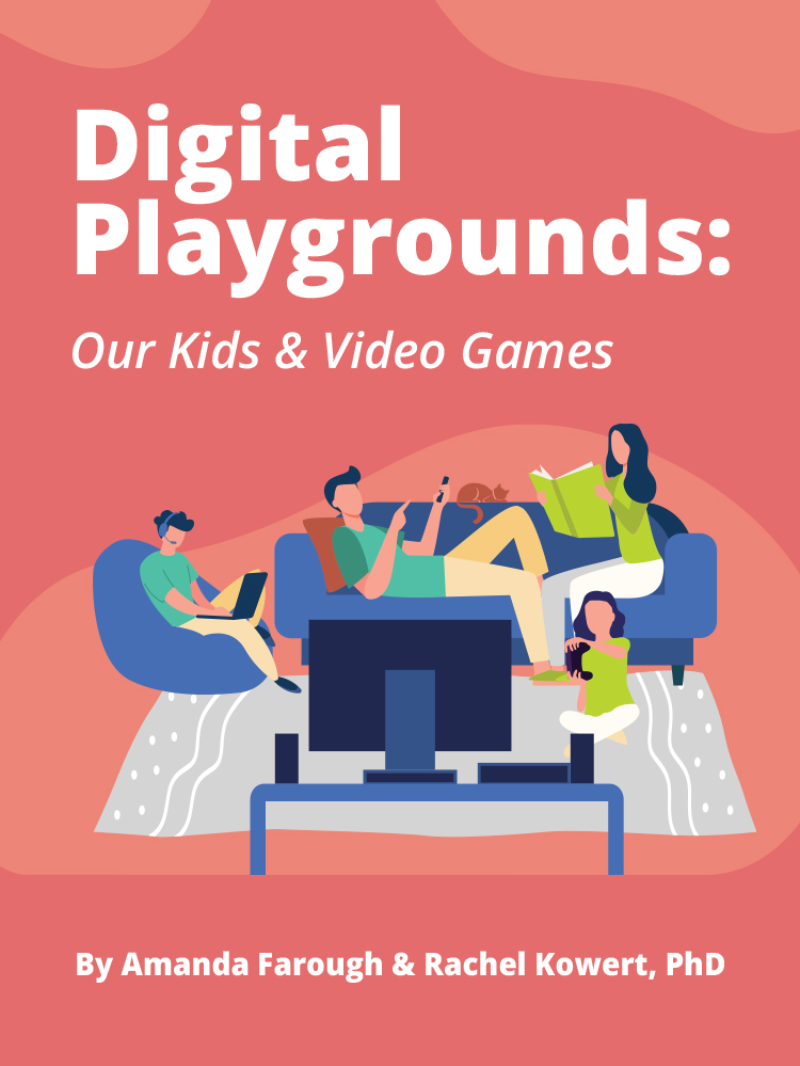
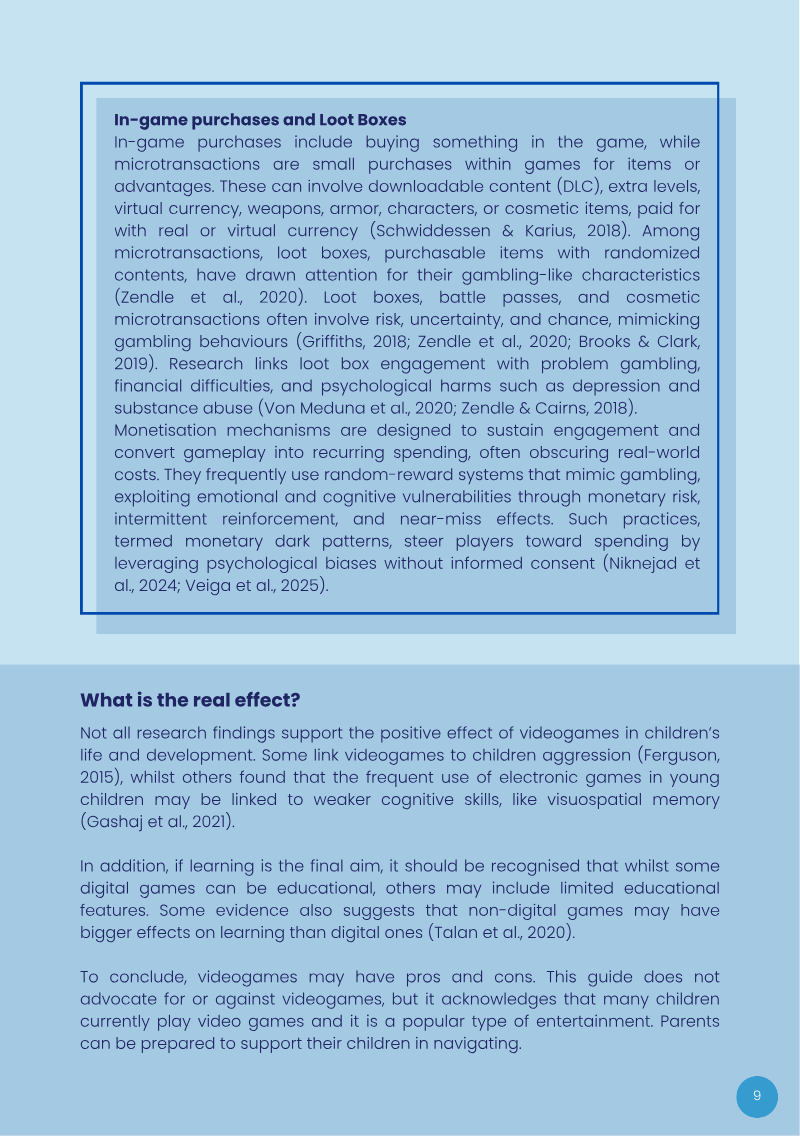
"Digital Playgrounds: Our Kids & Video Games" argues that digital play is a legitimate and valuable part of childhood, and that parents should guide children's gaming through conversation and collaboration rather than fear. Its central thesis rests on defining play as a voluntary, immersive activity that serves social connection, mood management, and learning. The authors draw on Self-Determination Theory and the concept of "flow," contending that games can foster creative thinking, problem solving, time management, and leadership, and that modern educational games far exceed earlier examples.
The work distinguishes healthy from harmful gaming with particular care. It separates positive escapism, which offers stress relief, from subversive escapism, which involves avoiding real responsibilities. Problematic play, the authors argue, usually reflects underlying conditions such as depression or anxiety rather than games themselves, and they critique the WHO's 2019 "Gaming Disorder" classification as vague and insufficiently supported by evidence that games cause the problems attributed to them.
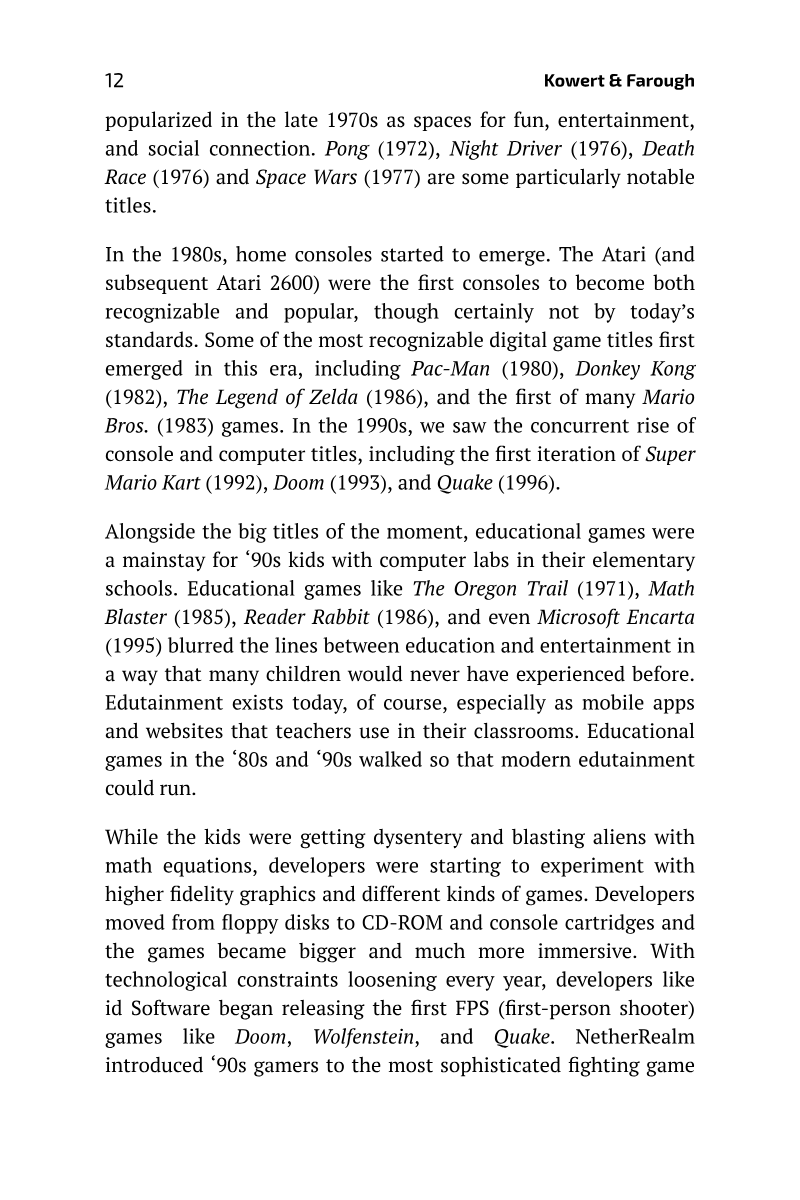
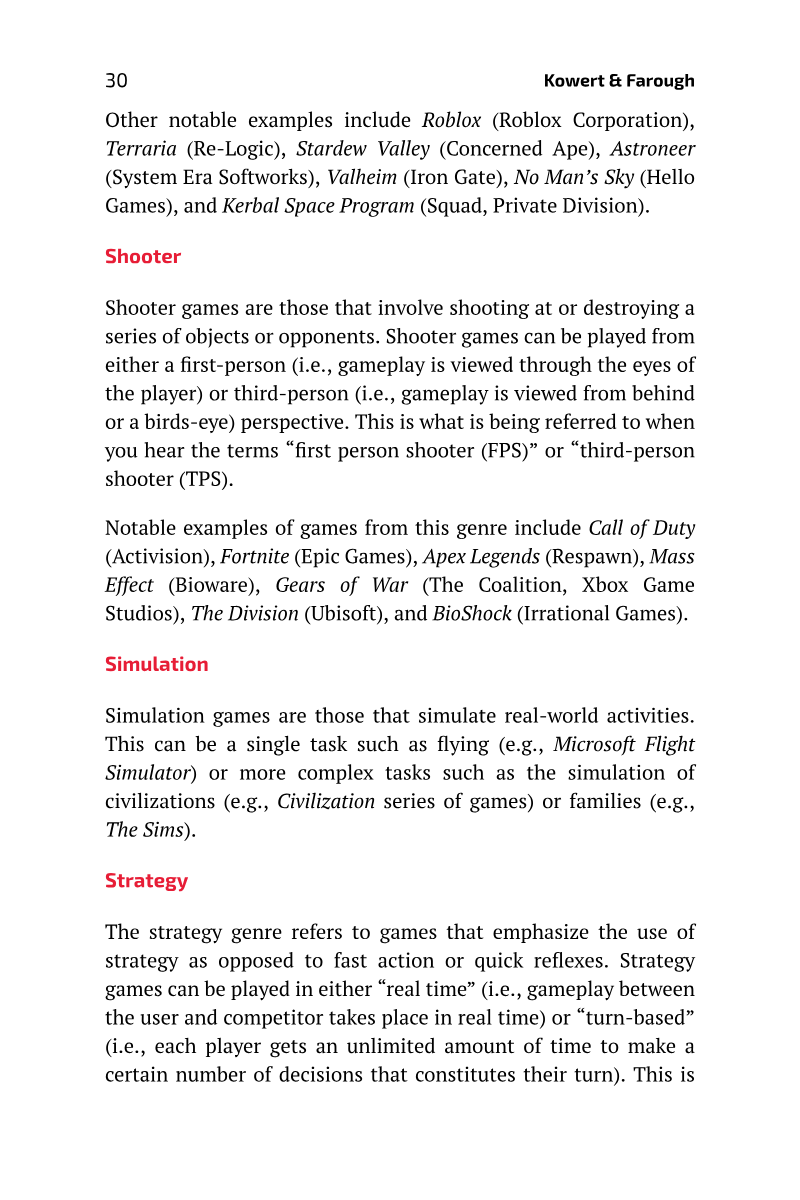
The scope is broad. The authors situate video games as the modern "third place" for children, citing an estimated 3.24 billion players worldwide and noting that 75% of U.S. households include at least one player. They survey major genres, emphasizing that classification is based on gameplay rather than aesthetics, and they note that nearly all games now require internet connectivity, which makes parental controls over online interaction and privacy especially relevant.
The book's recommendations center on collaborative, age-appropriate rules for time and content, informed by ratings such as the ESRB and by research, with the goal of cultivating self-regulation over time. Its evidence is largely anecdotal, drawn from the authors' own households rather than systematic data, a limitation that bears on how broadly its conclusions can be applied. The authors themselves bring complementary expertise, combining business and game journalism with research psychology.
ETC Press · 2023
ETC Press · 2022
ETC Press · 2021

ETC Press · 2021
ETC Press · 2021
ETC Press · 2020


ETC Press · 2020

ETC Press · 2020

ETC Press · 2020

ETC Press · 2020
ETC Press · 2020

ETC Press · 2019
Bryter · 2026












Comments