1 free read left. Create a free account for unlimited reading + AI research.
Create free accountThe Real Reason EA Shut Down BioWare
Key insights
6 takeaways- 01EA's roughly $18 billion in debt from a leveraged buyout, with over $1 billion per year in interest, reportedly drove the company to redirect resources away from BioWare toward a new Star Wars Battlefront game.
- 02BioWare's team was stretched across Dragon Age: The Veilguard while Mass Effect was years from completion, and a run of underperforming releases (Anthem, Mass Effect: Andromeda, Veilguard) compounded the pressure.
- 03Veilguard reportedly missed sales expectations by about half, and in early 2025 BioWare was gutted and shut down with roughly 400 layoffs across EA.
- 04Escalating game budgets are a central factor in the analysis, with Gears of War: E-Day reportedly near $500 million cited as evidence that rising costs make risky mid-sized titles hard to sustain.
- 05The 'too woke' criticism of Veilguard is judged unsupported, since inclusive titles like Baldur's Gate 3 and Hogwarts Legacy sold strongly; Veilguard's weaker reception is attributed to clunky writing, tedious combat, and development churn.
- 06BioWare's reputation rests largely on its inclusive characters and relationships, which many players found meaningful, and the new Mass Effect team reportedly holds a creative vision distinct from Dragon Age's.
Ask AI about this video
Transcript
Hello, one takes Shrier here and today we are talking about the demise of Boware. There's been a lot of speculation as to why EA shut down the revered RPG studio. If you ask Blue Sky, it's because Saudi Arabia hates the gays. If you ask Twitter, it's because Boware went to woke. What is the real reason? I made some calls for a Bloomberg article that I just published. As always, you can find a gift link in the show notes. and I found out the real explanation. I'll give you the short version. Then I'll get into some of the context and history and maybe a little bit later I'll even talk about wokeness and the questions surrounding that. Uh been a lot of debate about whether boware went to broke and got to broke as a result. I have some thoughts. So what's the top line? Boware shut down because of Star Wars. It's kind of ironic. In 2007, EA purchased Boware
because of the promise of an ambitious new Star Wars game. It was uh the MMO, the Old Republic. And then about 20 years later, by EA shut down Boware because of another Star Wars game, Star Wars Battlefront 3. So, here's what's going on. Um, and again, this is I made some calls, talked to some people. This is all based on conversations I've had with people um familiar with EA strategy and Boware strategy, people across the board at both EA and Boware. So, what happened was over the summer um or a few months ago, I'm not sure exactly when, uh EA got this opportunity to uh potentially work on a Star Wars Battlefront 3. Lucasfilm started talking to them. The opportunity came up. Um, Battlefront 2 had been polarizing, controversial for various reasons, and there wasn't really a thought that they would immediately go on to a sequel, but the things changed. There was a big resurgence on Battlefront 2. Um, the idea became a possibility more recently.
And EA at the same time has been in the process of closing this leveraged buyout for $55 billion. Um, which as a result of that, just to explain real quick what that means, um, EA was taken private. They were taken off of the stock market by a bunch of investors led by Saudi Arabia, which owns the majority of this new EA. Um, which means that this new group of investors now owns EA. Um, they spent $55 billion to buy all the shares that were on the market on the publicly traded market and take it private. And as a result of that, because it's a leverage buyout, they took out a bunch of debt from bank loans to pay for that $55 billion acquisition. And they put a ton of that debt on EA itself. So EA now has to service about $18 billion in debt, which means uh a significant amount of interest payments every single year. The exact number will kind of vary. I'm not sure what it is. It depends on the the structure of the bonds and the debt is a little complicated and um it has a bunch of different notes each with different
interest rate percentages. So it's a little complicated to figure out but over a billion dollars in debt it's safe to say every single year or sorry over a billion dollars in interest payments every single year to service that debt. So as a result of that EA has a lot of financial pressure and so uh it started doing this kind of holistic portfolio review looking around and saying where can we cut costs where are we spending to be the the most strategic which is something that companies big corporations in the gaming world do all the time. They're always kind of evaluating their portfolios, figuring out what makes the most sense to invest in, what should we put money into. Um, and they looked at uh two potential games. You have on one hand Star Wars Battlefront 3, which as of right now is not in development. Um, it has not started yet, but uh was a possibility. And then they looked over at Boware, which is making mass effect. Now, Boware was around 50 people at the time. It was closed last week. So, a very small team for AAA standards for big budget game standards working on this new Mass
Effect. It was in fairly early development despite the fact that it was announced back in 2020. And a big the biggest reason for that, the biggest reason that it was still several years out is because that team was actually taken and put on Dragon Age: The Veilg Guard for a solid year and a half, two years. Um, they actually made I reported this on Bloomberg last year. They actually were responsible for that final mission in Veilgard. if you played it. Um it's kind of a Mass Effect style like um all hands on deck like mission to the death sort of thing where you have to make all these different choices along the way. Um a lot of people even people who didn't like Veilgard I think were complimentary of that final mission. So um Mass Effect was also in early development and so EA is looking at these two sci-fi action games and saying hey these are both going to cost us hundreds of millions of dollars to finish because that is the reality of game development today. Um, in Star Wars Battlefront's case, got to start from scratch, potentially plan out the next, who knows, four years of development, um, expensive, big teams, um, it's going
to be a hefty proposition. In the case of Mass Effect, you have this small team at Bowware. There's 50 people. You got to grow that or find some codev help. You can't make a AAA game with 50 people. You can't make a big branching narrative RPG with 50 people. So, you needed to expand that team and throw a lot more people at it. Um, check out my old video about why games cost so much if you want to hear a little bit more about where we're getting these figures of hundreds of millions of dollars. Um, I saw an article speculating that uh it would cost only $5 million to finish the new Mass Effect game, which is one of the silliest things I've seen in my life. Um, based on it was based on some ridiculous calculations and assuming that those 50 people would be the only people working on it, which is also ridiculous. But no, we're talking about two sci-fi games that each would cost hundreds of millions of dollars to make. and EA looked at them. EA said, "Hey, we have all these new financial pressures. We can't just be spending hundreds of millions on both projects. We're going to pick Star Wars over Mass Effect." And as a result, they shut down Boware, canceled Mass Effect, and decided to go allin on Star Wars Battlefront 3. Um,
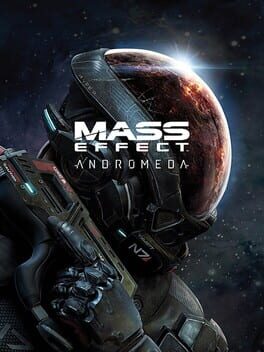
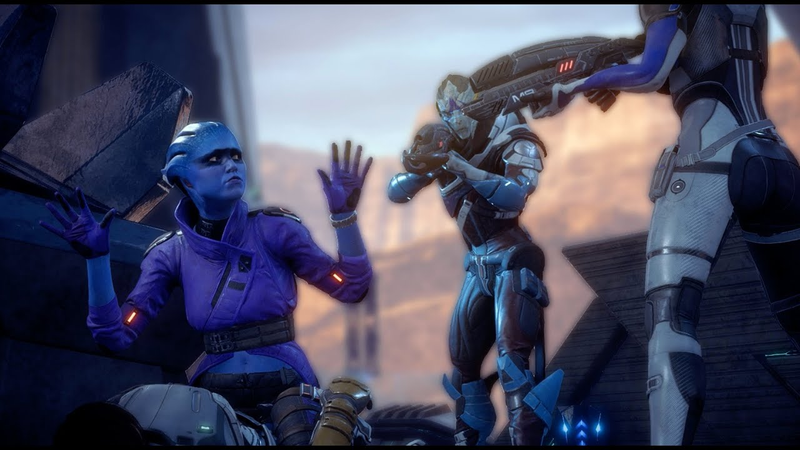
it's there are other factors too, don't get me wrong. Um, that is the largest factor. There are other factors. One is that of course Boware's track record in recent years has been spotty at best. Veilgard missed sales expectations. Anthem was a complete disaster. And Mass Effect Andromeda, um, while I think it sold okay, was critically panned and often me'd on the internet thanks to its facial animations. The last game that Boware put out that was critically acclaimed and commercially successful was Dragon Age Inquisition in 2014, which was a very long time ago. Um, so that's part of it. Boware has also been kind of a difficult company to manage. which has had a lot of tensions and stress points. Um, of course, and EA never understood Boware. That's another important part of this whole thing, right? EA purchased I'll get into why EA purchased Boware and how they were never uh they were always an awkward fit within EA and how even the way it happened was just kind of unorthodox in a second. Um, but so put that aside for
a sec, but just keep in mind EA is not a company that understands RPGs. EA is a company that is focused on sports and action games. And the idea of a Battlefront game that's a shooter that is a continuation, a sequel of previous games that can kind of iterate on that. You have your DICE team that is familiar with making these shooters, just came off of Battlefield 6. There's a lot kind of lining up for that project to make sense for EA and EA just understands shooters better. EA's executives understand shooters better. There was also an executive shakeup over the summer. Um, I think this went kind of under the radar because not a lot of people know the figures involved. But what happened was um there was a basically EA just shuffled up its seauite and so Laura um Mle Mle I'm sorry I don't I don't know how to pronounce her last name but she was head of studios for EA for a long time. She was a big advocate for Boware and for Mass Effect and she was kind of sidelined, pushed to the side. And these other two guys, David Tinson and Cam Weber, have kind of risen and taken over. And those are both guys with a lot
of experience and history doing EA sports stuff, which again is in EA's DNA is releasing Madden games, releasing FIFA games, predictability, annual release cycle. There was constantly a conversation with Boware over why aren't you releasing games every single year? Why aren't you on a more predictable schedule just like the our sports games are and our shooters are? Um, Boware was always an awkward fit. All right, I'm going to get into a little history here, but yeah, I mean those are those are the reasons. The main reason is Star Wars. There were some supplementary ancillary reasons, too. But if you want to know the kind of topline here, it's that EA shut down Boware because it chose to put those hundreds of millions of dollars, that big investment into Star Wars Battlefront 3 instead of Mass Effect. And it's as simple as that. Um, I don't know if there were conversations about potentially selling Boware ahead of this closure, but I do know that EA has traditionally hoarded franchises like Treasure Trove. Um, like a dragon hoarding gold because uh, well, I don't know why because they don't like it when
other people maybe they don't want to be embarrassed by like selling a franchise and then it turns into a big hit or something. I don't know. They're also using the Mass Effect franchise because they are plowing ahead with the TV show that is in development at Amazon, a Mass Effect show. Um, so, uh, I think the idea of selling boware, Bowware is kind of useless to sell. There's no there's no value there without the IPs attached. So, um, I don't think that was ever really seriously considered, but I don't know. I don't know if there were conversations there. So, let's go back in time a little bit. I'm going to get into the little bit of history here. Um, a lot of people think that Boware was just sold directly to EA, but that is not in fact what happened. It's actually a little more complicated than that. What actually happened was EA uh or sorry, what actually happened was that Boware's founders sold the company to a private equity firm in 2005 called Elevation Partners. And Elevation Partners was founded by a bunch of wealthy people, including YouTube's Bonto of all people. Um, and also a guy named John Rickello. And the idea of
Elevation Partners was they wanted to build a video game super group. Do something different. Do something that was uh out of the con constraints of like um publicly traded publishers and just build a big video game company. But they changed plans and in 2007 John Ricadello left Elevation and went to become CEO of EA. And hey, a few months later, EA then purchased Elevation's video game group, which included both Boware and also Pandemic Studios, which used to be a a big independent studio back in the day. Um there's a kind of boware pandemic group. This purchase was for more than $800 million. Um a little side note here is that in SEC filings, EA said that Ricatello had recused himself from the deal in the negotiations over this deal, but still he stood to gain um up to $4.9 million from this deal. Um, again he founded a a private equity company, left to run EA and then at EA and then EA almost immediately bought the holdings of that private equity company which only only
in corporate America. But anyway, uh this was kind of an uncomfortable marriage. It was always an uncomfortable marriage. It never really made sense. EA did not have RPGs in its DNA. And in fact, when announcing the deal, part of what EA said and Mickeadella said was, "We can use EA to fill in these holes of like RPG and MMOs that we are missing." At the time, they said they were working on a big MMO and that would of course become Star Wars: The Old Republic. That was a big reason for this purchase is that EA had been trying for a long time to get in the the World of Warcraft game to take on World of Warcraft to do its own MMO RPG and had not had much success. and they saw Star Wars: The Old Republic as a good way to do that. Um, so yeah, uncomfortable marriage all around. Um, never really fit into EA's portfolio. And Bware did release some hits under EA. Um, some Mass Effect games. Uh, I believe, um, I don't remember if the first one was released
under EA, but the second and third Mass Effect games certainly would were, and those were big hits. Um, Dragon Age, of course, Dragon Age Origins was was a success. Dragon Age 2 less so. That's a whole another story. Um, that game was delayed. That game was made in uh about a year, a little over a year uh to fill a hole in Bowware schedule because they had to delay the MMO and EA executives came to Boware and said, "Hey, what are you going to do to fill this hole in your schedule?" Again, uh EA always was thinking annualized, predictability, like release something every year. And so, uh Boware just came up with Dragon Age 2 and like worked their asses off to release that game in a year and a half. And at the at the time it was controversial and it was seen as like the this was before all the the recent string of boware flops. Dragon Age 2 was always seen as a black sheep. Although there are some people out there who really like that game because it does a lot of interesting things. It just has some also some some tedium. Um all the accessories you have accessories in there that are just called ring or just
called necklace or whatever. Anyway, um Dragon Age Inquisition was a hit and of course Star Wars the Old Republic wound up becoming really successful. wind up generating more than a billion dollars in revenue despite some kind of up and downs along the way. Um, but then the wheel started to fall off after that and you have the Mass Effect Andromeda story of the Anthem story of the Veilgard story. I've written extensive pieces about all three of those games. Maybe one day I'll make video versions of those stories, but for now I'll throw links in the show notes because I have big pieces about all three. I've talked to a lot of people at Boware over the years and found out all of the development problems that each of those games ran into a lot of similar things. Um, uh, Mass Effect Andromeda, Anthem, and Dragon Age Veilgard all shared a lot of traits. One is that all three of them changed directors midway through development, which caused a lot of problems. All three of them had issues with Frostbite, which is the engine, the graphical engine that EA used and that Boware started using with Dragon Age
Inquisition. Um, all three had issues with overtime and um, kind of this treadmill of delays. Um, it's funny, a lot of people are like, who's to blame? EA, Boware, all of the above? I mean, the answer, of course, is both, but uh, each of these games had kind of different factors behind why they turned out the way they did. For example, a lot of people believe that EA forced Bware to make live service games, which is true, but not in the way that a lot of people think. So, for example, Anthem was a game that was come up with that was incepted entirely by Boware. Casey Hudson, who was the director of the Mass Effect trilogy, decided to make his own new IP, wanted to make his own new thing. He called it Dylan because he wanted it to be unlike anything out there, just like Bob Dylan. And it wound up uh changing forms quite a bit. He actually left in the middle of development which I think sent that project um a skew in a lot of different ways because he had a vision in his head that other people didn't really know
what it was going to look like. Um and he left before it was kind of fully realized and that game changed a lot. It originally was going to be like a survival game in space and wound up turning into what it was, an online loot shooter, but it was always envisioned as a multiplayer game. And Casey Hudson, who would later come back to run Boware, was always a guy who was supportive of games as a service. So, this was not entirely an EA initiative. Although of course when you work for a company like EA and you have to deal with budgets and pitching your your um pitching your budget to uh the powers that be the executives in charge every single year and you have to get things approved and go through green lights and gates and whatnot. Uh of course it helps to have something that is kind of fitting the mandate of multiplayer games at EA. Um, so Anthem I think was a problem that Boware was making. Whereas at the same time, Dragon Age: The Veil Guard was a problem that I think that game would have turned out entirely differently if not for mandates from above to make it a
service game. Dragon Age 4 um was originally projected as this kind of continuation that would really take a lot of ideas and things they learned from Dragon Age Inquisition. Um and a team there led by uh Inquisition's director Mike Laidelaw started working on that game and uh it was essentially they were told you have to make a multiplayer game which led m laid law to left and led to a lot of turbulence there. Then they started working on a multiplayer version of Dragon Age 4. Then that was canled because they were told actually you can make it a single player game again. And that's what became Veilgard. And I think a large part of Veilgar's problems um came from that constant shifting in direction which made it really difficult for them to find their feet on that game. I'll get into Velgar more in a sec. We'll we'll talk about wokeness. I promise. Um so three flops in a row essentially. Vegar comes out in November of 2024. At first it has all this momentum. It seems to be selling well. People at Bowware are really thrilled because it felt like
their last big shot to release a hit. Um and uh critical like critical per uh reviews are are solid. It gets like an 80some on Metacritic. It's people are thrilled with the reception in general. Um but soon that all dwindles. Uh word of mouth I think is pretty bad. I think fans tended uh to uh like it a lot less than the critics did. Obviously it was the center of culture war stuff. Um I'm not super convinced that that had a big impact on sales. I actually think that a lot of Dragon Age fans um uh didn't like it for many other reasons, including clunky writing, but also just the way it felt, the tedium that the combat could feel. I mean, a lot of you saw a lot of vestigages of the live live service game that it was originally going to be. Um that game had a lot of problems, man. One of the biggest Mark Dra who was the executive producer on Dragon Age for a long time and then came back as a consultant on Dragon Age: The Veilg Guard. um he did a great video about um something that I've also written about in my reporting on this game which is
this idea that like even though that game was however many years in development, four or five years in development uh depending where you start counting but um a lot a large chunk of that was a game the game was delayed for like six months at a time which makes it impossible to really uh take advantage of that time. If you think if you have a deadline and it's in May and then it's extended to November, but then it's extended to the following May and then it's extended to the following November, you are working with that kind of that short-term deadline in mind every time. And so you can't just step back and be like, "Hey, let's make some big changes here. Let's take some ambitious swings. Let's fix some things that we know are wrong." You just have to be like, "All right, I only have six months left. Time to fix some bugs. Oh, I have another six months. All right, I guess we have another six months left. Time to fix some bugs and do what we can." And it just kept happening like that. Um, that's not to say that by word developers are not responsible for what this game ultimately turned out to be. Um, but I think it's really difficult to make a game under those conditions, under those circumstances. Um, January
of 2025, EAG announces that Dragon Age of Veilgard missed sales expect expectations by 50%. Huge number. Um, and they decided to gut Boware. Essentially, they moved a lot of Bowware people to other EA studios like um Motive where they were working on Iron Man and uh Full Circle where they were working on Skate and bunch of others, Battlefield teams, etc. um left a very small team remaining at Boware. Uh they then the numbers changed over the last two years, but about 50 were remaining when the when the company was shut down last week. Um and then they were working on Mass Effect. They were excited about it. you a lot some of them have come out in public and talked about the visions they had. Um, a lot of people are really excited about it. I would add a caution here that um, cancelled games are always like crystallized in our heads as these perfect um, ambitious swings that could have been anything. And I would caution that things you hear about their early
ambitions for this new Mass Effect game, you never know how many of them would actually have come to fruition. I mean, just to give you an example, Mass Effect Andromeda was originally planned in its first couple of years in its pre-production period as a game with hundreds of procedurally generated planets, kind of like No Man's Sky. And that did not happen in the final game because sometimes when production realities come into the picture, you realize that what you all these ambitious ideas you had in the early years will not actually stick. um that's happened with pretty much every Boware game in recent years is that it changed drastically from pre-production into actual production. So, I would I would offer a a word of caution before getting too just kind of sad um about this game that you've heard about that sounds so cool because you never know what actually comes out of the production period. Um and then of course last week um Bloomberg we broke the news that EA was shutting down Boware. Laid off 400 people. We paid a lot of attention to
Boware but worth noting um about 350 other people were laid off across the company. Um keep that in mind as far as the human cost here. About 3% of EA and really ultimately again there's been a lot made of Boware and its recent years and its progressive values and all these other things. a lot of just kind of conversation and a lot of noise and a lot of misinformation. Um, but the reality is that Boware was shut down for the same reason that game companies have been laying off tens of thousands of people over the last few years, which is that game budgets have grown exponentially and become more and more expensive for these games to make, for these companies to make. Um, we just saw Gears of War eay cost $500 million to Xbox and that is a real number. That is that is real. Um, that's what we're looking at here. That's what games cost to make, especially in North America these days. Um, and it's driving these game companies to to make layoffs, to do cost cutting, to move development outside of North America in a lot of cases, and to focus only on the biggest
franchises that are as have as little risk as possible. And in EA's case, there's few bigger franchises than Star Wars. Star Wars Battlefront 3 is seen as a much lessy less risky bet within EA than a new Mass Effect game was. Um, all right, that's the story. Let's talk a little bit about wokeness. Um, you have probably seen people on social media on YouTube talking about how Bor failed because it was too woke because it had a non-binary character and some awkward writing about push-ups or whatever. Um, I have a couple of thoughts here. One is that I think that these people whenever you ask some of these people um they always have a hard time articulating and explaining why Dragon Age: The Veil Guard failed because it had a non-binary character where Dragon Age the Inquisition or Inquisition um was a huge success despite having a prominent transgender character who talks about transgender issues and the list goes on and on. I mean, there are all sorts of
character uh games out there that have been hits despite being inclusive, having different kind of uh people in it who are not the kind of who are who who people on the internet take issue with transgender people, transgender representation, that sort of thing. Um, Balders's Gate 3 is a game where you can anybody, uh, including a squid. Um, and it's a game full of transgender people, LGBT people, etc., etc. Hogwarts Legacy. Obviously JK Rowling has there's whole all sorts of baggage there, but one of the first characters you meet in that game is a transgender bartender um in in uh Hogsme. Um and that game was obviously a massive hit. Um from what I have seen, I have never seen any data suggesting that the inclusion of LGBTQ people in a game has any effect on sales, either good or bad. I think what people have identified in Dragon Age Veilgard is clunky writing and a lot of
kind of things that are just awkward and and um memeable. Um which is I mean there could be all sorts of reasons for that. But it is it is become this kind of like it has become even more of a meme. It has become even more viral because it happens to include non-binary people. But really, it's just clunky writing that people are taking issue with. And I think they're kind of associating that with this idea of this company has gone too woke in their heads. In reality, this is a company that has been including LGBTQ uh relationships and characters in their games for 20 years. Um, Star Wars Nights of the Old Republic, regularly remembered as one of the greatest games of all time, is being remade as we speak because people love it so much. That is a game that I believe was one of the first games ever to have gay romance in it. You could have gay romance in that game. Mass Effect, of course, you've always been able to have gay romance. Dragon Age has always been a series that has been about inclusion and uh
accepting of people's personalities and identities and stuff like that. Um, again, I think what people are just kind of latching on to is bad writing, is awkward writing, is scenes that are just not good. And I think part of uh what is great about inclusion is that you can identify that like hey I mean there can be bad writing about transgender people and there can be good writing about transgender people. A transgender developer could be a bad writer. It could be a good writer. I mean I I think that if you are going to say that just because something is is inclusive that it's good then you're doing a disservice to everybody. Um and I think that's ultimately one of the problems with Veilgard. And I think that's something that even people outside of the kind of culture war activist sphere have identified and it's one of the reasons that a lot of Dragon Age fans bounced off of this game. Um, but I mean look, there are there's a reason that a lot of these kind of Twitter warriors and
culture warriors and people with the YouTube like headlines and thumbnails about how uh woke is killing gaming. There's a reason these people pick very specific targets, games that are very niche or are failing regardless or going to fail regardless. Um, there's this game there was this game called Dusttor that came out last year or two years ago and nobody had ever heard of it. It was not a game that was on many people's radar except for Culture Warriors because it became for some reason this big game that everybody on YouTube wanted to talk about. Um, and they just made it their target and it became an easy target because nobody was going to buy that game regardless. Nobody had really paid much attention to that game regardless. So, it's very easy to point at a game like that and be like, "Hey, look, it failed because it was too woke because it was under the radar in the first place. Whereas a lot of the other targets that I've mentioned, games that are inclusive in all sorts of ways, um that are just too big to fail, Balders's
Gate 3, I think, is a great example of that, have not been the target of these culture wars because, uh they I think those people know that they have to pick their battles. They can't be can't be picking the games that are are successful and beloved or else you're gonna fail. So, you have to kind of you have to it's like a bully at school, right? like you have you can't go around or like you go to prison you you you I guess in prison you want to kind of get into a fight with the biggest one there, right? But in school, if you're a bully at school, you're not going to get into a fight with the the the running back on the football team. You're going to go and pick on the nerds who can't beat you up anyway. It's a lot of punching down as a big part of this whole equation. But honestly, I am not convinced that the culture war has had much of an impact on sales. I think there's a lot of anecdotal data. I think that we've seen games that are quote unquote woke, that are inclusive, that have LGBTQ themes and characters in it. I think we've seen some of them succeed, some of them fail, and I think the factors behind whether they succeed or fail are unrelated to whether they have LGBTQ
characters. In Dragon Age of Velgard's case, it happened to be that some of the scenes involving LGBTQ characters were very clunky and I would say poorly written. subjective thing for sure, but I think um that's I I I I'll I'll I'll say that because I think it when I see those scenes, I'm just kind of like, "Oh man, this is kind of a drag to to watch through." Um and there are other parts of these games that are not, which is why those aren't turned into memes because these games have done such a good job of being inclusive and um just making people feel represented in games in a way they're not otherwise. And a lot of that is done with really good writing. So, it's very easy to extrapolate just the bad parts and be like, "Look, we're going to do some push-ups because I misgendered you or whatever and just kind of other awkward scenes like that." It's very easy to pick on those and pick on those games. But what you're not going to see is people uh doing the same with some of the great scenes from Dragon Age
Inquisition or Dragon Age Origins that also happen to be inclusive and mean a lot to a whole lot of people. The last thing I'll leave with you with is that idea, which is I think it can be kind of it's easy to laugh at this stuff and to be like, "Hey, uh, look at this silly non-binary scene with characters who are making each other do push-ups or whatever." Um, and it's very easy to make jokes about that. Um, but I think one of the reasons Boware has been so beloved over the last three decades is that there are people out there who see characters within Boware games and see relationships within Boware games that feel representative of their own lives and own identities and they feel included and they feel like they can relate to those characters and they have real connections with those characters in ways that maybe they haven't gotten out of other games. And a reason, one of the big reasons for that is that Bowware traditionally in a lot of its games over the years, um, especially the early ones, the Balders's Gates, Nights of the Old Republic, Jade Empire, first few
Mass Effects, a lot of people just have connected with those characters and, uh, gotten meaning out of them in ways that they haven't gotten from other other games. And I think that's really important and it's really special. And I think that if you want to call that too woke or whatever, that's your prerogative. I personally think that it is good for the video game industry to have games where different people can see themselves represented and feel included and feel connected in a way that they wouldn't otherwise. I think it is it is an overall positive thing. But hey, this is where we're at. Boware was shut down not because it was too woke, not because it it went broke because it was too woke, but because as always of money and corporate politics, which is always the reason that companies get shut down. Star Wars takes priority over Mass Effect. One last thing I'll leave you with, from what I've heard, this new Mass Effect game uh was made by people
who like weren't trying to be quote unquote woke with it. Um, I think the Mass Effect team, very different than the Dragon Age team. Those two teams had a lot of friction, in fact, over the years for various reasons. Um, and the Mass Effect team, I think, had a different vision for this game. That's not to say it wouldn't include gay relationships or anything like that, but I think one of the things they were reacting to was some of the negative responses to Dragon Age of Veilgard. Um, and I think they were they were for what it's for better or for worse, I mean, I think they were trying to go and push the game in a different direction. I mean, you might have seen, for example, you might have seen a story out there this last week about like uh Bor removing LGBT flags or something like that, a pride flag um to to appeal to executives. That story is nonsense from what I've heard. I mean, I I don't think there's any truth to that because I don't think there was any such flag in the game in the first place. All right, RP Boware. I'm sure there'll be more to say down the road. Maybe I'll do videos if people want them about each specific
game and and how things went wrong. But for now, let's end it at that. Rest in peace, Boware. Have a good weekend. I'll see you all next time.
Summary
EA's closure of BioWare and the cancellation of Mass Effect are presented as the result of financial pressure and corporate priorities rather than cultural controversy. After a leveraged buyout left EA carrying roughly $18 billion in debt and over a billion dollars a year in interest, the company reportedly redirected resources toward a new Star Wars Battlefront game. The BioWare team was simultaneously stretched across Dragon Age: The Veilguard, leaving Mass Effect years from completion. Other contributing factors include a recent run of underperforming releases, namely Anthem, Mass Effect: Andromeda, and Veilguard, along with internal management tensions and EA's long-standing reluctance to invest in role-playing games compared with its sports and shooter franchises.
The broader history traced here runs from Elevation Partners' 2005 purchase of BioWare to EA's 2007 acquisition, through the strong performance of Star Wars: The Old Republic, and then a series of troubled development cycles driven by live-service and multiplayer pivots, shifting mandates, and repeated delays. Veilguard reportedly missed sales expectations by about half, and in early 2025 BioWare was gutted and shut down with roughly 400 layoffs across EA.
The analysis places much of the blame on escalating game budgets, pointing to projects such as Gears of War: E-Day, reportedly near $500 million, as evidence that rising costs make risky mid-sized titles hard to sustain. The "too woke" criticism of Veilguard is judged unsupported, since inclusive titles like Baldur's Gate 3 and Hogwarts Legacy have sold strongly. Veilguard's weaker reception is attributed instead to clunky writing, tedious combat, and development churn.
Finally, BioWare's enduring reputation is credited largely to its inclusive characters and relationships, which many players found meaningful, and this is described as a positive for the industry. The new Mass Effect team is said to have held a distinct creative vision separate from Dragon Age's, and a reported account of removing a pride flag to appeal to executives is considered unfounded.


















Comments