Key insights
6 slides
The core tension
High weekly play coexists with declining total time.
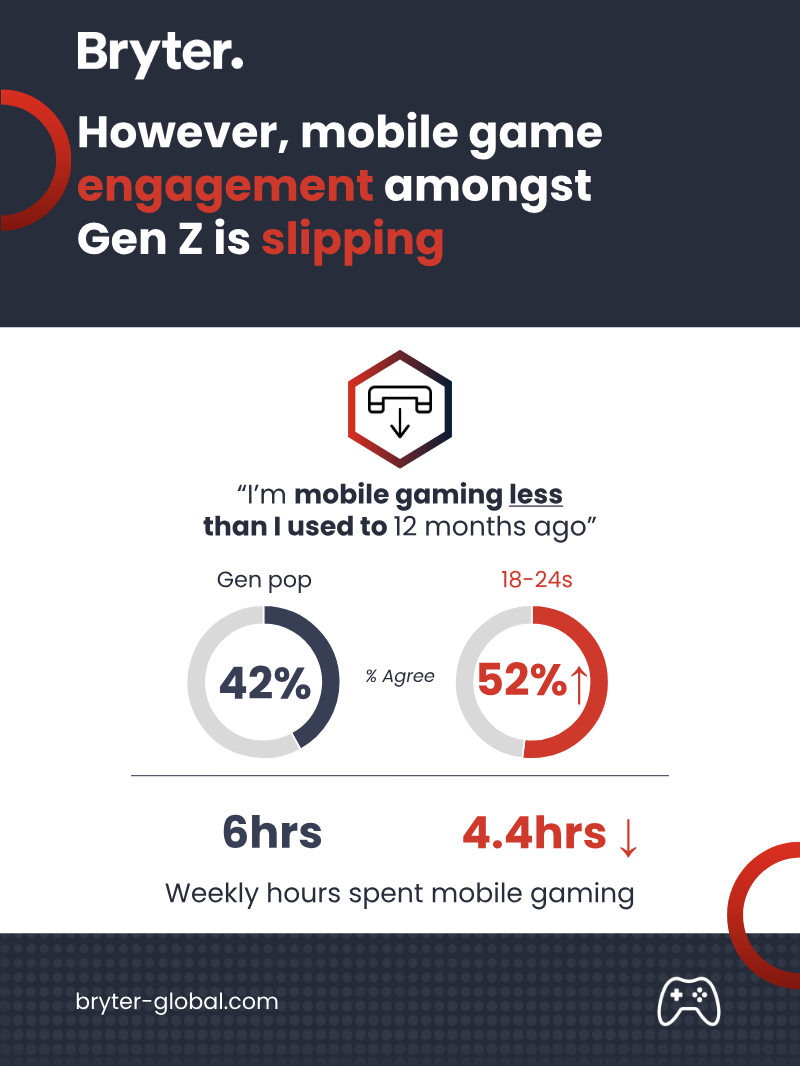
79% of 18- to 24-year-olds play mobile games at least several times a week. Their average time investment is declining to 4.4 hours per week.
Time down. Gen Z mobile gaming time is declining to an average of 4.4 hours per week.
The attention shift
Social media and short-form video displace mobile gaming time.
57% of Gen Z players report that social media, streaming, and short-form video content are actively displacing their mobile gaming time.
Monetization friction
Intrusive monetization and advertising drive abandonment.
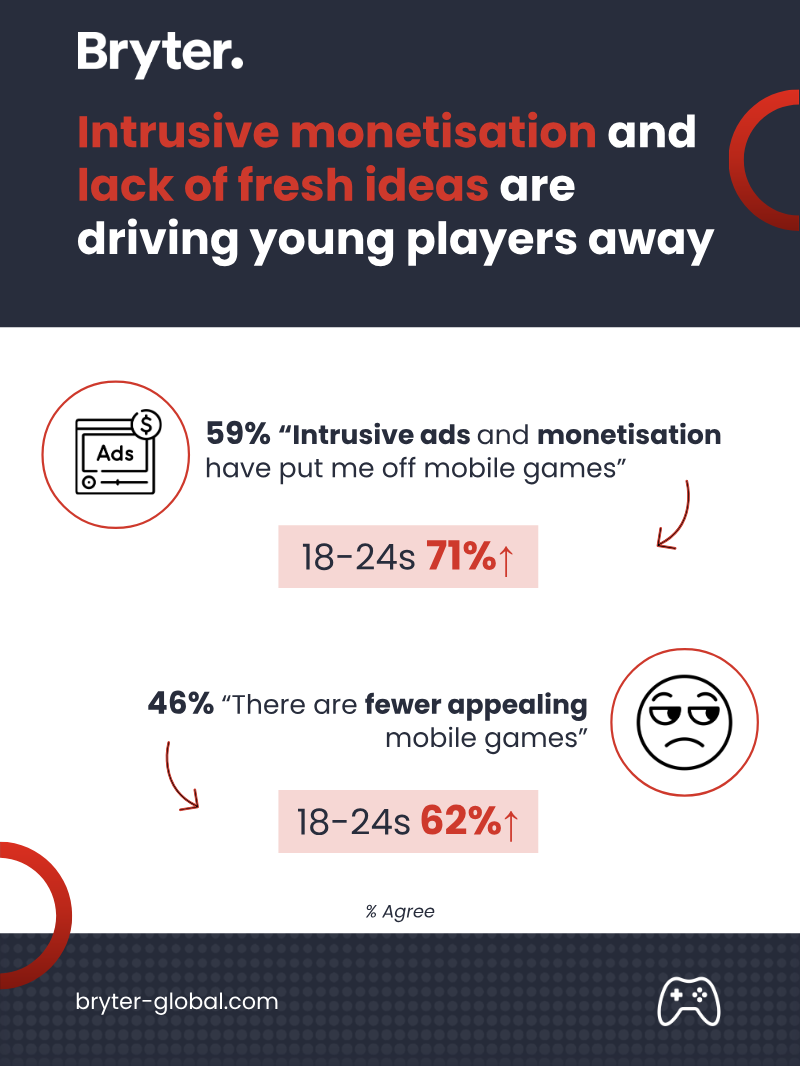
71% of UK Gen Z mobile gamers cite intrusive monetization and advertising as the primary reason for abandoning games.
Content gap
A lack of fresh content fuels rotation.
62% of Gen Z players report a lack of fresh, appealing content in the current mobile gaming market.
Discovery shift
Gen Z discovery relies on creators and peers.
Gen Z discovery is increasingly spontaneous, relying on creator content and peer recommendations rather than traditional marketing assets.
Page 5 of the report- 01Creator contentGen Z discovery relies on creator content.
- 02Peer recommendationsGen Z discovery relies on peer recommendations.
- 03Spontaneous discoveryDiscovery is increasingly spontaneous rather than traditional marketing.
Engagement design
Front-loaded rewards and fair monetization support retention.
Successful engagement strategies require front-loading immediate rewards, designing for shareable social moments, and implementing fair, non-intrusive monetization models.
Page 5 of the report- 01Front-load rewardsFront-load immediate rewards.
- 02Design shareable momentsDesign for shareable social moments.
- 03Fair monetizationImplement fair, non-intrusive monetization models.
1 / 6
Ask AI about this report