1 free read left. Create a free account for unlimited reading + AI research.
Create free accountArticle European Conference on Games Based Learning (ECGBL)
1 free read left. Create a free account for unlimited reading + AI research.
Create free accountArticleEuropean Conference on Games Based Learning (ECGBL)
The paper looks at how a past romantic breakup shapes the experience of Sayonara Wild Hearts, a pop-album arcade game about heartbreak and self-healing.
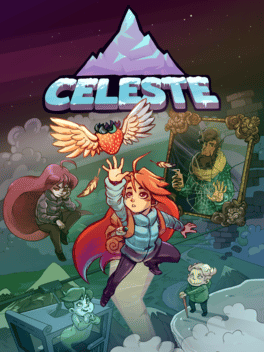
This study examines how a player's emotional closure from a past romantic relationship shapes their experience of Sayonara Wild Hearts, a pop-album arcade game centered on heartbreak, depression, and self-healing. The authors combine close gameplay analysis across the game's seven chapters, reviews of online commentary and tarot symbolism, and an anonymous Google Forms survey of 70 members of online gaming communities. Their central finding is that players who have achieved closure tend to read the game as an affirmation of resilience and self-love, while players still burdened by unresolved feelings more often experience it as catharsis, a space to confront painful emotions. The paper also positions the game's soundtrack as a subtextual narrative layer that connects players emotionally to the story, drawing comparisons to music-driven works such as Bob Dylan's Blood on the Tracks and to other emotionally focused games like Florence and Celeste.
The chapter-by-chapter analysis maps the protagonist's journey onto the stages of grief and the symbolism of the tarot arcana, with interpretations varying according to whether a player has moved past a breakup. Survey results show that 57.1% of respondents with a breakup history described the game as cathartic, while 21.4% reported connecting with its gameplay or music, and 21.5% linked it to other life events. Respondents without a breakup history reported higher engagement with the gameplay and music (65%) than with personal associations (35%).
The study's scope is narrow, and its limitations are significant. The sample of 70 self-selected community members is small and non-representative, the survey is not described in terms of validated instruments, and the conclusions about closure rest largely on interpretive reading rather than measured outcomes. The authors themselves identify therapeutic applications of games for depression and PTSD as an unexplored area for future work.
Each row is a game or company this document names, each column a document, oldest first. A mark means that document names it. Select a row to see those documents.
European Conference on Games Based Learning (ECGBL) · 2026
European Conference on Games Based Learning (ECGBL) · 2026
European Conference on Games Based Learning (ECGBL) · 2026
DiGRA · 2012