Celeste
8 documents in the library are about Celeste, from writers such as Game Developers Conference, Thomas Brush and Push to Talk, the newest from 2025. Each has a summary and key insights with the page they come from.

Help Madeline survive her inner demons on her journey to the top of Celeste Mountain, in this super-tight platformer from the creators of TowerFall. Brave hundreds of hand-crafted challenges, uncover devious secrets, and piece together the mystery of the mountain.
- Released
- Jan 25, 2018
- Developer
- Extremely OK Games
- Publisher
- Maddy Makes Games
- Genres
- Platform, Adventure, Indie
- Platforms
- Google Stadia, PlayStation 4, Linux, PC (Microsoft Windows), Mac, Xbox One, Nintendo Switch
- Links
- Wikipedia
Game data from IGDB.com
Documents about Celeste
The Art of the Follow-Up
The independent game development sector faces a significant psychological and professional challenge when creators achieve a breakout, "canonical" hit.
- Financial stability from a breakout hit often triggers creative paralysis or project cancellation rather than facilitating easier development cycles for subsequent titles.
- Canonical indie titles like Celeste, Hollow Knight, and Stardew Valley maintain consistent, high-volume monthly revenue years after release, which paradoxically intensifies the pressure on developers to replicate that performance.
- The expectation to deliver a 'bigger and better' product frequently leads to extended development delays or the total abandonment of follow-up projects.
Why Some Games Just FEEL Good For Some Reason — Mark Brown @GMTK
Game feel, often referred to as game juice, serves as a foundational element in game development that dictates how responsive, satisfying, and immersive a player’s interaction with a title is.
- Game feel is a multi-sensory experience that requires the integration of responsive movement, sound design, particle effects, and animation to create a cohesive, living environment.
- Developers should dedicate significant time to tuning core mechanics, such as jump height and gravity, in a simple prototype environment before building out complex levels.
- Sound design is a critical component of game feel that should be implemented early in development, as even simple effects provide essential feedback that informs the player's experience.
2024 GDC Main Stage: A Developer's Concert (feat. Austin Wintory and Troy Baker)
The 2024 GDC Main Stage performance serves as a testament to the artistic maturation of video game music, positioning it as a vital pillar of interactive storytelling.
- Yoko Shimamura became the first composer to receive the GDC Lifetime Achievement Award, signaling a formal industry shift toward recognizing the foundational legacy of game audio professionals.
- Modern game music has evolved from simple background accompaniment into a sophisticated tool that directly influences player agency, narrative depth, and emotional resonance.
- The 2024 GDC Main Stage performance highlighted the artistic maturation of the medium by featuring scores from titles including Hades, Celeste, God of War, and Baldur’s Gate 3.

How to Represent Mental Illness in Games
The gaming industry holds a significant moral responsibility to refine the representation of mental health, given that up to half of the global population will encounter mental health challenges during their lifetimes.
- Media portrayals of mental illness often rely on harmful tropes—such as the 'terrifying' asylum patient or the 'evil' psychotic—which discourage individuals from seeking professional help due to fear of institutionalization or personality-altering medication.
- When writing about mental health, developers should prioritize accuracy by conducting basic research, as even simple fact-checking can prevent the trivialization of complex conditions like OCD or anxiety.
- Accurate representation in games provides a significant benefit by allowing players to identify their own vulnerabilities, which can serve as a powerful tool for self-recognition and validation.
Let's make a PICO-8 Game in 30 Minutes!
PICO-8 functions as a specialized fantasy console engineered to facilitate rapid game prototyping through a highly constrained, integrated development environment.
- PICO-8 functions as a specialized fantasy console that accelerates prototyping by integrating sprite, tile, and audio editors into a single environment, bypassing the overhead of traditional game engines.
- Developers can achieve rapid, pixel-perfect prototypes by leveraging modular, state-based Lua scripting and existing open-source codebases, such as the movement logic from Celeste.
- The platform enforces strict token limits, requiring developers to prioritize efficient code and modular design to maintain functionality within the console's constraints.
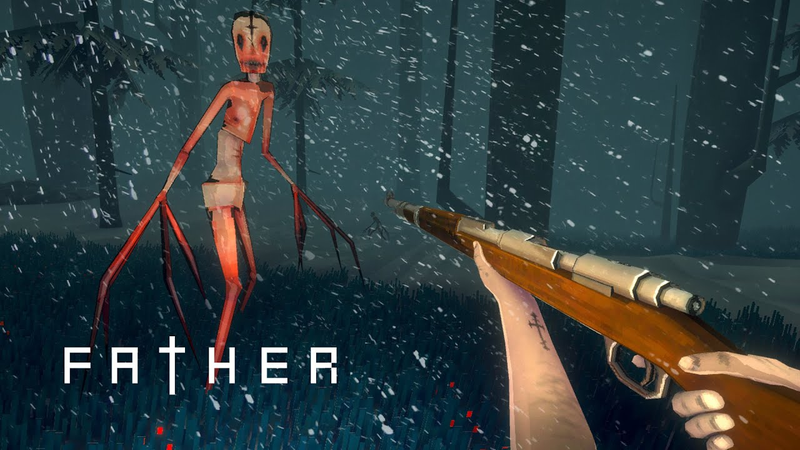
How I Made My FPS Weapons - Devlog
The primary objective of this development overview is to define and demonstrate the concept of game feel in first-person shooters.
- Game feel is defined by the immediate, responsive relationship between player input and audio-visual output, serving as the primary differentiator between mediocre and successful FPS titles.
- Weapon systems should utilize a centralized state machine paired with animator override controllers to manage weapon-specific animations, particle effects, and kickback intensities within a streamlined codebase.
- Dynamic screen shake can be achieved by integrating Cinemachine’s Perlin noise, with amplitude and frequency scaled to match the perceived power of individual firearms.

Indie Game Developers and Canada
Canada has emerged as a premier global hub for independent game development, driven by a combination of favorable government policy, a robust professional ecosystem, and high quality of life.
- Canadian provincial governments provide aggressive financial incentives for game studios, including tax credits that can reimburse up to 50 percent of employee salaries.
- Vancouver serves as the primary hub for Canadian independent game development, hosting a high density of mobile developers and indie studios.
- The Canadian ecosystem has successfully fostered high-profile titles such as Celeste and supported the growth of established studios like Klei Entertainment and Hothead Games.
Level Design Workshop: Designing Celeste
The design philosophy behind Celeste centers on a fractal narrative approach, where individual levels function as self-contained stories that dictate pacing and mechanical structure.
- Level design in Celeste is structured as a hierarchy of stories, where individual screens represent quick, simple challenges that aggregate into larger, thematic area arcs.
- The development process relies on iterative 'brute force' refinement, evidenced by the developer discarding 20 levels from a single area because they failed to align with the intended mood.
- Levels are designed to be permissive, allowing for multiple solutions and emergent gameplay, which accommodates both casual players and speedrunners who may discover unintended shortcuts.