Transcript
This week, Sony battles it out in the UK courts, Xbox shakes up its leadership team, and Matt Booty returns. Hello and welcome to the Game Business Show. It's a really bumper edition this week and I'll shortly welcome back Matt Booty to chat about the US video game industry. He's a popular guest. I can't wait to have him on. But before that, I have a load of other things to talk about. First, a couple of house messages, as we call them. We're up for an award. The Game Business up for an award. We're up for best media brand at the MCV Awards, which is exciting. I don't think I've ever been up for an award before. I normally give them out. So that's lovely. And second, yes, I have to plug the Game Business Live. have well over 70 companies coming. If you don't know what the Game Business Live is, if you've not If you've not heard, if you've somehow been hiding under a rock, it's basically three episodes of our show in front of a live audience in Los Angeles during Summer Game Fest on Monday, June 8th. Tickets are available now. We have EA's Laura Miele, former Naughty Dog co-founder
Jason Rubin, and industry analyst Shawn Layden, Matthew Ball, all coming along, all talking to me on stage. Jeff will be there as well. Paid subscribers to The Game Business can come along at no extra cost. Or you can also buy a ticket if you prefer. You can check out the gamebusiness.com for all the details. Right, rattled through that cuz we've got a lot of news to get through. And our first story is an Xbox story. They're always in the news at the moment. They've made a bunch of leadership changes to their company. Some of these people come from Core AI, which is the division that Asher Vollmer, the new CEO of Xbox, also came from. But let me read you through some of these changes. So, Jared Palmer, he was a former Core AI vice president of product and senior vice president of GitHub. He's been named VP of Xbox engineering. Former Core AI president of design, Tim Allen, has been named CVP of Xbox design. Jonathan McKay, previously a director at Meta and head of growth for ChatGPT and OpenAI, will take the role of head of growth at Xbox. Evan Chang, who has been general manager at Core AI, will be general manager of transformation at Xbox and run a team of engineers aiming to streamline
development at Xbox. A lot of this is about speeding up putting the more things out. That's part of the sort of mission statement here. And David Shloss, who was once Instacart's senior director of product and growth, again, Instacart was another former business of Asha Sharma's. He has been named head of Xbox subscriptions and cloud. There are some departures. Corporate vice president Kevin Gammill, who was part of the Xbox user experience team, is leaving. As is Roanne Sones, corporate vice president for Xbox devices and ecosystems. She'll be shifting to an advisor role after a leave of absence. Now, there were some new roles, some changes as well for some of the remaining leaders. So, Jason Ronald is now accountable for Project Helix and the Xbox platform. He has been VP of Xbox gaming devices and ecosystem. Jason Beaumont, VP of Xbox experiences, will now lead product and services. Fátima Cardoza will remain VP of gaming AI or lead a newly formed personalization organization. This has been a big thing that Asha has been mentioning in various memos. And Jennifer Creegan, VP of strategy business model insights, will now lead Xbox's media business. As part of this,
Xbox is retiring features that don't align with their goals. So, they're winding down Co-pilot on mobile and halting development of Co-pilot on console. The firm only announced that it was doing gaming Co-pilot on consoles in March. I mean, they did launch this in beta on PC, mobile, and the ROG Ally handheld in 2025. So, a lot of news coming out here from Xbox. Asha Sharma is not slowing down. Yeah. It's very much like a first 100 days thing happening here with her leadership. Certainly lots of things to talk about. There is other stories beyond Xbox. Um this one though is another regular in the game business. It's about Build a Rocket Boy. Um they reportedly laid off a further 170 employees across level design, audio, QA, and social. This is their third set of layoffs. Apparently, they've only got like 80 employees left now. That was a big big studio a year ago. It follows the disastrous launch of the action game Minds Eye in June 2025. We talked a little bit about that in this week's edition of the Game Business Show with Hakan Abra my interactive which of course had the misfortune of having to
try and publish that game. It's a miserable story that one and a bit of an old one. They've accused someone of sabotaging the business. There's been sort of spyware put in into employee computers. It's very messy. Anyway, that's the video Rocket Boy story and this is a interesting development that's all indicator of the future of the video game industry. Epic Games and Disney have launched creation tools that allow fans to develop their own Star Wars games within Fortnite. It features gameplay features, templates, and assets including characters, locations, vehicles, and weapons from previous Star Wars Fortnite collaborations. Players can now create themed islands in Unreal Editor for Fortnite around Star Wars. So, there's plenty of Star Wars games coming out and even more now coming from fans. That's that's interesting. Bunch of financial results. Remedy reported a slight drop in Q1 revenue down 1.9% to 13.1 million euros and a 23% drop in profit to 1 million euros. In more positive news, ahead of the new Control Resident game, the original Control saw a rise in sales year-on-year and has now surpassed 6 million sales. That's a lovely little story there for Control.
Roblox lowered its annual growth outlook due to the introduction of mandatory age checks and new safety measures. The firm's Q1 revenue was up 39% to 1.4 billion dollars while net losses widened to 248 million dollars compared to the 216 million dollars the year before. However, due to the introduction of new age checks and verifications, the company now expects full year revenue growth to be between 20 to 25%. Only 20 to 25%. It's the only growth. It has upset some investors and and Rock Roblox share price fell um by over 20% as a result of that news. More positive news in financial news. Capcom has revised upwards its 2025 financial year forecast due to stronger than expected sales of Resident Evil Requiem. That game has now done 7 million copies. The publisher says it will now have net sales of 1.22 billion dollars, which is up 2.8% from the previous forecast and a net income of 342 million dollars, which is up 6.9%. We talked about Capcom on the game business micro earlier in the week about genuinely just what a wonderful story that's been. If that sounded interesting
to you, you can subscribe pay become a paid subscriber to listen to our micro. It comes out every Monday. Do you consider it if you're not already a subscriber. Couple of other stories. Rebellion's Atomfall has been turned into a TV series. The post-apocalyptic game in is set in the UK's Lake District. It received solid reviews upon release last year and has since won a BAFTA for the best British game. I love this game by the way cuz Lake District is one of my holiday destinations, beautiful place. Um, not so much when it's been overrun by uh, monsters. It's also attracted to 3.7 million players, the game. It actually launched with the Xbox Game Pass subscription service from day one, which helped with that number. Wonderful little story for that. The reviews weren't amazing for it. They weren't terrible. They weren't amazing for it, but it's done well. And finally, Steam early access release of Subnautica 2 has been set for May 14th. The game is number one in the Steam wish list charts with more than 4 million wish lists. The game's release has been overshadowed a little bit because of this legal battle between publisher Krafton and the leadership of the game's developer Unknown Worlds. Krafton owns Unknown Worlds. They fired the heads of the studios, but were
forced to reinstate them by US court. So, that's uh, gloriously messy, that one. Anyway, let's move into our first big story and we actually covered this in yesterday's newsletter. It was also on the website yesterday. It's around Sony's battle in the UK courts. You may have missed this. It's not been talked about as much as I thought it would be. It's a 2.6 billion dollar class action lawsuit over PlayStation's game pricing. It actually ends this week. It ends on Friday and it could force Sony to alter its business model. Now, the lawsuit was brought about by Alex Neill, who is representing consumers that purchased PlayStation digital content between August 2016 and February 2026. Now, the action, what it it accuses PlayStation of having a near monopoly on digital games and add-on content on PlayStation platforms. The case asserts that Sony set strict terms and conditions on developers and charges a 30% commission on every purchase, which results in excessive and unfair prices. This is their words, not mine. It claims the prices are out of proportion to the costs. Sony's counter argument is that there is sufficient competition. In fact, I'm going to delve
into this a little bit. This is around that 30% commission fee, really. That's what a lot of this hinges on. The idea is it's unfair, it's created a monopoly. Is it really a monopoly? The lawsuit argues, obviously, if you have a PlayStation 5, the only place that you can buy digital games for PlayStation 5 is via the PlayStation Store. The counter to this argument is that most of the bigger PS5 games are actually still available via physical retailers. And PlayStation does have competitors in the digital space via other platforms. For instance, EA Sports FC, which is last year's best-selling UK video game, is available to be bought via physical stores, via Xbox digital store, via Nintendo digital store, via PlayStation's digital store, via Steam, via all sorts of different PCs platforms, streaming services as well. PlayStation would argue that this competition keeps us keeps it honest, basically. It can't charge more, it can't overcharge, cuz people will just end up leaving and going to another platform. Now, this case is very similar to the Kent versus Apple case that happened in the UK. Dr. Rachel Kent successfully won a lawsuit that stated Apple's 30% cut on
App Store purchases was unfair. The Competition Appeal Tribunal concluded that Apple should lower its commission rates for developers and was found liable to pay 1.5 billion pounds in damages to UK users of iPhone and iPad. The case Alex Neill has put forward is basically the same. The console and mobile is a different market. So, Apple is only one of two main competitors in the console market. It's what they call a duopoly. That's not really the case with PlayStation in video games. The biggest argument around, though, why it's different is the costs related to the PlayStation business. Unlike mobile, PlayStation is primarily a video games machine. It isn't an essential item like a mobile phone. Therefore, Sony has to really invest in getting people to buy their machine, in getting publishers and developers to make games for their machine. And this comes at a price. PS5 consoles are sold at a very low margin, even at a slight loss, actually. The idea is that if they can keep the price low on the hardware, it can make the games the console more accessible to wider audience, and the profit is made up via that fee that they charge people to make games for that platform. PlayStation's actually overall profit
margin is typically between 9 and 10%. It's not mega. Obviously, the argument should be that could PlayStation allow other stores to sell digital games via its platform, but PlayStation argues this would negatively impact the consumer experience and pose security and privacy risks for consumers. Apple and Google have made similar arguments in their cases. Here's the thing, if PlayStation lose, will it actually result in cheaper games? In theory, could do, but it might not. If PlayStation though does see its margins erode on the software side, it could choose to increase the price of the console instead, which would be a tough pill to swallow when you consider the price has only just gone up because of the shortage in RAM. UK isn't the only place where this is going on. There are early similar class action lawsuits really in early stages in Australia, Netherlands, and Portugal. There's also another one in the US. The US lawsuit focuses more on the fact that Sony no longer allows for the sale of game specific vouchers that allow other stores to sell digital PlayStation products. This is a little more interesting, actually. In this case, the court has preliminarily approved a $7.85
million settlement. However, the court has not decided if the company has actually violated any laws. It is true, maybe you should let the physical retailers sell digital codes. I guess it's a gray market, it leads to all sorts of problems, but and that's the other one. Now, the case ends this week. That's when closing arguments will be made. The Competition Appeal Tribunal typically hands down its decisions between 3 to 18 months after the conclusion of the trial. But here's my thing on this. The retail landscape for video games has shifted drastically in 15 years. And in the UK, the competition in the high street, it used to be intense. I used to work for MCV magazine, it was a retail magazine, we covered this a lot. Back in the 2000s and early 2010s, price wars would frequently flare up. I remember one around Call of Duty: Modern Warfare 2, the original Call of Duty: Modern Warfare 2 from 2009, where all the supermarkets, Morrisons, Tesco, Asda, Sainsbury's went to battle over price. And in the end, you could buy Call of Duty: Modern Warfare 2 on the day it came out for £26 from Sainsbury's. That was half the price on the day it came out. Now, the retailer lost significant
money on that game, and that is obviously an extreme example. But it was common that most games would have a few pounds shaved off them at most stores cuz they're all competing with each other. And there was also things like pre-owned. Most major retailers, including some of the supermarkets, would accept trade-ins. Publishers hated that, by the way, but consumers kind of liked it. They could buy a game, they could play it, they could take it back the next week or the week after, and then trade it in against the next one. And it's basically a system on how to keep being able to play lots of more games. Now, it's worth noting, physical retailers still exist. There's like a online retailer like I go to ShopTo. They often shave a couple of pounds off the retail price as well. And there are second-hand game stores still. In fact, CEX is the UK's biggest video game retail chain now. But the rise of digital has certainly impacted that physical space. There's no Blockbuster anymore. GAME doesn't have a stand-alone presence on the high street anymore. Supermarkets don't even stock games anymore. Nobody's getting Call of Duty for half price on launch day in 2026, except consumers can now get Call of Duty: Warzone for free. And there are
now things like subscription services that wasn't really there back in the days of physical. Yes, the rise of digital has taken away some old business models and old ways of of being able to buy games, but it's also brought in some new sort of value-oriented business models as well. And let's to be honest, the video game market is more competitive today than it's ever been, and pricing is part of that competition. The question is, is it fair that PlayStation charge 30%? And I think back to an interview we did last year with Frank Gibeau from Zinga. His issue with the Apple and Google 30% fee is that he wasn't getting good value for money. The various app stores simply weren't delivering the results to justify that kind of commission. On console, because Sony lose money on the hardware, because it has a super valuable audience on PlayStation, that is what that 30% commission is giving developers. That's the argument that, you know, developers are yes, they're paying a 30% fee, but that's because PlayStation gives them this audience, and this audience costs PlayStation money to cultivate and develop and grow Of course, developers would love lower fees, and with the market in the situation it is in,
games companies more than ever are looking to platform holders for help. But, that conversation isn't really what this story is about. The lawsuit says that PlayStation is abusing its position and ripping off consumers. And I think that's hard to argue. The price of PS5 games is not really any different to the price of any game on any other format. Factoring in inflation, you could argue that actually AAA game prices have gone down over the last 15 years. And if PlayStation is required to reduce its fees, what do you think will be the outcome here? Do we think we're going to get cheaper game prices, or do you think game companies are just going to take the savings and help them manage the current industry headwinds? I think that's probably more likely. But, where I think there's a genuine risk is that Sony may increase the price of PlayStation 5 again, and therefore that weakens the player base for developers. So, even if the games do end up slightly cheaper, I'm not convinced players or developers will actually be better off overall. And there are, of course, conversations to be had around store fees, platform support, and the increasing power that console makers have across the whole value chain. But, outside of a few quid for some PlayStation players, the only people I can see who really benefit from
this lawsuit are the lawyers that proposed it in the first place. But, it's a big story, and we won't know the outcome for maybe another year yet, but um it is a big story. Sorry. That's all We're 15 minutes in, and you've had enough of my voice, I know. I've had enough of it as well. So, let's bring on someone far more interesting. He is in charge of games at US data giant Acorn. He puts out the US games charts. He just reported some positive March numbers. He's got insights and views on exclusive games and subscriptions and consumer appetite. He's one of our favorite guests. He is Matt Piscatella. Hello, Matt. Welcome back to the show.
Oh, man. Hello. Thanks for You know, you've had all these incredible guests on lately and then, you know, I get an email saying, "Do you want to come back on?" I'm like, "All right." You've had far far better people on lately than me. So, thanks. I appreciate it. It's fun to be back to talk to you.
The The audience loves you. Uh too much, actually. I'm not I'm not keen on it.
I love them, too. Hello, audience. Good Glad you're here.
Yeah, I see Have you been playing Marathon? Is that what I've been following I've been stalking you a bit on BlueSky. Is it Is it been Marathon been playing?
Uh no, but I respect the hell out of it. I respect people that can play that game. I know that I am not built for that game anymore.
I admired I have to say I admired the Bluey meme from the Pomeranians are the small and hardy breed and Marathon are the small and hardy breed. I thought that's a That's a very specific crossover of people that will understand those two things, of which I am one of them. So, I I appreciate it.
We have no kids and I'm telling you Bluey is one of the best shows on television for adults, not just for kids.
Oh, yeah.
We're deep in the Bluey-verse. You know, Disneyland over here in California, where we're at, uh just opened a new like Bluey show with like Bluey picture things you can get in front of and Bluey merch and we were having a good time. We There's Bluey food. So, you know, it's it's a good
It's a good time.
Yeah, I I have to admit when the last series came out, me and my wife We do have kids, but we watched that series Bluey in bed.
Oh, yeah. Like Oh, like at the end there with the house, you're just crying and he pulls the Oh, spoilers, I know, but
Yeah, in the bonus episode. Ah, anyway.
I could go on for hours about Bluey, but that's probably not important right now.
I was actually I was planning on segueing from that into Marathon, but somehow we went into Bluey.
You know, it fits. It all fits together.
Yeah. When it comes to Marathon, I don't know if they're fanboys or certain maybe the anti-live service brigade. Um, they want me to talk about how bad it's doing. But I I'm not sure it is doing. My thing with live service games is that it's very much a marathon, right? And it's and it you start with an audience and then you build and you update and you keep adding to it and adding to it and then it's kind of on the parent company to decide whether they think there's longevity in it. Do they have the patience to wait for 1 year, 2 years, 3
years for profitability? Certainly the company has the ability to do that. Um, so I'm a bit like I almost don't have anything to say about it.
They've made a game for the real sickos and the real sickos love that game and God bless them. I'm so happy for them. Like for the for the person who loves Marathon, they love Marathon. Like you listen to the some of those cats out there. Um, you know, uh, Jeff Gerstmann or, you know, Austin Walker were talking about it the other day. Just like the way that they appreciate the craft in the way that game is made that will completely put off the mass market video game player, but man, for that real true sicko, it hits all it hits all the right buttons and and in that respect, it's a huge success. But if you're trying to compare it to say Destiny, which had a very wide mass market appeal, like no, it's not going to meet that. But perhaps it could be good enough. I mean, it's a long time to develop, a lot of cost to develop.
Yeah.
The audience size isn't massive, so, you know, does that math work? I don't know, but I think they made the game they wanted to make and it hit with that audience.
Well, then we live in a world where, you know, I wouldn't have said Dark Souls or Elden Ring is a a big mass market property and yet here we are with Elden Ring movies and with all star casts and
Yeah, it got there eventually, right?
Yeah, obviously your market data came out a couple of weeks ago and it made me happier than the February ones cuz the February winners were very sort of concentrated around you know Resident Evil and subscriptions and a few others. But I actually think for most companies it was a bit of a poor month. But March there appears to be quite a lot of winners. Like we could have picked you know Crimson Desert and more Resident Evil and Pokémon and Nintendo and and even PlayStation was up I think a little bit. It just felt a lot more positive across the board.
Yeah, it turns out when you make games that appeal to people the people will buy them which is great. A couple of big games came out and found market success really you know brought the whole
market higher. There's a couple other things in there that boosted things that you know could could turn around onto the other direction here including the PlayStation 5 price increase which really boosted PlayStation 5 hardware at the end of the month. Had the biggest week of the year the week the the announcement came out. And then subsequently had its two lowest weeks of performance since um So you know a little bit of a wait and see approach to see what the full impact of those price increases are but you know between those games and the hardware selling it was a really yeah it was a really nice month overall in terms of the market performance especially compared to last year.
Yeah, Switch 2 seemed to do well and I know it's gone from tracking 45% ahead of Switch 1 to 12% but that'll be because we've got both consoles first full Christmas in there.
Mhm.
Which I think is pretty much crucial because December's I I don't actually know but I'm assuming December's the biggest month for Nintendo normally.
Oh yeah.
That was really positive and I know I was one of the people concerned about it Uh maybe the reports of Switch 2's demise was greatly exaggerated.
A little bit. I mean, it came in ahead of expectations, especially uh with Pikopia Pokopia, I don't know how to you know, I think it's Pikopia, who the hell knows. Um that did better than many expected, including myself. It really helped the hardware. Yeah, the Switch 2 is a weird curve, right? They had all of the units and most comparable benchmarks in history did not like every other console comparable in history doesn't have full stock through its the first full 10 months of distribution like Switch 2 has. So, we had a curve that's more upfront loaded because demand got pulled forward because the units were there. Uh demand, you know, came down compared to Switch later on because of course like Switch 1 demand was catching up to supply. And then in the the holiday comp, now that we both have a, you know, each
console has a December in the can, you know, being 12% ahead after the first holidays is really good. I was expecting single digits. Um so, yeah. I mean, but it's all going to depend on the slate, right? Or uh hopefully not, but you know, what's going on in component pricing eventually will have to catch up to everybody. Uh we'll see how long it takes to catch up to Nintendo, but if we start seeing price increases on Switch 2, then things get a little bit uh hairier trying to project out.
It's interesting with Switch 2. Maybe you're the same, um but I've got a sort of old-school view of new consoles. So, I'm sitting there going, "Well, there's Mario Kart, but where's Mario? And where's Zelda? And where are these big heavy hitters that normally get in the first um year?" But I'm interesting, I ended up with two Switch 2s. I bought one myself, and Nintendo sent me one. And so, my son's been playing on Switch 2. This is first games console. And he switches between he plays a bunch of different games, but the two he plays the most he alternates between Mario Odyssey and Donkey Kong Bonanza, coincidentally.
Attaboy.
But to him, they're interchangeable,
right? He doesn't really see one as a Switch 1 game and one as a Switch 2 game. They're just Switch games. And I think I've always saw Switch 2 as a new console, and it is a new console, but I guess it's it is a continuation. And I think when you think about the lineup in in if you think with that in mind, you think Donkey Kong and Kirby Air Riders and Pikopia and they're apparently a Star Fox on the way. It kind of makes sense cuz those are brands that weren't really developed on the first console. So, it only does feel like a continuation. Like it sort of reshapes my thinking a little bit around it and you know, what the goals are. And I do wonder, you talked about the price if Nintendo does have to increase the price of Switch 2 because the I do wonder if they they do what Sony did at the beginning of this generation when they couldn't supply enough units for PS5 and they sort of went back to PS4 and they started supporting that machine more to keep that audience engaged and keep that audience playing. I do wonder if Nintendo might consider, if they have to raise the prices, if they might consider doing that as well cuz they've still got a huge audience on there that that you know, we just saw Tomodachi Life. I don't know what it did in the US, but it seems to have done quite well in Europe come out on that machine.
Yeah, you listen to that. You see that
memo from Asher Sherman and Matt Booty over at Xbox saying all the options are on the table. It's like, okay, well, all the options are always on the table. And that's not really a strategy, but I get it. But really it applies to everybody because we're in unprecedented times and all options are going to be on the table for everyone in the video game world in this new however long it's going to be issue when it comes to RAM and component prices. I mean, you have Tim Cook earlier today um say that memory costs are going to have a What do you say? An increasing impact on our business. Uh you know, we'll continue to evaluate this. So, like no one knows what the hell's going on, not even Apple. So, yeah. Like every all the options are on the table because they have to be because you know, it's we're clearly in unprecedented space and no one knows what's going to happen. But yeah, that's an option. I think everything is, right? And that's what makes forecasting so much fun in 2026.
We'll switch to you. I really think that's interesting about Switch 2. Is the US numbers seem pretty good. Japan seems excellent. The Japanese numbers seem great. Europe, it's really oddly inconsistent. Like France numbers are much lower than I would have expected. Like France is was the number one market for Switch. For Switch 2, it isn't. What is for Switch 2, and this is taking my surprise, is is the UK. There's a myth that Nintendo doesn't do well in the UK, and they do sell in the UK, but it's just comparative to other markets a bit lower. So, Switch 1 hasn't outsold Xbox 360 in the UK. It hasn't outsold Wii. It hasn't outsold PS4, but it's still done well. In fact, it's I think it's very, very close to PS4 numbers now. Um so, it's it's still a good seller. It's just not a record breaker like it is in other markets. But so, therefore to see Switch 2 the UK lead on Switch 2, it's a bit different. This the maybe it's because maybe the UK market's a little bit more hardcore. I don't know.
So, you remind me. I don't know if you remember. I'm trying to go back in my
brain. Uh way back in the day and like the NDS 3DS days, what wasn't Nintendogs like huge in France? Or was it Imagine? Like the Imagine like babies line. There were there was some some like offshoot little franchise that did exceptionally well in France. And basically what I'm saying is bring back Nintendogs. If you want to sell Switch 2s, we need Nintendogs. Let's Let's go. What are we doing here?
You know, I always loved the fact Well, back when PlayStation had a slightly more localized strategy, they made Invizimals. They made a load of Invizimal games. And I remember asking It might have been Jim Ryan. I can't remember. It was something in the European business. What is it with Invizimals? It doesn't seem to do very much. And he went, "Sells loads in Spain."
See? You know, it's a regional market even though it's global. We're still regional. So, uh Invizimals and whatever sells in France, let's do it. And you know what? Knack 3. Let's get Knack 3 for one guy in San Diego who really liked Knack 2. He'd really appreciate
it.
Uh well, you mentioned as well the PS5 bump that you got at the end of the month because of those price rises. I have to say I was mortified at those price rises.
Yeah, they're big.
You know, I was looking at GTA 6 and I thought, "Oh, we might see a influx of new console owners because I I'm of an age where all of my friends used to be gamers, but they don't have much time now, but they're all keeping an eye on GTA 6. They're all going, 'Oh,' cuz the last time they played a game may have been GTA 5, which was 13 years ago." And so, it's like this could have an impact in this space and who It's difficult to know, but I when I see those price rises, I suddenly my my expectations were dampened quite a bit.
Yeah, so like those folks, right, who don't pay a lot of attention that have heard, "Okay, well, GTA's coming," but they're not really keyed in. Like, and that's a lot of people. You know, "Oh, GTA's coming out." Now, say it's November. I mean, let's just say it's November. They say it's November, but you never know. Let's say it's November. Comes out in November, people show up and they go, "Hell, man,
GTA's finally out. I'm going to go pick one up. A thousand-dollar console?" Like, you know, there's going to be that price shock um for a lot of people. And yeah, I said a thousand dollars cuz I've just already assumed we're going to get more price increases. I hope we don't. I'm not saying we will, but it's possible. Uh you know, but these Yeah, that's a huge price increase, and we've seen an immediate impact on the demand um for PlayStation 5 hardware because of that price increase, but it could just be an issue of some demand being pulled forward, uh you know, between the announcement and the implementation of the price increase. You know, these things take time to kind of balance out. Um but, you know, consumers right now, especially in the US world wide, but in the US, we're facing a you know, our own little uh perhaps self-inflicted set of circumstances here. Uh Um, what's going on across pricing in the US in particular has made the console audience uh, really shift towards higher income households really quite rapidly. Um,
we're now like well over half of video game hardware buyers are $100,000 plus household income level. Um, you know, and the average price of a piece of hardware has gone from like $250 in 2019 and now we're probably going to exceed $500 uh, just a few years later. So, like the all the dynamics of the console market have really changed quite dramatically in these last few years and we're really now it's it's no longer like a mass market video game device. It's a video game device targeted to high income households. So, it's a it's a whole different economic picture too, which kind of blows everything up.
And the thing is there's still not really any margin on them. Like they're still selling them maybe not at a loss like they used to. They're still the razor-razorblade model to a degree going on here with PlayStation. Look at PlayStation's profit margins and you think all the money they make from all those third-party software sales, you think well, you can see where the cost is going. And yet it's still targeting at the at the sort of the rich, basically.
Yeah, and you have all these folks,
right? Who again, all the options are on the table and they're all looking at this and they're looking at the prices, they're looking at the economic picture, they're looking at the macro data and they're going, okay, well, how the hell do we guarantee a business going forward as best we can given these incredibly chaotic market conditions, right? And so, you know, now like you know, we've been chatting back and forth online, everyone's been chatting back and forth about all these different options that are all of a sudden back on the table when it comes to exclusivity or or different types of rollouts. Like, what do we do in this market to make sure that we have a a viable healthy console business? And and that's a very difficult challenge right now.
Well, you've brought it up, Matt, exclusivity. Let's chat about it because I tried to get into the data last week when this game out.
Let's finally settle the debate.
Well, I tried to.
I'm sure we can work it out.
And that was that was the least Do you provide me with some interesting consumer stats? But the data that's available is the sort of data that you can argue both cases with it. Like you can see you can very easily go
exclusivity doesn't matter and you can also very easily go it's really important to to driving hardware bases. Well, look at God of War Ragnarok and it appears at least in the UK and some of the some of the markets I've got it seemed to have a profound impact on hardware sales at that time. But then I looked at Spider-Man 2 and I'm talking UK data here. The impact was far, far less obvious and in fact FIFA 24 which came out earlier in the month was responsible for far, far, far more PS5 sales. So, if you've got an answer, Matt, do do exclusives matter or not? That'd be great cuz I I couldn't work it out myself.
Everything matters and it matters in different variants to different people. Exclusives do matter, but they don't matter as much as a lot of folks say they do. I've been I've been saying that for a while and then get yelled at about it sometimes. But it's true like it it matters to some folks, it doesn't matter to others. The Oh, and speaking of FIFA like EA Sports College Football when that showed up in the US was one of the biggest drivers of hardware we've seen in in years, right? So,
yeah, exclusives matter. It's a hearts and minds issue as Jeff Gerstmann put it on his latest podcast. He was talking about this issue, too. It's a hearts and minds issue and it's a it's a perception issue. It's a positioning issue. It's a it's a marketing and brand kind of issue even more than it is like a consumer demand one. And in the survey data that you talked about that I posted uh the full slide about which asked people, "Hey, why do you play games on console?" exclusivity was number one on the list, but it wasn't that far ahead of other things like that's where my friends are and I like buying physical discs and some of these other reasons, you know, everything matters to an extent, but that survey's also open-ended response, right? So, if you get asked that question, what do you do? Like, well, um why do I play a console? Um exclusives? I don't know, exclusives. Like, there's also a little bit of that, too. So, it's what comes to mind first, but it may not perfectly describe
motivation.
I think cross-console's right. Things are different. If you're a Nintendo player, I suspect exclusives matter a great deal, and not because they're exclusive, it's cuz you bought a Nintendo console for Nintendo games.
I play Mario.
Yeah.
They're the games that drive the hardware, the biggest games. PlayStation's probably the other end, really. You look at third parties there. I mean, I'll take a leap, and I think I think exclusives might matter to PlayStation's probably most engaged, highest spending, and most loyal players.
Yeah.
But then you get into this other question. Okay, so it matters to that group, but if they can suddenly play PS5 games on Project Helix or Steam Machines or PCs, are are PlayStation going to go, "All those loyal players might leave." Why don't you think they are? Cuz they're not very loyal if they do. And so, it's a very complicated I think the biggest thing for me, particularly with the PlayStation PC side of things, they didn't sell very well, those single-player PC games. It is because they arrived later, and they're um
expensive and
Yeah.
Some of them did better than others, of course, yeah.
Yeah. Cuz I was going through I was looking at exclusive games generally through the data. I went got to Indiana
Jones. And I know Indiana Jones is was never the biggest selling game, but actually its Steam performance was quite weak, really. And I did wonder if maybe it's just those types of games don't do quite so well on PC. Um I guess there will be exceptions to that.
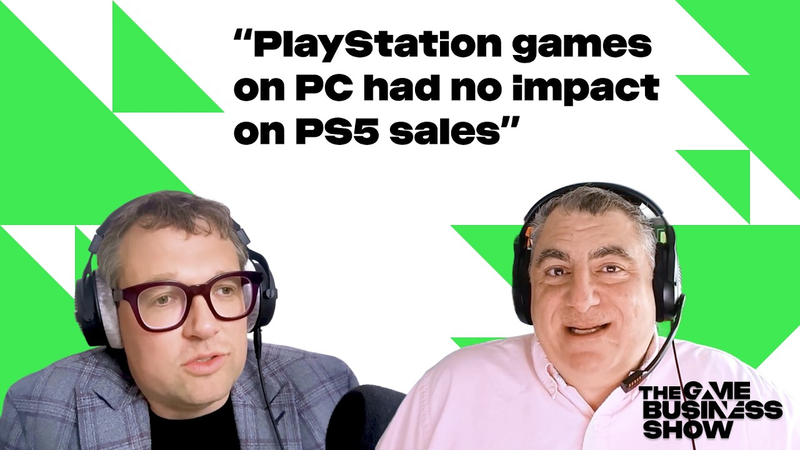
Yeah, and it gets into a question of what's an exclusive on console, right? Like a like I'm an MLB The Show freak um to my own personal detriment and lament, but I play that game a thousand hours a year. That's a console exclusive, although it's on several consoles, right? So, so what is exclusivity? But, yeah, so when PlayStation started putting their games onto PC, it had no impact at all on PlayStation sales. We didn't see a drop in PlayStation uh PlayStation 5 momentum because these games are all of a sudden available on PC later. You couldn't even tell. There was no blip whatsoever. And I really don't think when those games aren't on PC any longer, we're not going to see a positive blip. Um I don't think it matters when it comes to console demand,
personally, but I know people have a lot of other opinions on it. However, it does matter to perception, right? If your marketing message and your brand positioning is you know, we have all this cool stuff. Look at us. Okay, well, then that's a different question, right? You're trying to answer a different thing than just purely talking about demand.
Yeah. Which, you know, makes sense. You're trying to raise the overall profile of the the thing you're trying to sell. I get it. But, yeah, we I think we tend to get a little
to in the weeds on this stuff when more than 60% of people who turned on their PlayStation last year played Fortnite at least once, and there's no exclusive in like the top 20 games in that metric, then I mean
Yeah.
Yeah, how much does it really matter? I don't know.
I think I think this is more to do with the fact that they you know, they've been putting games on PC for 2 3 years. They've looked at it and they've gone, these games aren't really doing anything. We're going to end up in a situation getting these PC living room devices. Is it worth it? I think that's what
we're talking about. Is it Is it worth the investment of putting these games, you know, we have to give 30% of the money to Steam and we're doing this Is it Is it really beneficial to us? And I think I think it for a lot of games it isn't. But, Marathon did most of its units, I think, on PC and and
So did Helldivers 2. Yeah.
Yeah, and Helldivers 2 did. And Helldivers 2 even came to Xbox, did incredible things. I think we often see it as a black and white Well, at least the conversation online is like you're either your games are either exclusive or you're not. But I think it's just more going to be what makes sense.
Yeah, and when you add in things like price point, you know, if these consoles in particular like the next generation devices, if they're four figures or $1,200 say, because that's possible, then this whole conversation is kind of moot because these games are still expensive. You're going to have to find audience. And if you're selling a $1,200 box, you're not going to sell the same install to a you're not going to achieve the same install base you would when they were $600. You're just not. And like Shuhei Yoshida said the other
day, like making back some of these investment costs on making these big games, you know, you're eventually you got to go where the market is. And so like, yeah, sure. For like the next generation launch, could they say, "Okay, we're going to be exclusives and we're going to have these big exclusive games in order to establish our console, try to make sure we have momentum enough to make a full generation." I get it. But I bet within two years we're back to the games being available on more platforms to try to attract a bigger audience, but who knows. But like you said, it's it's everything matters, um, and exclusives is one part of that puzzle in in my opinion, at least.
There is a bit of a Xbox being on its big PR mission at the moment. We're changing the name from Microsoft Gaming to Xbox.
Cool.
We all called it Xbox anyway, but fine. Do wonder if maybe there might be a a test. Maybe they'll try an Xbox game, but I don't know. I think I do wonder if
there might be a somebody told me that the challenge for Xbox is less about selling hardware and actually keep getting people playing on Xbox at the moment. I think there's a drop in active users on it. I don't know if that's true or not. It's just something that someone said to me. So, I do wonder if maybe that's part of their thinking around exclusives. I don't know. But looking at the numbers that like what Forza did and Sea of Thieves did and stuff on PlayStation, I'd be quite surprised. You look at the wish list on Forza Horizon 6 and I mean I don't think PC's part of the conversation anyway, but I'd be surprised if they made that decision. They know they want to stabilize the console and I can understand exclusives might be a way of stabilizing the console. But I think they'd just be hurting themselves quite a bit by doing that.
Yeah, I'd have to agree and it goes against the the messaging of their of their initiatives of of trying to make it more open to let you play your PC games, whatever that really means. You know, we really still haven't gotten full clarification on what that means. You know, how they balance that with the concept of potential exclusive. Heck,
with the concept of paying for online play. Right? So, you know, if you're if Helix is a PC for all intents and purposes and you're trying to sell it as an a way for people to play their PC games, how do you charge for online play? How you can get away with that? Like there are all these little pieces of this equation that still have to be fleshed out because, you know, some of the stated goals and some of the business realities are in pretty stark conflict when it comes to actually executing on that vision.
Yeah, when the memo they said they want to create a platform which connects and unites players. This is my view on it. If they want to create a platform and they have a load of users on it, I think they have to put things in it that you can't get anywhere else. Otherwise, you're relying on it just being the best platform in order to get people off PlayStation, off Steam, off off whatever it is your rivals are. And when you're even putting though your games on those platforms, that feels counterintuitive to that goal of creating a platform.
On the on the other hand though, if you're looking at Helix and you know, you're saying that we this is a performance device. Like we are targeting the highest performance with it and you look at the market reality, what's going on with memory, storage, uh, GPUs, and you go, "Okay, well, hell, this thing is going to cost a heck of a lot of money, and we're going to sell, instead of selling, you know, who knows, a million and a half units, uh, in our first holiday, uh, at launch, um, you know, we sell 600k worldwide." Uh, you you know, you're you're not making games, uh, you're not making profitable games on a 600k install base, plus, you know, whatever PC reach you have, right? So, like, I don't know, the math gets really funky for me.
Yeah, when I was talking to Matthew Ball about this a couple of months ago, he said it fills him with dread. The, uh, which is, um, was, uh, uh, quite stark, um,
That's fair. I mean, yeah, man.
Like, uh, that's a um, there's a lot of uncertainty, um, and the math isn't mathing in a lot of ways. And like you mentioned earlier, like, demand is good. Demand is stable. Players are there. They're playing. People love playing games. People are buying some games a whole lot. They're not buying a lot of games a lot, but they're buying some games a whole lot. Like, we're not seeing a consumer retraction. We're seeing the economic side of it on the supply side, uh, becoming really dicey, which is driving a lot of the churn we're seeing, right? Um, the again, like, the math isn't mathing.
Yeah, well, yeah, that's what I wonder if there might be a delay to the next generation, or if maybe Nintendo start looking back, if they have to.
Yeah, I still want to put PS6 and Helix in 28, but, uh, in our forecast, but I haven't pulled the trigger yet, but I I don't know, perhaps they can do it. Like, look at what happened with Steam Machine right now. Like, we're this
thing is supposed to be locked, loaded, and ready to go. And like, we hear rumors about, you know, shipments moving across the the the world, and that type of thing, but we still don't know pricing, we and they don't know either, because there's probably a whiteboard a virtual whiteboard somewhere with a hundred different pricing and timing options with big X's through them as the realities of trying to secure RAM have continued to to mount, right? So you compound that in much bigger organizations like Sony and Microsoft that don't quite have the the agility of a valve and all of the sudden like, you know, 27 seems super aggressive right now. But hey, who knows?
Well, I think they said that they they're putting Project Helix Alpha units into a developers next year. I would be shocked if we have consoles next year. Like genuinely. I'd almost put money on that we won't.
Yeah, unless things change dramatically, right? Unless the all of the sudden, you know, we don't have wars happening.
Also, I don't really think this generation's I think if the one thing I
learned from the PS4 to the PS5 shift was actually the generation leak was relatively small. We still haven't had a Naughty Dog game. Right? We still haven't had a Ken Levine game. We haven't had a Ken Levine game since two generations ago. And I've sort of got to the point where if the games are taking longer to make them consoles, then maybe the console generations are just too short. I know that there's a sales curve going on to this, but I don't know if if people are actually clamoring for more hardware, at least not overall.
I don't think they are either, especially given market conditions and especially given pricing of the current generation. I posted a chart a few weeks ago about the average price of a PlayStation over time. And the same thing with It's the same thing. So don't get at me people about picking on one brand or the other. I was just showing you an example. But like PlayStations and Xbox Whatever. Video game consoles over time showed price decay as they tried to open up the market to more audiences. In the US this year, the average price
of the PlayStation 5 in its seventh year in market, seventh calendar year in market, could actually end up higher than the highest price ever, which was the launch average price of the PS3. That's never happened. We haven't seen price decay on PlayStation 5. We're seeing price increases over time. That's nuts. Right? So, like are people chopping at the bit to like pay a grand for a next-gen device? I don't know, man. I don't know.
Yeah, when the mass audience is like playing I'll give you an example, my son playing Mario Odyssey and Donkey Kong, he doesn't seem to notice one looks better than the other. You know, and I know that there are people out there and they're listening to this as well going, "No, they do It does matter." I don't think it does.
Uh they're probably 35 or older given um our our research. Yeah, because the younger audiences just want different things. I was talking to someone at a a major manufacturer the other day who said to me that the industry hasn't
fully internalized the fact that younger players just want different things than they do. And you can see that in what younger folks are playing like the the types of experiences that they're happy with and like they the graphical fidelity that really pushes the buttons of a a millennial or Gen X or just don't work on younger audiences. They just want different things. So, that's another interesting compounding problem as the console audience continues to age uh higher on average over time as younger players like just choose other things. Um they can play Roblox basically anywhere and they're just totally cool doing that.
Yeah, I always I actually just did a piece on Capcom. This is so somewhat somewhat to the side where I talked about I think one of the things that Capcom have done very well is they've managed to continue to appeal to the older crowd of people who grew up with these games, but they've also managed to bring in new audiences. I find the statistic on Resident Evil 2, the remake, doing like four times what the original did like mind-blowing to me cuz
it's like, well, you clearly somehow bought in loads of new players, but I think it's probably different reasons meaning it and then Yeah, there's no point to that. Um
No, but you you you make a great point in pointing out that there are some publishers that have just figured it out and they figured out their own lane. Uh Capcom being one of them of like, "Okay, this is what we're all about and this is who we're targeting." They're not trying to target everybody. Um like you don't put out a a Pragmata trying to target everyone. Like you're you're targeting a very specific type of player there. And that's been very smart. Um that type of approach. Although, you know, Pragmata is not going to sell what Resident Evil does. Um but that that approach of like, "Okay, our audience are is this type of player. We're going to give them the best version of that rather than like trying to make a live service game, right?" Trying to appeal to the Fortnite crowd, which some other publishers have tried to do and have completely fallen on their faces for it.
I spoke to Hasbro this week and I was really surprised that they haven't done
the live service thing. Cuz they've spent they they said to me they spent a billion dollars on video game development and video game investment since 2018, but none of it's been in like I mean, I know they've done things like Monopoly Go with Scopely and stuff, but then none of it's been in they've not put invested themselves in live service. They've gone very specifically into D&D and Baldur's Gate and Warlock and I think their biggest most ambitious things is Exodus. I actually said to the CEO, I was like, "I'm surprised a company like Hasbro I think would would be looking at that big fancy Fortnite number and go, 'How do we chase that?'" And but what became quite apparent is the CEO of Hasbro gets video games.
That's great.
He understands that ultimately, yes, they're playing in a market that has a slower ceiling, but you're more likely to have success. That's why when we talk about all these big companies chasing those those like the Warner Brothers of the world chasing those fancy live service numbers, I do get the impression it's cuz the people making those decisions are not they don't live it like we do. They know how hard it hurt know what they're walking into.
That was again an aside. Pragmata, I don't know if you've got this yet, but I was really in Europe the second week sales were really good. Like the first week sales were great, but the second week sales normally I don't know what it's like in the US, but we normally see a really big drop. And there was a drop in the second week. Wasn't anywhere near what I'm used to seeing. I think that So I guess then there was a big word of mouth benefit there on them on that game. I I've not played it yet. I've got a copy, but it seems to have done remarkably well. I think for what looks like product number three or whatever the old Capcom five game was from the GameCube.
Yeah, I'm getting our week two data later today. We're a little bit slower cuz we count everything on every finger and tell. I'm looking forward to that too. Yeah, the word of mouth has been really good on that game and I think over time especially as the price kind of gets promoted over time that should continue to do pretty well. I think it's going to be a one of those longer tail especially for a single player game. Longer tail
type experiences, but we'll see. But yeah, it's it's good to see a new IP get positive consumer response. Cuz we don't get enough of those really.
I just feel like I mean then I it was in development for a long time. It was delayed loads. I'm sure it cost a lot lot more than it looks if you know what I mean. But I do wonder if we're moving into a world where new IP is being broken in the double A space like the Claire obscurs of the world. And then over time maybe they become triple A games. It when they you've proven an audience. It's not you've not overspent. You you know, it's $50 rather than $250 million and then you've gone right. Okay, we've we've established Pragmata. Pragmata two will won't take seven years to make and whatever and and I do I do wonder if we're sort of moving into that space. I think I talked into again Hasbro about it while talking about Exodus. I I basically said to him, "Would you make that game if Would you commission that game today?" Um like a big triple-A Mass Effect-style
new IP sci-fi shooter. And he laughed at that question.
Yeah, it's very familiar to uh back in my days at Warner Brothers when we put out Batman: Arkham Asylum, uh we put out Arkham Asylum at a time when superhero games did not did not sell.
Mhm.
Uh it had a very low goal for it. Um it would be considered more of a double-A type development now. It was a much lower budget than later versions of Arkham was. But there's a risk there, right? Because we did that. We you know, Arkham Asylum did really well. We said, "All right, let's blow this up." Arkham City, fantastic. Huge numbers, uh critical acclaim, people loved the game. And then let's go even bigger. And then with Arkham Knight, uh really pushed the budget. Uh people didn't really respond to the Batmobile as the expectation was at some folks. And then all of a sudden uh everything happened there. Um so there's a risk there, too. Uh sometimes it's really good to stay where you're successful.
You won't Andy Robinson gives me a thing,
particularly in these older days of games, that that when you have three games, the first game is like do it quickly, get the core mechanics in, make a game. The second game is put all the things you wanted to put in the first game but couldn't into the second game. And then the third game just becomes bigger, better version of the second game. And that's when it goes wrong. Cuz it's like it's it's bloody now and it's too much.
You get the second game and it hits really big and you get X million units and then they say, "All right, we got X million. Now we need X million plus 10 more. How do we do that?" Uh "I don't know. We're bigger map and Batmobile. Yeah, that'll do it."
Yeah.
And then you kind of lose the plot about what made people love your game.
Yeah.
Dead Space 3 was a similar um thing for me, I think. And there's a few of those. Few examples I think. Um, before we wrap up, um, I want to bring up because they lowered the price of Game Pass. We haven't talked about that yet. You've been obviously tracking subscription market. The numbers are going up. It seems positive.
Yeah.
So, was it necessary?
So, the number has been going up. It's
been going up primarily because of the price increases. Subscriber churn across all services, driven by the price increases, has not offset the price increase, right? So, we've seen increased spending primarily from that, but there are some additional subscribers to say Switch Online because of what Nintendo Switch 2 has been doing. And some of the MMOs have continued to be strong and even grown.
Yeah, Star Wars as you said.
So, we've had a bunch of stuff in there, but the Game Pass issue is really interesting. Um, it's a big drop. It makes sense pulling Call of Duty out because Call of Duty it had a moderate impact at launch, but didn't really impact anything long-term. It didn't make a a lick of difference on hardware sales uh, when it made it to Game Pass at least in the US. So, pulling that out makes a lot of sense. Making it more reasonably priced makes a lot of sense. Um, but that's a big percentage price drop and are you going to make up for that by this huge influx of new subscribers? Well, I resubscribed uh, for the first time since the price increase. So, I'm sample size of one. I'm I'm I'm the jerk that does that.
But, are they going to be able to make up that gap? And, you know, if instead uh, spending is further reduced, Amy Hood or I think it was Amy Hood in the earnings calls uh, signaled that they were expecting price or a revenue decline from Game Pass in the next quarter uh, because of the price increase. I could be wrong on that. Uh, someone mentioned it in the earnings. Um, but they expected uh, revenue uh, decrease from Game Pass because of the price drop. But, over time, you know, are they going to be able to build back a subscriber base uh, helped by 23 bucks because $30 is all it's just a threshold, right? Where people go, "Wait a minute. What it Hmm. 20 bucks, I'm like, no problem. It's fine. 30 bucks?" It it that seems to taken place. So, you know, uh, it should help subscriber numbers, but is it going to help push the revenue higher?
Yeah.
Does it have to? I don't know. Like, and then what difference will it really make to Call of Duty sales? I'm of the position that the impact of Game Pass on
Call of Duty sales volume was much lower than a lot of people seem to think. I think it's being used as an excuse more than anything for the performance of the game. Um, but we'll see. The proof will be this holiday, I guess,
Mhm.
on that issue.
Well, they've got GTA to go against, as well, probably. And the and the yeah.
Knock on all of the wood because, my God, that game has to come out. It has to. They have to release that game at some They have It's got to come out They've got to do it eventually. It has to come out.
Right? Every year I'll do a story saying, "What would impact GTA 6 be this year?" And the um
Yep, me too.
Well, it's a big thing with um Game Pass for me is it's kind of embarrassing in a way cuz they've lost players. So, I so I assume they've lost players. So, they've lowered the price to try and win them back. And that's hard, right? Cuz you you had them in the first place. I guess that's why they've they've made the announcement and they've made the didn't move before Forza Horizon 6, which I think is probably a big There's a big H1 title, right? You know,
something that's going to bring back some Xbox players who may have tapped out of Game Pass at that price.
Yeah, and pretty good purchase intent from our tracking. It looks pretty good. Like Lego Batman's a little bit ahead of it, but you know, Forza's tracking really well from a sentiment perspective, at least in the US. So, that's that's super positive. Um, but yeah, I think, you know, ultimately, they bet big on trying to appeal to the mass market player, right? They said, "Okay, we're going to bring Call of Duty. We're going to be Fortnite. We're going to bring all these really big mass market things to Game Pass." When in when reality, Game Pass might just be for that super dedicated player that wants to be like a enthusiast and wants to dabble in everything, whereas the average call like the average Call of Duty player plays Call of Duty, maybe Madden, maybe EA FC, and that's it. That's all they care about. Maybe Fortnite. Perhaps their positioning was misaligned to that audience. I don't know.
Well, this is the thing that interests me cuz Ashley Shallcross talks about building a flexible model for Game Pass
going forward.
Yeah, the cable bundle.
And I was wondering, what does that mean? And I thought, could it mean that, you know, you subscribe and actually get a bunch of credits you can spend on games in Game Pass? But then I also started thinking, could it be like the cable or or satellite TV model where you get a base Game Pass, very cheap one, and then you can add on retro games, and you can add on shooters, and you can add on RPGs, or whatever. You can add on like like channels, basically, packages of games that suit your style. Which over overall, if you added all the packages on, it would come to a huge number.
Yeah.
But if you were just, you know, like, I don't I don't really like RPGs. I don't really want to be spending I don't really need Skyrim and Starfield or whatever. You can sort of package that out and get a cheaper variant. I have no idea what they do there, but um
Yeah, as as someone posted somewhere, they said, "We're we're going from the Netflix of games to the Comcast bundle of games." And yeah, like, that's what it would be. Like, we
This It's all so silly. But yeah, like, pick your bundle and call the had this service. Okay, am I What am I doing?
Well, I guess the point is I think the model I think the idea of this all-you-can-eat model um probably doesn't work when people don't eat that much. That's I think that's the heart of the problem, right? We eat a lot of TV. We watch a lot of TV, and so I subscribe to all the services cuz I watch multiple TV shows a night. But I don't I think, you know, we we know the numbers on the average. You think it's your statistic, wasn't it like 60 odd percent of gamers in the US only play two new games a year.
Yeah, buy two or fewer games. Yeah, and in terms of like the the psychographic profiles like the person that like an all you can eat service is going to appeal to are you know that very enthusiast audience you're talking I don't know call it on the high end one out of every five video game players is going to kind of fit into this addressable market. Um that's really going to care about
playing that smaller game or the the that kind of indie darling whereas the mass market player is just going to play Fortnite. Like they just don't care. Um So yeah, like you know, I think they tried to make this huge umbrella to try to get to Phil's 3 billion gamers worldwide target he was talking about and you know, most of the people didn't want to be under the umbrella and now you're you know, you're trying to reposition to try to do the best you can with the people that you know, really want to play those games and you know, hopefully they can figure it out.
Yeah, hopefully there might be some people get hurt on the way but we'll see. I'm going to end on one big question though Matt this is the question I've been wanting to ask you since the start.
Uh-oh.
Spending on cases or on organizers jumped 180% what was that about?
Uh it's a switch to you thing year-on-year last year there wasn't switch to this year there is. Um cases and organizers have been doing pretty good but that's just because they weren't doing much last year. Uh
It's just kind of a fun thing that every once in a while something kind of pops up out of nowhere. There was I think I put it in the release like the the leader. Um you know, it's just one of those things like you see these anomalies because of comps issues and by June when we have a switch to comp I'm sure it'll be Oh well, it'll be back down again. So
I I don't write about the accessories market enough. I used to a lot back on my MCV days used to be a popular conversation we used to do peripherals and accessories special and we ran for everything that was coming out, but we also looked at the market data and cuz GFK is like the most minute data on like what was selling and what wasn't selling and we used to really pull it apart. I don't do it very much anymore, but so when I see a stat like that, I'm like just I feel nostalgic almost.
I throw those things in for like the true the true sickos of the games data like here you go. This is weird. Look at this. Knowing that like most people don't care at all, but there's a couple people out there be like oh, what the hell and so
I'm glad you I'm glad you saw that and picked up on it. That's why I do it.
I also enjoy your what games that sold one copy this year is your list.
People like that a lot.
I saw I saw connect Star Wars on there.
Yeah, people seem to like that like but somewhere out there someone found a new copy well at least the retailer reported a new copy of a Killer 7 on the GameCube sold somewhere in the US and that made people pretty. Yeah, see? That's what the internet said yesterday like where the hell they find that? I I don't I can't actually see that detail. All that data's protected at the store level like I see the aggregate. But somewhere out there
some store clerk found an old box in the in the warehouse and can I buy this and bought it for
Like there's every every month there's just these these rando games that are just like where that what the hell happened here? How was how was that even in the system still? But hey, turns out.
Matt, we've spoken for ages and I always love it because actually I didn't have that many questions this time. I just had a few topics to talk about and it's flown by.
Oh wow, look at this.
Been really fun and you know what? I know that you're I know that sometimes you're a bit fearful about the industry and I can understand I mean the the stuff around consoles do do worry me a lot. But I think one of the things I got out of March was there is a lot of people buying games and a lot of different games. Crimson Desert is very different to MLB The Show, which by the way doesn't have any relevance to me in the UK. That doesn't even That doesn't even register. We get a little bit of Madden. It sort of is sort of hovering around there, but MLB I'm like
So, baseball is all about men in pajamas trying to go home. That's all you got to know. And if you keep that in mind, it all it all works out after that.
Yeah, I think they need to adapt it to a cricket version for us. Um but the the
how cricket's good.
Um but uh I I saw Pokémon Pokkén Tournament what it did to Switch two sales and Resident Evil Requiem doing
those numbers and Slay the Spire. We didn't really mention that and what that did. Um 5 million on that and you we just had Dispatch just did 5 million. Um we've got um Yeah, obviously Claire Obscure just hit 8 million. I know it's selected games. They all sort of cover up the the numerous failures and misses that are out there, but I don't know.
No, that it's not a demand problem. Like we have the players are there. They want great games like and they're willing to buy them. Like the demand is not the problem. Our problem is the supply side in the industry. It's the cost of game developments, the cost of the consoles, cost of components, cost of PCs, like all that stuff. I mean, eventually maybe game prices go up again, maybe consoles go up again. I worry that the average consumer that's you know, the where average growth has not kept up with the average price increase over time. And as we've seen these shocks to the system particularly around gas or petrol and fuel oils and other things like
what what, you know, and we're seeing in the US in particular record credit card debt, record household debt overall. Um you know, at some point uh things break. And you know, we've seen cracks. And I I I really hope that you know things can turn around a little bit because again people love playing video games. That's you know thankfully that we still all have that and that's what really matter and we have so many talented people making games that want to make more games. Um but you know we have investors who want to you know boil the oceans to make dumb videos. I don't know man. Like it's just a really kind of wacky time. Hey oh yeah and mentioning Slay the Spire um you know we've been doing these charts forever. Uh the best selling titles charts. We're going to be moving towards a projected total market number uh for those top titles um starting next month so you know no no more um asterisks and dots around you know physical only or
whatever.
Oh really?
And we'll be moving towards a complete projected list so you know more on that in a little bit.
So you and Blake Sky did a did a this is where Crimson does it would have come we think and this is where yeah.
That's interesting.
you do things and instead of asking for permission you ask for forgiveness later. So but yeah now we're now we'll be moving to that projected top titles list so look forward to that and hopefully people will get a more accurate picture of what's selling out here in the old US of A.
Brilliant. All right Matt I look forward to that thank you for your time as always as I say you're very popular you'll be back on soon.
That's very kind I I did that's ridiculous. I really appreciate it and and thank it's always great to chat the internet's always funny too so we'll see what they say. Uh but yeah always a good time really appreciate it.
Thanks Matt. That's it for today's episode of the game business show. Thank you to Matt for joining us once again. We will be back with more news analysis insight and interviews next week. We have some really good interviews coming up I can't wait for you to listen and watch those
and we have the game business micro on Monday that is just for paid subscribers. That's where we go through the big news stories of the previous week. If you'd like to become a paid subscriber please do not only will you get the micro not only do you get a monthly market report, not only can you get a free access to the Game Business Live, um it also supports us just doing these podcasts, and we really appreciate it. So, um if you want to do that, go to the gamebusiness.com. You can also become a free subscriber by the gamebusiness.com, as well. Thank you to my producer Richard for being brilliant. But, that's it from today. Until next time. Thank you for tuning in.
Auto-generated captions from YouTube — names and numbers may be misheard.















Comments