1 free read left. Create a free account for unlimited reading + AI research.
Create free accountWhitepaper European Conference on Games Based Learning (ECGBL)
1 free read left. Create a free account for unlimited reading + AI research.
Create free accountWhitepaperEuropean Conference on Games Based Learning (ECGBL)
Railway Quest is a web-based platform for teaching concurrent and parallel programming in Java, backed by a discrete-event simulation and an embedded Unity visualization.
Trains sharing single-track sections, much like threads sharing a lock.
Railway Quest is a web-based, gamified teaching platform designed to help students learn concurrent and parallel programming in Java. Its central design choice is to model threads as trains navigating shared-resource tracks, supported by a discrete-event simulation backend and an embedded Unity visualization. The authors position the tool as addressing a gap in prior educational games, which often lack non-determinism, omit synchronization primitives such as mutexes and condition variables, or fail to connect meaningfully to real programming practice.
The evidence presented is preliminary and self-reported. In a Spring 2025 course at SUPSI with roughly 60 enrolled students, 45 (75%) completed an interim survey. Eighty-four percent agreed or strongly agreed that the platform helped them grasp concepts more easily and quickly, yielding a mean of 4.4 out of 5, the highest-rated item in the survey. In a ranking of ten learning resources, the platform placed third with 30 votes, behind guided exercises and lecture slides. Students reported improved understanding of race conditions, deadlocks, and starvation, along with better use of synchronization tools, though these conclusions rest entirely on student perception.
The authors acknowledge the limits of this design. There is no control group and no direct measurement of learning outcomes, so the findings indicate student satisfaction rather than demonstrated gains in competence. The work is situated within a body of prior research on game-based programming instruction, including studies on educational effectiveness and motivation and the work of Zhu et al. (2019, 2020) on representing parallel programming concepts in games and on learners' problem-solving strategies. Taken together, the paper offers a promising design and encouraging initial feedback, with rigorous assessment of learning effectiveness identified as the necessary next step.
Each row is a game or company this document names, each column a document, oldest first. A mark means that document names it. Select a row to see those documents.
European Conference on Games Based Learning (ECGBL) · 2025
European Conference on Games Based Learning (ECGBL) · 2025
European Conference on Games Based Learning (ECGBL) · 2025
European Conference on Games Based Learning (ECGBL) · 2025
European Conference on Games Based Learning (ECGBL) · 2025
European Conference on Games Based Learning (ECGBL) · 2025
European Conference on Games Based Learning (ECGBL) · 2025
European Conference on Games Based Learning (ECGBL) · 2025
European Conference on Games Based Learning (ECGBL) · 2025
European Conference on Games Based Learning (ECGBL) · 2025
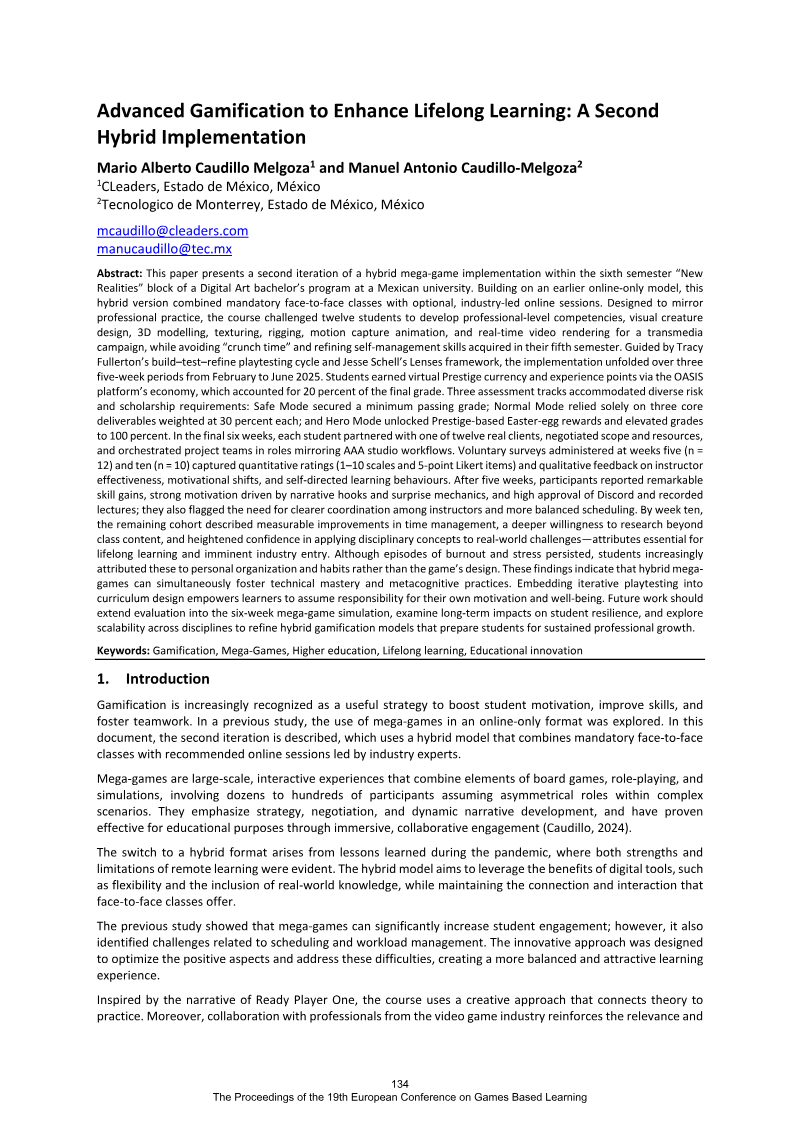
European Conference on Games Based Learning (ECGBL) · 2025
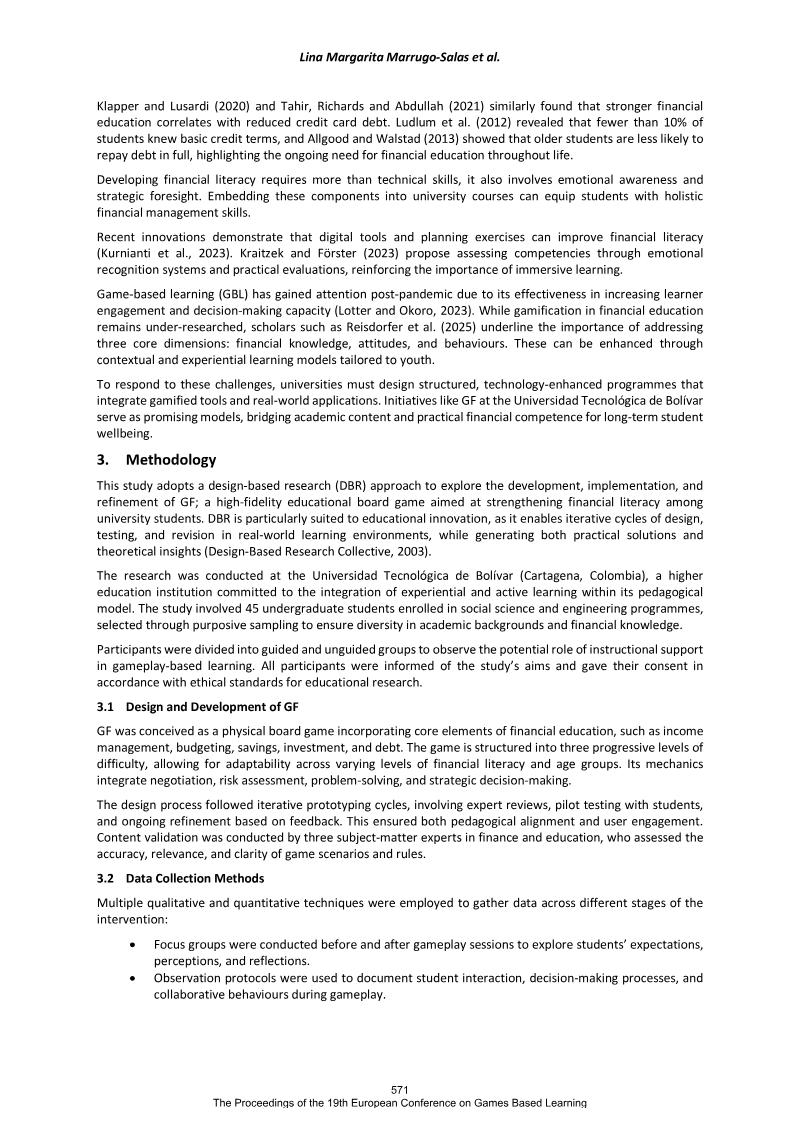
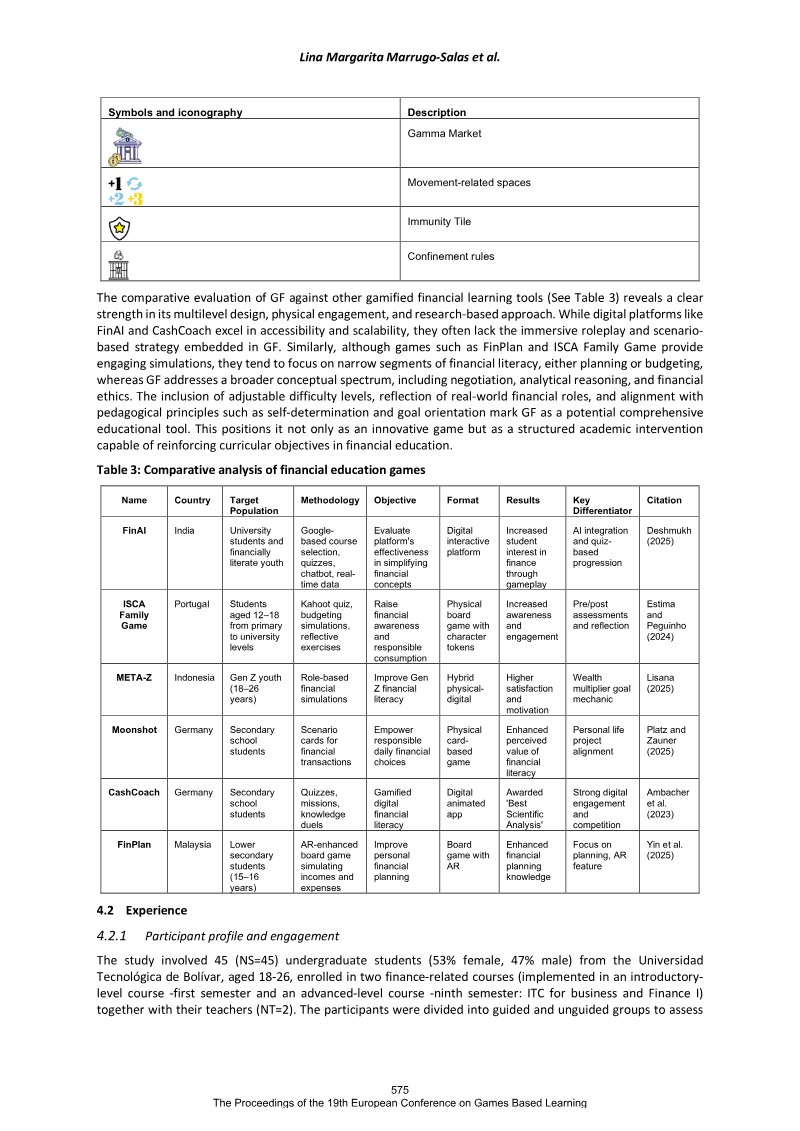
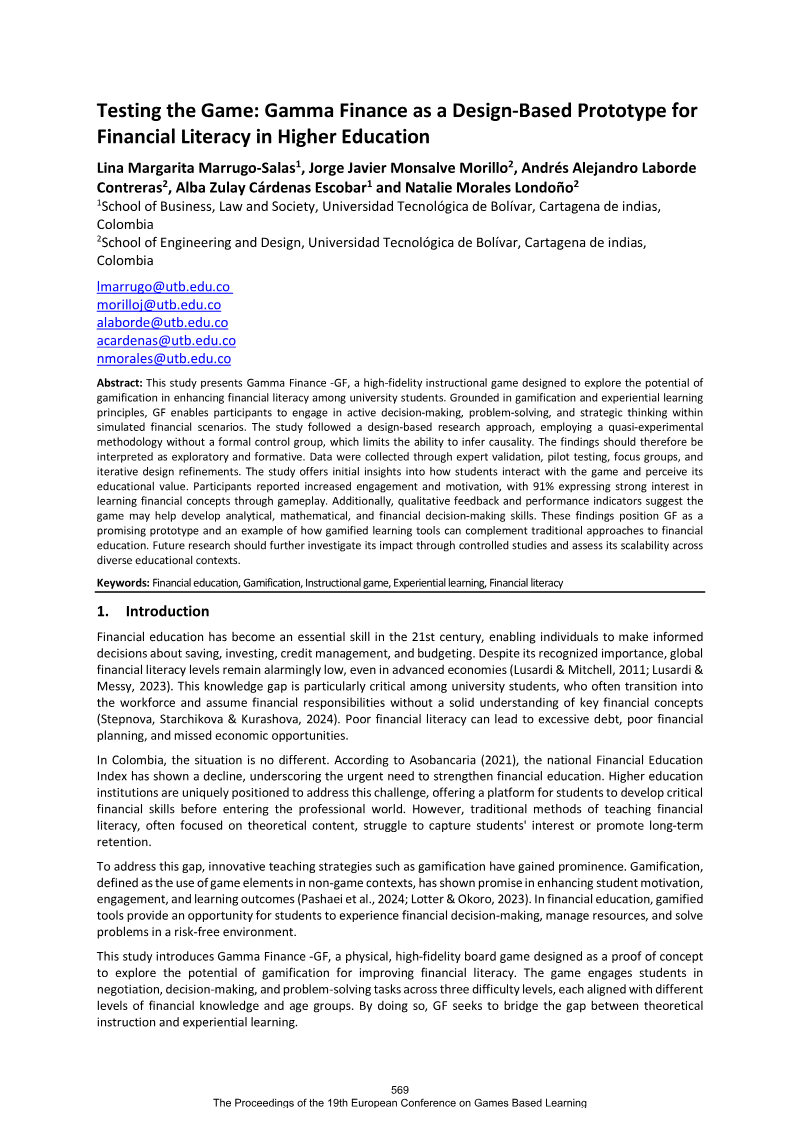
European Conference on Games Based Learning (ECGBL) · 2025
European Conference on Games Based Learning (ECGBL) · 2025