1 free read left. Create a free account for unlimited reading + AI research.
Create free accountReport DiGRA
1 free read left. Create a free account for unlimited reading + AI research.
Create free accountReportDiGRA
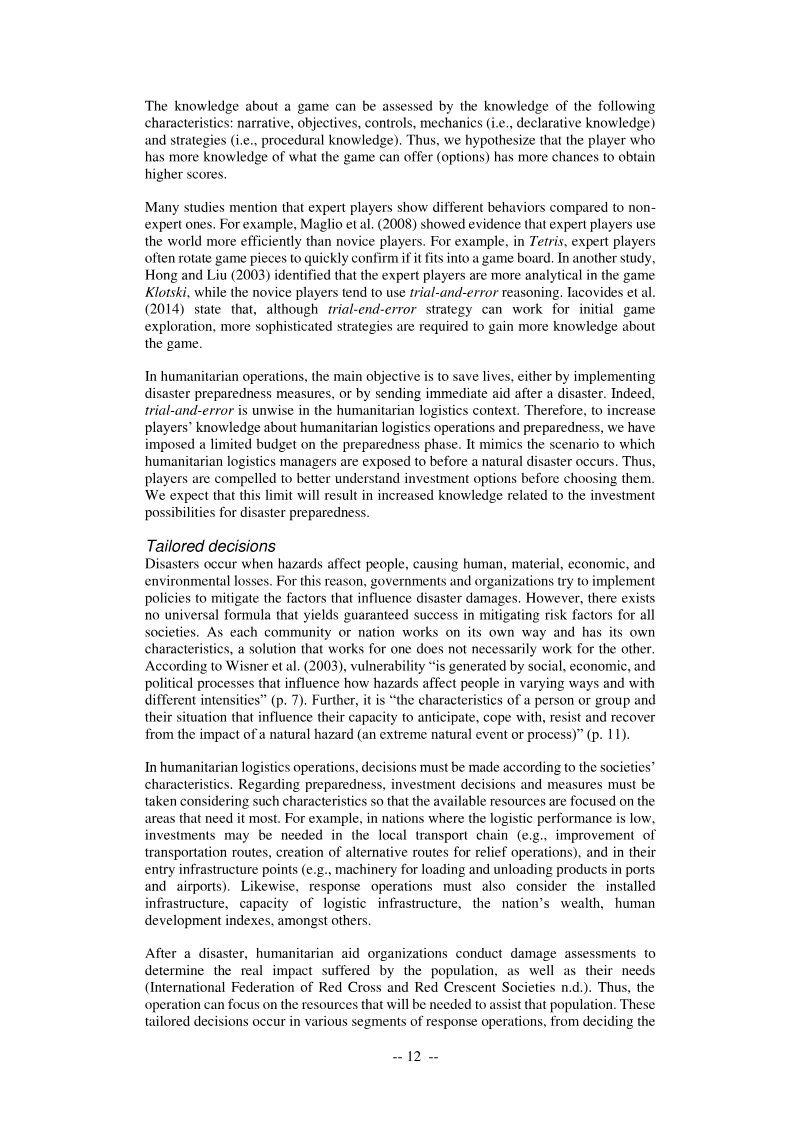
Low financial literacy is linked to poor retirement preparation, high-interest debt, and overindebtedness. The authors frame this as more pressing amid economic instability and shifting social security systems.
This paper, authored by researchers at the University of Vaasa, argues that mainstream digital games can serve as informal environments for building financial literacy, a skill set that remains weak among adults despite formal educational programs. The authors frame financial literacy as increasingly important amid economic instability and shifting social security systems, noting that low literacy is linked to poor retirement preparation, high-interest debt, and overindebtedness. They position game-based learning as a promising complement to traditional interventions, whose effectiveness has been contested.
The study's central contribution is its analysis of "economic games," titles that simulate elements of an economic system such as supply, demand, and scarcity. The authors compiled a database of nearly 100,000 commercially released digital games spanning 1963 to 2017, excluding mobile titles, and identified 1,295 economic games within it. From this set they selected 92 popular English-language titles released between 2000 and 2017, analyzing them through gameplay, manuals, reviews, forum discussions, and video playthroughs, with Mobygames serving as a classification resource.
Among the preliminary findings, economic elements appear across platforms from the 1970s onward, with a peak in economic game releases between 2000 and 2005. The vast majority of these games simulate running a business rather than personal or macroeconomic finance. The authors also note that classic board games such as Monopoly and The Game of Life embody economic design features like currency, resource management, and transactions.
The paper situates its work within game studies scholarship on learning and literacy, particularly the work of James Paul Gee, while noting that informal "sandbox" learning of economics through games has received little research attention. The authors conclude that games deserve consideration as a meaningful method for empowering players to understand economics and make more reasoned, unbiased financial decisions.

DiGRA · 2022

DiGRA · 2022



DiGRA · 2022



DiGRA · 2022

DiGRA · 2022

DiGRA · 2022



DiGRA · 2022

DiGRA · 2022

DiGRA · 2022



DiGRA · 2022



DiGRA · 2022

DiGRA · 2022
Extra Credits · 2021