1 free read left. Create a free account for unlimited reading + AI research.
Create free accountReport DiGRA
1 free read left. Create a free account for unlimited reading + AI research.
Create free accountReportDiGRA
Distilling the key insights…
This study surveys over 600 adult respondents from more than 30 countries to examine how players perceive and engage with historical games, a topic that prior research has largely confined to formal education settings involving adolescent students or undergraduates in history programs. Its central aim is to understand player practices and perspectives in informal, situated contexts where no teaching activities or explicit learning goals are present. Because fewer than a quarter of respondents are students and over half hold non-academic occupations, the work is positioned as a study of the general public rather than of a population whose primary activity is learning history, which the authors suggest gives it broader relevance than earlier studies.
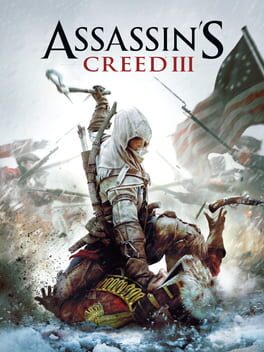
The research is organized around four objectives: outlining players' understandings of the history depicted in historical games, examining their motivations and practices across games and other media, exploring informal and incidental historical learning that occurs through digital play, and summarizing player views of games relative to other visual media. Specific questions probe whether players of strategy titles such as Civilization V regard them as more valuable for learning than action-adventure games such as Assassin's Creed III, whether incidental learning from play encourages deliberate historical inquiry in books or documentaries, and whether such relationships run in both directions. Participants are also asked to identify games they consider authentic or inauthentic and to explain why, in order to clarify which design elements players associate with educational value.
The study additionally examines the social contexts of play, including whether players engage alone or with others, online or in person, and how often they discuss historical games on forums or social media, along with the content of those exchanges. The analysis is still in progress at the time of writing, so the findings are presented as forthcoming. The authors expect the results to inform research in historical game studies and in the broader fields of games, learning, and player reception, and they acknowledge methodological limitations to be discussed alongside the completed results.
Each row is a game or company this document names, each column a document, oldest first. A mark means that document names it. Select a row to see those documents.



DiGRA · 2018

DiGRA · 2018



DiGRA · 2018



DiGRA · 2018

DiGRA · 2018

DiGRA · 2018



DiGRA · 2018



DiGRA · 2018



DiGRA · 2018



DiGRA · 2018

DiGRA · 2018



DiGRA · 2018
DiGRA · 2009