1 free read left. Create a free account for unlimited reading + AI research.
Create free accountWhitepaper European Conference on Games Based Learning (ECGBL)
1 free read left. Create a free account for unlimited reading + AI research.
Create free accountWhitepaperEuropean Conference on Games Based Learning (ECGBL)
The paper frames its pipeline as a response to the tension between pedagogical goals and practical classroom constraints. It names limited lesson time, heterogeneous devices and IT policies.
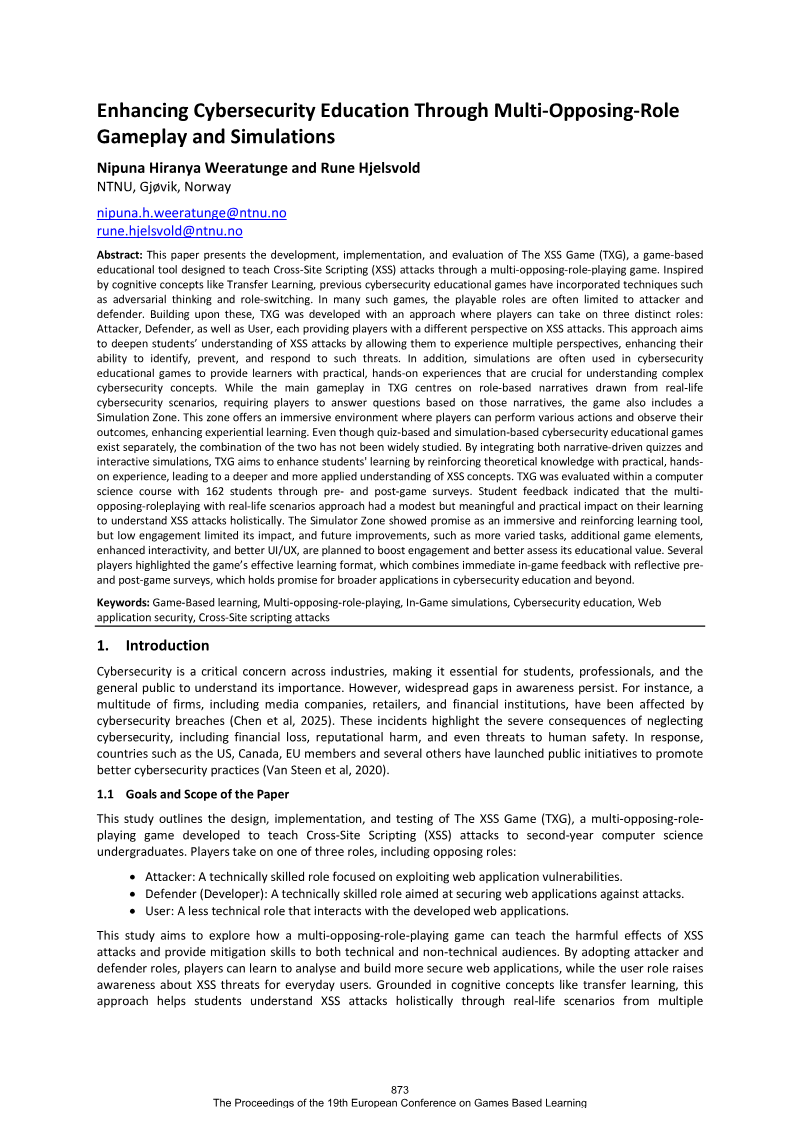
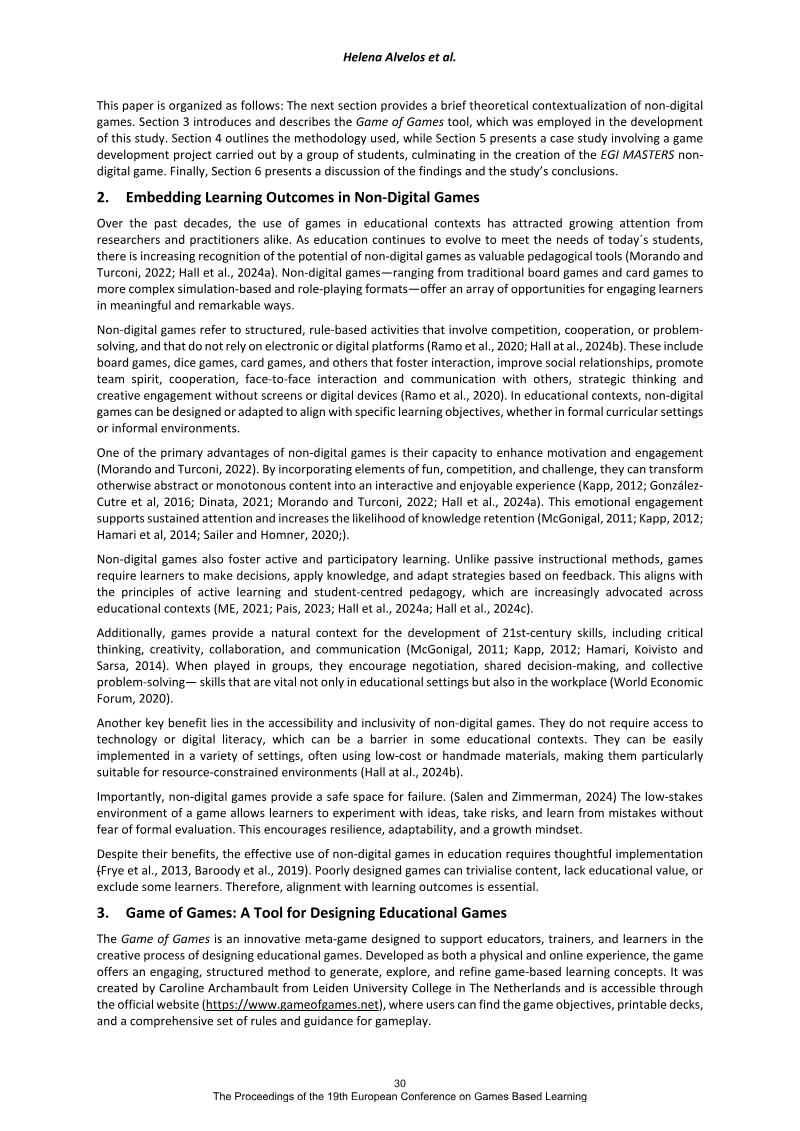
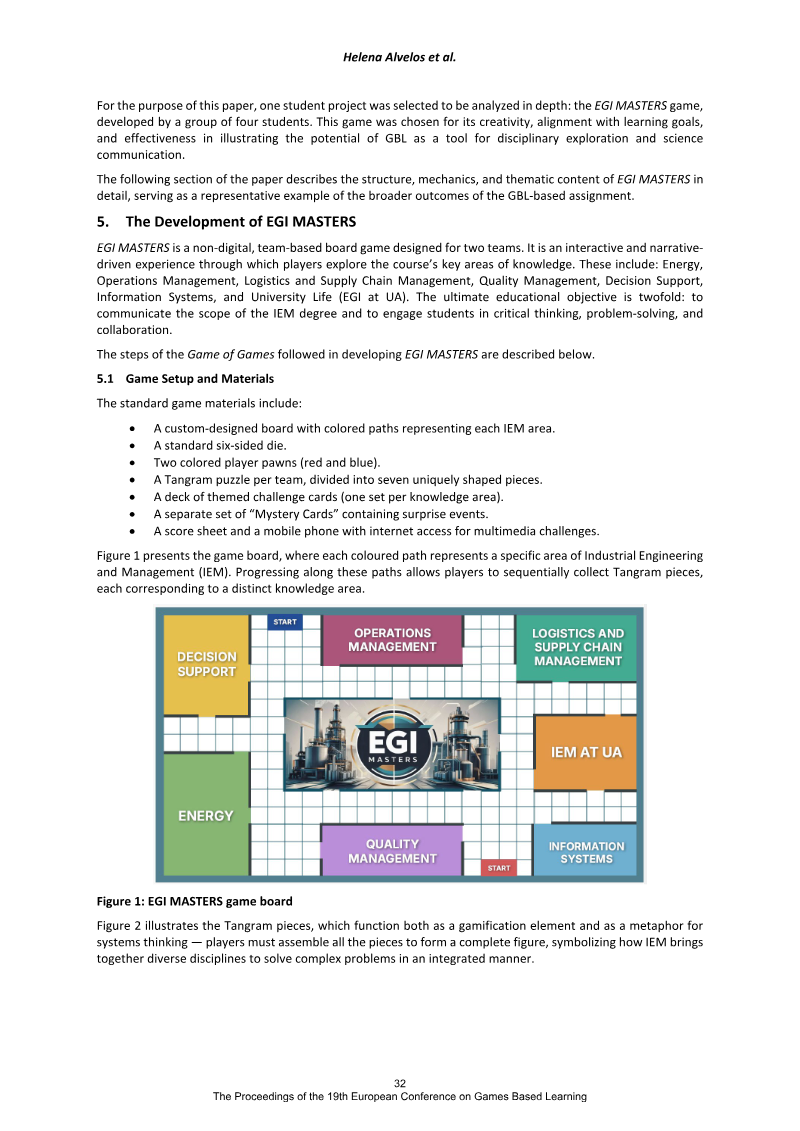
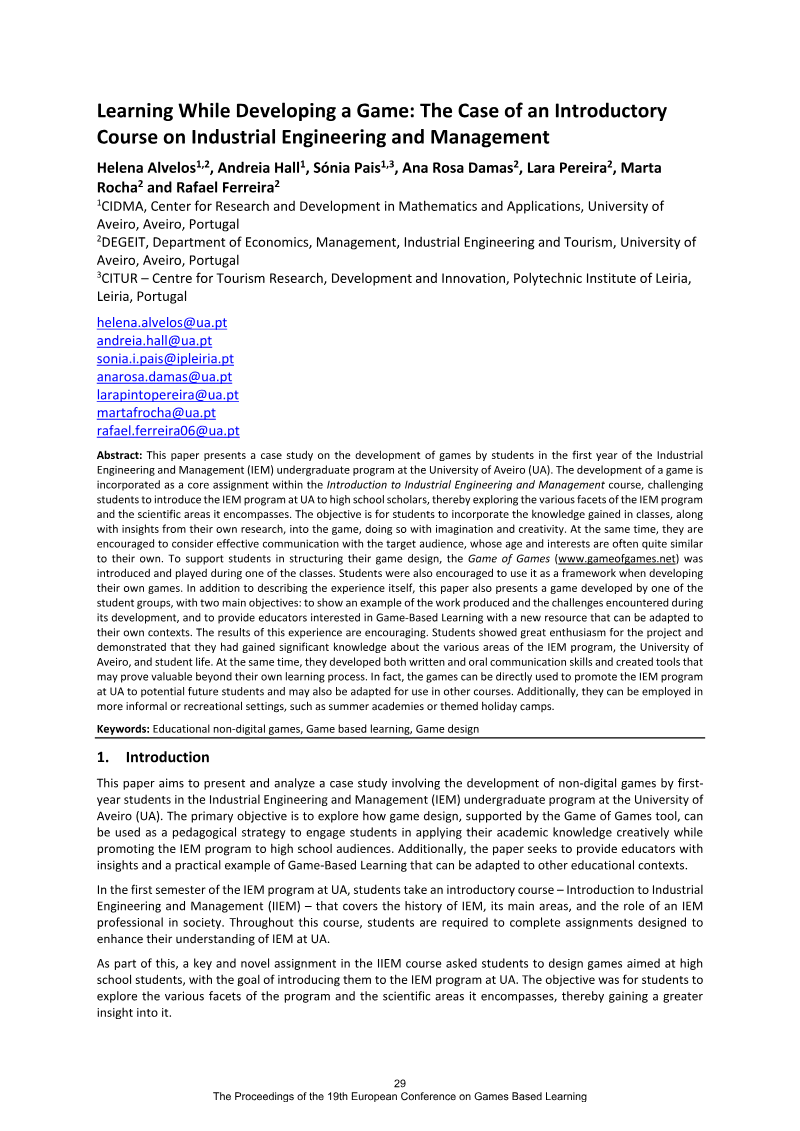
This paper presents a collaborative participatory design pipeline for building classroom-feasible educational games, demonstrated through DIETER (Digital Educational Escape Room), a modular escape room of short, tablet-ready STEM mini-games for upper secondary education. The pipeline connects subject-matter experts, game design students, didactic specialists, students, and teachers across requirements, development, and validation phases, using sprint-based cycles with defined review gates. The authors position the approach as a response to the persistent tension between pedagogical goals and the practical constraints of classrooms, such as limited lesson time, heterogeneous devices, and IT policies.
A key empirical input is an exploratory survey of Austrian upper secondary students, with a sample dominated by sixth and eighth grade learners and a gender split of 61% female and 36% male. Respondents rated smartphones most favorably for gaming (mean 2.10 on a 1-5 scale), followed by laptops (2.58), while tablets scored lower for leisure play (3.73) and specialized classroom hardware such as interactive whiteboards was strongly disliked (4.56). These results led the team to prioritize touch-first, low-threshold tablet interaction for classroom use, a choice supported by broad household tablet access reported in a German media study (87% of 12-19-year-olds).
The development process relied on workshops, creative ideation methods such as brainstorming and collective notebooks, and student prototyping within university courses. Validation workshops with teachers and lecturers assessed feasibility, setup time, group work, and fit with lesson phases. The authors report two main findings: the idea-generation process was more time-consuming than expected, and prototypes tended to replicate existing quiz formats, prompting a ban on recurring concepts in later cohorts. They also observe that players often did not recognize underlying concepts as learning content without explicit debriefing, underscoring the importance of post-game reflection and teacher-facing materials. The authors note that the originality and feasibility effects of their interventions remain to be systematically tested.



European Conference on Games Based Learning (ECGBL) · 2026



European Conference on Games Based Learning (ECGBL) · 2026



European Conference on Games Based Learning (ECGBL) · 2026



European Conference on Games Based Learning (ECGBL) · 2026



European Conference on Games Based Learning (ECGBL) · 2026



European Conference on Games Based Learning (ECGBL) · 2026



European Conference on Games Based Learning (ECGBL) · 2026



European Conference on Games Based Learning (ECGBL) · 2026



European Conference on Games Based Learning (ECGBL) · 2026



European Conference on Games Based Learning (ECGBL) · 2026



European Conference on Games Based Learning (ECGBL) · 2026



European Conference on Games Based Learning (ECGBL) · 2026



European Conference on Games Based Learning (ECGBL) · 2026



European Conference on Games Based Learning (ECGBL) · 2026



European Conference on Games Based Learning (ECGBL) · 2026