ReportNewzoo
Games, Esports, Live Streaming, Cloud and the Metaverse: 2022 Trends to Watch
202230 pages~25 min full read
Key insights
7 slides
The shift
Gaming is integrating emerging technologies and cross-platform accessibility.
The industry is undergoing a structural transformation. Cloud gaming and the metaverse are central to this evolution.
Key number
Cloud gaming enables high-end experiences on mobile and legacy consoles.
Cloud gaming is driving industry growth by bypassing hardware limitations. Publishers can reach broader audiences on mobile devices and legacy consoles.
What changed
The metaverse is evolving into a commercial ecosystem.
Significant venture capital investment supports the metaverse. Virtual real estate markets and digital fashion integration are also key drivers.
Distribution
Pressure is forcing a transition toward more open app stores.
Regulatory and consumer pressures are challenging traditional distribution gatekeepers. The industry is moving toward more open app store ecosystems.
Esports
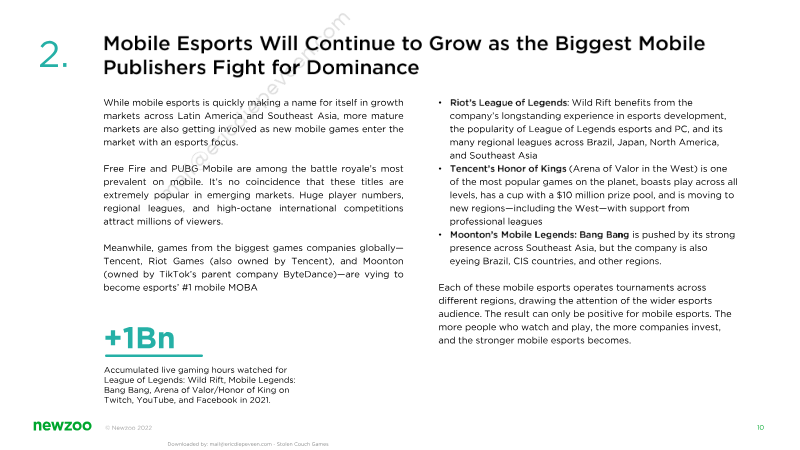
Esports organizations are prioritizing mobile-first titles and co-streaming.
Organizations are diversifying revenue streams by prioritizing mobile-first titles. They are leveraging co-streaming to maximize viewership reach.
Competition
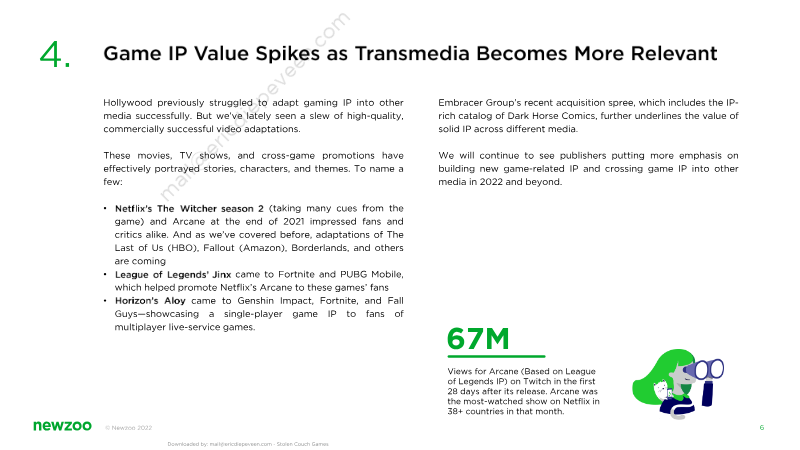
A surge in cross-media IP adaptations intensifies competition.
The industry is seeing a surge in high-quality cross-media intellectual property adaptations. A crowded release calendar intensifies competition for consumer attention.
The big picture
The industry is balancing innovative monetization with user trust.
These trends reflect a strategic effort to sustain growth across global markets. The industry is navigating the complexities of digital transformation.
1 / 7
Ask AI about this report