The Asia-Pacific and North American markets are currently tied for the global lead in game revenue at $42.6 billion each, with Asia-Pacific maintaining an 8.7% compound annual growth rate.
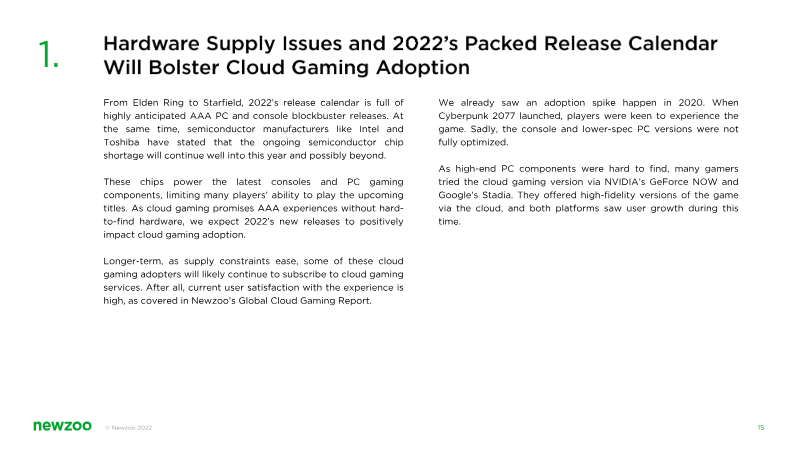
See it on page 29Cloud gaming is expanding rapidly as publishers use services like NVIDIA GeForce NOW to deliver AAA titles to legacy hardware, driven by semiconductor shortages and the need for broader platform reach.
See it on page 15Major publishers are pivoting away from explicit NFT branding due to significant player backlash and platform-level restrictions from companies like Valve, Apple, and Google, opting instead for less controversial 'NFT-like' monetization features.
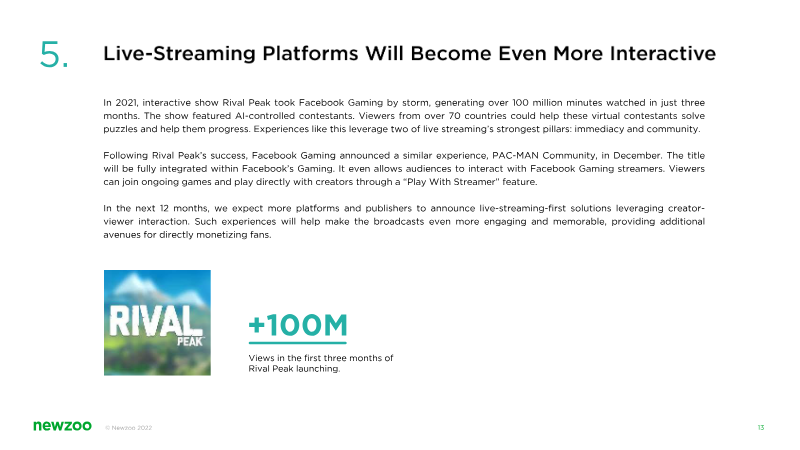
See it on page 3Interactive live-streaming content is proving to be a high-engagement driver, with titles like Rival Peak and PAC-MAN Community generating over 100 million minutes of viewership in a three-month period.
See it on page 13Emerging markets in Latin America, the Middle East, and Africa are projected to outpace the global average in revenue growth, signaling a shift in the geographic distribution of the gaming industry.
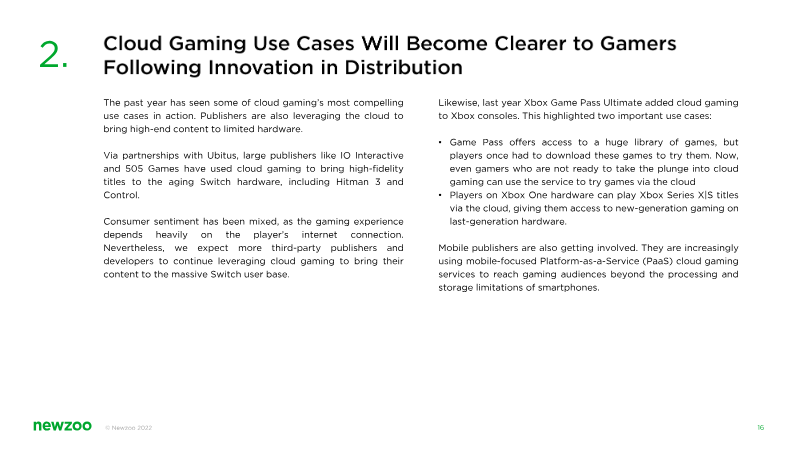
See it on page 29Subscription-based models, such as Game Pass Ultimate, are becoming central to publisher strategies for maintaining player retention and expanding access to high-end content.
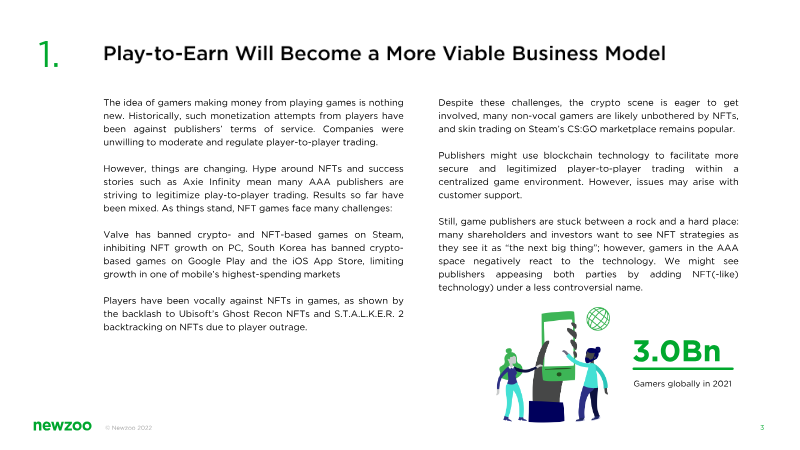
See it on page 16The analysis examines how emerging technologies and shifting consumer behaviors are reshaping the global gaming ecosystem. Blockchain‑based monetisation, particularly non‑fungible tokens (NFTs), has met with mixed reception. While the promise of secure, legitimised trading is evident in titles such as Axie Infinity, major publishers have reacted cautiously. Valve’s ban of crypto games on Steam and Ubisoft’s withdrawal from NFT initiatives after player backlash illustrate a broader industry reluctance, compounded by regulatory constraints in jurisdictions like South Korea and platform‑level anti‑steering rules from Apple and Google. Consequently, publishers are exploring “NFT‑like” features under less controversial branding to satisfy investor appetite while mitigating gamer discontent.
Live‑streaming and cloud gaming are emerging as pivotal drivers of player engagement. Interactive shows such as Facebook’s Rival Peak and PAC‑MAN Community have amassed over 100 million minutes of viewership in three months, opening new monetisation avenues. The semiconductor shortage is accelerating the migration of high‑end titles—Elden Ring, Starfield—to cloud platforms. Services like NVIDIA GeForce NOW and Google Stadia have already recorded user growth, while publishers leverage cloud to deliver AAA content on legacy hardware (e.g., Nintendo Switch) and broaden access through subscription bundles such as Game Pass Ultimate. This trend signals a shift toward broader platform reach and subscription retention.
Geographically, the Asia‑Pacific region dominates global game revenues at $42.6 billion, driven by China’s mobile‑first market and an 8.7% compound annual growth rate (CAGR). North America matches this revenue figure at $42.6 billion, with a 7.9% CAGR. Latin America, the Middle East, and Africa are projected to grow faster than the global average, increasing their share of worldwide revenues. COVID‑19’s impact on Asia‑Pacific was muted, partly due to a strong console gaming emphasis that helped sustain growth. The findings collectively underscore the importance of balancing innovative monetisation models, expanding platform accessibility, and regional market dynamics in shaping the future of gaming.