1 free read left. Create a free account for unlimited reading + AI research.
Create free accountArticle Journal of Games Criticism
1 free read left. Create a free account for unlimited reading + AI research.
Create free accountArticleJournal of Games Criticism
Distilling the key insights…
A proceduralist perspective on game design offers a critical framework for analyzing how software architecture, algorithms, and data representation influence the portrayal of gender, race, and sexuality. By moving beyond narrative and visual analysis, this approach examines the underlying code as a site of political expression. The central thesis posits that because game systems—including those utilizing procedural content generation—are authored by humans, they inevitably embed the biases and social assumptions of their creators. Consequently, a comprehensive critique of diversity in games must account for both the knowledge representation layer, which defines the system's data, and the algorithmic layer, which governs how that data is processed and experienced by the player.
The analysis highlights that even seemingly neutral or color-blind system designs often perpetuate existing biases by ignoring identity-based nuances or relying on restrictive binary models. For instance, character creation tools and social physics engines frequently limit the expression of identity through rigid Boolean variables or exclusionary data sets. Furthermore, the rise of procedural content generation introduces new challenges, as automated systems may inadvertently amplify societal prejudices if they are trained on biased data or lack sufficient cultural context. The reliance on crowdsourced information or blacklisted content to manage output underscores the necessity for designers to intentionally integrate social responsibility into the technical development process.
Ultimately, the research advocates for a more rigorous, design-centric approach to software development that treats procedural systems as active participants in the construction of playable identity. Future technical research should focus on creating tools that allow for more nuanced representations of identity, developing metrics to identify unintentional biases in generative systems, and providing AI with the cultural context necessary to navigate complex social scenarios. By scrutinizing the formal models and processes that define game environments, developers can better ensure that their systems support diverse and inclusive player experiences.
Journal of Games Criticism · 2026
Journal of Games Criticism · 2026
Journal of Games Criticism · 2025


Journal of Games Criticism · 2025



Journal of Games Criticism · 2025



Journal of Games Criticism · 2025

Journal of Games Criticism · 2024
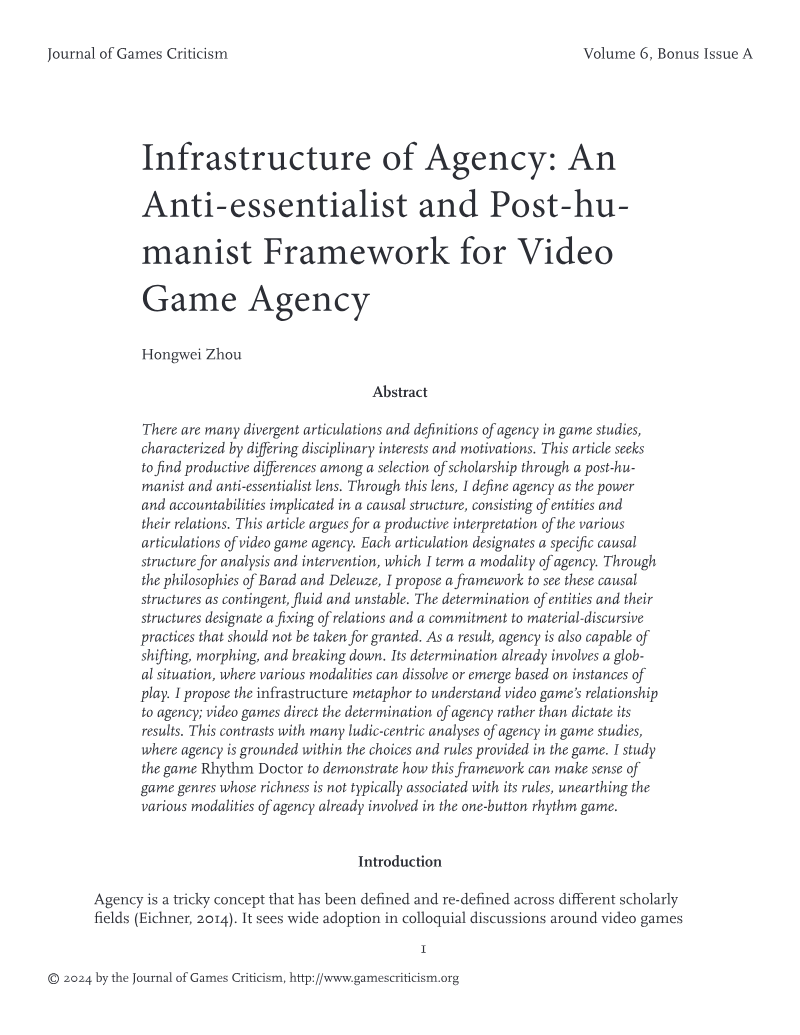
Journal of Games Criticism · 2024
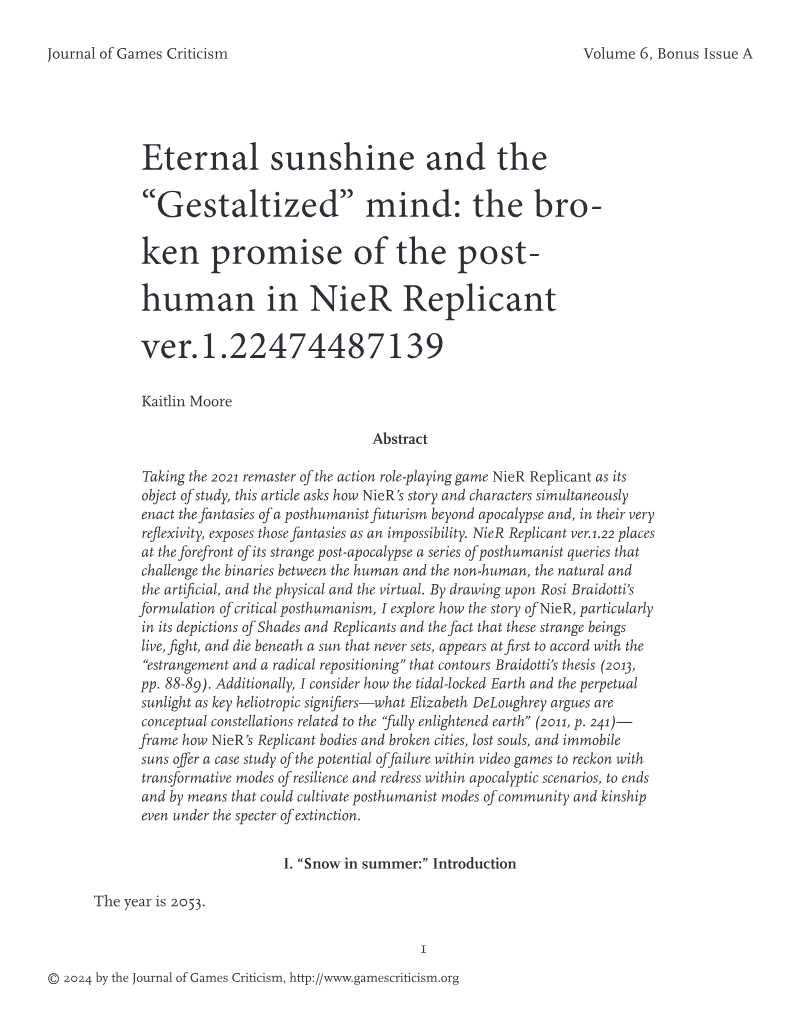
Journal of Games Criticism · 2024
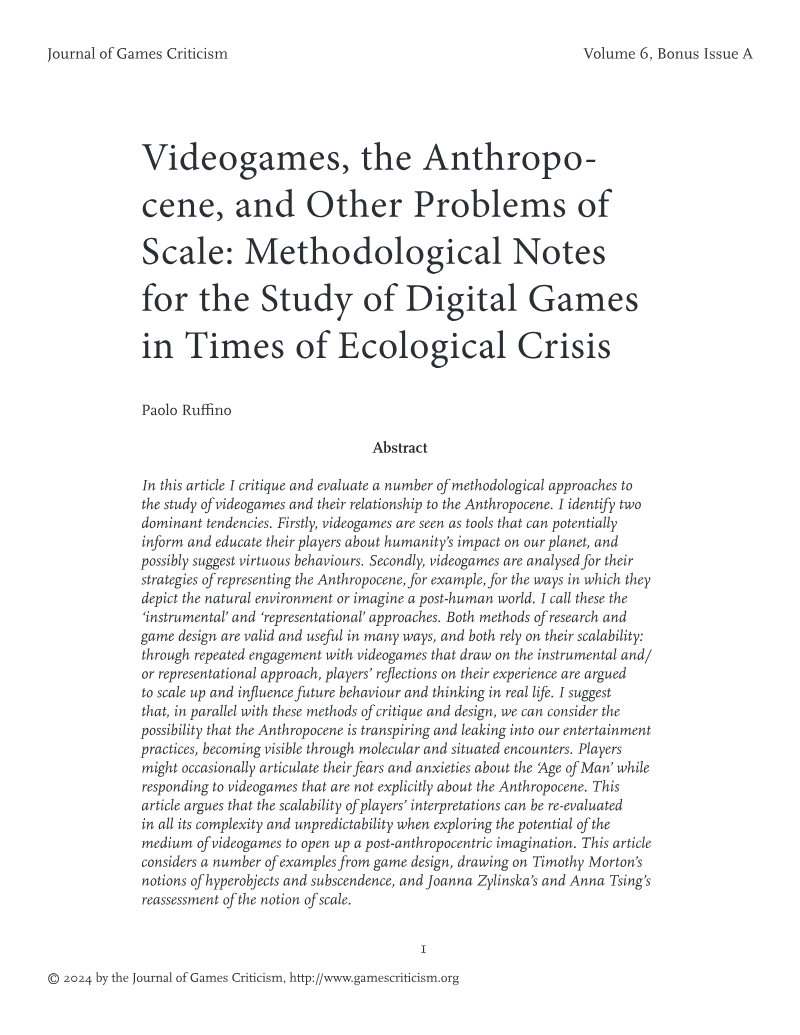
Journal of Games Criticism · 2024

Journal of Games Criticism · 2024
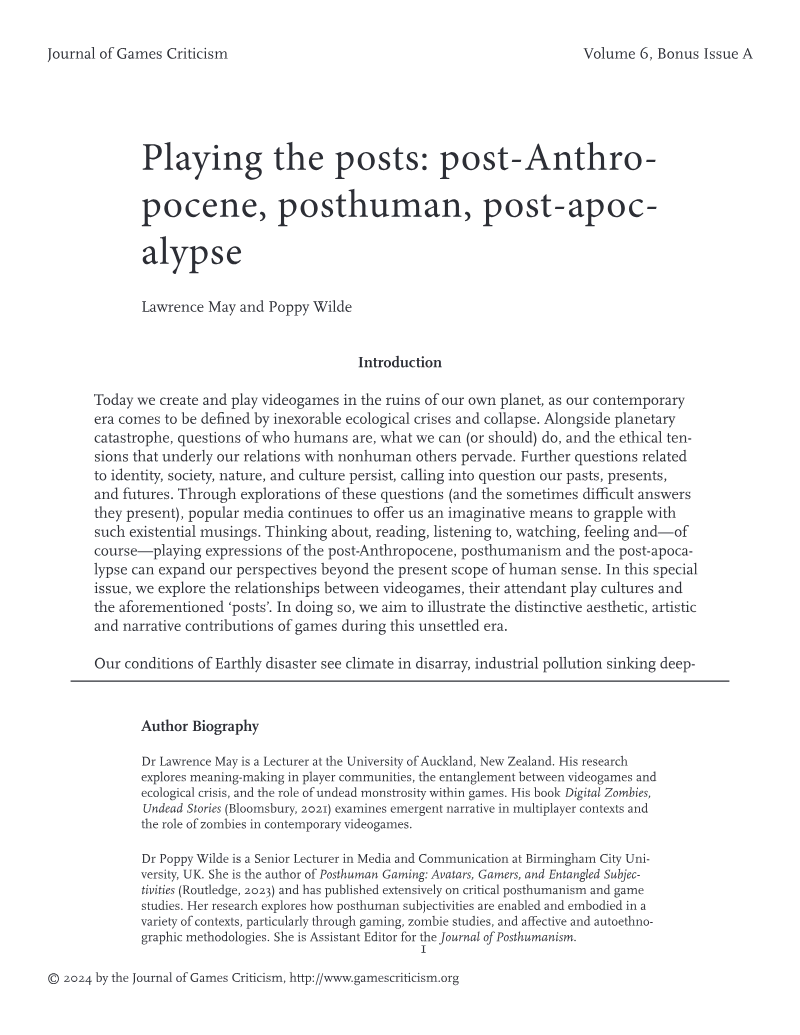
Journal of Games Criticism · 2024
G|A|M|E – The Italian Journal of Game Studies · 2026