Time
Company
Documents about Time

FTUE: Stormfall w/ added Megan Fox
The mobile strategy game Stormfall: Rise of Balur utilizes a highly structured First Time User Experience (FTUE) to onboard players, heavily relying on celebrity integration and repetitive, task-oriented mechanics.
- Stormfall: Rise of Balur utilizes celebrity integration, specifically featuring Megan Fox as an in-game tutor, to increase engagement and provide a recognizable guide during the initial tutorial phase.
- The First Time User Experience (FTUE) is designed as a highly structured, task-oriented loop that relies on 'skinner box' mechanics, such as frequent rewards of speed-ups, currency, and experience points, to reinforce player behavior.
- The onboarding process transitions from high-frequency, low-agency interactions—where directional arrows dictate every move—to an open-ended state, which serves as a critical friction point that often leads to player churn.
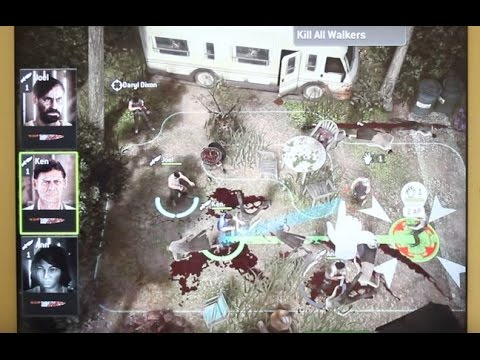
FTUE: The Walking Dead: No Man's Land
The First Time User Experience (FTUE) for the mobile strategy game The Walking Dead: No Man’s Land demonstrates a structured, multi-layered onboarding process designed to acclimate players to both turn-based combat and base-management mechanics.
- The Walking Dead: No Man’s Land utilizes a multi-layered FTUE to bridge the gap between turn-based combat and base-management mechanics, specifically targeting a mass-market audience drawn by the intellectual property.
- The combat tutorial emphasizes mission objectives over direct engagement, teaching players to manage action points and evaluate the risk-reward ratio of fighting versus reaching exit points.
- The game incorporates a base-building meta-layer inspired by Clash of Clans, introducing resource management, time-gating, and character progression to establish a long-term core loop.
Awesome Per Second - Don't Waste Time - Extra Credits
Game design should prioritize the density of high-quality experiences over total play duration, a metric defined as awesome per second.
- Game design should prioritize 'awesome per second,' a metric that emphasizes the density of high-quality experiences over total play duration.
- Developers must ruthlessly edit their projects to remove content that is merely 'good' rather than 'great' to maintain a consistent interest curve.
- The industry-wide pressure to inflate play time to justify price points often leads to the inclusion of mediocre filler content.

Snakes and Ladders - How the Meaning of an Ancient Children's Game Adapted Over Time - Extra Credits
Snakes and Ladders serves as a profound example of how game mechanics function as metaphors for cultural values and philosophical beliefs.
- Snakes and Ladders originated in India approximately 2,000 years ago as a tool for moral and religious education rather than a test of player skill.
- The game’s mechanics rely entirely on chance to reinforce the concept of fate and the karmic cycle of life, death, and rebirth.
- In its original Indian iterations, the board layout featured more vices than virtues, reflecting a spiritual philosophy where regression was more common than elevation.
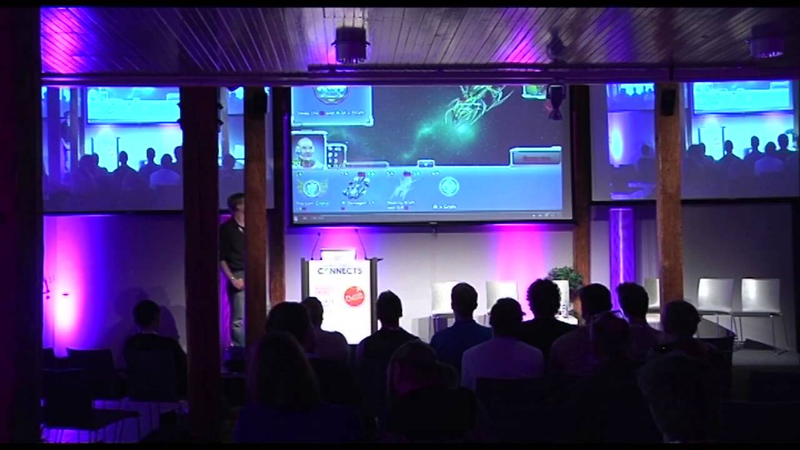
PGC Helsinki 2014: Demo Time!
The 2014 PGC Helsinki showcase highlights three distinct mobile game titles, emphasizing the diversity of development strategies within the indie sector.
- Indie developers are increasingly using soft launches in select regions to validate retention and engagement metrics before committing to global releases.
- Two Men and a Dog’s 'Zombie Catchers' achieved a 44% content completion rate during its soft launch, validating the market demand for high-quality mobile platformer-base-building hybrids.
- Hardcore Games is targeting the mobile CCG market with 'Star Admiral,' a 3D-modeled title currently in soft launch across Austria, Switzerland, and Canada that incorporates complex mechanics like energy sacrifice and tactical strike tracking.
Power Creep - The Trouble with Expansions and Time - Extra Credits
Power creep represents a significant design and economic challenge for persistent online games, occurring when new content renders existing elements obsolete through superior numerical performance.
- Power creep occurs when new content introduces superior numerical performance, rendering existing game elements obsolete and devaluing historical player investments.
- Relying on raw stat increases to drive progression often leads to the rapid abandonment of legacy content and can trigger a mass exodus of the player base.
- Designers can mitigate power creep by introducing 'incomparables,' which are gameplay elements that provide distinct, non-numeric utility rather than simple stat upgrades.