Santa Monica Studio
Company
Documents about Santa Monica Studio
'God of War Ragnarök': Building the UI for a AAA Sequel
The development of the user interface for God of War Ragnarök centered on balancing high-fidelity aesthetic goals with the rigorous technical constraints of a AAA sequel.
- To ensure accessibility and readability, the UI team established a minimum body font size of 24 points and implemented comprehensive text scaling options, which were highly utilized by players.
- The UI team utilized a dynamic layout system from the start of production to prevent localization issues, ensuring that text elements could adapt to different languages without requiring manual fixes or overlapping.
- When faced with memory constraints regarding 4K video streaming, the team used a 720p video asset stretched to fill the screen, leveraging a 'campfire' visual aesthetic to mask the lower resolution.
Breaking Barriers: Combat Accessibility in 'God of War Ragnarök'
The development of God of War Ragnarök prioritized the removal of unintentional barriers for players with motor and sensory disabilities, establishing a framework where accessibility features enhance rather than diminish the core combat experience.
- Accessibility features should be implemented by focusing on low-conflict, high-value tasks first, such as expanded control remapping and automating contextual traversal, to build internal confidence and demonstrate player value.
- Designers should avoid building overly specific 'assists' based on assumptions of player intent, opting instead for generic models that allow players to maintain agency, such as sub-target aim flicking that functions regardless of lock-on status.
- Accessibility features can conflict with intended design, such as mini-boss checkpoints that inadvertently trivialize combat; these should be placed in dedicated accessibility menus to ensure they are used by players who truly need them rather than those simply seeking an easier experience.
2023 Game Developers Choice Awards (GDCA)
The 23rd annual Game Developers Choice Awards served as a comprehensive celebration of both contemporary industry achievements and the historical foundations of interactive entertainment.
- Elden Ring dominated the 23rd annual Game Developers Choice Awards, winning Game of the Year, Best Design, and Best Visual Art.
- God of War Ragnarök secured three major awards, specifically for Best Audio, Best Technology, and the Audience Award.
- The industry recognized historical contributions by awarding the Lifetime Achievement Award to John Romero for his work in the first-person shooter genre.
Playtesting 'God of War'
The development of God of War (2018) serves as a case study for integrating rigorous user research into the creative process to overcome significant design uncertainty.
- Establish a consistent playtesting schedule and stick to it, as frequent cancellations create instability and undermine team confidence in the process.
- Categorize playtests into two distinct types: usability tests to validate mechanical function and unguided playthroughs to validate the intended emotional fantasy or player experience.
- Use a combination of undirected feedback (interviews and observations) and directed feedback (explicit questions) to extract actionable data, ensuring the team considers the entire player perspective rather than isolated comments.
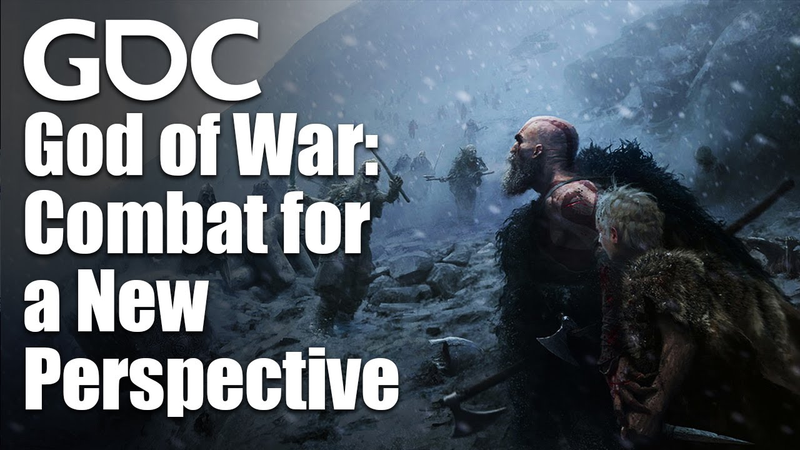
Evolving Combat in 'God of War' for a New Perspective
The transition of the God of War franchise to an intimate, over-the-shoulder camera perspective necessitated a complete overhaul of combat mechanics to preserve the series' signature offensive power fantasy.
- To maintain an offensive power fantasy with a restricted over-the-shoulder camera, developers implemented a data-driven zone constraint model that forces enemies into a predictable crescent-shaped area in front of the player.
- An aggression token system limits the number of active threats simultaneously engaging the player, preventing them from being overwhelmed by off-screen enemies.
- Combat fluidity is maintained through a hybrid targeting approach that combines analog stick input with motion warping, removing the necessity for traditional lock-on mechanics.
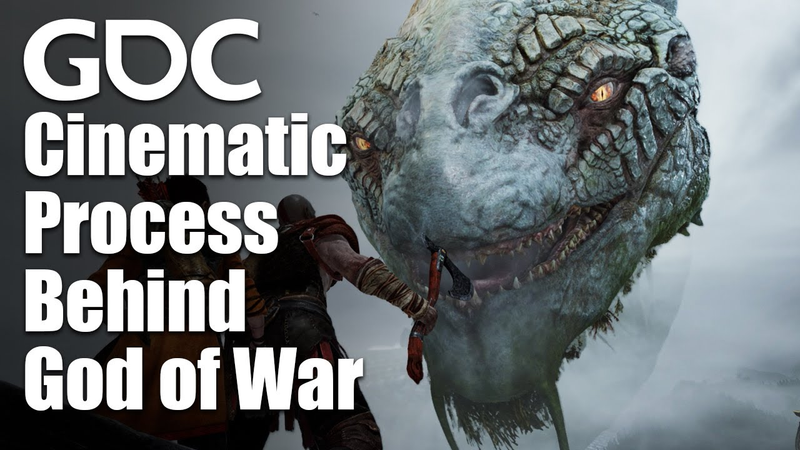
Keyframes and Cardboard Props: The Cinematic Process Behind 'God of War'
The production of God of War centers on the technical and creative challenge of maintaining a continuous, uninterrupted camera perspective throughout the entire game.
- The development team achieved a continuous, uninterrupted camera perspective by replacing traditional layout methods with a documentary-style staging process.
- Pre-production utilized live-action rehearsals, handheld camera tests, and cardboard props to establish spatial scale and character motivation before committing to motion capture.
- A custom virtual camera pipeline was implemented to bridge film-industry techniques with game-specific animation constraints, utilizing automation tools to translate data between proprietary rigs and standard software.
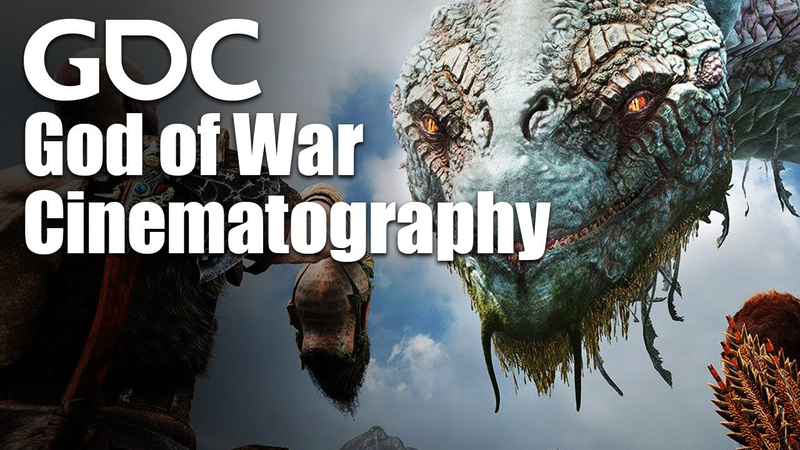
Creating a Deeper Emotional Connection: The Cinematography of God of War
The development of God of War centers on the pursuit of empathetic immersion, a state where players move beyond mere sympathy for characters to experience the narrative as a personal, lived journey.
- The development team utilized a continuous, no-cut camera technique to eliminate traditional editing, preventing the mental disconnects that typically disrupt player immersion.
- To achieve a documentary-style aesthetic, the team implemented a 'first-and-a-half-person' perspective that anchors the player directly to the protagonist’s internal emotional experience.
- The production relied on sophisticated technical maneuvers, such as invisible zooms and precise character blocking, to replicate the impact of film editing within a single, unbroken shot.
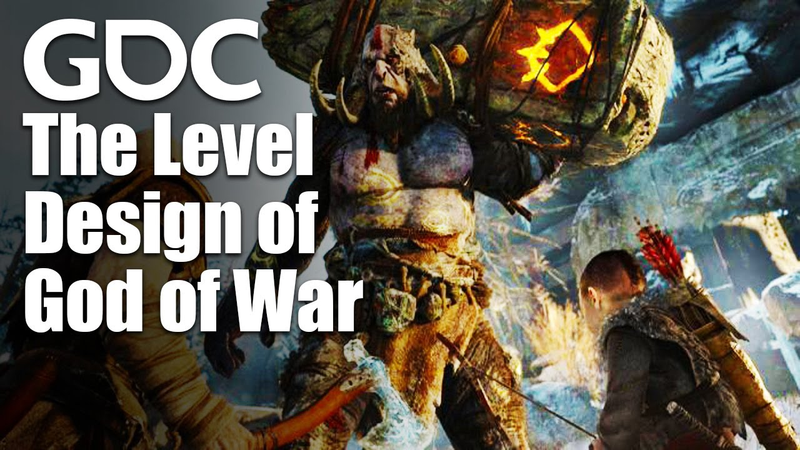
The Level Design of God of War
The transition of the God of War franchise from a fixed-camera action series to an immersive, modern experience is anchored by three core pillars: combat, narrative, and exploration.
- The game’s design is built on three core pillars—combat, narrative, and exploration—which serve as a consistent lens to ensure environmental cohesion and seamless transitions between gameplay and cinematic storytelling.
- Development teams utilized standardized architectural metrics based on specific unit values for movement and spacing to ensure technical consistency and creative flexibility across the entire game world.
- To maintain pacing and prevent repetition, the design team introduced new mechanics as thematic anchors every 90 to 120 minutes.
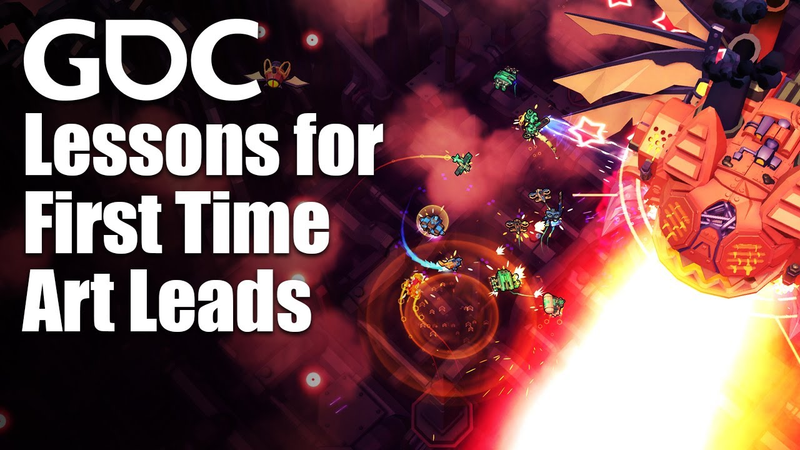
What They Don't Teach You in Art School: Lessons for First Time Leads
Transitioning from an individual contributor to a team lead in the game industry requires a fundamental shift in focus from personal artistic output to the cultivation of team health and project stability.
- Transitioning to a lead role requires shifting focus from personal artistic output to service-oriented management, prioritizing team health and project stability over individual technical tasks.
- Operational efficiency is maintained by using rigorous data collection for scheduling, detailed asset checklists for cross-departmental handoffs, and strict time limits on brainstorming sessions.
- An optimal team size is approximately five members, which facilitates more personalized management and clearer communication channels.
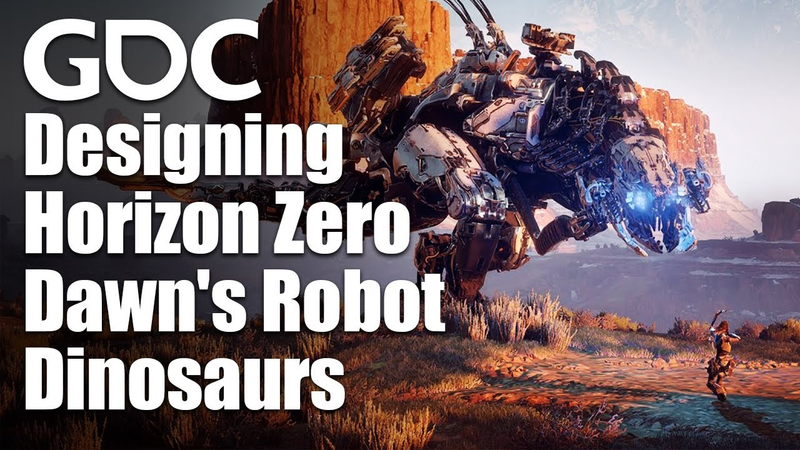
A No-Nonsense Approach to Designing Horizon Zero Dawn's Robot Dinosaurs
Guerrilla Games developed Horizon Zero Dawn to revitalize its creative output following a decade of work on the Killzone franchise.
- Guerrilla Games developed Horizon Zero Dawn to pivot away from the Killzone franchise and establish a distinct, vibrant post-apocalyptic intellectual property.
- The design team utilized intrinsic ideation, a methodology that grounds all visual elements, architecture, and societal structures in logical environmental and resource-based constraints.
- To ensure intuitive combat, the studio transitioned from military-inspired aesthetics to biomimetic designs modeled after real-world animal and dinosaur behaviors.
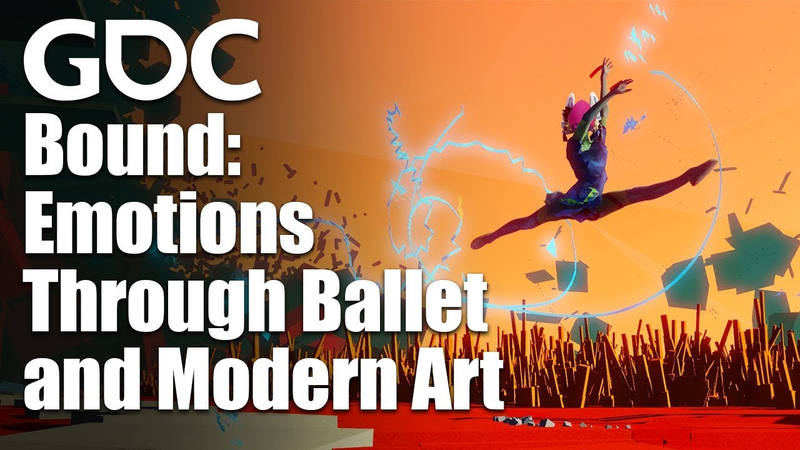
Bound: Emotions Through Ballet and Modern Art
Bound represents an experimental approach to interactive storytelling, blending the technical heritage of the Polish demoscene with the aesthetic principles of 20th-century modern art.
- The development team shifted from a 'demo scene' mentality—where projects were kept secret to maintain a competitive advantage—to a rigorous playtesting model that identified two distinct player groups: those emotionally connected to the narrative and those who were not.
- To achieve fluid, expressive movement, the team abandoned initial plans for a runner-style character in favor of a ballerina, ultimately hiring professional dancer Maria Udod and choreographer Michal Gorol for motion capture.
- The team overcame communication barriers with the choreographer by breaking down complex dance and gymnastic movements into tiny, manageable video clips for study and reference.
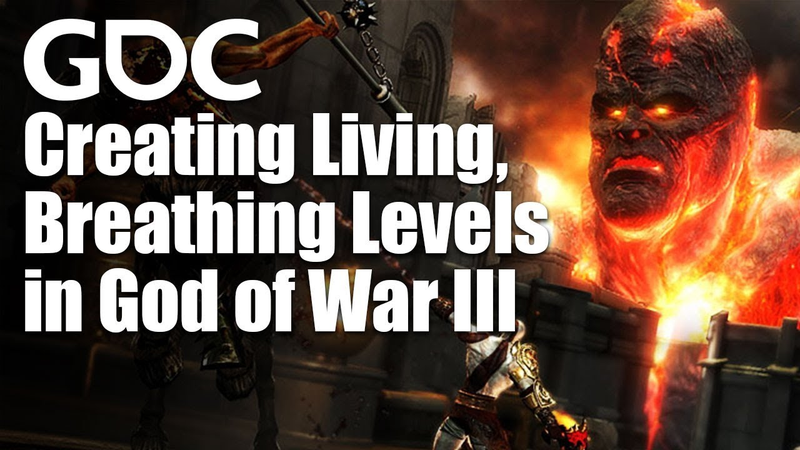
The Titans: Creating Living, Breathing Levels in God of War III
The development of the Titan sequences in God of War III represents a landmark achievement in balancing massive-scale spectacle with interactive gameplay.
- The God of War III development team transformed 500-meter-tall Titans into dynamic, interactive environments rather than static boss arenas, resulting in 25-minute immersive gameplay sequences.
- To overcome technical limitations, the studio developed custom tools to manage collision, camera logic, and entity attachment on moving, animated meshes in real time.
- The project was completed over a nine-month development cycle, utilizing gray-box testing and standardized nomenclature to manage the complexity of large-scale sequences.
