God of War III
Game
3 documents in the library are about God of War III, from writers such as DiGRA and Game Developers Conference. Each has a summary and key insights with the page they come from.
Connections
Each row is a game or company named alongside God of War III, each column a document, oldest first. A mark means that document names it. Select a row to see those documents.
Documents about God of War III

The Titans: Creating Living, Breathing Levels in God of War III
The development of the Titan sequences in God of War III represents a landmark achievement in balancing massive-scale spectacle with interactive gameplay.
- The God of War III development team transformed 500-meter-tall Titans into dynamic, interactive environments rather than static boss arenas, resulting in 25-minute immersive gameplay sequences.
- To overcome technical limitations, the studio developed custom tools to manage collision, camera logic, and entity attachment on moving, animated meshes in real time.
- The project was completed over a nine-month development cycle, utilizing gray-box testing and standardized nomenclature to manage the complexity of large-scale sequences.
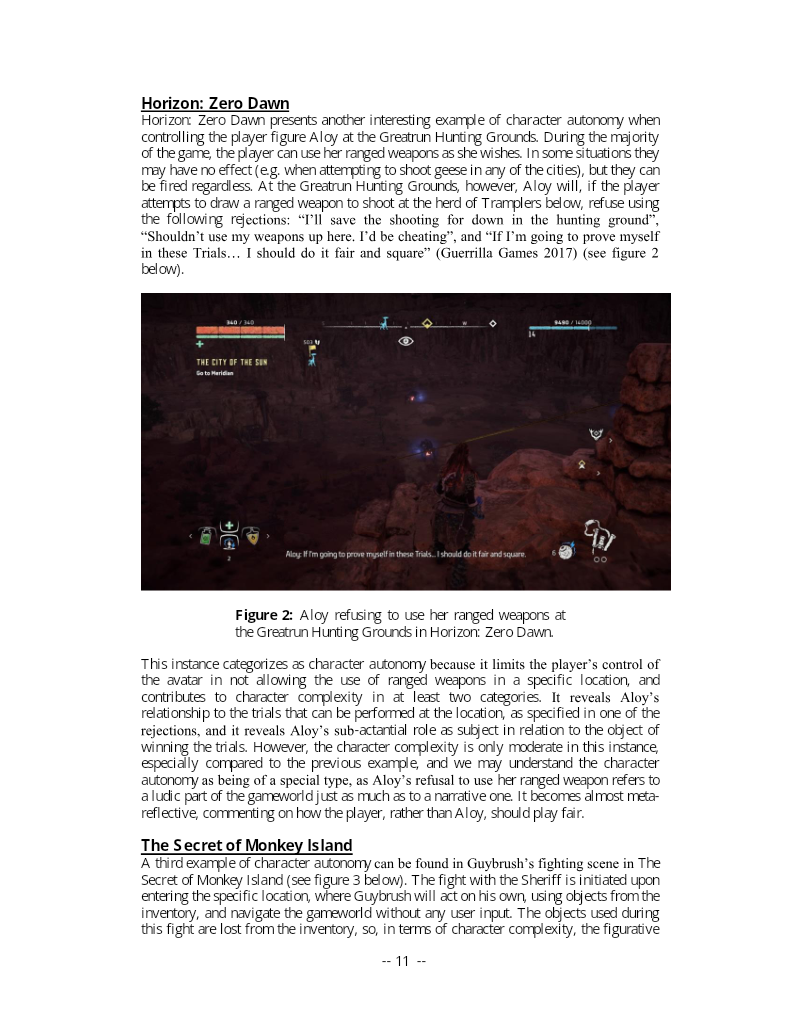
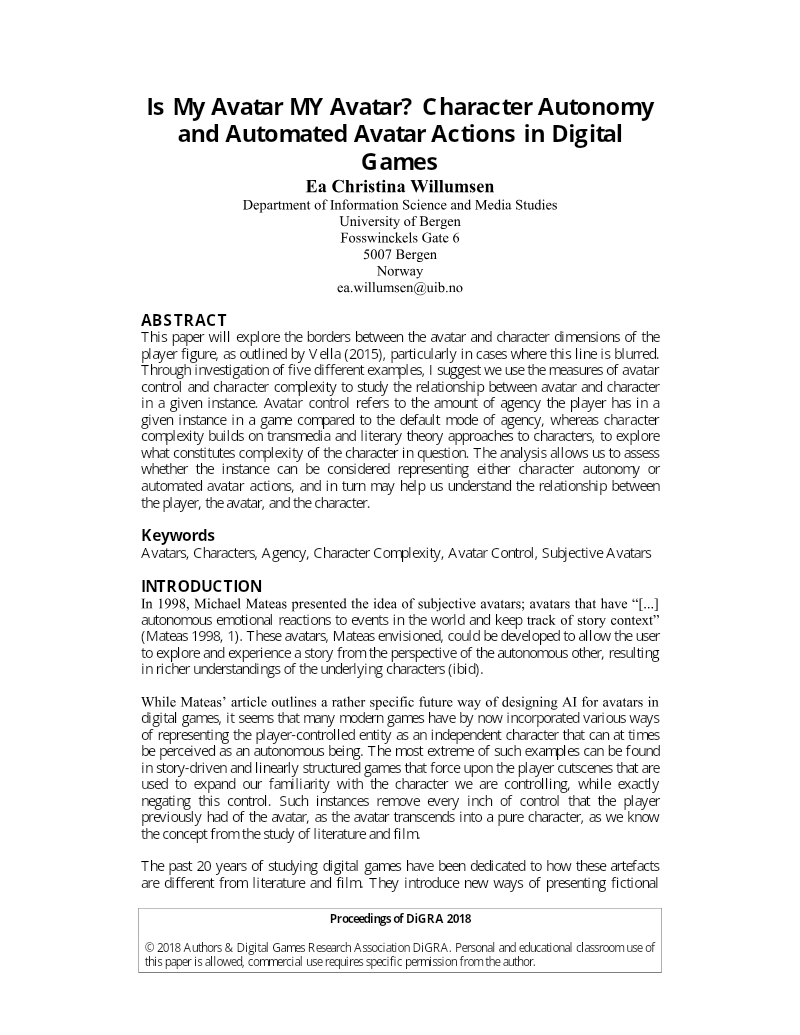
Is My Avatar MY Avatar? Character Autonomy and Automated Avatar Actions in Digital Games
Willumsen's paper addresses a persistent question in game studies: when a player-controlled avatar acts, is the action expressing the player's agency or the independent will of a fictional character?
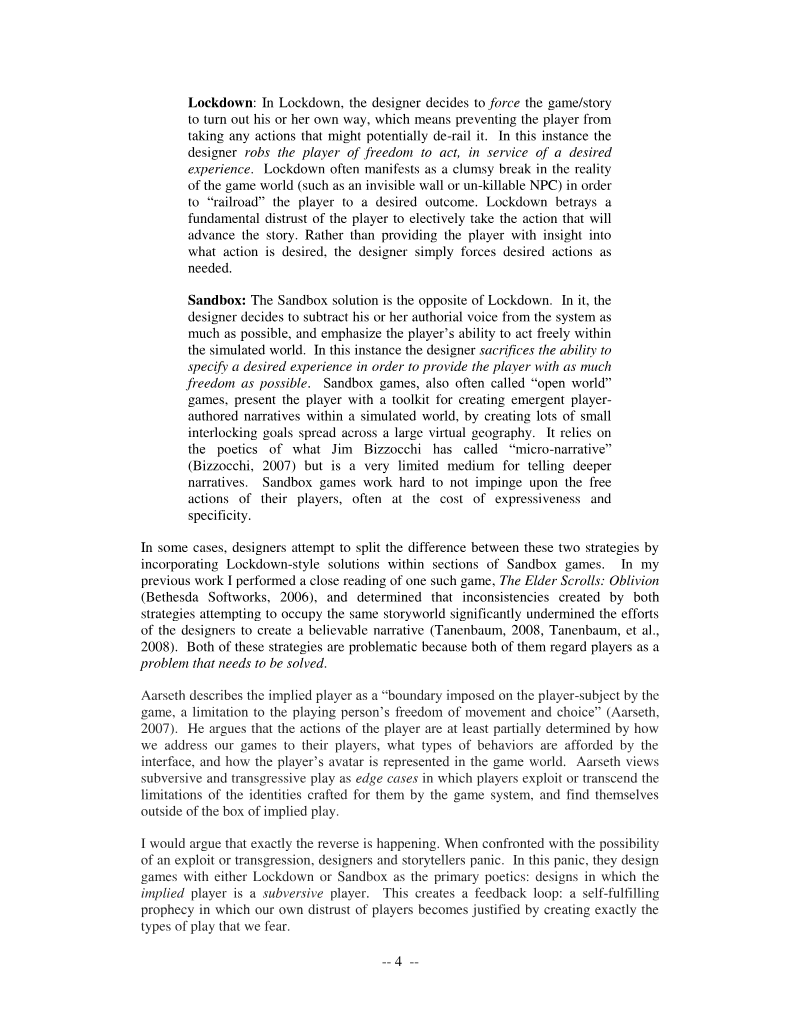
How I Learned to Stop Worrying and Love the Gamer: Reframing Subversive Play in Story-Based Games
Tanenbaum's analysis challenges a long-standing assumption in game design and interactive narrative research: that players are inherently subversive, seeking out exploits that undermine what designers intended.
- Tanenbaum argues that the assumption that players are inherently subversive is self-reinforcing and creates an artificial conflict between designers and players, which fuels two problematic design approaches, 'Lockdown' and 'Sandbox'.
- The author proposes treating players as collaborators whose behavior shifts across performative stances rather than fitting into fixed player types.
- Players routinely hold multiple, even contradictory, goals and narrative frames at once, drawing on Mackey's 'subjunctive mode' and parallel 'tracks' of engagement.