Nokia
Company
Documents about Nokia
Microsoft Form 10-Q: Q3 Fiscal Year 2015
For the fiscal quarter ending March 31, 2015, Microsoft navigated a significant strategic pivot toward a mobile-first, cloud-first business model.
- Microsoft reported strong growth in the 'Devices and Consumer' (D&C) segment for the nine months ending March 31, 2015, with revenue increasing 24% ($1.3 billion) driven by gains in search advertising, Office 365 Consumer, and Xbox services.
- First-party video game and Minecraft revenue saw a significant 83% increase ($305 million) over the nine-month period, bolstered by new Xbox title releases and Minecraft sales.
- Xbox Live and other store transaction revenue grew 25% ($315 million) for the nine-month period, reflecting an increase in both the number of active users and revenue per user.

Andras Velvart talks SongArc
SongArc emerged from a desire to bridge the gap between passive music listening and active, expressive performance on mobile devices.
- SongArc achieved 1.3 million downloads within its first year on the Windows Phone platform, peaking as the sixth best-rated game in the store.
- The game’s development was supported by the Microsoft Imagine Cup and the AppCampus program, a partnership between Microsoft, Nokia, and Aalto University.
- The development team is currently executing a multi-platform expansion to iOS, Android, and Windows tablets, with a target rollout for the holiday season.
Microsoft Form 10-Q: Q2 FY2015
Microsoft’s financial performance for the second quarter of fiscal year 2015 reflects a pivotal transition toward a mobile-first, cloud-first strategy.
- Microsoft acquired Nokia’s Devices and Services business on April 25, 2014, for a total purchase price of $9.4 billion, consisting of $7.1 billion in cash and $2.1 billion in non-cash convertible note repurchases.
- As of December 31, 2014, Microsoft held $90.2 billion in cash, cash equivalents, and short-term investments, an increase from $85.7 billion at the end of the previous fiscal year on June 30, 2014.
- Commercial Cloud and server products drove a 7% revenue increase in the Commercial segment for the six months ended December 31, 2014, with server products revenue growing 11% during that period.
Microsoft Form 10-Q: Q1 FY2015
Microsoft’s financial performance for the first quarter of fiscal year 2015 reflects a period of aggressive strategic transformation and significant capital investment.
- Commercial revenue grew 10% ($1.1 billion) for the quarter ended September 30, 2014, driven by strong performance in Commercial Cloud, on-premises licensing, and a 13% increase in server products and Microsoft Azure revenue.
- Office Commercial revenue declined 7% ($322 million) as customers transitioned to Office 365 Commercial, while Windows Commercial revenue grew 10% due to increased renewals and customer base expansion.
- Microsoft recorded a $253 million restructuring charge during the quarter related to asset write-downs and facility consolidations, with additional pre-tax charges of $100 million to $600 million expected for the remainder of fiscal year 2015.
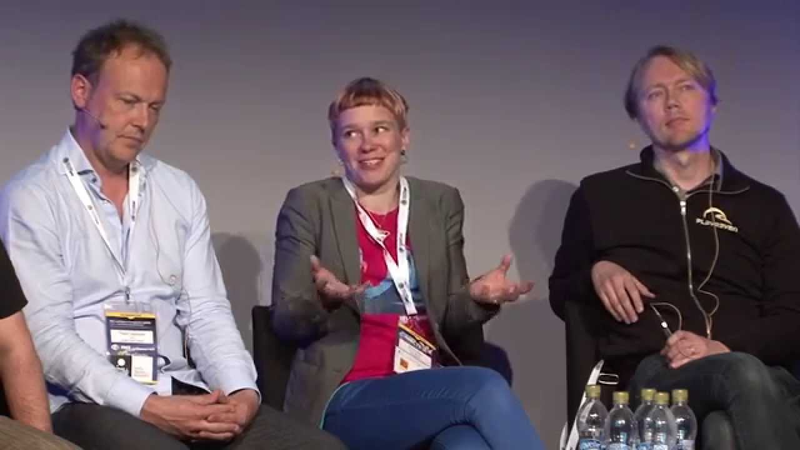
Finnish mobile games history: part 3
The Finnish mobile gaming industry has established itself as a global leader, characterized by a highly collaborative ecosystem that prioritizes knowledge sharing over cutthroat competition.
- The Finnish mobile gaming industry thrives on a collaborative ecosystem where developers prioritize knowledge sharing over competition, a culture necessitated by the lack of a significant domestic market.
- The sector has matured from a technical, coding-focused foundation into a sophisticated hub that integrates creative design with advanced business strategies, user acquisition, and brand development.
- Industry success is shifting away from distribution-based power toward a model driven by content quality, speed of execution, and the ability to cultivate direct relationships with fans.

Finnish mobile games history: part 1
The Finnish mobile gaming industry represents a unique case study in regional economic development, evolving from a niche technical community into a dominant global force.
- The Finnish mobile gaming industry emerged from a unique convergence of a collaborative software demo scene and a cultural preference for indoor technical pursuits.
- Nokia served as a critical catalyst for the industry by providing essential funding, professional infrastructure, and training grounds for developers during the sector's early stages.
- Although the N-Gage platform was a commercial failure, it forced local studios to master technical constraints and team-based workflows that became foundational for later successes like Rovio and Supercell.

How 200 Finnish game developers generated $1.2 billion in 2013
The Finnish game industry experienced a period of rapid expansion between 2011 and 2014, characterized by high efficiency and significant financial growth.
- In 2013, the Finnish game industry generated €900 million in direct game sales, representing a 260 percent year-over-year increase.
- The total economic impact of the sector, including merchandising and M&A activity, reached €2.2 billion in 2013.
- Between 2011 and 2014, the industry secured $1.8 billion in total investment, fueling growth for both startups and established studios.

How Finland change the direction of the mobile games industry
The Finnish mobile gaming industry owes its foundational success to the strategic influence and patronage of Nokia.
- Nokia served as the foundational corporate patron for the Finnish mobile gaming industry, providing the essential investment, technical infrastructure, and distribution channels that enabled studios like Rovio, RedLynx, and Bugbear to scale.
- The Finnish 'demo scene'—a culture of programmers dedicated to maximizing hardware performance—provided the core talent pool that Nokia leveraged to pioneer early mobile gaming concepts.
- Nokia’s N-Gage hardware, despite its commercial failure, acted as a critical bridge to the modern era by introducing early mobile connectivity standards and concepts that prefigured modern ecosystems like Game Center and mobile MMOs.
Microsoft Form 10-K: FY2014
During fiscal year 2014, Microsoft underwent a fundamental strategic transformation, reorganizing its business into Devices and Consumer and Commercial segments to support a mobile-first, cloud-first operating model.
- Operating income grew by $5.0 billion (23%) in FY2014, primarily driven by the absence of a $6.2 billion goodwill impairment charge recorded in the prior fiscal year.
- Cost of revenue increased by $2.7 billion (16%), largely due to a $900 million inventory adjustment for Surface RT, payments to Nokia for strategic initiatives, and increased hardware-related expenses.
- Microsoft incurred a $733 million (€561 million) fine from the European Commission during FY2014 for failing to comply with a 2009 agreement regarding the display of a 'Browser Choice Screen' on Windows PCs.
Microsoft Form 10-Q: Q3 FY2014
For the quarter ending March 31, 2014, Microsoft navigated a pivotal organizational transition toward a devices and services business model.
- Microsoft underwent a major organizational restructuring in Q1 FY2014 to transition into a devices and services company, resulting in new reporting segments: D&C Licensing, D&C Hardware, D&C Other, Commercial Licensing, and Commercial Other.
- Operating income for the three months ended March 31, 2014, decreased by $638 million (8%) compared to the prior year, driven by higher costs of revenue and offset by lower general, administrative, sales, and marketing expenses.
- Cost of revenue increased by $1.2 billion (24%) for the quarter, primarily attributed to higher sales volumes of Xbox and Surface hardware and a $159 million increase in datacenter expenses.

Why Malaysia is looking to supercharge its ICT sector
Malaysia is aggressively pursuing a strategic shift in its national economy, aiming to increase the ICT sector’s contribution to its GDP from 12 percent in 2012 to 17 percent.
- Malaysia is targeting an increase in the ICT sector's contribution to national GDP from 12 percent in 2012 to 17 percent.
- The government is scaling its mobile app developer talent pool from an initial 700 trained individuals to a core community of 7,000 developers.
- The Malaysian Multimedia Development Corporation is driving this growth using a private-sector staffing model to ensure agile, market-oriented policy implementation.
Microsoft Form 10-Q: Q2 FY2014
Microsoft’s financial performance for the second quarter of fiscal year 2014 reflects a pivotal strategic transition toward a devices and services-oriented business model.
- Microsoft reported a 14% revenue increase for the quarter ended December 31, 2013, driven primarily by strong performance in the Devices and Consumer (D&C) Hardware and Commercial Licensing segments.
- Operating income rose 3% to $198 million for the quarter, though this growth was partially offset by a 46% increase in cost of revenue, totaling $2.6 billion, largely due to higher sales volumes of Xbox and Surface devices.
- The company officially transitioned to a new organizational structure in fiscal year 2014, shifting to a 'devices and services' model and reporting financial performance across five new segments: D&C Licensing, D&C Hardware, D&C Other, Commercial Licensing, and Commercial Other.