London Studio
Company
7 documents in the library are about London Studio, from writers such as Game Developers Conference, Game World Observer and Hit Points. Each has a summary and key insights with the page they come from.
Connections
The documents about London Studio on the inner ring, the other games and companies they name on the outer one. Select a cover to see it up close and open it in a new tab; drag to move, pinch or Ctrl + scroll to zoom.
Key figures from the reports
PlayStation announced 900 job cuts, representing approximately 8% of its global workforce, which includes the total closure of the 22-year-old London Studio and layoffs across Naughty Dog, Insomniac, Firesprite, and Guerrilla Cambridge.
Hit Points, 2024 · Legacy Thinking
Sony London Studio achieved a 25% reduction in GPU frame time by implementing a resolution gradient technique that masks peripheral pixels to maintain the 60 FPS requirement for VR.
Game Developers Conference, 2017 · Fast and Flexible: Technical Art and Rendering For The Unknown, p. 21
Documents about London Studio

Why did PlayStation buy Bungie in the first place?
The acquisition of Bungie by PlayStation for $3.6 billion in 2022 serves as a case study in the challenges of pivoting toward a live-service business model.
- PlayStation acquired Bungie for $3.6 billion in 2022 to accelerate its transition into the live-service market, but the strategy has resulted in approximately 700 layoffs and underwhelming performance for projects like Marathon.
- The console market is experiencing a period of stagnation, with U.S. hardware unit sales hitting record lows for both PlayStation and Xbox due to rising component costs and repeated price hikes.
- U.S. gaming revenue showed only a marginal 1% year-over-year increase in May, reflecting a broader cooling trend as consumers delay spending while anticipating the next generation of consoles expected in 2028.

Sony Layoffs and Their Impact on the Gaming Industry
Sony Interactive Entertainment has undergone significant organizational restructuring between 2022 and 2025, resulting in the layoff of 1,568 employees globally.
- On February 27, 2024, Sony announced an 8% reduction in its global workforce, impacting approximately 900 employees across the Americas, EMEA, Japan, and APAC.
- Bungie, acquired by Sony for $3.6 billion in 2022, underwent two rounds of significant layoffs: 100 employees in October 2023 due to revenue falling 45% below projections, and 220 employees (17% of its workforce) in July 2024.
- Sony permanently closed Firewalk Studios and cut approximately 210 jobs in October 2024 following the commercial failure of the game Concord.
Over 2,000 Games Industry Professionals Lost Their Jobs in February, 5x Year-Over-Year
The global video game industry experienced a significant surge in workforce reductions during February 2024, with at least 2,027 professionals losing their jobs.
- The video game industry recorded at least 2,027 layoffs in February 2024, a fivefold increase compared to the 386 jobs lost in February 2023.
- Total industry layoffs for the first two months of 2024 have already exceeded 8,000, putting the sector on track to surpass the 10,500 total layoffs documented in all of 2023.
- Sony Interactive Entertainment accounted for the largest share of February's reductions with 900 job cuts, including the closure of London Studio and staff reductions at Naughty Dog, Insomniac Games, and Guerrilla Games.

Age of Empires Mobile / Balatro’s Success / Sony Layoffs / Apple Arcade Woes
The gaming industry is currently navigating a period of significant strategic recalibration, characterized by the tension between high-budget franchise adaptations and the surging influence of independent, low-overhead titles.
- Sony has initiated significant workforce reductions and closed its London Studio, signaling a strategic retreat from high-budget virtual reality development due to a lack of mass-market adoption.
- Independent titles like Balatro are demonstrating that innovative, low-overhead projects can achieve immediate profitability without the massive marketing budgets required by traditional AAA franchises.
- Apple Arcade is currently facing developer attrition and declining user engagement as it struggles to compete with the aggressive, IP-focused gaming strategies employed by Netflix.
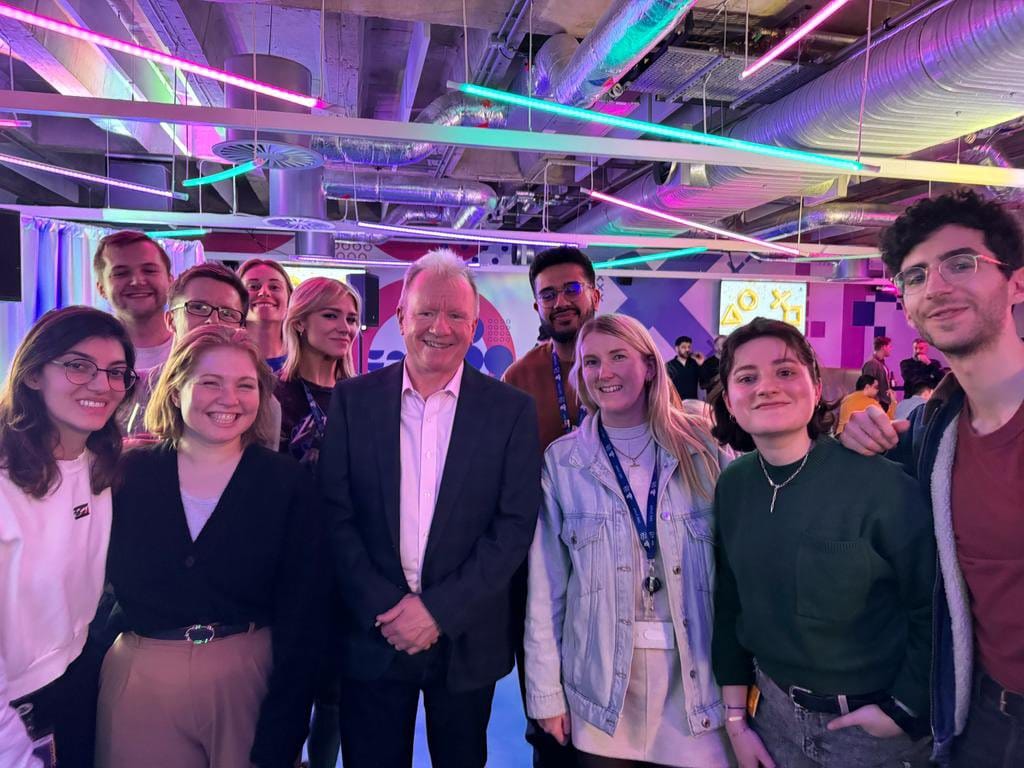
Legacy Thinking
The game industry experienced a period of significant contraction in late February 2024, characterized by widespread layoffs and studio closures across both independent and major corporate entities.
- PlayStation announced 900 job cuts, representing approximately 8% of its global workforce, which includes the total closure of the 22-year-old London Studio and layoffs across Naughty Dog, Insomniac, Firesprite, and Guerrilla Cambridge.
- EA is laying off 670 employees (roughly 5% of its global staff), shuttering its Ridgeline Games studio, and cancelling a planned Star Wars first-person shooter from Respawn Entertainment.
- Supermassive Games has initiated redundancy processes for nearly half of its 300-person staff, aiming to eliminate 90 positions, while Deck Nine is cutting 20% of its workforce due to worsening market conditions.
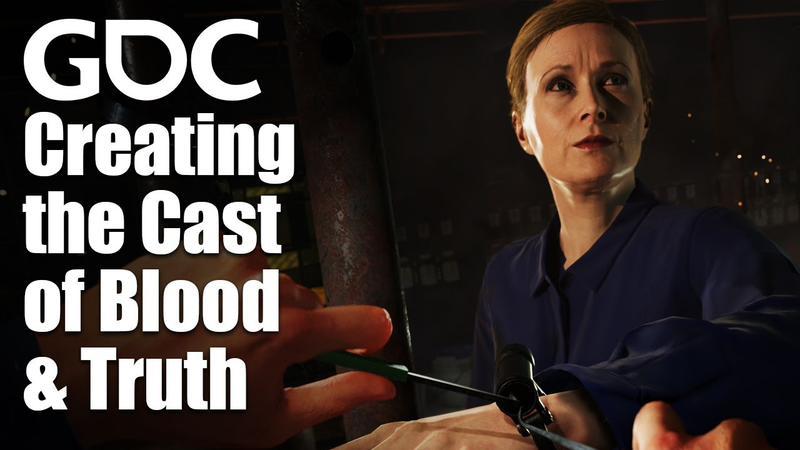
Characters to Get Immersed In: Creating the Cast of 'Blood & Truth'
The development of characters for the PlayStation VR action shooter Blood & Truth focused on overcoming the limitations of virtual reality immersion by prioritizing realistic character interactions and player agency.
- Sony London Studio developed 'Blood & Truth' by prioritizing character interaction and immersion, building on data from 'The London Heist' which showed that direct, physical interactions with NPCs were twice as popular as other VR experiences.
- To maintain high frame rates in VR while achieving realism, the team implemented a two-tier character system: Tier 1 (key characters) featured exact digital doubles with 40,000–50,000 polygons, while Tier 2 (NPCs) used modular, interchangeable parts at 30,000–40,000 polygons.
- The studio utilized photogrammetry and 3D scanning to create digital doubles of actors, partnering with 3Lateral for high-fidelity head scans and specialized facial rigging to meet quality requirements.

Fast and Flexible: Technical Art and Rendering For The Unknown
This 2016 presentation outlines the technical strategies employed by Sony London Studio to navigate the uncertainties of early virtual reality development on the PlayStation 4.
- Sony London Studio achieved a 25% reduction in GPU frame time by implementing a resolution gradient technique that masks peripheral pixels to maintain the 60 FPS requirement for VR.
- The studio utilized a tiled forward renderer in their LSS DK engine to avoid the constraints of G-buffers, allowing for rapid experimentation with varied shading models and stylized lighting.
- Real-time, voxel-based Light Fields were adopted to replace traditional light maps, providing superior ambient lighting and depth while accelerating the artistic iteration process.