indie
CompanyUnited States
Documents about indie

What If You Improved Your Indie Game 3 Steps / Day?
The practice of implementing three daily improvements to an indie game serves as a highly effective strategy for maintaining momentum, overcoming creative stagnation, and ensuring consistent progress.
- Implementing three specific improvements daily prevents creative stagnation and ensures consistent momentum toward a finished product.
- Development should prioritize a single, highly polished vertical slice to establish a cohesive mechanical and visual foundation before scaling production.
- Design choices must balance aesthetic ambition with functional clarity, as overly chaotic visuals can hinder player readability and action tracking.
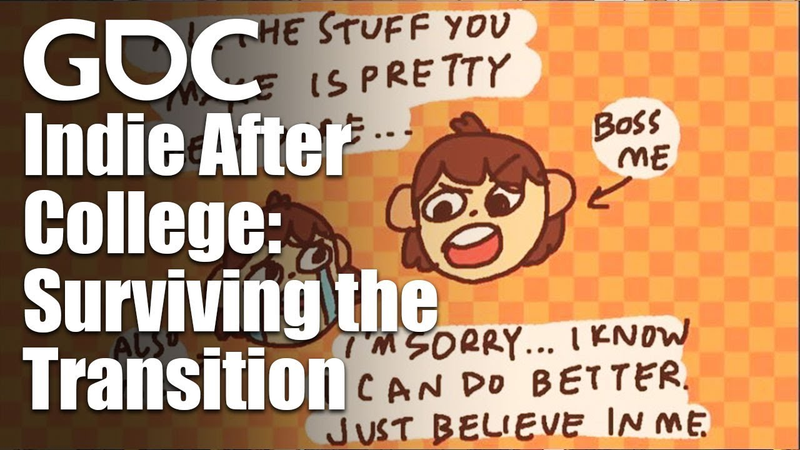
Indie After College: Surviving the Transition
This presentation provides a pragmatic, cautionary guide for students and recent graduates considering a career in independent game development.
- The indie game market is severely saturated, with annual releases on Steam surging from approximately 400 in 2012 to over 7,500 in recent years, causing median sales per game to plummet.
- Success in independent development is frequently driven by survivorship bias, privilege, and luck rather than merit alone, necessitating a strategic approach to risk management.
- Recent graduates should avoid attempting to build an 'ultimate' thesis project immediately, as the lack of professional experience and financial safety nets significantly increases the risk of burnout.
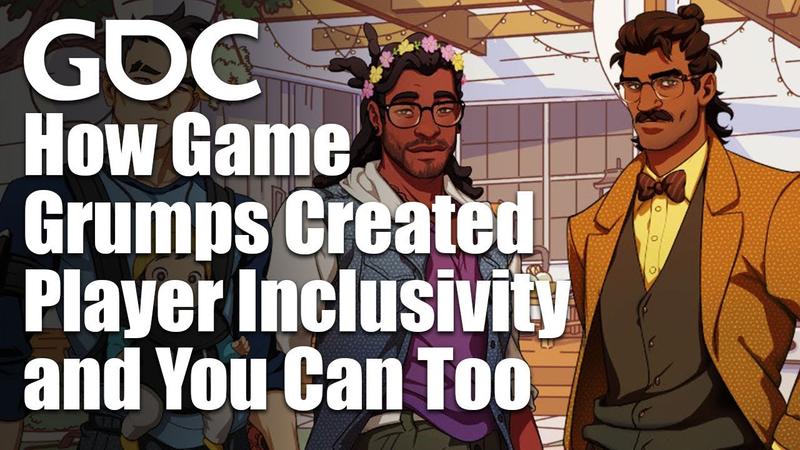
Dream Daddy: How Game Grumps Created Player Inclusivity and You Can Too
The development of Dream Daddy serves as a practical blueprint for integrating meaningful player inclusivity into indie game projects without requiring massive budgets or extensive production timelines.
- Meaningful player inclusivity can be achieved by prioritizing high-impact design choices, such as diverse body types and hairstyles, over resource-heavy, complex customization sliders.
- Inclusivity is a design-led process that benefits from integrating diverse consultants to refine narrative tone and ensure authentic representation.
- The development team utilized a custom tool called the DDML compiler to facilitate iterative script improvements and the seamless integration of gender-neutral dialogue.

Making Your First Indie Game (5 Tips!)
Developing a first indie game requires a structured approach that balances creative inspiration with technical discipline.
- Allocate 40 percent of the total development timeline specifically for the polish phase to ensure the transition from a functional prototype to a professional-grade product.
- Define core gameplay mechanics and movement constraints early in the development cycle to prevent player confusion and minimize the need for costly rework.
- Utilize modular design and asset reuse throughout production to scale environments efficiently, reserving unique, high-effort assets for the final stages.
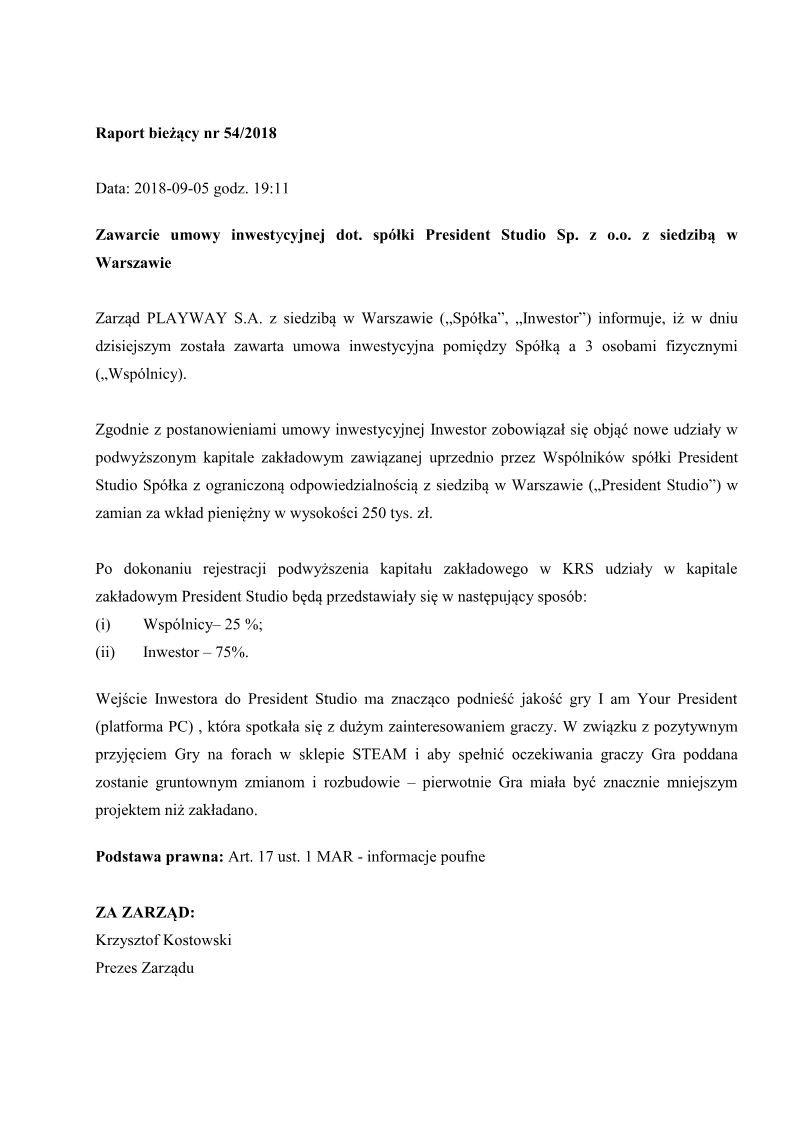
Raport Bieżący Nr 54/2018
PlayWay S.A. has formalized an investment agreement to acquire a majority stake in the Warsaw-based development team, President Studio Sp. z o.o.
- PlayWay S.A. acquired a 75% controlling interest in Warsaw-based President Studio Sp. z o.o. in September 2018.
- The acquisition was finalized through a 250,000 PLN cash contribution from PlayWay to subscribe to new shares in the developer’s increased capital.
- The three founding members of President Studio retain the remaining 25% stake in the company.


Half-Year Report of 11 bit studios S.A. for H1 2018
The first half of 2018 marked a transformative period for 11 bit studios S.A., characterized by record-breaking financial performance and a strategic shift toward larger-scale game production.
- 11 bit studios achieved a record-breaking H1 2018 with PLN 45.7 million in revenue, a 427% year-on-year increase, and a net profit of PLN 24.9 million.
- The launch of Frostpunk was the primary growth driver, recouping its PLN 10-12 million development costs within 66 hours of its April release.
- The company maintains a strong balance sheet with over PLN 51 million in cash, allowing for self-funded operations and future development without external debt.

The #1 Trait Of A Great Game Developer
The core thesis of this discussion is that playfulness and genuine passion are the essential traits for successful indie game development, serving as the primary antidotes to the creative paralysis caused by perfectionism and fear of failure.
- Playfulness acts as the primary antidote to creative paralysis and perfectionism, allowing developers to overcome the fear of failure that often leads to stagnant, over-revised game mechanics.
- A developer's tendency to link their personal identity to their project creates counterproductive pressure that hinders progress and leads to constant, unnecessary revisions.
- The concept of 'quality' in game development is subjective and does not reliably correlate with immediate commercial success or critical reception.

How To Launch An Indie Game
The launch of an indie game is a high-stakes, emotionally taxing milestone that requires meticulous preparation to ensure long-term viability.
- The initial launch window on platforms like Steam is the primary opportunity for visibility and positive reviews, making immediate product polish critical despite the ability to patch post-release.
- Indie titles typically have a predictable sales shelf-life of approximately three years, necessitating a consistent release cadence to maintain long-term studio viability.
- To mitigate financial risk and avoid the complications of revenue-sharing models, studios should utilize project-based contracting for specialized tasks rather than hiring full-time staff prematurely.
"Indie" Is A Stupid Word
The term indie has become an increasingly imprecise and potentially damaging label within the game development industry.
- The term 'indie' has become an imprecise label that fails to reflect the professional reality of modern game developers who operate as legitimate businesses rather than hobbyists.
- Developers should transition to identifying as professional studios or startups to avoid the restrictive stereotypes associated with indie games, such as amateur production values or limited scope.
- The industry's persistent focus on the financial struggles of small-scale developers, often reinforced through self-deprecating social media content, is damaging to professional morale.

Will You Snail? - Q&A (Indie Game Devlog)
The development of the indie platformer Will You Snail centers on a unique core mechanic where an artificial intelligence tracks player movement to generate obstacles in real-time.
- The game features a core mechanic where an AI tracks player movement to generate real-time obstacles, creating a high-intensity, rage-inducing experience.
- The developer is prioritizing viral reach and streamer engagement over immediate monetization, with plans to release the title for free.
- The visual identity has been refined from a chaotic aesthetic to a polished, high-contrast red style to improve watchability and differentiate the game in the rage-platformer genre.
The 2016 Failure Workshop
The indie game development landscape is frequently defined by the psychological and operational hurdles that follow an initial success.
- Developers often trigger a 'sophomore slump' by over-engineering and succumbing to feature creep in an attempt to replicate previous successes.
- Avoiding early, unpolished feedback stifles the iterative process, leading to prolonged development cycles that lack a cohesive core.
- Strategic failure frequently results from a misalignment between a game’s core fantasy and its aesthetic presentation, causing target audiences to reject technically proficient products.
Anyone Can Make 2D Games! Here's How!
The primary objective of this guide is to provide an efficient, scalable workflow for indie developers to create high-quality 2D game environments.
- Indie developers can achieve professional-grade 2D environments by prioritizing modular design and asset reuse over creating unique illustrations for every game element.
- The 'stamp' technique utilizes reusable vector assets like moss, bricks, and foliage, which are modified through rotation, scaling, and color adjustments to maintain visual variety efficiently.
- Unity’s Z-axis arrangement enables a parallax system where movement speed is tied to depth, effectively simulating a 3D environment within a 2D space.