indie
CompanyUnited States
Documents about indie
5 Lessons from Devolver’s Latest Playable Marketing Experience
The release of Devolverland Expo, a first-person marketing simulator designed to showcase upcoming titles, serves as a case study for the effectiveness and pitfalls of playable marketing experiences.
- Marketing experiences should prioritize clear, frictionless calls to action, such as embedding Steam wishlist buttons or email signup forms directly within the game to prevent user drop-off.
- Playable marketing requires high accessibility; the Devolverland Expo faced criticism for lacking subtitles and including motion blur that caused physical discomfort for some users.
- Small indie developers should avoid creating standalone playable advertisements, as these require significant resources and brand recognition that only major publishers like Devolver Digital can effectively leverage.
GameDiscoverabilityland: Those Satisfactory Sales Numbers
This analysis examines the evolving landscape of video game discoverability and sales performance as of mid-2020.
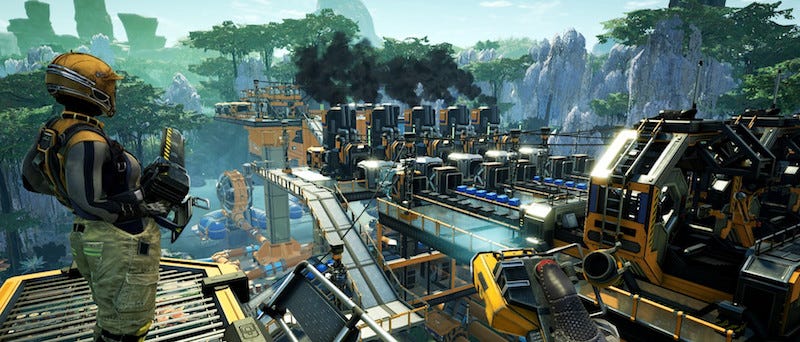
- The game Satisfactory sold 958,917 units during a 15-month Epic Games Store exclusivity period and 367,601 units in its first month following its Steam release.
- EGS exclusivity remains a viable financial strategy for developers when paired with guaranteed advances and favorable royalty rates, provided the title later launches on Steam to capture latent demand.
- The mobile gaming industry currently generates approximately one billion downloads per week.
Mobile Game Discovery: Why It's Tricky for Indies
The mobile gaming market presents significant, often prohibitive challenges for small and medium-sized independent studios, primarily due to the distinct differences in user acquisition and monetization compared to the PC and console sectors.
- The mobile market's 'winner-takes-all' dynamic forces independent developers to compete with large-scale publishers who possess superior data-driven monetization expertise and capital.
- Success in free-to-play mobile gaming is heavily dependent on paid user acquisition and cross-promotion, which often exceed the financial resources of smaller studios.
- Premium mobile titles face a price ceiling typically capped at $9.99, necessitating massive sales volumes that are rarely achievable for independent developers.
Game Discoverabilityland: Go Go Summer Festival
This analysis examines the state of game discoverability during the summer of 2020, focusing on the impact of digital showcases and the Steam Summer Festival.
- The 2020 Steam Summer Festival featured over 900 demos, with top-performing titles securing more than 2,000 daily wishlists despite the high density of competing content.
- 73.8% of Steam users review fewer than 10% of the games they own, highlighting a significant gap between game acquisition and active user engagement.
- Industry experts recommend a minimum price point of $20 USD for new releases to ensure long-term financial viability in an increasingly crowded marketplace.
Game Discoverabilityland: The Summer of Games
This analysis examines the evolving landscape of video game discoverability and platform performance as of mid-2020.
- The Steam Summer Game Festival featured nearly 1,000 unique titles, creating a high-density environment that threatens to dilute individual game visibility for indie developers.
- Native support for macOS and Linux is declining due to technical barriers like the deprecation of OpenGL and the increased reliance on compatibility layers like Valve’s Proton.
- Success in the current market requires complex, multi-platform release strategies and a heavy reliance on community-driven marketing rather than relying solely on store algorithms.
Game Discoverability & The Nintendo Switch: What's Selling?
The Nintendo Switch represents a uniquely promising environment for independent game discoverability, though the platform is becoming increasingly crowded.
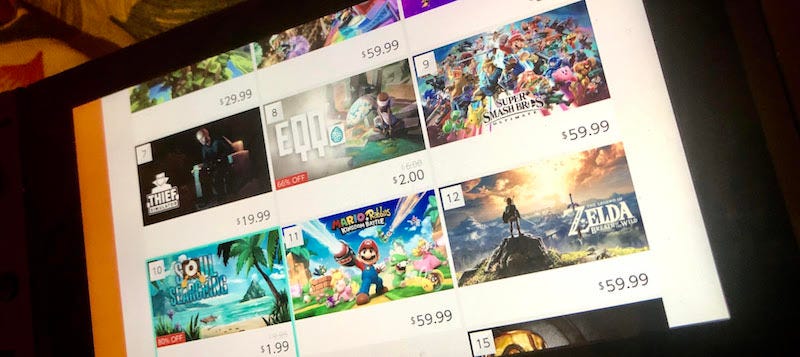
- The Nintendo Switch eShop lacks public performance data, forcing developers to rely on third-party tracking tools like eShopRank to estimate revenue through daily chart position monitoring.
- Market success on the Switch is increasingly driven by extreme discounting strategies, with some independent titles relying on 80% to 90% price cuts to secure impulse purchases and maintain visibility.
- Top-performing content on the platform falls into four categories: premium-priced first-party titles, ported third-party AAA games, high-volume indie hits with minimal discounting, and heavily discounted indie titles.
Game Discoverabilityland: Welcome to the Summer of Indie Direct
The landscape of video game discoverability in mid-2020 was defined by the industry’s rapid pivot to virtual showcases following the cancellation of E3 due to the COVID-19 pandemic.
- Aligning trailer reveals and marketing campaigns with concentrated digital event windows, such as Summer Game Fest, Guerrilla Collective, and Wholesome Direct, is a vital strategy for maximizing indie game visibility.
- Releasing game demos serves as a proven discovery tool, with SMG Studio data for Death Squared demonstrating a measurable increase in long-term sales performance.
- Strategic use of platform-specific discounts is essential for maintaining sales momentum and visibility within the crowded, decentralized digital marketplace.
Game Discoverability & The Nintendo Switch: Where We're At
The Nintendo Switch remains a primary platform for independent developers, particularly those creating smaller, 2D, or niche titles that align with the platform's specific audience.
- The Nintendo Switch library has grown to over 3,200 titles in North America, with approximately 124 new games released monthly, leading to market saturation that outpaces the growth of the active user base.
- New releases typically remain visible above the fold on the eShop for only a few days, forcing developers to rely on aggressive discounting—ranging from 40% to 90%—to regain visibility.
- Developers use deep discounts to trigger a surge in unit sales, aiming to climb the 'Best Sellers' or 'Great Deals' charts, which are calculated based on a 14-day rolling average.

UK Indie Games Devs Power Ahead in Latest UK Games Fund Round
The UK Games Fund successfully concluded its sixth round of funding in May 2020, demonstrating the resilience of the British independent games sector during the onset of the COVID-19 pandemic.
- The UK Games Fund supported 38 independent game studios in Round 6, providing financial packages to assist in the development of their own intellectual property.
- The selection process for Round 6 was highly competitive, drawing more than 170 applications from UK-based developers.
- The UK Games Fund adapted its original funding model—which initially planned for a £5,000 prize followed by a pitch for £20,000—to provide immediate, flexible financial support in response to the economic impact of the pandemic.
Great Talks You Probably Missed
Effective game marketing requires a strategic, multi-faceted approach that prioritizes platform partnerships and community engagement.
- Platform partnerships are the most significant driver of game sales, often outperforming internal marketing efforts and community building in terms of measurable unit movement.
- Steam's recommendation algorithm prioritizes higher-priced games to maximize revenue, making it difficult for low-cost titles (e.g., $0.99) to gain significant visibility.
- Wishlist conversion rates can be lower than expected; for example, one case study showed only a 30% conversion rate from 150,000 wishlists at launch.
LudoNarraCon: A Data-Filled Followup Q&A
LudoNarraCon serves as a case study for the efficacy of virtual, editorially-driven game showcases on the Steam platform.
- LudoNarraCon 2020 achieved massive scale through Steam integration, recording 940,000 event page sessions, 1.43 million unique stream viewers, and 61 million banner impressions.
- Participating unreleased games gained an average of 3,000 wishlists, while released titles saw an average of 45,000 page visits during the event.
- Digital demo distribution proved highly effective, with participating titles averaging 4,624 demo activations per game.

Covid-19 & the Video Games Industry: The Good, the Bad and the Ugly
The video game industry experienced a period of significant volatility and transformation during the early stages of the COVID-19 pandemic.
- Between mid-March and mid-April 2020, European digital full-game downloads surged by 113% compared to the same period in 2019.
- Combined hardware spending on PS4, Xbox One, and Nintendo Switch consoles in the EMEA region grew by 96% during the initial lockdown period, reversing months of decline.
- Digital distribution's share of full-game spending among tracked publishers rose from 51% pre-lockdown to 75% during the lockdown period.