Improbable
Company
4 documents in the library are about Improbable, from writers such as Deconstructor of Fun, Hit Points and PocketGamer.biz. Each has a summary and key insights with the page they come from.
Connections
The documents about Improbable on the inner ring, the other games and companies they name on the outer one. Select a cover to see it up close and open it in a new tab; drag to move, pinch or Ctrl + scroll to zoom.
Documents about Improbable

The Runtime Gap: What 25 Years Inside Game Engines Taught Andrew Bowell About Where AI Actually Matters
The article examines the evolving role of artificial intelligence in video games, arguing that true innovation lies not in production tooling but in runtime player experience.
- The significant AI paradigm shift in games is expected at runtime, enhancing player experience with dynamic, responsive game worlds, rather than merely improving production efficiency through asset generation or code assistance.
- On-device AI inference is crucial for the economic viability of AI-native games, as cloud-based inference for a million concurrent users results in existential token costs and latency issues.
- Iconic, led by Andrew Bowell (who spent 15 years at Havok and 10 years at Unity, where he built the product organization that captured 50%+ market share before their $13.7B IPO), is developing engine technology for AI-native interactive experiences.

Why Most Game Engines Die, and How AI Builds "Living Worlds"
The game industry is currently undergoing a fundamental transition from utilizing artificial intelligence as a productivity tool for asset generation toward integrating it as a core engine component for real-time, immersive gameplay.
- The game industry is shifting from using AI as a productivity tool for asset generation to integrating it as a core engine component for real-time, dynamic gameplay.
- Developers are prioritizing on-device AI processing over cloud-based models to mitigate latency, privacy risks, costs, and model drift while ensuring deterministic gameplay.
- The goal is to create 'living worlds' with non-player characters that possess memory and engage in unscripted interactions, moving away from static, pre-scripted narrative loops.

Unlikely Story
The gaming industry is currently experiencing a trend where established developers and struggling companies pivot toward speculative technologies like NFTs and the metaverse to secure funding.
- Saudi Arabia’s Public Investment Fund has acquired a 5% stake in Nintendo, making it the company's fifth-largest shareholder.
- Improbable has pivoted to the metaverse through its new entity, M2, which secured $150 million in funding from Andreessen Horowitz to develop 'Otherside' in partnership with Yuga Labs.
- Improbable’s previous cloud-computing platform, SpatialOS, struggled with scalability and high costs, with one developer estimating server maintenance at $5 per user per month.
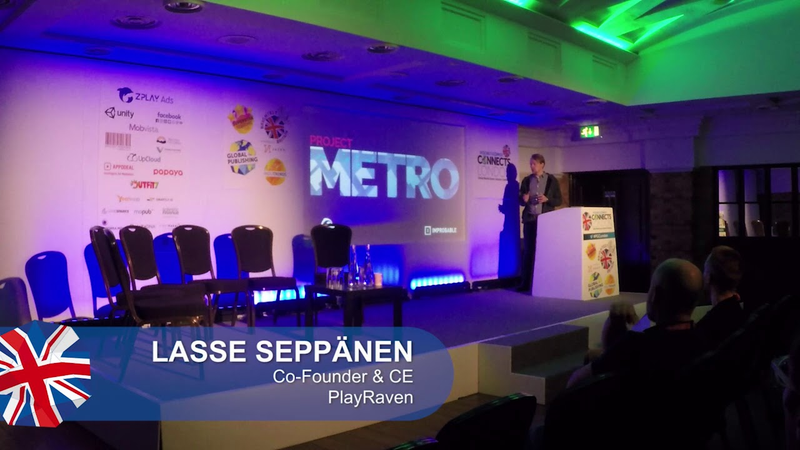
How PlayRaven is working with CCP and Improbable to create next-gen MMO experiences in mobile
PlayRaven is currently shifting its strategic focus toward developing next-generation mobile massively multiplayer online (MMO) games.
- PlayRaven is pivoting its core strategy to focus exclusively on social, multiplayer-driven mobile MMOs, abandoning the single-player mechanics used in its 2014–2016 titles to improve long-term player engagement.
- The studio is partnering with CCP Games to develop a mobile title set in the EVE Online universe, focusing on complex social coordination and resource management adapted for mobile usability.
- Early pre-alpha testing of the EVE Online mobile project with hardcore fans has already yielded positive engagement metrics, validating the studio's community-driven development approach.