ArticleDeconstructor of Fun
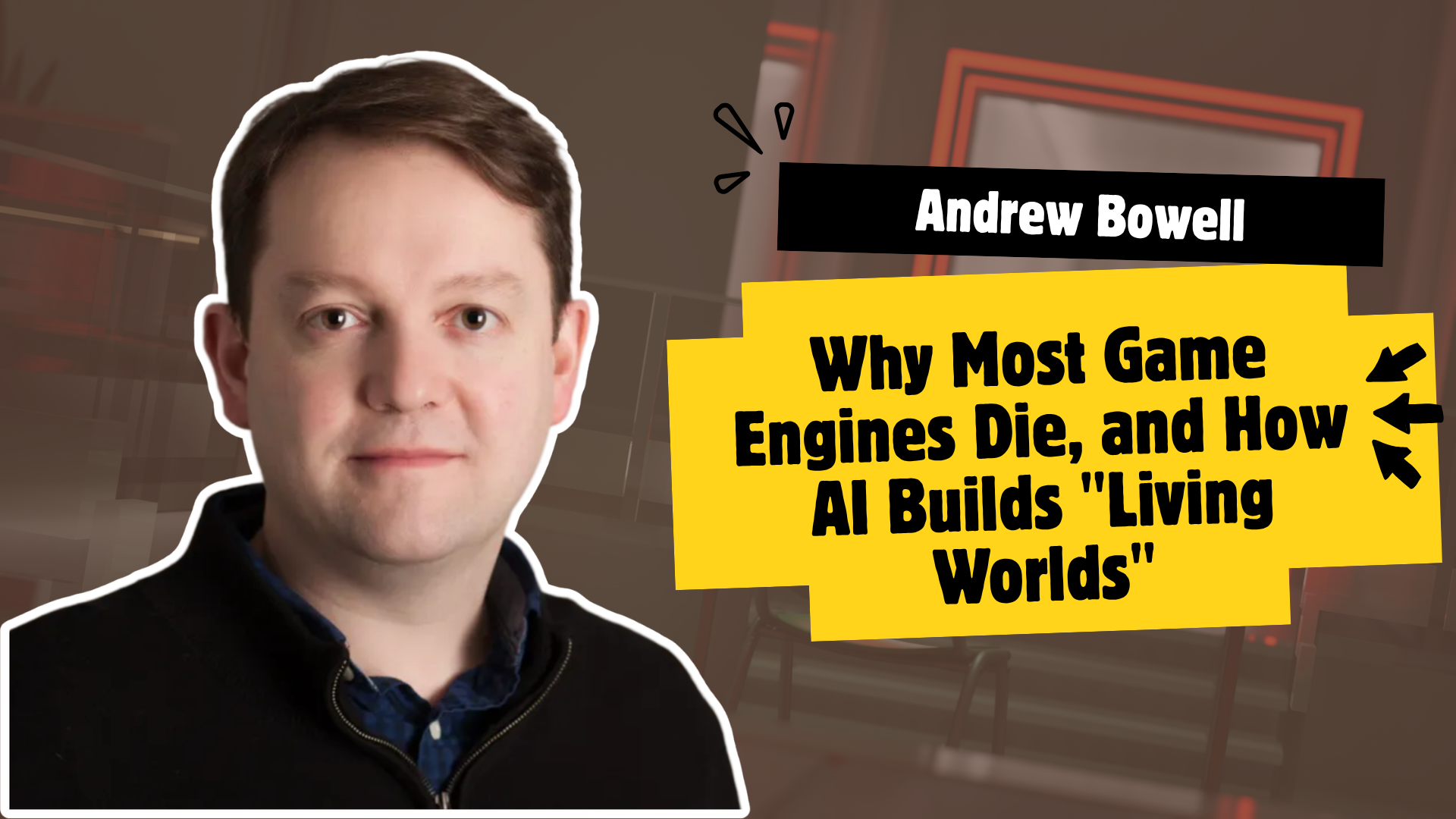
The Runtime Gap: What 25 Years Inside Game Engines Taught Andrew Bowell About Where AI Actually Matters
23 Jun 20261 pages~7 min full read
Key insights
8 slides
The core claim
AI innovation in games is expected at runtime, not in production tooling.
The article argues true innovation lies in dynamic, responsive player experiences rather than asset generation or code assistance.
Runtime focus. The significant AI paradigm shift in games is expected at runtime, enhancing player experience.
The economic problem
Cloud-based inference for large player bases becomes prohibitively expensive.
Running a language model in the cloud raises privacy concerns and creates existential token costs for a million concurrent users.
The solution
Iconic's first title runs its full AI stack on a Steam Deck.
The Oversight Bureau achieves zero ongoing inference costs per player by running on-device, though it requires high-end GPUs.
Hardware reach. Only about 30% of Steam users possess GPUs capable of full AI stacks.
30%
of Steam users possess GPUs capable of full AI stacks
The team
Andrew Bowell brings 25 years of engine experience to Iconic.
He spent 15 years at Havok and 10 years at Unity, where he built the product organization that captured 50%+ market share.
Market share. The Unity product organization Bowell built captured 50%+ market share before their $13.7B IPO.
The model
Iconic builds a component layer on top of existing engines like Unity and Unreal.
The strategy mirrors middleware models, focusing on a specialized AI runtime layer rather than competing on rendering and physics.
- 01Build AI runtimeDevelop a specialized AI runtime layer and authoring toolset.
- 02Sit on existing enginesIntegrate on top of engines like Unity and Unreal.
- 03Avoid full engine competitionDo not compete on rendering and physics.
The risk
New game engine ventures have a poor track record of success.
Examples include Stadia, Amazon's Lumberyard with over $1 billion spent, and Improbable which raised $855 million.
Failure rate. The track record for new game engines is poor, with examples like Stadia, Amazon's Lumberyard, and Improbable failing to establish market dominance.
The validation test
Success depends on player demand and broad hardware compatibility.
The thesis is compelling, but commercial validation hinges on whether players genuinely seek out AI-native experiences.
Validation hinges. Commercial validation hinges on player demand for AI-native experiences and the scalability of on-device inference.
The landscape
Historical engine milestones focused on physics and mobile accessibility.
Havok's physics focus and Unity's mobile accessibility are contrasted with a forthcoming wave leveraging machine learning.
1 / 8
Ask AI about this report