
Hangar 13
CompanyUnited States · Founded 2014
Ideas. Big, small, creative, risky, revolutionary: at Hangar 13, we explore them all. And we won’t settle for “that’ll do” ideas, either. We push ourselves to think further, to create, to innovate, so that the best ideas win. We dig in, we solve problems, we think and rethink.
Connections
Each row is a game or company named alongside Hangar 13, each column a document, oldest first. A mark means that document names it. Select a row to see those documents.
About the company
- Founded
- 2014
- Country
- United States
- Links
- Official site
Company data from IGDB.com
Documents about Hangar 13
Veggie Vigilantes: Queering Crime Tropes in Cosy Comedy Games
This paper offers a textual analysis of two games by the LGBTQI± Canadian studio Snoozy Kazoo, Turnip Boy Commits Tax Evasion (2021) and Turnip Boy Robs a Bank (2024), arguing that their cosy, comedic reimagining of mafia narratives subverts established crime tropes.
- The paper is a textual analysis of two Snoozy Kazoo games, Turnip Boy Commits Tax Evasion (2021) and Turnip Boy Robs a Bank (2024), arguing that their cosy comedic take on mafia narratives subverts established crime tropes.
- The games parody mafia power structures, deflate authority figures, and critique capitalism through satire, slapstick, and cute aesthetics, in contrast to crime works like The Godfather, The Sopranos, Mafia, and Grand Theft Auto that reproduce organised-crime glamour and violence.
- The authors frame this humour and cuteness as a form of resistance that makes the danger of the mafia and themes of apocalypse and war more manageable and accessible.
Portraying Unfavorable Sociocultural Circumstances Through the Videoludic Picaresque
This paper examines how contemporary video games use the rogue figure and the picaresque framework to portray unfavorable sociocultural circumstances, arguing that the videoludic picaresque continues a centuries-old literary tradition of depicting marginalized lives in oppressive societies.
- The paper argues that the videoludic picaresque continues a centuries-old tradition: picaresque fiction, from sixteenth-century Spain onward, served as an early form of intersectional storytelling addressing class, gender, ethnicity, and sexuality.
- The author proposes that urban density, visible economic disparity, and institutional corruption, prominent in early modern picaresque novels, closely parallel present-day conditions, which is a key reason for the rogue's renewed popularity in games.
- The rogue protagonist is framed as a vehicle for exploring how identities are treated within oppressive systems, with games shaped by their historical moment in the same way early literature was.

UK Tax Strategy: November 2025
Take-Two Interactive Software maintains a comprehensive tax strategy for its UK subsidiaries for the fiscal year ending March 31, 2026, emphasizing full compliance with the Finance Act 2016.
- Take-Two Interactive’s UK tax strategy for the fiscal year ending March 31, 2026, mandates full compliance with the Finance Act 2016 across all corporate income tax, PAYE, VAT, and customs duties.
- The strategy covers major UK-based development studios including Rockstar, Hangar 13, Gram Games, and NaturalMotion.
- Governance is centralized under the Chief Financial Officer, utilizing external professional advisors to manage risks associated with complex or uncertain tax laws.
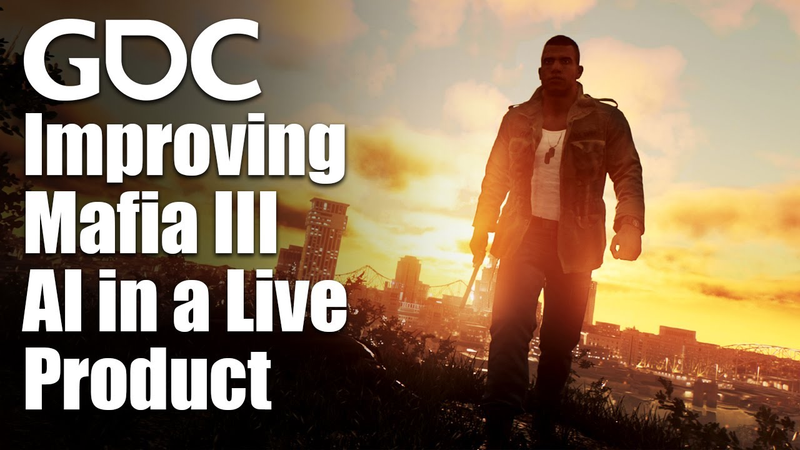
Triage on the Front Line: Improving Mafia III AI in a Live Product
The post-launch improvement of artificial intelligence in the open-world crime drama Mafia III serves as a case study for managing live product updates under strict resource and time constraints.
- Hangar 13 utilized a cross-functional 'strike team' consisting of engineers, animators, designers, and QA to execute a three-month post-launch AI improvement patch for Mafia III.
- Prioritization of AI fixes was determined by a three-factor framework: impact (player experience), complexity (potential for unintended knock-on effects), and cost (time and resource allocation).
- The team addressed AI responsiveness by refining event-based reaction systems, such as increasing the detection range for gunshots beyond the original 40-meter limit to ensure enemies properly escalated to combat.
