Mafia III
6 documents in the library are about Mafia III, from writers such as Game Developers Conference and Take-Two Interactive, the newest from 2021. Each has a summary and key insights with the page they come from.

Mafia III is an open-world action-adventure game played from a third-person perspective and the third entry in the Mafia series. Players control Lincoln Clay across a large recreation of the fictional city of New Bordeaux, modeled on New Orleans, tackling missions with a mix of gunplay, melee combat, stealth, and a cover system. Objectives can be approached in different ways, and players seize territory from rival criminal outfits and hand districts to their lieutenants. Period cars can be driven across the city, and the setting and licensed soundtrack draw heavily on the late 1960s American South.
- Released
- Oct 7, 2016
- Developer
- Hangar 13
- Publishers
- Take-Two Interactive, Aspyr Media, 2K Games
- Genres
- Shooter, Racing, Adventure
- Platforms
- Xbox Series X|S, PlayStation 4, PC (Microsoft Windows), PlayStation 5, Mac, Xbox One
- Links
- Official site, Wikipedia
Game data from IGDB.com
Documents about Mafia III
Triage on the Front Line: Improving Mafia III AI in a Live Product
The post-launch improvement of artificial intelligence in the open-world crime drama Mafia III serves as a case study for managing live product updates under strict resource and time constraints.
- Hangar 13 utilized a cross-functional 'strike team' consisting of engineers, animators, designers, and QA to execute a three-month post-launch AI improvement patch for Mafia III.
- Prioritization of AI fixes was determined by a three-factor framework: impact (player experience), complexity (potential for unintended knock-on effects), and cost (time and resource allocation).
- The team addressed AI responsiveness by refining event-based reaction systems, such as increasing the detection range for gunshots beyond the original 40-meter limit to ensure enemies properly escalated to combat.
Vehicle Audio of Mafia III: Recreating a Classic Era in Automotive History
The audio production for Mafia III centers on the challenge of recreating the authentic mechanical soundscape of 1968 New Orleans within the constraints of a high-octane, open-world action game.
- The development team recorded 30 distinct vehicle archetypes from 20 cars, two trucks, seven boats, and one electric vehicle to populate an expansive 1968 New Orleans setting.
- To ensure high-fidelity audio without environmental interference, the team used a Dyno-pack hydraulic braking system for controlled, silent recording sessions.
- The production scaled 30 original recordings across 90 total in-game car models by utilizing a flexible audio architecture that adapts to real-time physics data.
Creating the Characters and World of Mafia III
Mafia III centers on the narrative of Lincoln Clay, a Vietnam veteran navigating the volatile landscape of 1968 New Orleans.
- The narrative of Mafia III is set in 1968 New Orleans, utilizing a documentary-style presentation with archival footage to ground its fictional revenge story in the historical reality of the era's racial and social tensions.
- Developers utilized extensive research from literature, documentaries, and firsthand accounts to ensure historical accuracy in character motivations and systemic world-building.
- The game features a sophisticated police AI that dynamically adjusts response times based on the socioeconomic status of different city districts to mirror systemic disparities of the late 1960s.
Designing System Driven Dialogue in Mafia III
The design of Mafia III centers on a system-driven dialogue framework that replaces traditional, static branching narratives with a dynamic, state-based architecture.
- Mafia III replaces static branching narratives with a state-based architecture that triggers dialogue based on gameplay variables rather than linear scripts.
- The 'Sit Down' mechanic forces players to manage underboss loyalty by distributing conquered districts, directly linking economic strategy to narrative outcomes.
- Character behavior is governed by a database-driven system that tracks specific personality variables including greed, jealousy, and impatience.
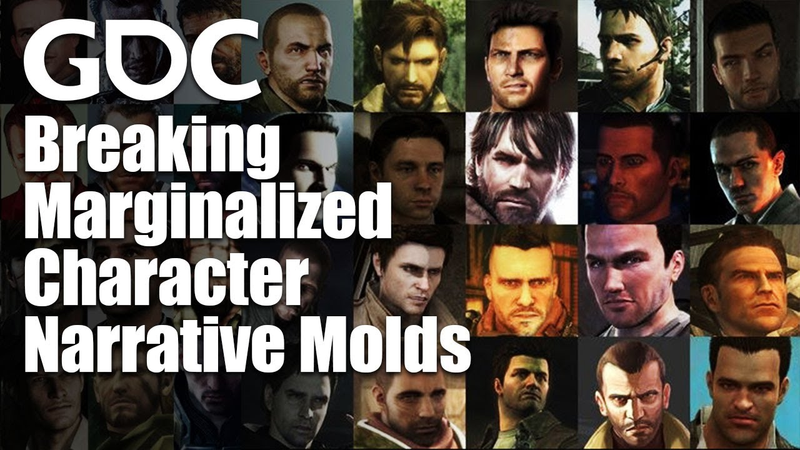
Breaking Marginalized Character Narrative Molds to Write Better, Richer Characters
The prevailing reliance on the cisgender, able-bodied white male as the default protagonist in video games frequently results in generic, imperialist archetypes that lack genuine relatability.
- Developers must move beyond the default cisgender, able-bodied white male protagonist to avoid generic, imperialist archetypes and foster deeper character relatability.
- Authentic representation requires grounding protagonists in specific, deliberate cultural and personal histories, as demonstrated in the narrative approach of Treachery in Beatdown City.
- Writers should avoid reducing marginalized characters to one-dimensional stereotypes or trauma-based plot devices, a failure observed in titles like Mafia III and Watch Dogs 2.
Take-Two Interactive Form 10-Q: Q1 Fiscal Year 2017
Take-Two Interactive’s financial performance for the first quarter of fiscal year 2017 reflects a strategic transition toward digital distribution and a continued reliance on key intellectual property.
- Grand Theft Auto products remain a critical revenue driver, accounting for 41.5% of Take-Two’s net revenue for the three months ended June 30, 2016.
- The company maintains a $100 million credit agreement expiring August 18, 2019, which had no outstanding borrowings as of June 30, 2016.
- Take-Two issued $283.2 million in 1.00% convertible notes due in 2018, which are convertible into approximately 13.36 million shares of common stock at an initial price of $21.52 per share.