Engine
Company
Documents about Engine
The Unreal and Epic Games Ecosystem | Develop:Brighton 2024
The Epic Games ecosystem is defined by its dual identity as both a technology provider and a veteran game developer.
- Epic Games operates as a developer-first organization with 4,000 employees across 15 countries, utilizing the same internal tools and Unreal Engine technology to build their own titles, such as Fortnite, that they provide to the industry.
- The Unreal Engine business model is royalty-driven, meaning Epic only collects a maximum 5% royalty on gross revenue once a game exceeds $1 million in lifetime earnings.
- Epic Games charges a 12% revenue share for sales conducted through their marketplaces, which they position as a lower-cost alternative to industry-standard distribution fees.
Unreal Engine Development Update | Develop Brighton 2024
Unreal Engine is undergoing a strategic evolution focused on maximizing graphical fidelity, streamlining large-scale world building, and enhancing overall developer productivity.
- Unreal Engine 5.5 will introduce experimental support for skeletal mesh Nanite, enabling internal hierarchies, animation, and displacement on skinned meshes.
- Epic is optimizing Nanite for dense foliage rendering to improve performance on Gen 9 consoles, addressing current limitations with small-scale geometry aggregation.
- The engine is shifting toward a 'Mega Worlds' initiative, utilizing smart assets with embedded Procedural Content Generation (PCG) graphs to allow environment artists to build complex biomes without manual placement.

AI and Human Dignity
The integration of artificial intelligence into game development must be strictly governed by ethical considerations, specifically the preservation of human dignity and the protection of intellectual property.
- The developer prioritizes ethical AI integration, limiting its use to administrative tasks like meeting summarization to avoid potential copyright, authorship, and human rights violations inherent in current data-scraping models.
- Performance optimization is a core design philosophy for the project, with the team actively considering bypassing the Unreal Engine 5 (UE5) renderer in favor of a simpler, more lightweight solution to avoid excessive hardware requirements.
- The project emphasizes manual craftsmanship over automated tooling, with 100% of the level design currently being built by hand rather than relying on procedural generation or AI-assisted workflows.
Should You Switch To Godot? (GODOT vs. UNITY vs. UNREAL)
The discussion evaluates the comparative utility of Godot, Unity, and Unreal Engine for independent game developers, focusing on the trade-offs between engine accessibility, technical capability, and production requirements.
- Engine selection should be treated as a functional business decision based on project scope and technical requirements rather than an ideological preference for open-source software.
- Godot is the optimal choice for 2D projects and developers prioritizing a lightweight, efficient architecture and cost-effectiveness.
- Unity and Unreal Engine remain the industry standards for large-scale production, complex 3D rendering, and reliable console deployment.

Wizards of the Coast will bet on new talent for future D&D and Magic video games
Wizards of the Coast is strategically pivoting toward becoming a major publisher of premium video games by leveraging its core intellectual properties, Dungeons & Dragons and Magic: The Gathering.
- Wizards of the Coast is pivoting to become a major publisher of premium video games by leveraging its Dungeons & Dragons and Magic: The Gathering intellectual properties.
- The company has partnered with the newly formed studio Giant Skull, led by industry veteran Stig Asmussen, to develop a new Dungeons & Dragons title.
- Wizards of the Coast is establishing a centralized content creation team to support studios with fantasy-focused art and world-building for projects developed in Unreal Engine 5.

Jake Birkett: How To Make Indie Games Full Time, Unity vs Custom Engine, Indie Survival | Ep. #051
Achieving long-term financial sustainability in the independent game industry requires a shift away from chasing viral trends toward building a diverse catalog of smaller, profitable titles.
- Indie developers should prioritize building a sustainable, long-term business model over chasing viral hits, as 95% of games fail to achieve significant commercial success.
- Consistent income can be generated by building a portfolio of games and leveraging a loyal fan base that purchases bundles and subsequent titles in a series.
- Game feel and player feedback—such as sound, visual effects, and intuitive mechanics—are more critical to long-term success than academic gray-box design or complex meta-systems.

Stirling Rank: How He Sold 9 Million Copies Of His Game, 8 Years Of Dev, Unity v Unreal | Ep. #050
The development of a successful tactical shooter requires a delicate balance between maintaining artistic integrity and navigating the pragmatic demands of the global gaming market.
- Stirling Rank’s tactical FPS game, Ready or Not, has achieved 9 million copies sold after approximately eight years of development.
- The game’s success is attributed to its 'offensively honest' approach, incorporating controversial themes like drug trafficking and violence as core narrative hooks.
- Rank advocates for using Unreal Engine over Unity, citing concerns over Unity's historical royalty structures and tracking algorithms.

Which Game Engine Is Best In 2025? UNITY vs. UNREAL?
The choice between Unity and Unreal Engine remains a central debate for independent game developers, particularly those focused on first-person shooters.
- Both Unity and Unreal Engine face significant performance bottlenecks regarding real-time shadow casting, requiring developers to manually limit the number of shadow-casting lights to maintain acceptable frame rates.
- Unreal Engine is often preferred for 3D and FPS projects due to its out-of-the-box support for features like Lumen, which provides real-time global illumination that is more difficult to achieve in Unity.
- The choice of game engine is frequently driven by team familiarity with specific programming languages, such as C++ for Unreal, and the need for cost-effective development tools for early-stage studios.
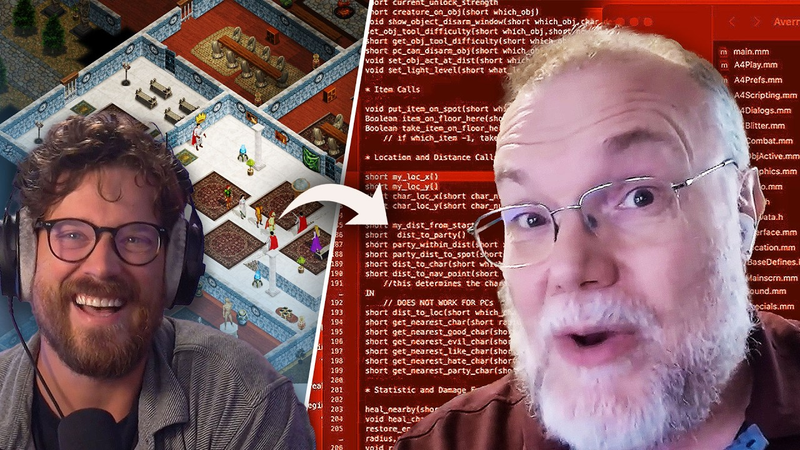
What A Custom Game Engine (NOT UNITY) Looks Like Behind The Curtain (w/ Jeff Vogel)
Maintaining a bespoke, 30-year-old game engine written in simple C++ offers a viable alternative to industry-standard tools like Unity.
- Maintaining a custom C++ engine with a compact codebase of 50,000 to 70,000 lines provides a viable, efficient alternative to complex industry-standard tools like Unity.
- Bespoke engines can bypass the need for extensive external documentation or software by utilizing manual scripting and global variables for data management.
- A grid-based coordinate system and script-driven object management allow solo developers to efficiently build and iterate on isometric, open-world environments.
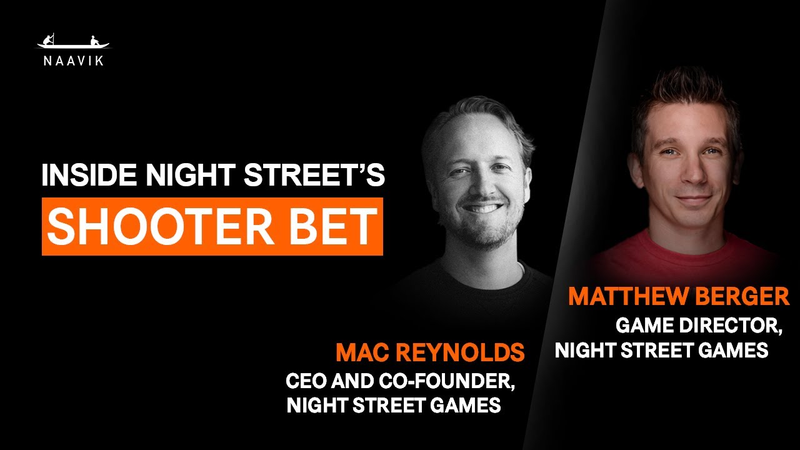
From Imagine Dragons Fame To Night Street’s Shooter: Last Flag
Night Street Games is carving a distinct niche within the competitive 5v5 hero shooter market through the development of its flagship title, Last Flag.
- Night Street Games has scaled from a small prototype team to a 50-person studio by fully integrating their outsourced partners into the core company structure to maintain cultural and creative alignment.
- The studio differentiates its 5v5 hero shooter, Last Flag, by prioritizing a capture-the-flag core loop over traditional shooter mechanics and embedding music into the gameplay to drive immersion.
- To compete in the oversaturated PC shooter market, the studio follows a strategy of avoiding direct competition with established titles like Overwatch, instead focusing on unique mechanics that appeal to a specific core player segment.
Session: Understanding The Creator-Driven Growth Engine For Mobile Games
The creator-driven growth engine for mobile games has evolved from a transactional model of purchasing ad space to a sophisticated, relationship-based strategy centered on long-term community engagement.
- Creator marketing has shifted from simple ad placements to long-term relationship building, requiring agencies or partners to manage collaborations at scale across the millions of available YouTube and TikTok channels.
- Successful creator programs, such as those used by Epic Games for Fortnite, utilize creator codes to link the game's economy directly to the creator economy, incentivizing influencers to drive both new installs and in-app purchases.
- Measuring success solely through direct install attribution is insufficient, as much of the value from creator-driven growth is evergreen, organic, and uncaptured by standard tracking models.
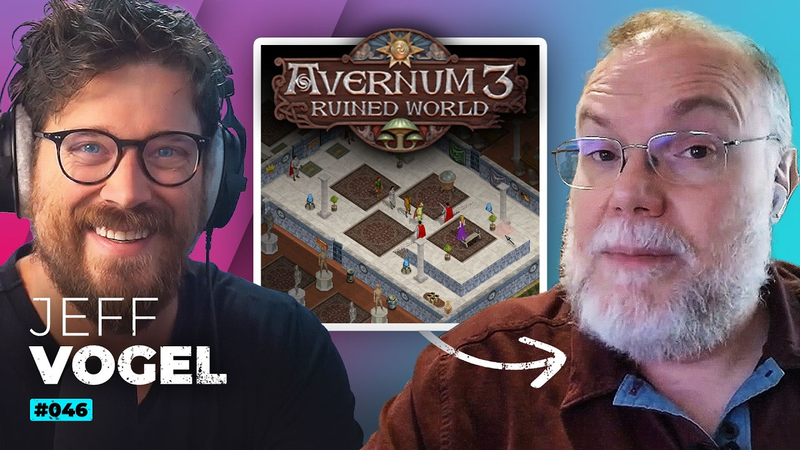
Jeff Vogel: Making Games Alone For 30 Years, Unity vs Custom Engine, Indie Survival | Ep. #046
Long-term survival in the independent game industry is best achieved by prioritizing sustainable business practices and niche creative focus over the pursuit of fleeting commercial trends.
- Survival as a solo indie developer for over 30 years is best achieved by cultivating a loyal, niche audience rather than chasing commercial hits.
- A sustainable indie business model relies on a large back catalog of titles and direct fan support through platforms like Kickstarter, which provides financial stability during industry downturns.
- Jeff Vogel’s studio, Spiderweb Software, has released 25 retro RPGs since 1994 by prioritizing consistent, manageable production over high-polish, high-risk projects.