Disney
CompanyUnited States
Documents about Disney
Shooter Monthly #7: Marathon’s Collapse, Apex’s Comeback, & Disney’s Extraction Shooter
The extraction shooter genre currently faces a critical inflection point, characterized by a tension between hardcore design philosophies and the necessity of mainstream accessibility.
- The extraction shooter genre is currently struggling with a critical tension between hardcore mechanics and the mainstream accessibility required for player retention.
- Titles like Marathon are seeing significant declines in daily active users, driven by punishing gameplay loops and a lack of effective onboarding for new players.
- Apex Legends serves as the industry benchmark for longevity by successfully oscillating between casual and hardcore audiences through sandbox refinements and accessibility features like bot-filled lobbies.
🚨📢 BREAKING NEWS: Royal Kingdom Adds Ads, Playtika Exits Social Casino, Mistplay Buys Mychips
The mobile gaming industry is currently undergoing a significant shift in monetization and user acquisition strategies, characterized by a move toward casual gaming, the consolidation of rewarded ad platforms, and the abandonment of "no-ads" policies by major studios.
- Dream Games has abandoned its 'no-ads' policy for Royal Kingdom, integrating interstitial and rewarded ads as of February 2026 to drive daily downloads from 100,000–300,000 up to 600,000.
- The addition of ads to Royal Kingdom generates an estimated $170,000–$190,000 in daily revenue without cannibalizing in-app purchases, with markets like Brazil showing simultaneous growth in both revenue streams.
- Playtika has pivoted away from social casino games, which are now in managed decline, to focus on casual titles that currently represent 76% of its business.
Sega-Rovio woes, Playtika goes casual, Unity's turnaround, pitching investors, data nuggets, more
The mobile games industry is currently defined by a shift toward pragmatism, consolidation, and a strategic pivot away from traditional free-to-play models.
- Sega is pivoting away from free-to-play mobile initiatives following a $200 million write-down related to the underperformance of its Rovio acquisition.
- Unity’s financial turnaround is anchored by its Vector adtech product, which achieved an 80% year-over-year revenue increase.
- Playtika has officially shifted its corporate strategy to prioritize casual gaming titles, such as Disney Solitaire, while treating its legacy social casino business as a non-growth asset.
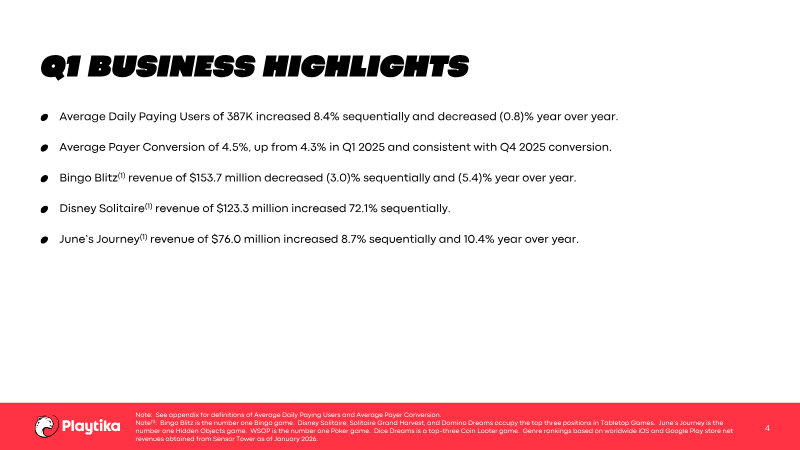
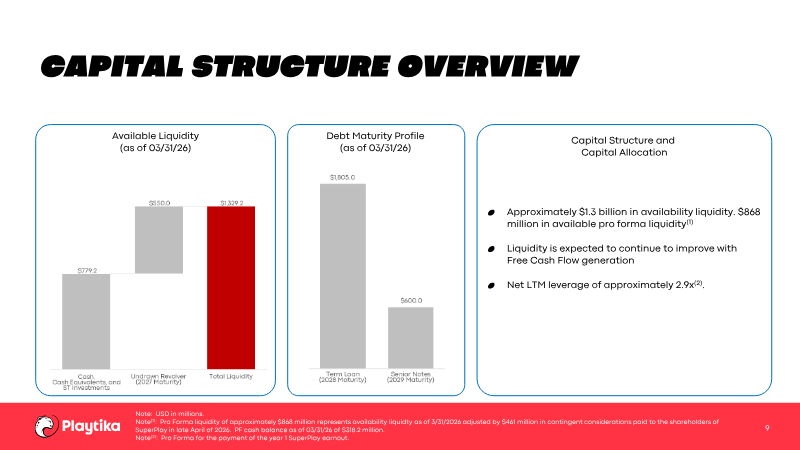
Playtika Holding Corp. Q1 2026 Earnings Results
Playtika Holding Corp.’s Q1 2026 earnings results reflect a period of mixed financial performance characterized by revenue growth alongside a net loss.
- Playtika reported Q1 2026 revenue of $744.7 million, a 5.5% year-over-year increase, but recorded a net loss of $57.5 million.
- Adjusted EBITDA fell 37.8% sequentially to $125.2 million, reflecting a significant decline in adjusted profitability metrics.
- Direct-to-consumer (DTC) platforms achieved record growth of 16.7% sequentially and 62.8% year-over-year as the company attempts to reduce reliance on third-party platform fees.
Playtika Holding Corp. First Quarter 2026 Results
Playtika Holding Corp.’s first quarter 2026 results reflect a period of mixed financial performance characterized by revenue growth alongside significant bottom-line pressure.
- Playtika reported Q1 2026 revenue of $744.7 million, representing a 5.5% year-over-year increase and a 9.7% sequential growth.
- The company raised its full-year 2026 guidance, now projecting revenue between $2,750 million and $2,850 million and Adjusted EBITDA between $750 million and $790 million.
- Direct-to-Consumer (DTC) revenue reached record levels, growing 62.8% year-over-year and 16.7% sequentially, while third-party platform revenue declined by 14.0%.
Playtika Holding Corp. Q1 2026 Financial Results
Playtika Holding Corp. reported its financial results for the first quarter of 2026, highlighting a period of revenue growth alongside strategic investments.
- Playtika reported Q1 2026 revenue of $744.7 million, representing a 9.7% sequential increase and 5.5% year-over-year growth.
- Direct-to-Consumer (DTC) platforms achieved record revenue of $291.8 million, marking a 16.7% sequential increase and 62.8% year-over-year growth.
- The company reported a net loss of $57.5 million, primarily driven by a non-cash impact from contingent consideration remeasurement related to the SuperPlay acquisition.

TWIG #380: Game Pass Gets Cheaper, China's Mobile Dominance & Division Resurgence Reviewed
The gaming industry is currently undergoing a structural realignment as the subscription-based model, often likened to a Netflix for games, fails to achieve long-term viability in Western markets.
- Xbox has reduced the price of Game Pass Ultimate by 23% and removed day-one access for major titles like Call of Duty, signaling a shift away from the unsustainable Netflix-style subscription model in Western markets.
- Publishers from China, Hong Kong, and Singapore now command 30% of Western mobile gaming revenue, highlighting the inability of Western developers to compete with Eastern production scale and rapid replication.
- Western firms are pivoting away from content-heavy subscription services to focus on high-margin infrastructure, including AI development, engine technology, and marketplace management.

Weekly Industry Briefing: March 2026
The April 2026 industry briefing provides a comprehensive overview of the mobile gaming sector, focusing on performance metrics, corporate strategy, and emerging trends.
- King's VP and head of live ops, Eva Ryott, discussed the company's use of AI, last summer's layoffs, and workplace culture, as well as how Candy Crush Saga is addressing competition in the puzzle genre.
- NetEase and Bungie have rebooted Destiny: Rising with a new update to combat declining revenue, and the community's initial reception to the changes is positive.
- March's top-grossing mobile games saw Gossip Harbor achieve a significant milestone, while Monopoly Go's revenue continued to decline, and Brawl Stars showed renewed success.
News Round-up: Gunzilla Drama, FAA Recruitment, Sunset Visitor's Next Game
This news summary provides a mid-April 2026 update on various developments within the global video game industry, focusing on corporate shifts, labor disputes, and upcoming software releases.
- Amazon’s Luna platform will terminate support for a la carte game purchases, third-party stores, and external subscriptions effective June 10, 2026.
- Gunzilla Games is under scrutiny for delayed employee payments, which the CEO has officially attributed to cash-flow management strategies.
- The U.S. Federal Aviation Administration is actively recruiting gamers to fill air traffic control roles amid ongoing agency staffing pressures.
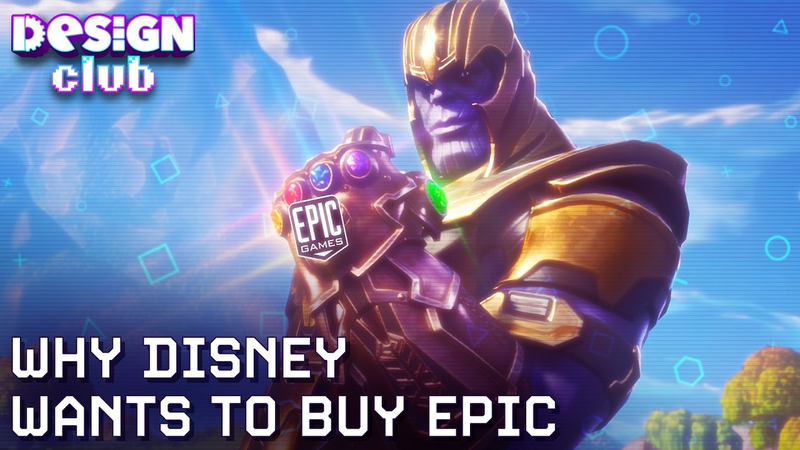
Why Disney Wants To Buy Epic | Design Club
Disney is actively pursuing a strategic acquisition of Epic Games to address a critical deficiency in its corporate portfolio: the lack of a robust, internal first-party gaming infrastructure.
- Disney lacks strong internal game development capabilities, making the acquisition of Epic Games a strategic move to gain control over high-value gaming assets and infrastructure.
- Epic Games provides three critical pillars for Disney: the Unreal Engine for content creation, the Fortnite platform for user engagement, and the Epic Games Store as a distribution channel.
- Integrating Epic into Disney's ecosystem would allow for massive content bundling, such as offering legacy Disney, Marvel, and Star Wars game titles as part of a Disney+ subscription.

Unity copies the AppLovin playbook with Vector | Week in Mobile Games podcast
This analysis covers recent developments in the mobile games industry, focusing on strategic shifts by major technology firms, legal challenges, and performance trends for specific titles.
- Unity is shifting its business model to mirror AppLovin by divesting its game publishing division, Supersonic, to focus exclusively on its 'Vector' growth strategy.
- The Ninth Circuit Court of Appeals has denied Apple’s request for a rehearing in the Epic Games App Store dispute, maintaining the current legal pressure regarding external transaction fees.
- Supercell’s Brawl Stars has seen a revenue resurgence, recording $33 million in February, a 9.2% increase since November 2024.
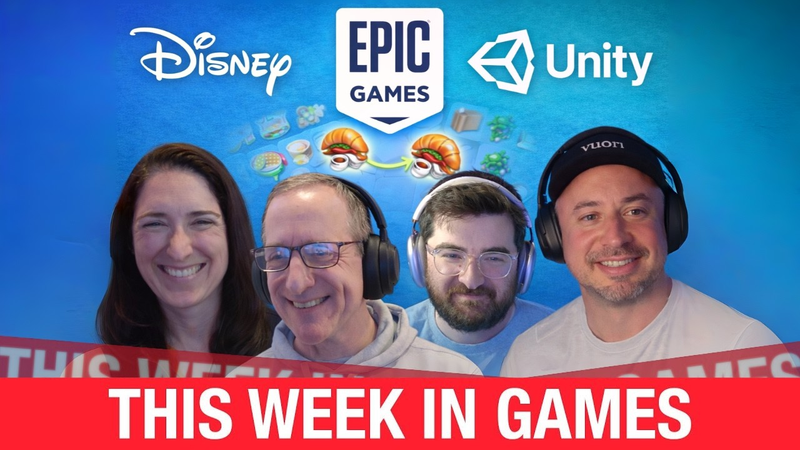
TWIG #377: Epic for Sale, Unity Cuts Deep, and Merge Keeps Printing
The video game industry currently faces a period of intense structural realignment, characterized by a shift away from speculative hardware and niche genres toward proven, high-margin monetization models.
- The gaming industry is shifting from speculative hardware and niche genres toward high-margin, data-driven monetization models as companies prioritize risk mitigation.
- Mobile gaming success is increasingly dominated by the 'merge-two' genre, with titles like Gossip Harbor leveraging slot-style economics and card-collection mechanics to monetize player impatience.
- Unity is undergoing a strategic retrenchment, divesting from underperforming ad networks to focus on its core engine business, though analysts remain skeptical of its ability to compete with market leaders.