Dice
CompanyUnited Kingdom
Documents about Dice

As a Battlefield studio, is Criterion Games really still Criterion?
Criterion Games has evolved from its origins as an independent developer of high-octane racing titles like Burnout and Need for Speed into a foundational pillar of the Battlefield franchise.
- Criterion Games has transitioned from an independent racing developer into a core support studio for the Battlefield franchise, working alongside DICE, Ripple Effect, and Motive.
- The studio maintains its creative identity by applying its historical expertise in high-octane, responsive gameplay mechanics to the Battlefield live-service model.
- Nearly 25% of the studio's workforce has over a decade of tenure, providing the institutional knowledge necessary to preserve the studio's design culture during its integration into a larger ecosystem.

Tencent, Playtika and SuperPlay shenanigans, further Google Play changes. Monopoly Go, MTG, more
The mobile games industry is currently navigating significant shifts in corporate ownership, platform accessibility, and market performance.
- Google has dropped its requirement for a 'registered app stores' program, allowing third-party app stores like the Epic Games Store to operate directly within the Google Play Store as of late July 2024.
- Tencent is reportedly in talks to acquire Superplay, the developer of Dice Dreams and Domino Dreams, for up to $1.5 billion following the studio's significant performance growth under Playtika.
- MTG reported Q2 group revenue of $306 million with a 24% profit margin, driven by Raid: Shadow Legends, which earned $111 million, while direct-to-consumer revenue grew to 38% of total group income.

Playtika for sale, data nuggets, Ilkka's BAFTA, Netflix Playground, game writers on mobile, more
The mobile games industry is currently navigating a period of significant strategic shifts and market stabilization.
- Playtika has initiated a strategic review to explore a potential sale, with an estimated enterprise value of $2.7 billion to $2.9 billion, following a 91% decline in market capitalization since January 2021.
- Global mobile in-app purchase (IAP) earnings remained flat in Q1 2026 at approximately $20.5 billion, with China-based publishers leading the market while US-based publisher revenue declined 14% year-on-year.
- Regional market performance in Q1 2026 showed significant growth in Singapore (up 22%) and Turkey (up 28%), while Japan’s market remained flat.

two & a half gamers session #39 - How to do a game review? Rush Royale full UA, GD, Admon analysis
Conducting a comprehensive game product review requires a multifaceted approach that integrates user acquisition, game design, and monetization strategies to evaluate a title’s market viability.
- Rush Royale generates approximately $1.7 million in monthly revenue from ads, accounting for roughly 30% of its total earnings.
- The game utilizes a localized ad network strategy, leveraging MyTarget for CIS markets and Pangle for Asian regions to maximize monetization.
- User acquisition for Rush Royale is driven by major networks including Unity, Facebook, and Google, utilizing gameplay-altered creatives to effectively capture target audiences.
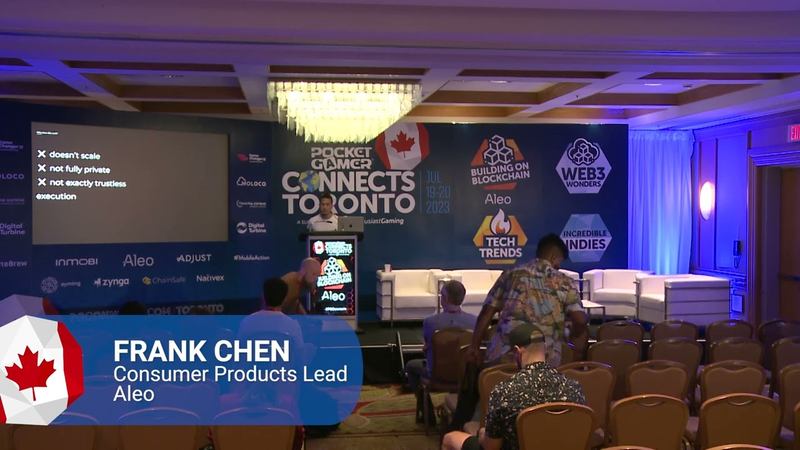
Your Game Will Suck Without Zero Knowledge Proofs - Frank Chen, Aleo
Decentralized gaming aims to eliminate the need for trusted third parties, protecting players from asset theft, data surveillance, and arbitrary service termination.
- Zero-knowledge (ZK) proofs are essential for decentralized gaming because they enable players to verify moves and game states without exposing private data or strategies.
- Public blockchain ledgers are currently unsuitable for genres like real-time strategy, shooters, and card games because they expose player inputs, which ruins games reliant on imperfect information.
- Existing privacy solutions are inadequate: trusted execution environments rely on vulnerable hardware, fully homomorphic encryption is too computationally intensive, and commit-and-reveal schemes lack long-term privacy.

Blockchain Tech at Dice 2022 | Games ReCAP
The 2022 DICE conference served as a primary industry forum for debating the integration of blockchain technology, non-fungible tokens (NFTs), and the metaverse into the gaming sector.
- The 2022 DICE conference revealed a sharp divide between executive and investor interest in blockchain financialization and the skepticism held by developers and players regarding its impact on game design.
- Proponents argue that decentralized server hosting could prevent game sunsetting by allowing multiplayer titles to persist after a studio ceases operations.
- Advocates proposed using token-based voting systems to grant players influence over game balance and development, a concept that faced significant pushback from professional designers.

FTUE: Disney Magical Dice
Disney Magical Dice, a mobile title developed by Netmarble, serves as a western-focused adaptation of the popular Korean board game Everyone’s Marble.
- Disney Magical Dice, developed by Netmarble, adapts the Korean board game Everyone’s Marble for Western audiences by blending Monopoly-style mechanics with collectible card game (CCG) progression.
- The game’s onboarding process suffers from significant friction, specifically due to mandatory push notification prompts and background data downloads that delay access to the core gameplay loop.
- While the tutorial effectively teaches basic movement and property acquisition, its restrictive nature fails to adequately prepare players for the game's more complex attribute management and card-fusion systems.
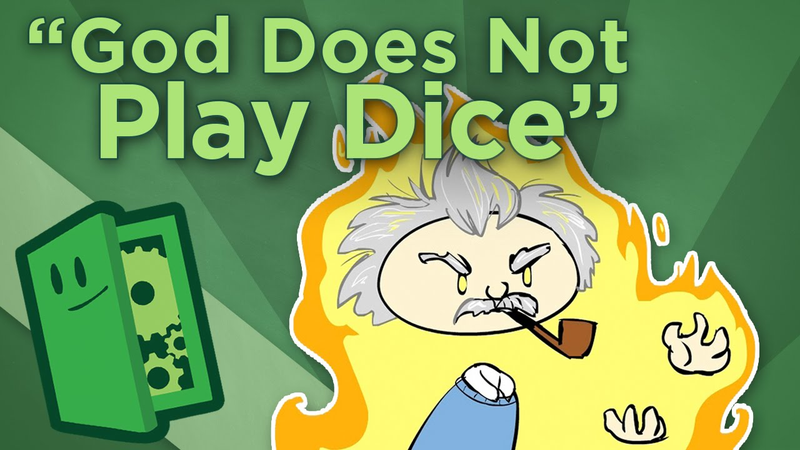
God Does Not Play Dice - The Danger of Unquestioned Belief - Extra Credits
This analysis examines the intersection of faith, science, and critical inquiry, arguing that the scientific method is not devoid of faith but rather relies on it as a foundational starting point.
- Scientific knowledge is not absolute truth but a dynamic process built upon axiomatic postulates that must be accepted on faith.
- Gödel’s incompleteness theorems demonstrate that complex mathematical systems inherently contain true statements that cannot be proven, precluding the possibility of total certainty.
- Treating science as an unquestionable dogma mirrors the risks of religious fundamentalism and can actively hinder progress, as seen in Albert Einstein’s rejection of quantum mechanics due to his personal belief in a deterministic universe.