Dark Horse
Company
12 documents in the library are about Dark Horse, from writers such as Embracer Group, Naavik and PocketGamer.biz. Each has a summary and key insights with the page they come from.
Connections
The documents about Dark Horse on the inner ring, the other games and companies they name on the outer one. Select a cover to see it up close and open it in a new tab; drag to move, pinch or Ctrl + scroll to zoom.
Key figures from the reports
Embracer Group reported a 121% increase in net sales to SEK 37.7 billion for FY 2022/23, driven by major acquisitions including Asmodee, Dark Horse Media, and Limited Run Games.
Embracer Group, 2023 · Embracer Group Q4 & Full Year Report FY 2022/23, p. 1
Embracer Group reported Q2 net sales of SEK 9,569 million, representing a 190% year-over-year increase driven by 35% organic growth and major acquisitions including Square Enix assets, Dark Horse, and Asmodee.
Embracer Group, 2022 · Embracer Group Interim Report Q2: July–September 2022, p. 1
Dark Horse reported 2021 net sales of SEK 900 million and an operational EBIT of SEK 130 million, with projections to reach up to SEK 200 million in operational EBIT by the 2023/2024 fiscal year.
Embracer Group, 2021 · Embracer Group Acquires Dark Horse: Presentation, p. 12
Documents about Dark Horse
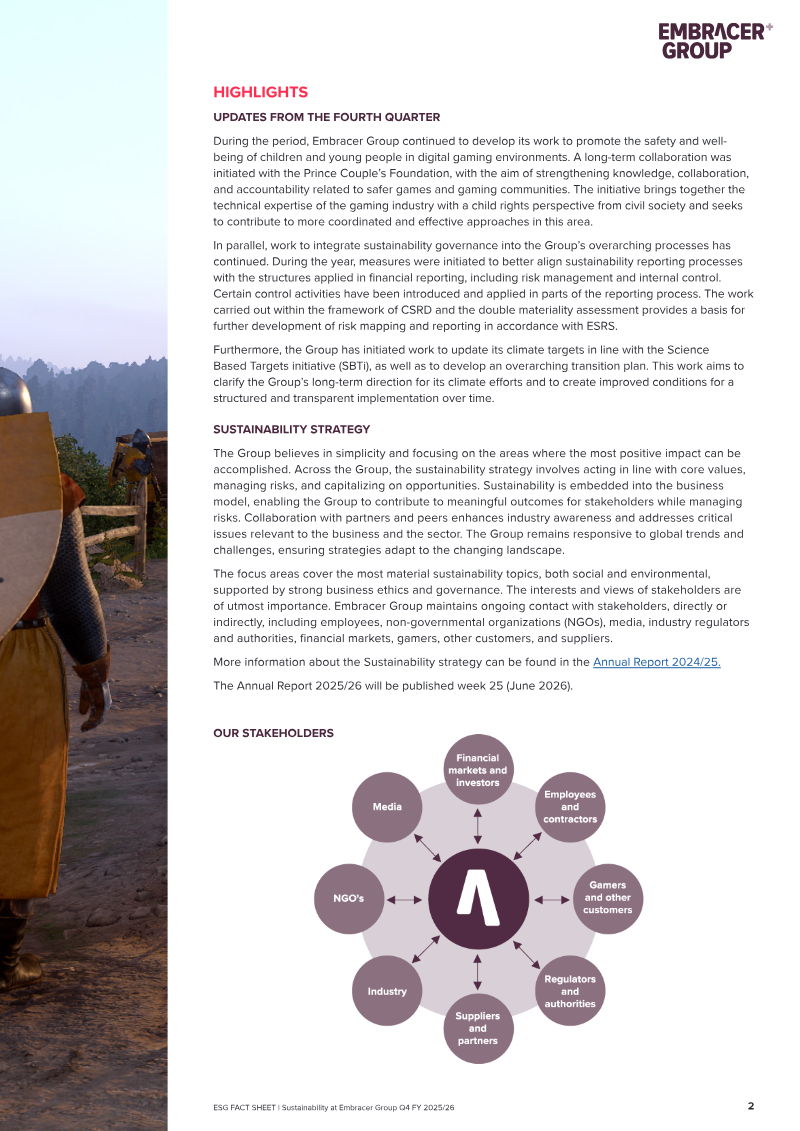
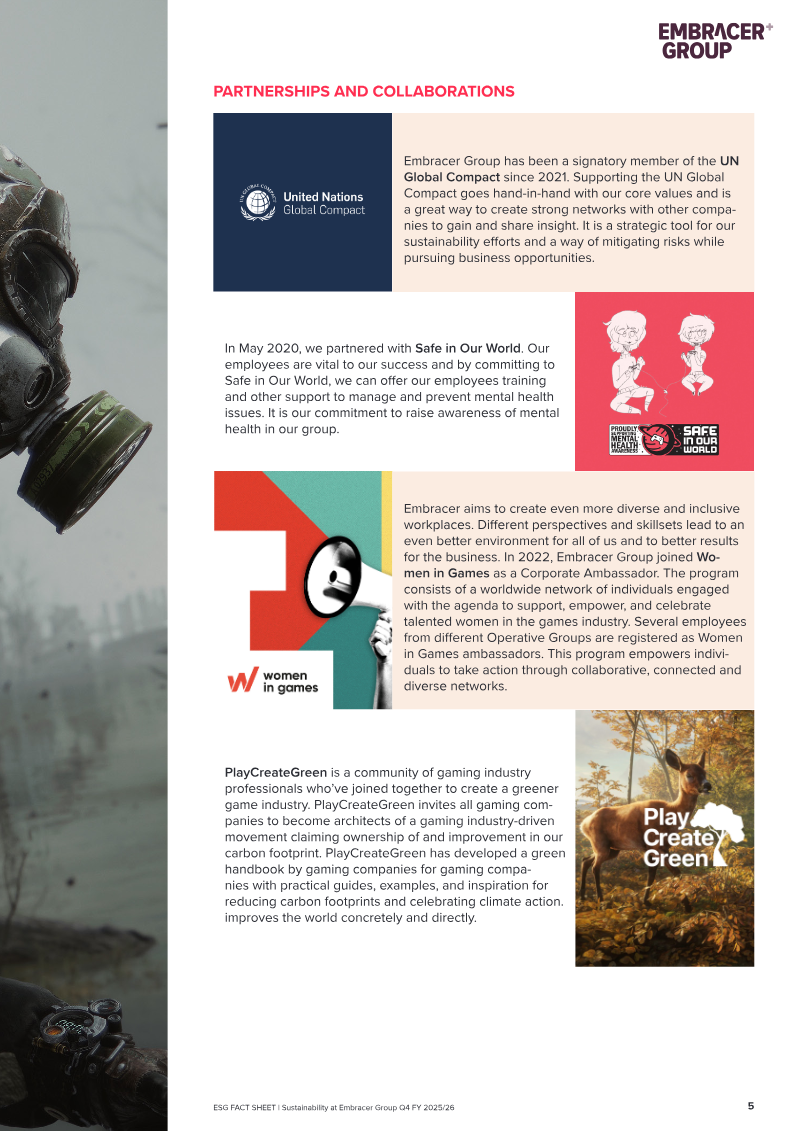
ESG Fact Sheet: FY 2025/26
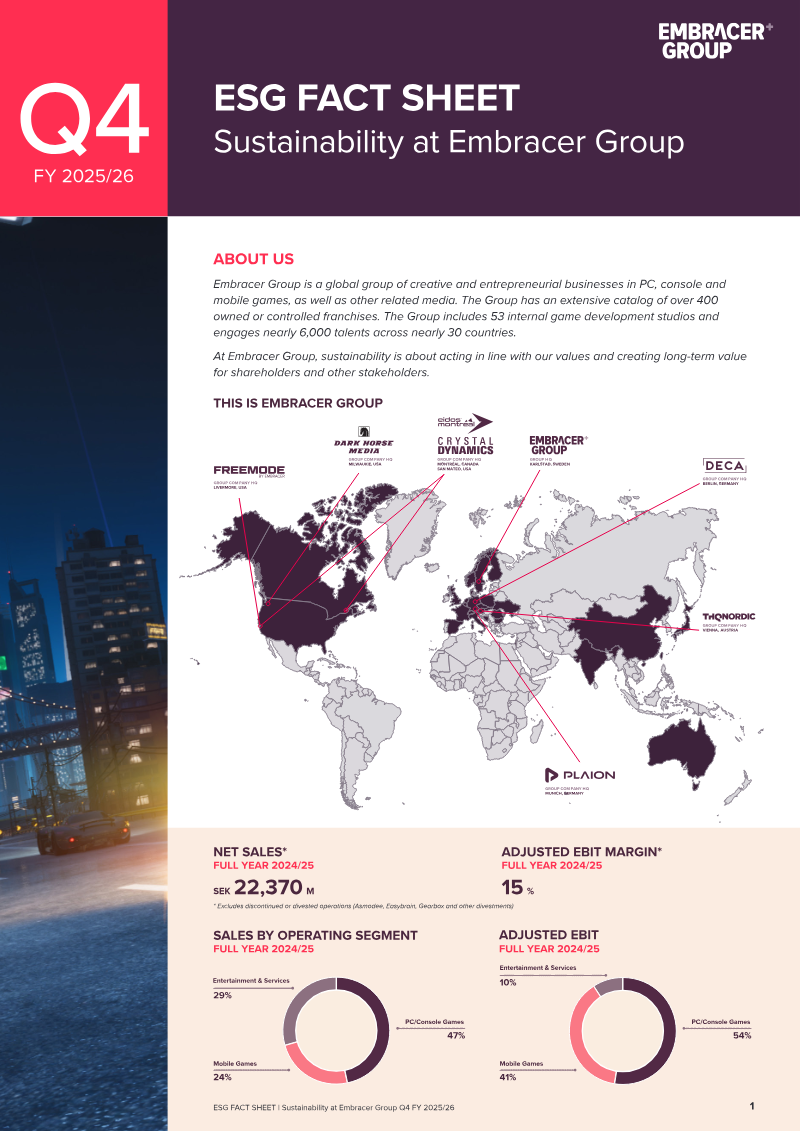
The Embracer Group’s FY 2025/26 ESG Fact Sheet outlines the organization’s commitment to integrating sustainability into its core business model, which spans PC, console, and mobile game development across nearly 30 countries.
- Embracer Group reported net sales of SEK 22,370 million with an adjusted EBIT margin of 15% for the 2024/25 fiscal year, excluding divested operations.
- The PC and console gaming segment is the company's primary revenue driver, contributing 47% of total sales and 54% of adjusted EBIT.
- The workforce consists of nearly 6,000 employees, with a gender distribution of 27% women and 73% men.
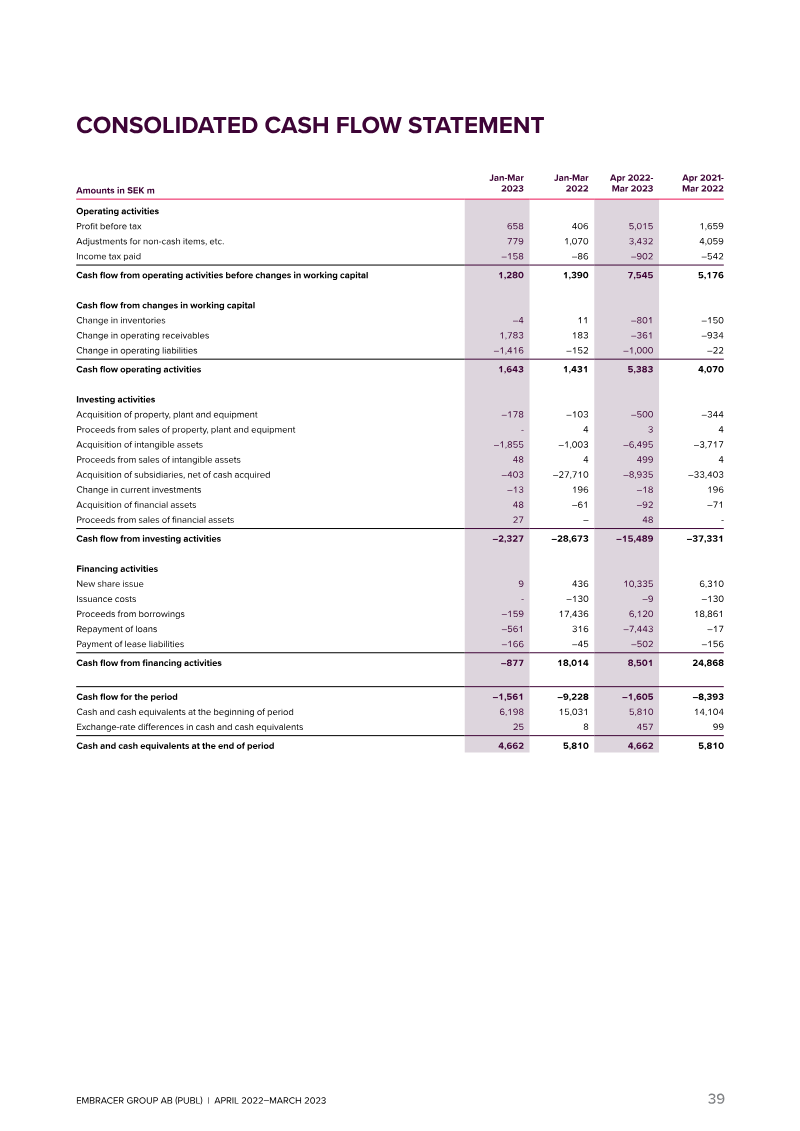
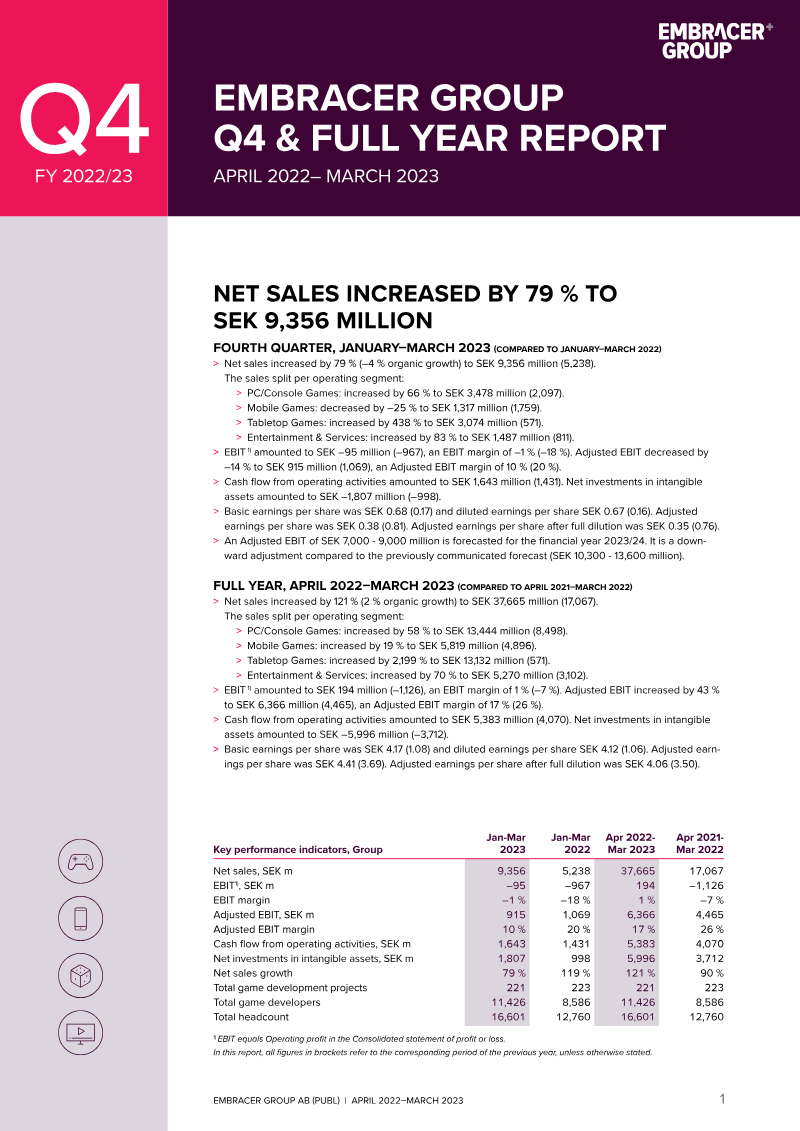
Embracer Group Q4 & Full Year Report FY 2022/23
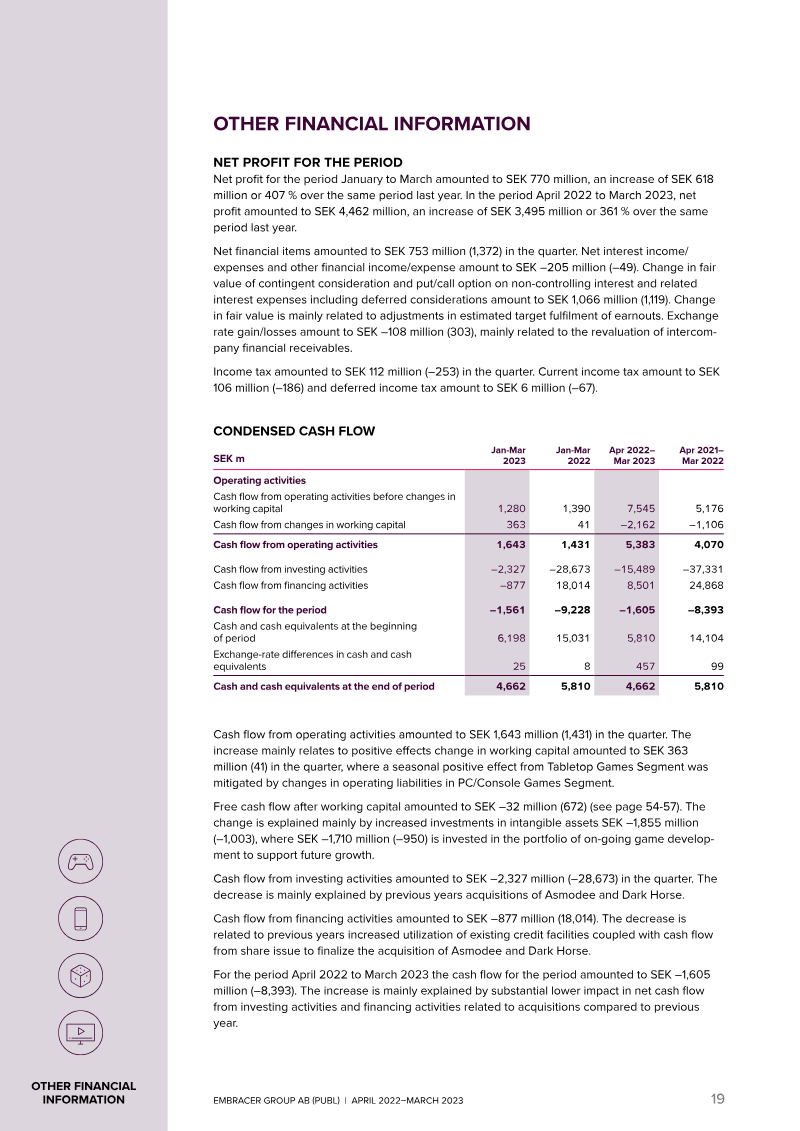
Embracer Group’s fiscal year 2022/23 was defined by aggressive expansion and structural transformation, resulting in a 121% increase in net sales to SEK 37.7 billion.
- Embracer Group reported a 121% increase in net sales to SEK 37.7 billion for FY 2022/23, driven by major acquisitions including Asmodee, Dark Horse Media, and Limited Run Games.
- The company revised its FY 2023/24 Adjusted EBIT forecast downward to SEK 7–9 billion following project delays and the collapse of a $2 billion strategic partnership.
- Despite annual net profits of SEK 4,462 million, the company recorded a quarterly EBIT loss of SEK 95 million, highlighting volatility in its current business model.
Embracer Group Interim Report Q2: July–September 2022
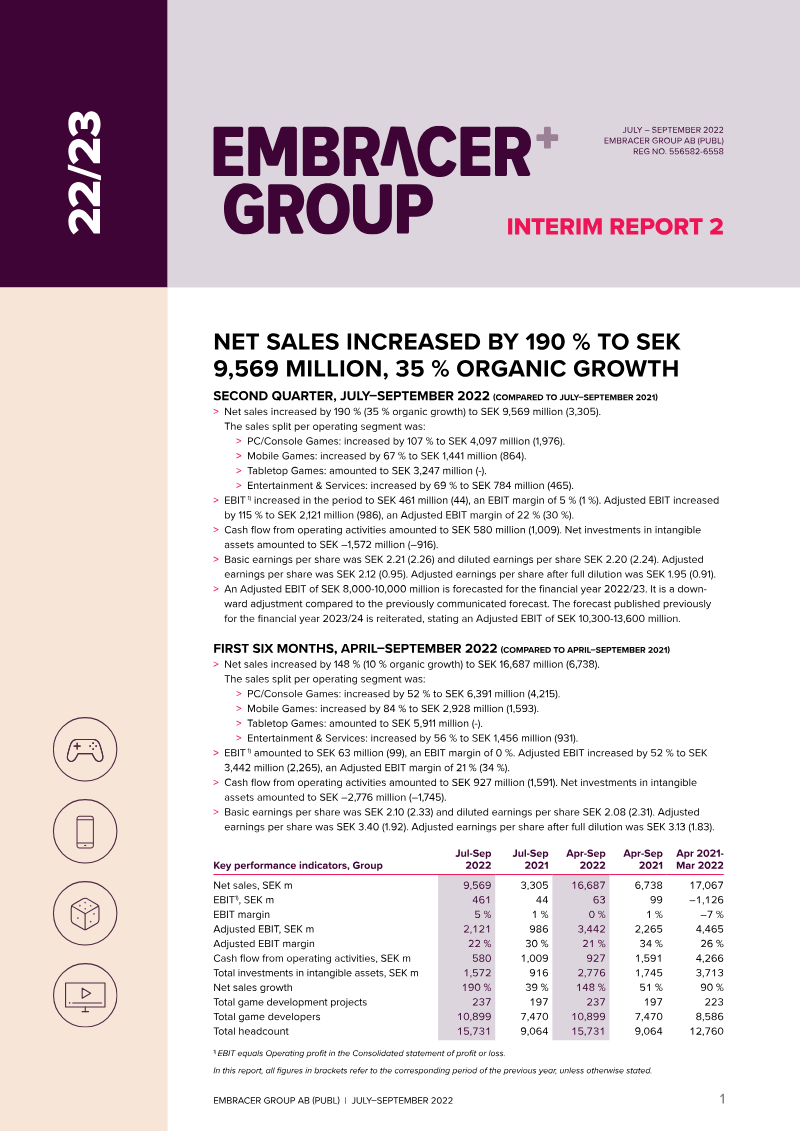
Embracer Group experienced substantial expansion during the second quarter of the 2022/23 financial year, reporting net sales of SEK 9,569 million, a 190% increase compared to the same period in the previous year.
- Embracer Group reported Q2 net sales of SEK 9,569 million, representing a 190% year-over-year increase driven by 35% organic growth and major acquisitions including Square Enix assets, Dark Horse, and Asmodee.
- The company lowered its full-year Adjusted EBIT forecast to a range of SEK 8,000–10,000 million, citing macroeconomic headwinds, mixed performance of new game releases, and rising user acquisition costs in the mobile segment.
- Management has initiated a comprehensive business review to optimize long-term value, which may include structural spin-offs to address the complexities of its rapid, acquisition-led expansion.
Embracer Group Annual General Meeting FY 21/22: Presentation
Embracer Group achieved substantial financial expansion during the 2021/2022 fiscal year, characterized by an 89 percent increase in net sales to SEK 17,037 million and a 54 percent rise in adjusted EBIT to SEK 4,416 million.
- Embracer Group achieved significant financial growth in FY 21/22, with net sales rising 89% to SEK 17,037 million and adjusted EBIT increasing 54% to SEK 4,416 million.
- The company is shifting from an aggressive acquisition-led strategy to a more disciplined, value-accretive approach focused on organic growth and stricter investment hurdles to manage macroeconomic volatility.
- A record SEK 3.5 billion was invested in internal game development during the fiscal year to support long-term IP value creation.
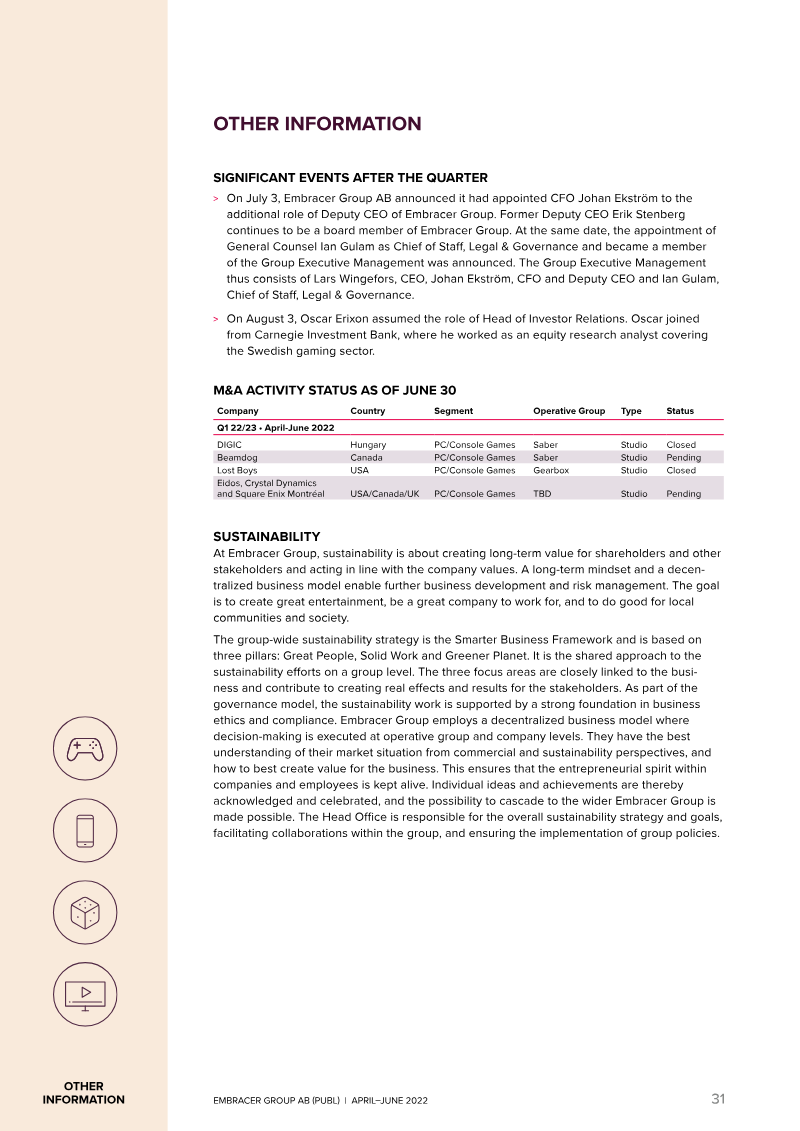
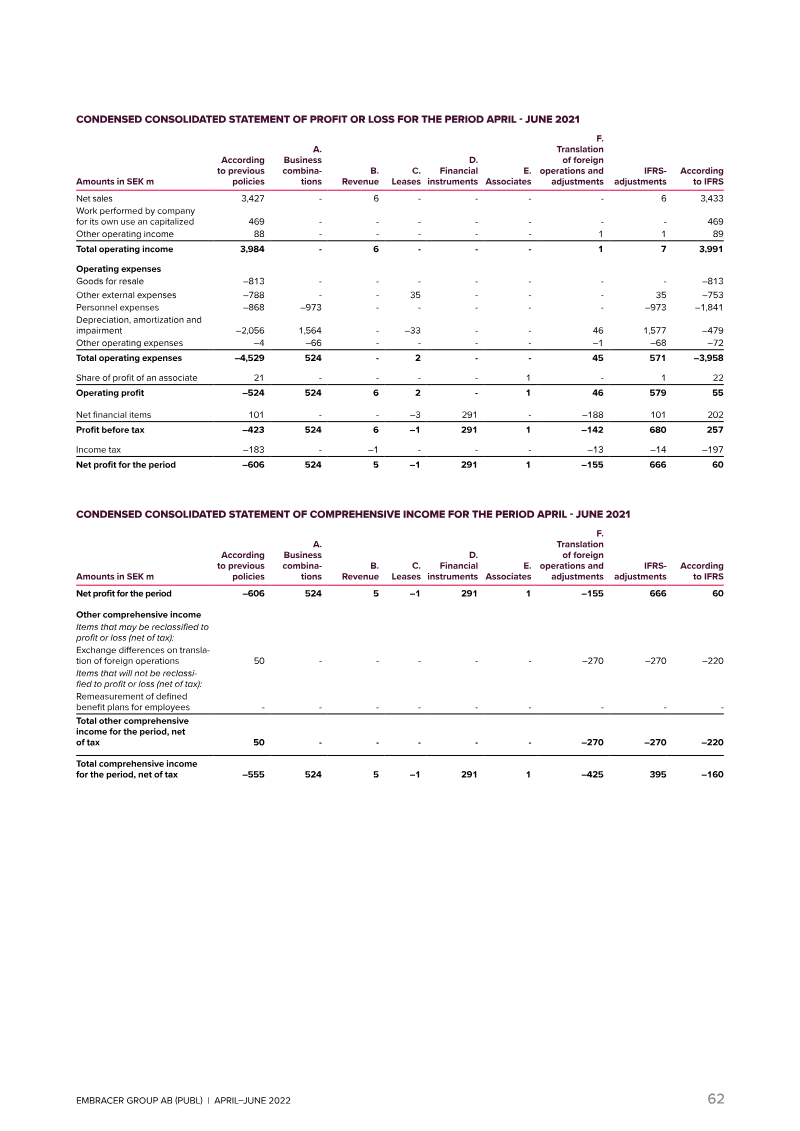
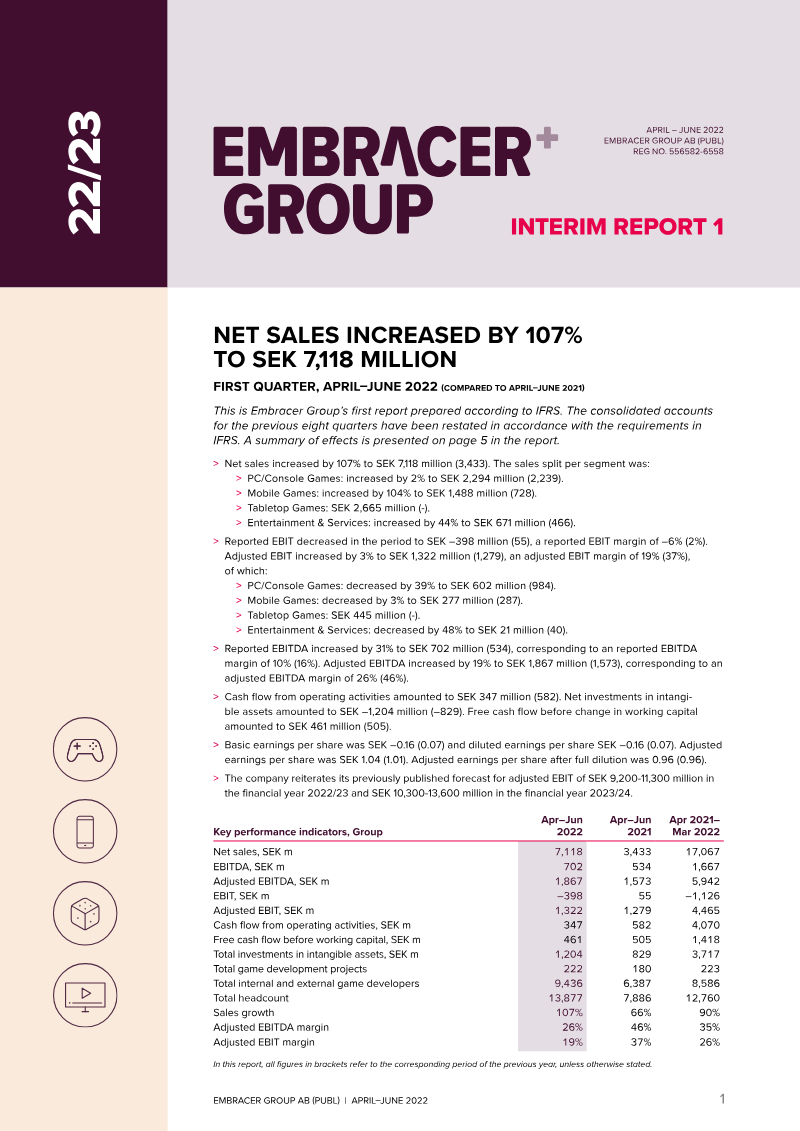
Embracer Group Interim Report: Q1 April-June 2022
Embracer Group’s financial results for the first quarter of the 2022/23 fiscal year reflect a period of aggressive expansion and structural transition.

Embracer Group Q4 FY21/22 Interim Report
Embracer Group achieved substantial financial expansion during the fourth quarter of the 2021/2022 fiscal year, characterized by a 117 percent year-over-year increase in net sales to SEK 5,229 million and a 17 percent rise in operational EBIT.
- Embracer Group reported a 117% year-over-year increase in Q4 FY21/22 net sales to SEK 5,229 million, alongside a 17% rise in operational EBIT.
- The company projects significant organic growth for FY22/23, with operational EBIT forecasts ranging between SEK 9,200 million and 11,300 million.
- The development pipeline currently includes over 223 projects, featuring more than 25 AAA titles and a threefold increase in accumulated investment for PC and console games.
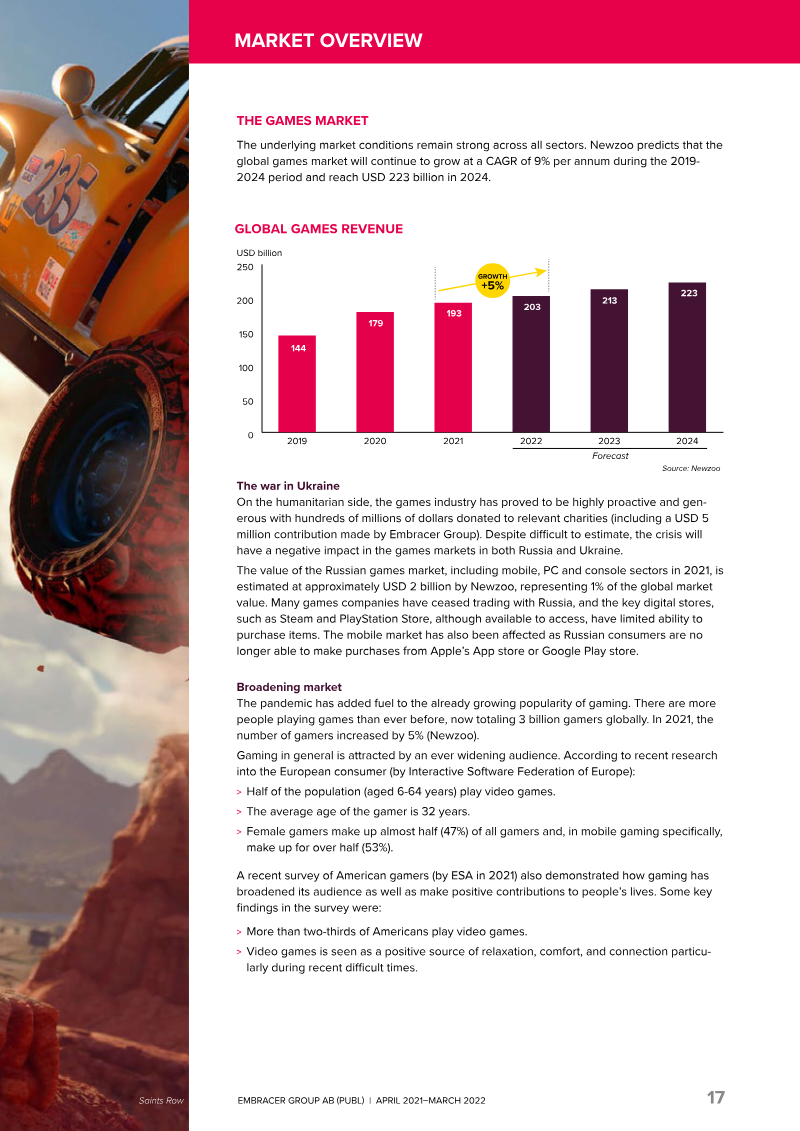
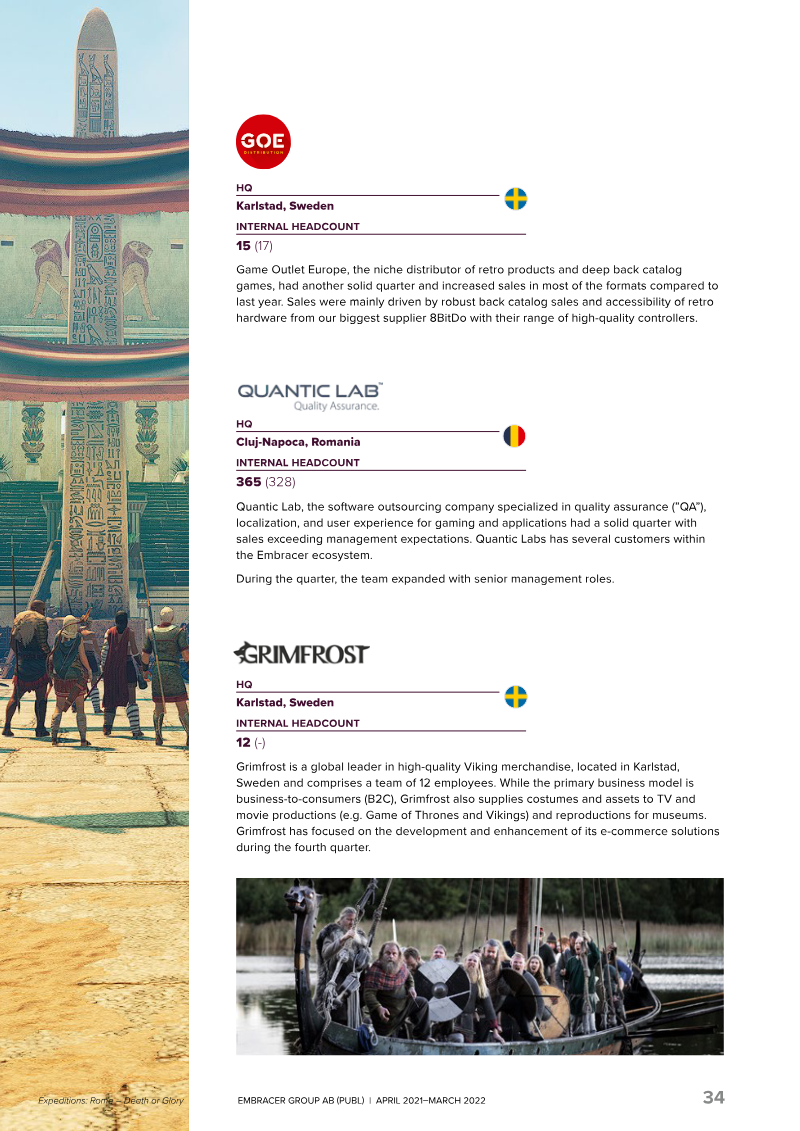
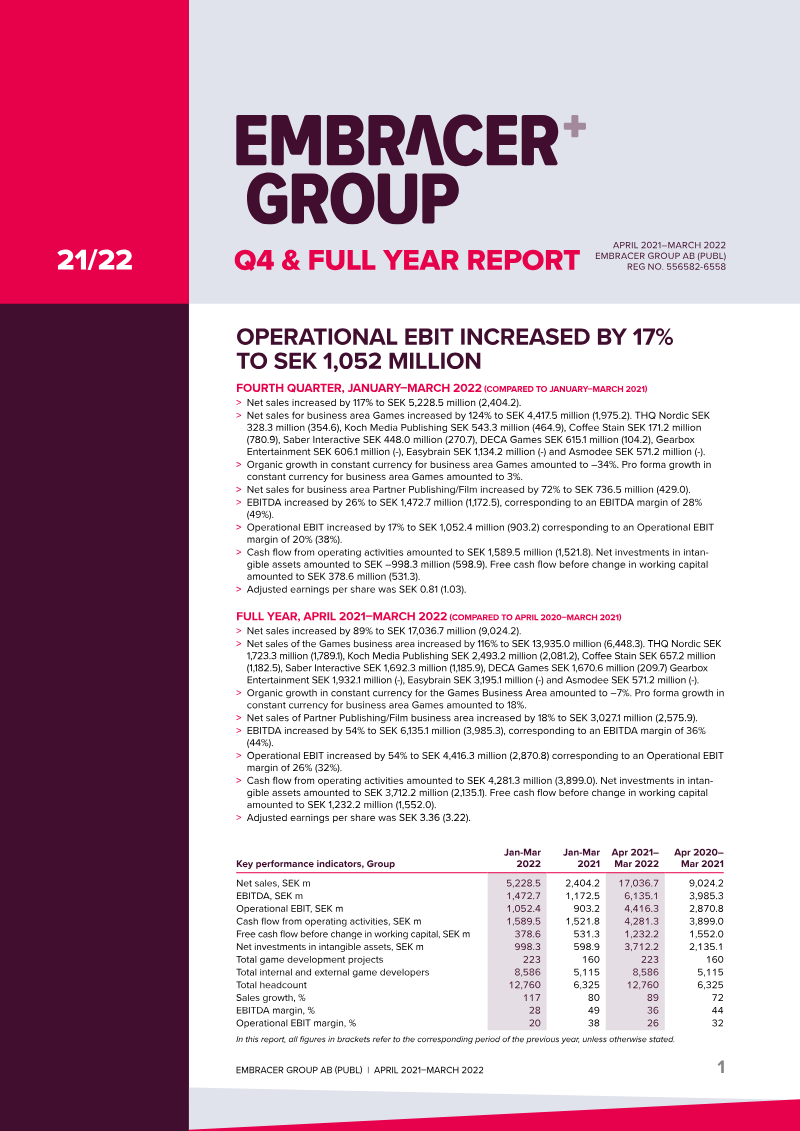
Embracer Group 21/22 Q4 & Full Year Report
Embracer Group’s fiscal year 2021/22 was defined by a transformative expansion strategy, characterized by aggressive mergers and acquisitions that significantly scaled the company’s global footprint.
- Embracer Group achieved an 89% increase in net sales to SEK 17.0 billion for fiscal year 2021/22, driven by an aggressive M&A strategy.
- The company reported a net loss of SEK 4.3 billion, primarily due to significant amortization and depreciation expenses resulting from its rapid acquisition cycle.
- As of the end of the fiscal year, the organization expanded to include 119 internal studios, over 850 owned franchises, and a development pipeline of more than 200 active projects.
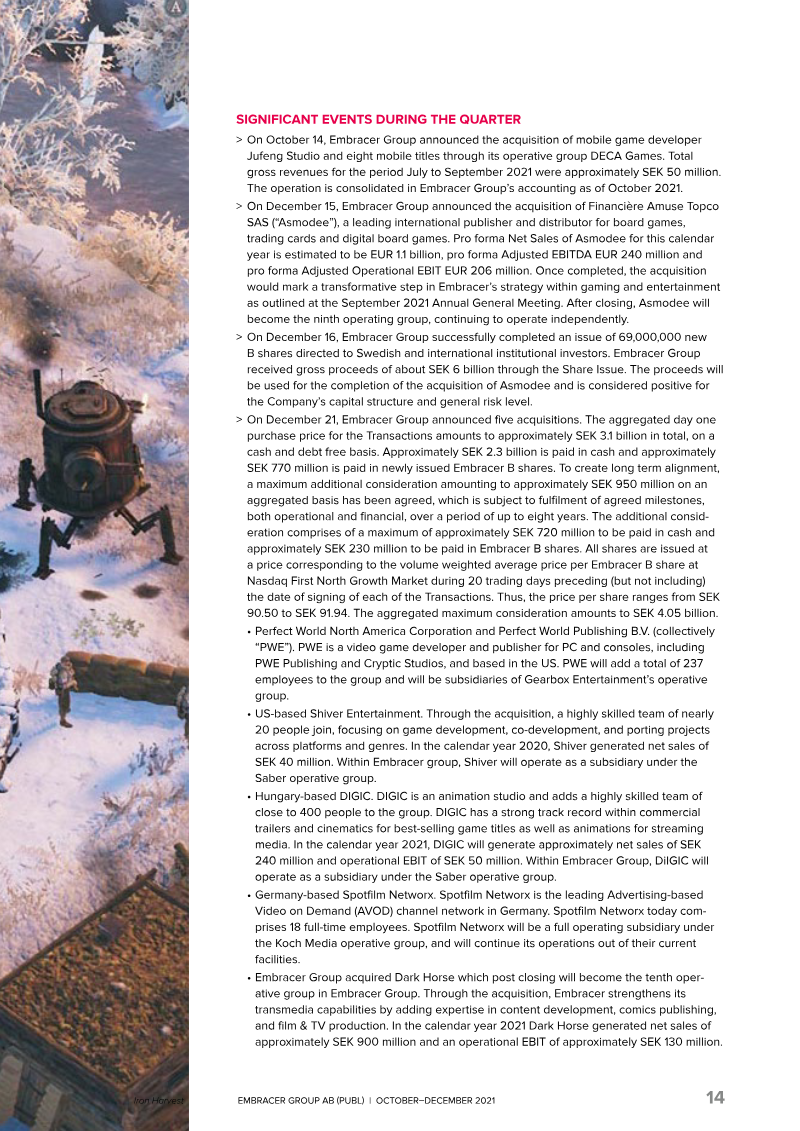
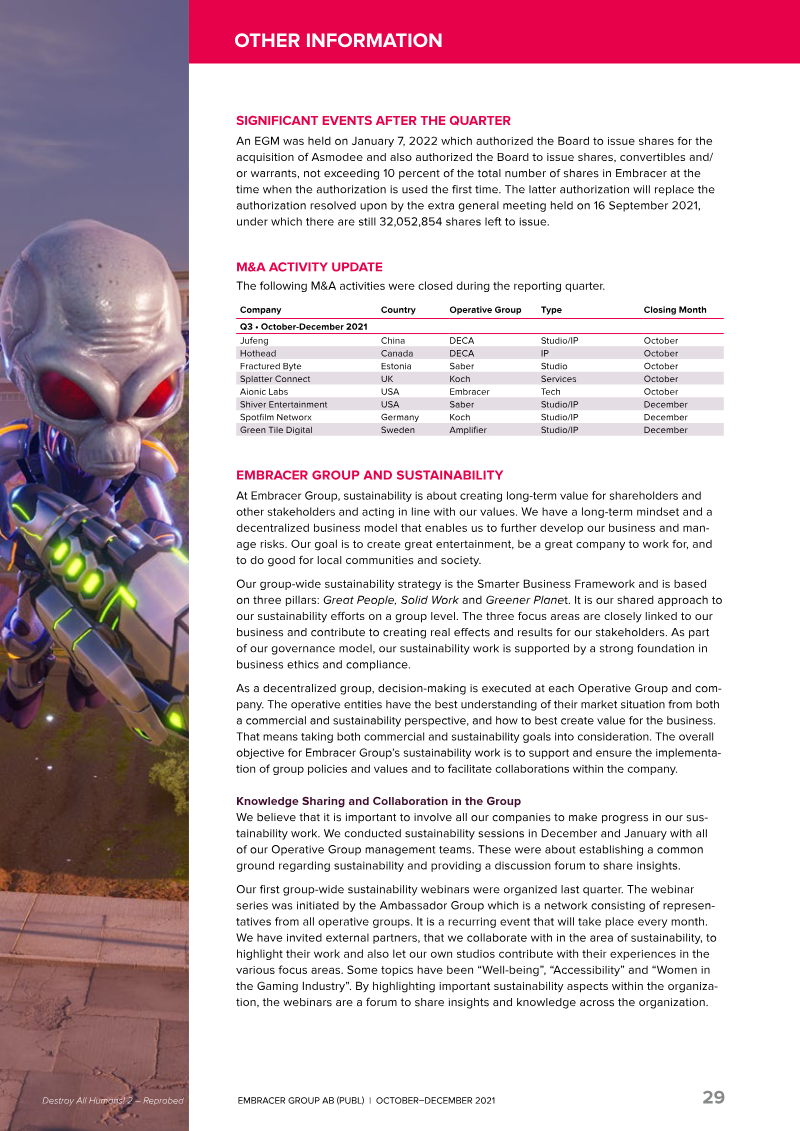
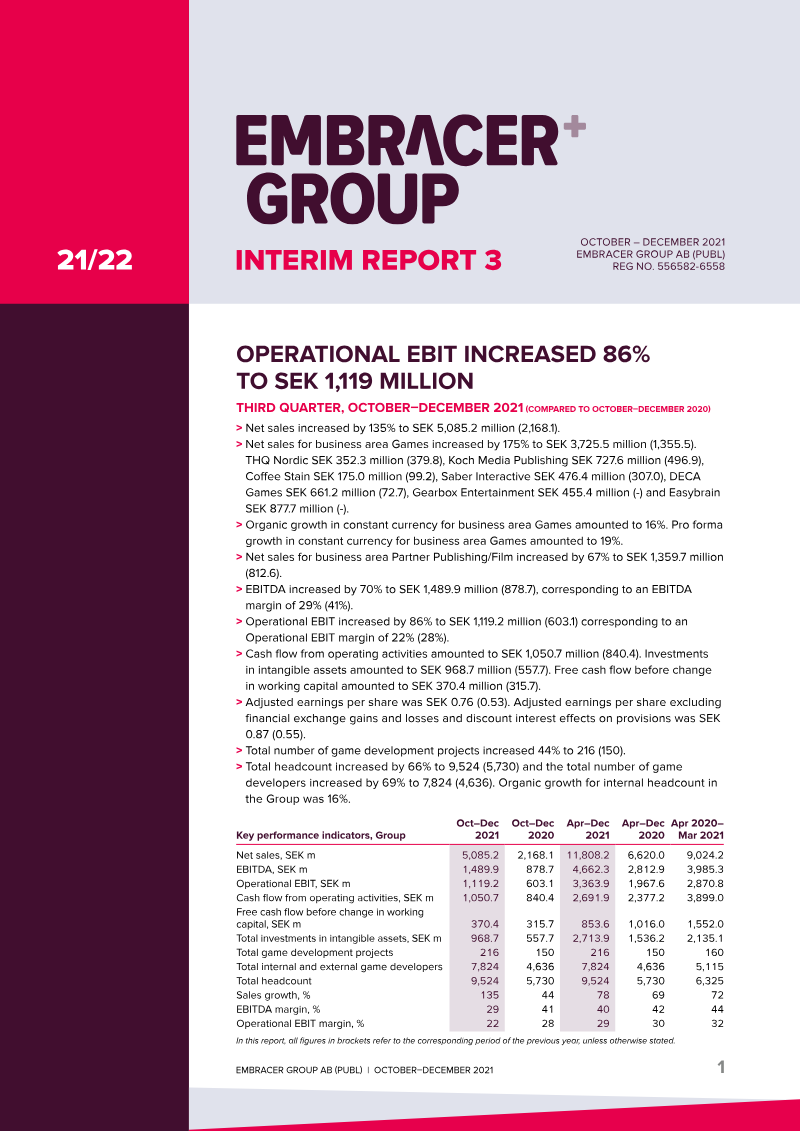
Embracer Group Interim Report: Q3 2021/22
Embracer Group’s fiscal third quarter of 2021/22 reflects a period of aggressive expansion and structural transformation, characterized by a 135% surge in net sales to SEK 5,085 million.
A Bit of Culture: Assembling by the Tree
This analysis explores the intersection of physical collectibles and digital entertainment, using the LEGO brand as a primary case study for understanding modern consumer behavior and investment trends.
- LEGO sets have emerged as a high-yield asset class, delivering an average annual return of 11% based on a study of 2,322 unopened products.
- LEGO has achieved a seven-fold increase in sales since 2003, driven by the modular nature of its system and thematic scarcity in the secondary market.
- The video game and toy industries are converging around the concept of 'fractionalization,' where consumer value is derived from assembling modular systems and personalized digital or physical experiences.
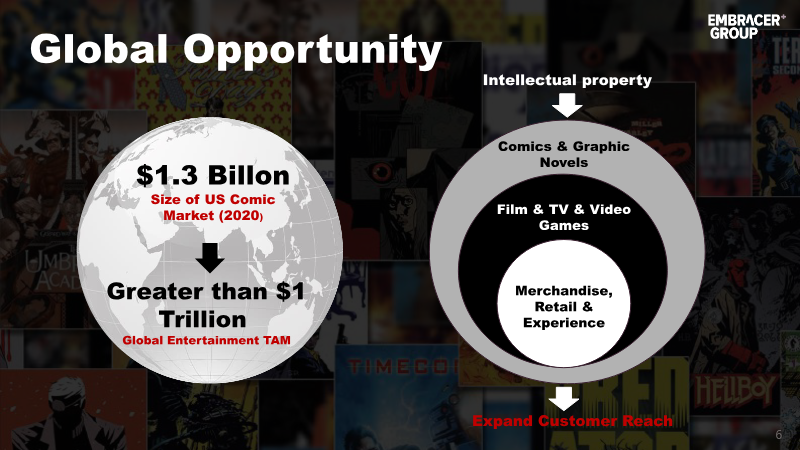
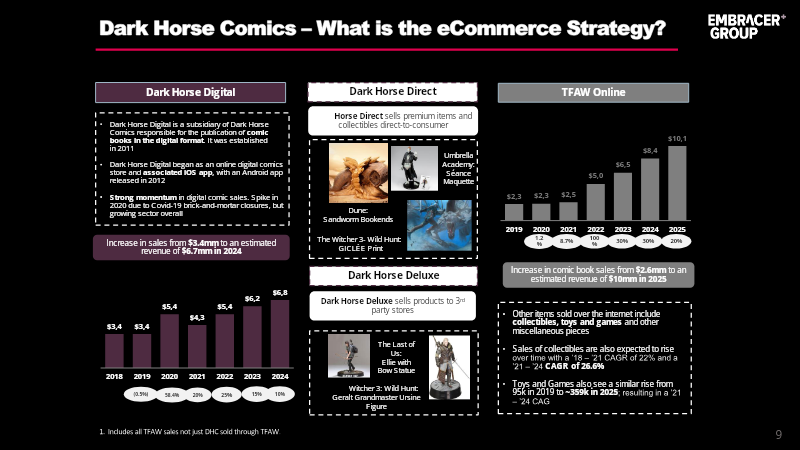
Embracer Group Acquires Dark Horse: Presentation
Embracer Group’s acquisition of Dark Horse serves as a strategic expansion into transmedia, integrating a major comic book publisher and production house into its existing portfolio.
- Embracer Group is acquiring Dark Horse to integrate its transmedia capabilities, including a library of over 600 titles and a network of 2,000 creative professionals, into its gaming portfolio.
- Dark Horse will become Embracer’s tenth operative group, with the transaction expected to close by January 2022 and no planned restructuring.
- Dark Horse reported 2021 net sales of SEK 900 million and an operational EBIT of SEK 130 million, with projections to reach up to SEK 200 million in operational EBIT by the 2023/2024 fiscal year.

Stillfront: Understanding Gaming’s Dark Horse
Stillfront Group has established itself as a formidable entity within the global gaming industry by successfully transitioning from a niche developer into a diversified powerhouse.
- Stillfront has achieved a $4.4 billion market cap by executing a decentralized acquisition strategy, scaling from one studio per year to a rate of one per quarter as of 2020.
- The company maintains 30%+ EBIT margins by focusing on a portfolio of proven, long-lifecycle free-to-play (F2P) games rather than the high-risk model of developing individual hit titles.
- Revenue diversification has shifted significantly toward mobile, which accounted for 75% of bookings by Q2 2020, with a genre mix split between casual/mash-up (38%), strategy (34%), and simulation/RPG/action (28%).
Success Bi Design: How we Embraced What we Knew (in a Field we Didn’t) to Achieve Success
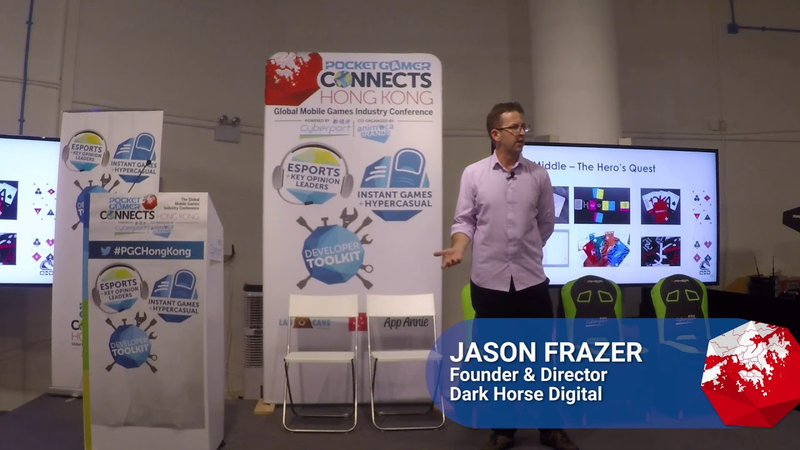
The presentation outlines the strategic journey of Dark Horse Digital, a two-person startup that successfully navigated the game development industry despite lacking a traditional technical background.
- Founders can overcome a lack of technical expertise by retaining intellectual property while outsourcing development to specialized partners, such as the Finnish firm Kaos Games.
- The four-pillar startup framework—hipster (design), hacker (coding), hustler (sales), and hound (research)—provides a structured approach for non-technical founders to manage game development.
- Market research should be segmented by demographic, specifically targeting 18-25-year-old Android users, 18-30-year-old Apple users, and high-spending users over 40.