Clover Studio
Company
4 documents in the library are about Clover Studio, from writers such as Capcom and DiGRA. Each has a summary and key insights with the page they come from.
Connections
Each row is a game or company named alongside Clover Studio, each column a document, oldest first. A mark means that document names it. Select a row to see those documents.
Documents about Clover Studio
Preserving Hmong Batik Through Video Games
This paper presents an ongoing research project examining how video games can help safeguard intangible cultural heritage, focusing on Hmong batik, a resist-dyeing craft practiced by the Hmong people of southwestern China.
- The paper argues games can preserve intangible cultural heritage by reaching audiences that traditional documentation may not, using Hmong batik as its case study.
- The central artifact, Batiked, is a Unity-based 2D platformer whose mechanics mirror the batik process of waxing, dyeing, and melting, with level design drawing on Hmong motifs including stone and mythic imagery.
- The work is framed under Research through Design, treating the prototype as an executable argument and game design itself as a research method bridging ethnographic craft study and human-computer interaction.
The Cultural Economy of Ludic Superflatness
This paper examines the "superflat" aesthetic described by artist Takashi Murakami as a defining feature of Japanese visual culture, applying it specifically to Japanese digital games as an interpretive framework it terms "ludic superflatness."
- Ludic superflatness is presented as a framework applying Takashi Murakami's superflat aesthetic to Japanese digital games, treating it as an agentive, polemical expression of culturally hybrid national identity shaped by postwar Japan's relationship with the United States and the blurring of high art and subculture.
- The author argues that games such as the Katamari series, WarioWare: Mega Microgame$, and Viewtiful Joe embody superflat aesthetics through flattened 2D visual conventions, serial reproducibility, and intertextual pastiche while reflecting contemporary commercial production logics.
- The analysis uses cultural economy theory, which treats economic and symbolic processes as mutually constitutive, reading games as assemblages of aesthetic, gameplay, and commercial practices.

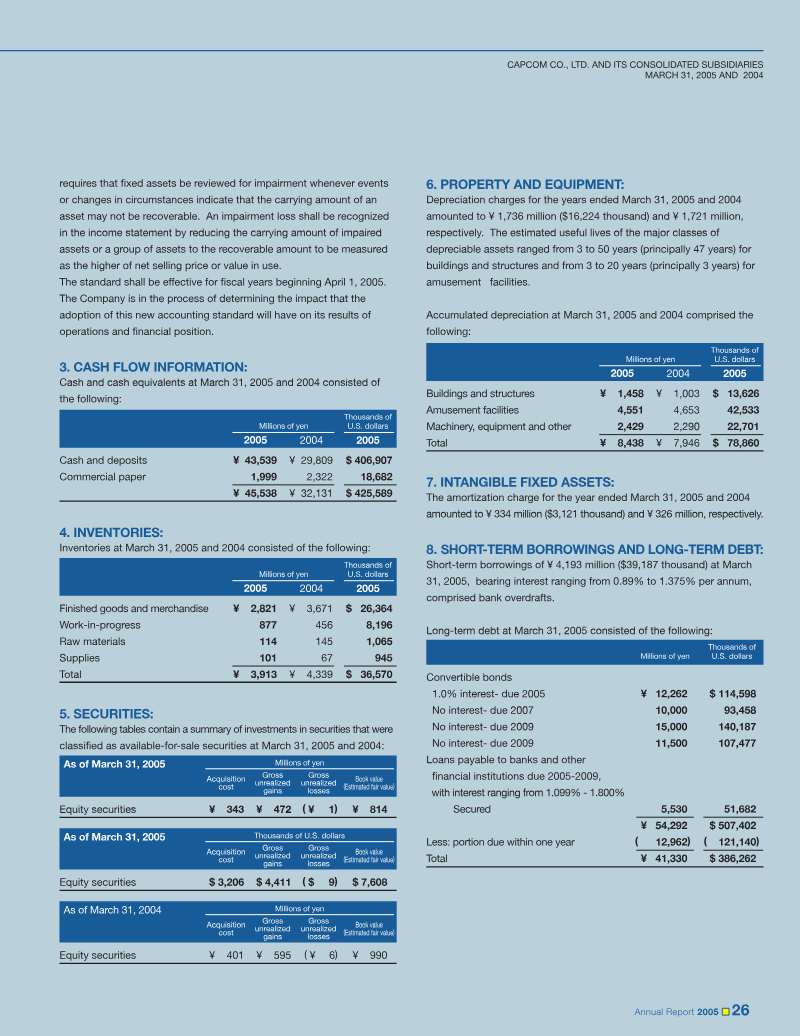
Capcom Annual Report 2005
Capcom’s 2005 fiscal year represents a pivotal financial turnaround, characterized by a successful transition from a net loss of ¥9,159 million in the previous year to a net income of ¥3,622 million.
- Capcom returned to profitability in fiscal year 2004, reporting net sales of 65,896 million yen (up 25.1% year-over-year) and a net profit of 3,622 million yen, following a 9,159 million yen net loss in the previous year.
- Operating income saw a significant increase of 452.6% to 7,753 million yen, driven by successful structural reforms and cost-reduction initiatives.
- The company is prioritizing a multi-platform development strategy for next-generation consoles, with 70% of resources allocated to large-scale sequels and 30% to new titles, including upcoming releases like 'Resident Evil 5' and 'Devil May Cry 4'.
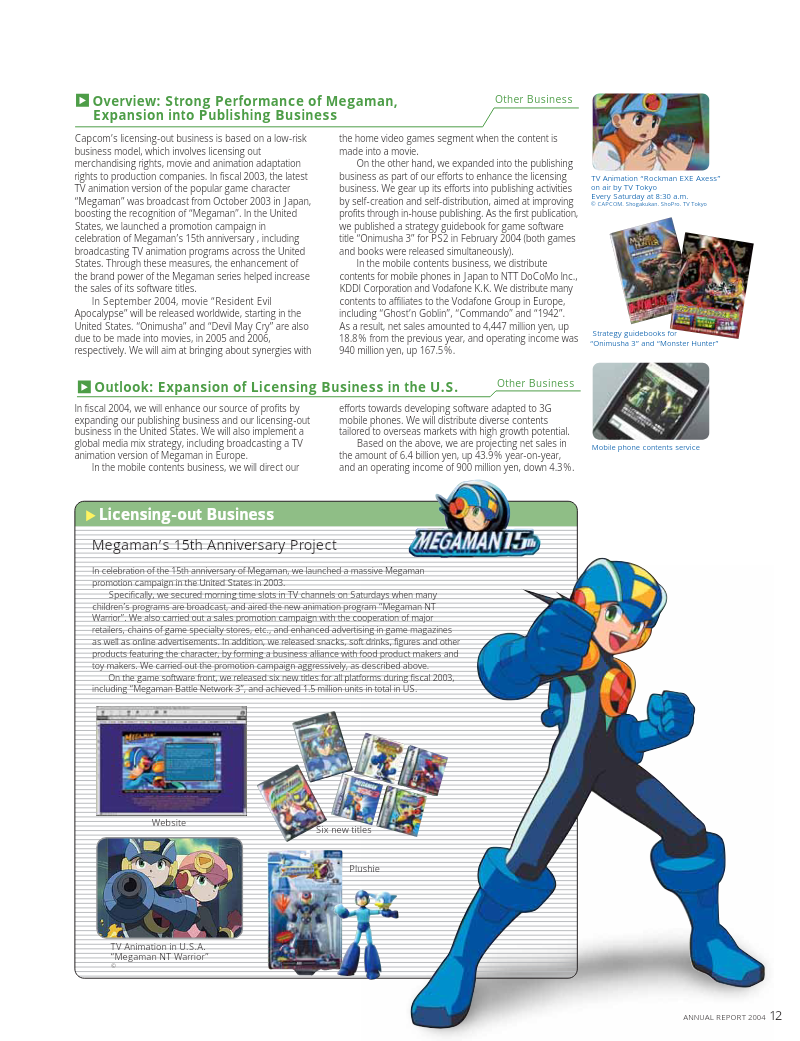
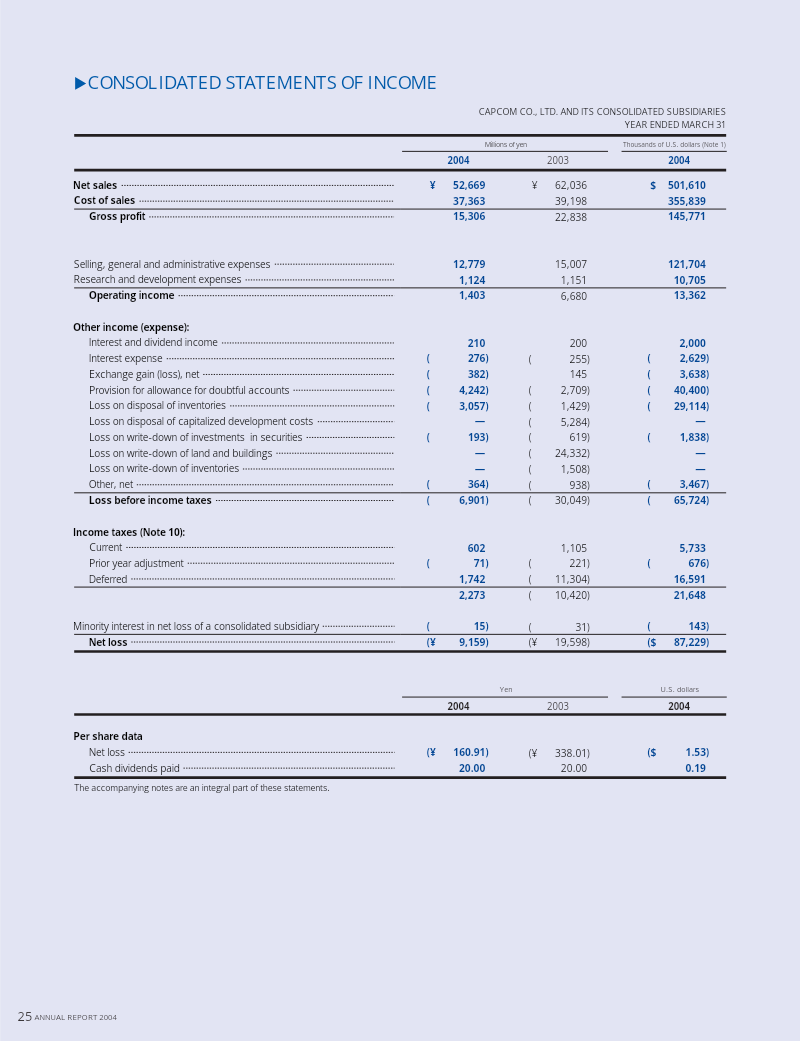
Capcom Annual Report 2004
Fiscal year 2004 represented a period of significant financial contraction for Capcom, characterized by a net loss of 9,159 million yen and a 15.1 percent decline in consolidated net sales to 52,669 million yen.
- Capcom reported a net loss of 9,159 million yen for fiscal year 2004, with consolidated net sales falling 15.1 percent to 52,669 million yen.
- The home video game segment drove the financial downturn due to delayed software releases, rising development costs, and inventory adjustments in North American and European markets.
- Overseas revenue contribution declined significantly, dropping from 42.4 percent to 27.2 percent of total income.