Ōkami
Game
2 documents in the library are about Ōkami, from writers such as Capcom and DiGRA. Each has a summary and key insights with the page they come from.
Connections
Each row is a game or company named alongside Ōkami, each column a document, oldest first. A mark means that document names it. Select a row to see those documents.
Documents about Ōkami
Preserving Hmong Batik Through Video Games
This paper presents an ongoing research project examining how video games can help safeguard intangible cultural heritage, focusing on Hmong batik, a resist-dyeing craft practiced by the Hmong people of southwestern China.
- The paper argues games can preserve intangible cultural heritage by reaching audiences that traditional documentation may not, using Hmong batik as its case study.
- The central artifact, Batiked, is a Unity-based 2D platformer whose mechanics mirror the batik process of waxing, dyeing, and melting, with level design drawing on Hmong motifs including stone and mythic imagery.
- The work is framed under Research through Design, treating the prototype as an executable argument and game design itself as a research method bridging ethnographic craft study and human-computer interaction.
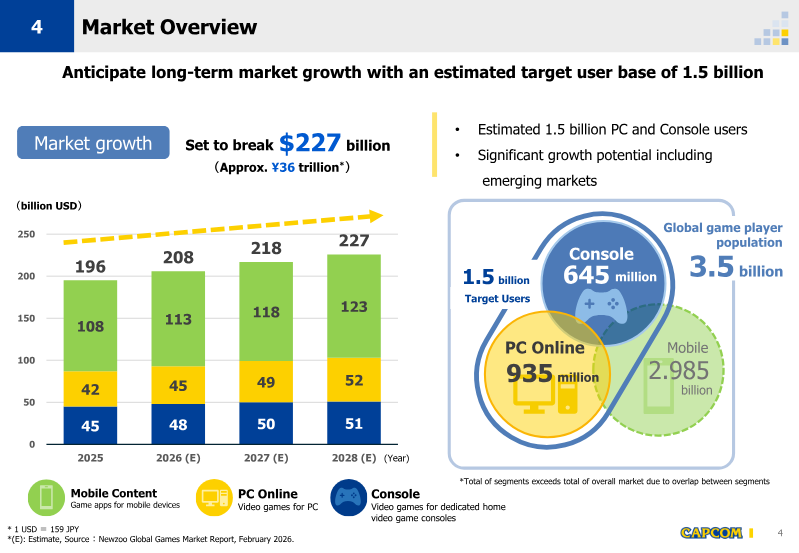
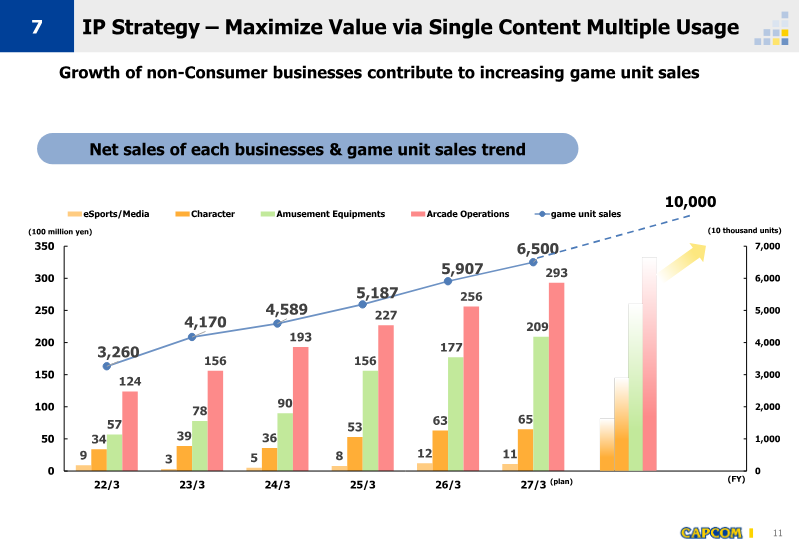

Capcom FY26/3 Earnings Summary: Mid- to Long-Term Growth Strategies
Capcom’s mid- to long-term growth strategy centers on a flywheel-driven business model designed to maximize the value of its intellectual property (IP) through a combination of stable new title releases and sustained catalog sales.
- Capcom projects consistent growth with an operating profit target of 83 billion yen for FY27/3, maintaining a 10% annual growth trajectory.
- The company aims for a long-term annual sales volume of 10 million units, supported by a digital sales ratio that reached 83.7% in FY26/3.
- Capcom is leveraging a 'flywheel' business model that combines new title releases with catalog sales and multi-faceted IP usage, such as eSports and licensing, to expand its global fan base.
Companies behind it

As the documents state it.