Reports in the Market (Overall) category.
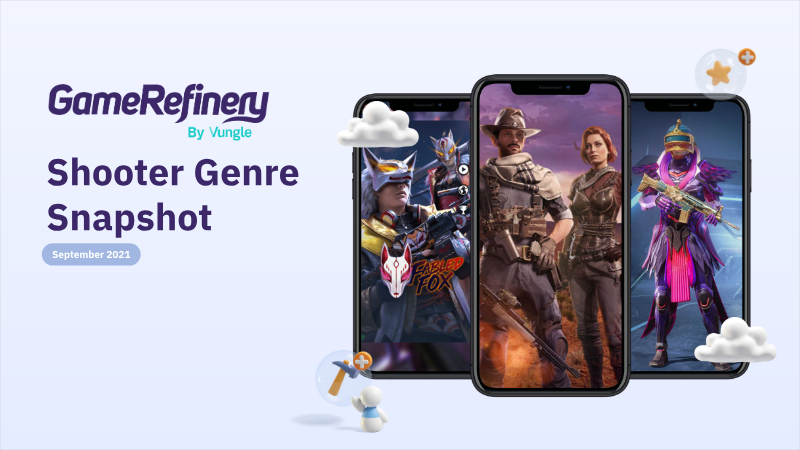
Shooter Genre Snapshot – September 2021 (GameRefinery)
1. Market Overview | Metric | Insight | |--------|----------| | Genre rank (US iOS) | 6th largest mobile genre, ~6 % of total iOS revenue. | | Revenue share | The “Big Three” – Call of Duty: Mobile, PUBG Mobile, and Garena Free Fire – generate > 84 % of shooter revenue. | | Impact of Fortnite removal | Apple‑Epic lawsuit (Fortnite removed Aug 2020) erased a game that once held ~30 % of the shooter market on iOS. | | Growth leader | Garena Free Fire doubled its iOS revenue in 2021, climbing from ~10 % to ~30 % market share and now rivals CoD Mobile for the top spot (Q2 2021). | | New‑entry stagnation | No shooter launched in the last 2 years cracked the top‑grossing 200; only Bullet Echo (May 2020) entered the top‑500. |
2. Top‑Performing Titles (US iOS – Q2 2021)
| Rank | Game | Publisher | Sub‑genre | Share | |------|------|-----------|-----------|-------| | 1 | Garena Free Fire – 4th Anniversary | Garena International | Battle‑Royale | 28.56 % | | 2 | Call of Duty: Mobile | Activision | Classic FPS/TPS | 28.17 % | | 3 | PUBG Mobile – Ignition | Tencent | Battle‑Royale | 26.55 % | | 4 | War Robots | Pixonic | Tactical Shooter | 3.5 % | | 5 | Sniper 3D | Fun Games | Sniper | 3.5 % | | 6 | Pixel Gun 3D | Cubic Games | Classic FPS/TPS | 2.12 % | | 7 | War Machines: Tank | Fun Games | Tactical Shooter | 1.9 % | | 8 | Zooba: Zoo Battle Royale | Wildlife Studios | Battle‑Royale | 1.88 % | | 9 | World of Tanks Blitz | Wargaming | Tactical Shooter | 1.61 % | | 10| Tacticool | – | – | ~1 % |
Key takeaway: The top three dominate ~83 % of the genre’s revenue; the rest of the field is highly fragmented.
3. Why the “Big Three” Stay on Top
| Driver | How It’s Implemented | |--------|----------------------| | Battle Pass | Seasonal “free + paid” tracks that reward playtime, cosmetics, and progression. | | Limited‑time Gachas | Time‑bound loot‑box style draws with increasing price/odds, often tied to events or milestones. | | Live Events & New Modes | Frequent, high‑visibility updates (e.g
Southeast Asia represents a rapidly accelerating segment of the global esports market, characterized by high growth rates in both viewership and revenue. Between 2019 and 2024, the region is projected to see a compound annual growth rate (CAGR) in audience size that significantly outpaces global averages, with year-over-year increases reaching as high as 18.2%. This expansion is driven by a mobile-first gaming culture where 82% of the online population plays mobile games and 39% of players identify mobile as their primary platform. Key markets fueling this trend include Indonesia, Vietnam, the Philippines, Thailand, Malaysia, and Singapore.
The regional ecosystem is heavily influenced by mobile-centric titles, specifically Mobile Legends: Bang Bang, Garena Free Fire, and PUBG Mobile. These three games accounted for roughly half of all global esports hours watched for those titles on Twitch and YouTube Live during the first half of 2021. Revenue streams in the region mirror global trends, with sponsorship serving as the primary contributor, supported by media rights, publisher fees, and digital goods. Government intervention also plays a critical role in market maturation, with initiatives like the Youth Esports Program in the Philippines and the integration of esports into the 30th SEA Games as a medal event.
Data for these findings was sourced from Newzoo’s 2021 Global Esports and Live Streaming Market Report and Consumer Insights. The methodology utilized a Major City Approach for most Southeast Asian nations to represent active internet users aged 10-50, while Singapore data covered the general online population within that age bracket. The findings conclude that improved internet infrastructure and the accessibility of mobile devices are the primary catalysts for long-term engagement and the continued attraction of non-endemic brand sponsorships to the region.
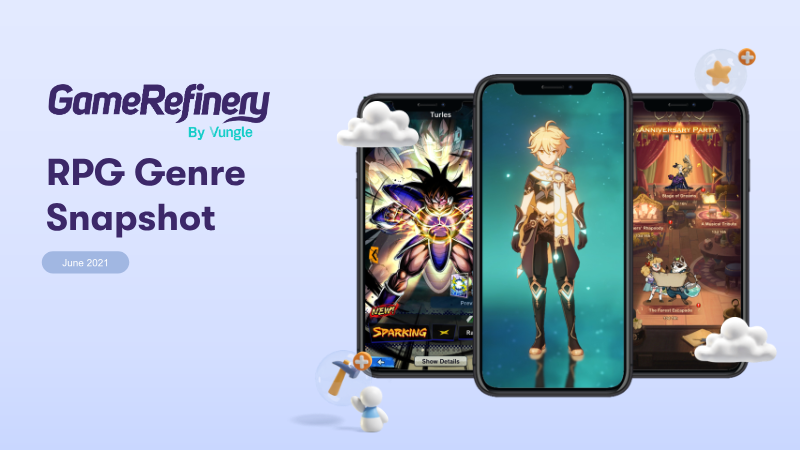
Role-playing games represent a significant pillar of the mobile gaming market, currently holding a 14% revenue share on the US iOS platform. While established titles like Raid: Shadow Legends and Marvel Strike Force maintain their positions at the top of the charts, the genre is undergoing a fundamental shift in subgenre dominance. Historically led by turn-based titles, the market is increasingly defined by high-production action RPGs. This transition is primarily driven by the massive success of Genshin Impact, which alone accounts for 10% of the total RPG market share, and the more recent launch of My Hero Academia: The Strongest Hero.
Analysis of these market leaders reveals a trend toward open-world experiences, narrative depth, and console-quality production values. While both leading titles utilize action-based combat and anime art styles, they cater to different player motivations. Genshin Impact focuses on single-player exploration and skill-based mechanics, whereas My Hero Academia emphasizes social and competitive elements through synchronous and asynchronous PvP. Despite these innovations in gameplay, the genre remains anchored by character collection and gacha-based monetization.
Revenue performance in the sector is heavily dictated by live operations and content updates. Data indicates that the most significant revenue spikes occur during limited-time events, particularly those introducing new characters via "banner gachas" or step-up mechanics. Furthermore, collaboration events with external intellectual properties, such as the crossover between The Seven Deadly Sins: Grand Cross and Stranger Things, have proven highly effective at engaging audiences. These findings, derived from GameRefinery’s proprietary SaaS dashboard and genre taxonomy, cover the US iOS market over a twelve-month period ending in mid-2021.
Role-playing games (RPGs) represent a cornerstone of the mobile gaming market, accounting for approximately 14% of total revenue on the US iOS platform as of mid-2021. While the genre has long been dominated by established turn-based titles like Raid: Shadow Legends and Marvel Strike Force, recent market data indicates a significant shift toward Action RPGs. This transition is driven primarily by high-production, open-world titles that bridge the gap between mobile and console-quality experiences.
The primary catalyst for this shift is Genshin Impact, which alone commands over 10% of the RPG market share. Alongside the more recent launch of My Hero Academia (MHA): The Strongest Hero, these titles emphasize narrative depth, exploration, and high-fidelity graphics. While both utilize an anime art style, they cater to different player motivations: Genshin Impact focuses on single-player exploration and skill-based combat, whereas MHA integrates more competitive social elements, including synchronous and asynchronous PvP.
Monetization within the genre remains heavily reliant on character collection mechanics and sophisticated gacha systems. Analysis of top-performing updates shows that revenue spikes are most frequently tied to limited-time "banner" gachas and IP collaboration events, such as the crossover between The Seven Deadly Sins: Grand Cross and Stranger Things. These events often introduce bespoke gameplay modes, such as tower defense or unique PvE challenges, to maintain engagement.
The findings are based on GameRefinery’s proprietary three-layered taxonomy and a motivation framework derived from a survey of over 7000 mobile gamers across English-speaking Western markets. The data specifically covers the US iOS market for the 12-month period leading up to June 2021, highlighting a clear evolution from traditional turn-based mechanics toward immersive, open-world action experiences.
The global esports market is experiencing a period of robust expansion, characterized by double-digit growth in both viewership and revenue. Total industry revenues are projected to reach $1.08 billion by the end of 2021, representing a 14.5% year-over-year increase. This financial growth is primarily driven by sponsorships and media rights, which remain the dominant revenue streams. China has solidified its position as the primary market leader, maintaining the largest share of both global esports revenues and the highest concentration of esports enthusiasts.
Audience engagement has surged significantly, with total hours watched on major streaming platforms like Twitch and YouTube increasing by 76% in 2020. While general live-streaming saw the most dramatic rise, dedicated esports viewership also grew by 12.6% during the same period. The global audience is on a trajectory to exceed 577 million viewers by 2024, split between occasional viewers and dedicated enthusiasts. Regional growth is particularly strong in emerging markets, with the Rest of World category seeing a 10% year-over-year increase in enthusiasts, outpacing the growth rates of North America and Europe.
The sponsorship landscape is undergoing a structural shift from short-term, one-year experimental deals to multi-year strategic partnerships. This evolution reflects increased confidence from brands in the long-term stability of the industry. There is a notable influx of non-endemic sponsors, particularly from the financial services sector, including banks and insurance companies seeking to reach younger demographics. Additionally, the furniture industry has accelerated its involvement, with 32 sponsorship deals closed by manufacturers in a twelve-month period as remote work and home-based gaming increased.
Despite the logistical challenges posed by the transition to online-only formats during global lockdowns, the industry demonstrated resilience. While traditional sports faced total shutdowns, esports leagues successfully migrated to digital play, though issues like internet latency persisted. Major publishers like Riot Games have seen significant returns on new titles, with Valorant emerging as a major driver of live esports hours. As the industry moves forward, a return to in-person LAN events is anticipated, though the timeline for the return of live audiences remains contingent on global health conditions.
The first quarter of 2021 marked a record-breaking period for the global gaming industry, characterized by an unprecedented surge in financial activity across private investments, public offerings, and mergers and acquisitions. Total closed transactions reached $25 billion across 249 deals, representing a twofold increase compared to the first half of 2020. When including announced but not yet closed transactions, the total deal value for the quarter climbed to $39 billion. This momentum suggests that 2021 is positioned to surpass previous annual records for industry investment.
Mergers and acquisitions served as the primary engine of growth, contributing 57% of total deal value at $14.3 billion. This segment saw a nearly sixfold increase in value year-over-year, driven by "mega-deals" such as Microsoft’s $7.5 billion acquisition of ZeniMax Media, ByteDance’s purchase of Moonton, and EA’s acquisition of Codemasters. Public offerings also reached new heights, totaling $8.3 billion across 36 deals. This activity was bolstered by high public market valuations and the rising popularity of Initial Public Offerings (IPOs) and Special Purpose Acquisition Companies (SPACs), with notable listings from Playtika, Roblox, and Huuuge Games.
Private investments hit a segment record of $2.6 billion, with late-stage transactions accounting for 73% of that value. Roblox’s $520 million pre-IPO round was the most significant private placement. Geographically and strategically, Tencent remained the most prolific investor, closing 35 deals with a heavy focus on PC and console developers. Other top strategic players included Electronic Arts, Embracer Group, and Epic Games.
The data covers global transactions within the gaming, platform, technology, and esports segments during the first three months of 2021. Methodology involves tracking closed transactions using a combination of public media, business partnerships, and S&P Capital IQ data, specifically excluding pure gambling and betting entities to focus on the core video game market.
This analysis examines how different generations engage with video games, highlighting the medium’s evolution from a simple pastime into a multifaceted social and entertainment ecosystem. The research, based on a survey of 72,068 respondents across 33 global markets conducted in early 2021, reveals that while gaming is a universal form of entertainment, engagement patterns vary significantly by age. Younger cohorts, specifically Gen Z and Millennials, increasingly view gaming as a primary leisure activity that encompasses not just playing, but also watching content, socializing, and participating in virtual communities.
Key findings indicate that the share of leisure time dedicated to gaming increases with each younger generation. Gen Z and Millennials report spending more time on gaming than on social media or streaming movies and television. While relaxing and unwinding remain the top motivations for playing across all demographics, younger players are uniquely driven by competition, social interaction, and creative achievement. Consequently, these groups favor multiplayer modes and genres that offer sandbox or social elements, such as Fortnite and Roblox. In contrast, older generations, including Gen X and Baby Boomers, primarily utilize games for casual relaxation, often preferring single-player experiences on mobile devices.
The research also identifies a growing trend toward the metaverse, where virtual worlds serve as platforms for non-gaming activities like social gatherings and digital events. Younger consumers show high interest in avatar customization and content creation, signaling a shift toward digital identity and persistent virtual spaces. While older gamers are less likely to engage with gaming-related video content, those who do often prioritize practical information, such as reviews and tutorials, to inform their purchasing decisions. Ultimately, the data suggests that gaming has become a foundational pillar of modern entertainment, offering brands and developers diverse opportunities to reach audiences through increasingly immersive and social digital experiences.
The snapshot presents a comprehensive overview of in‑game event strategies across the global mobile gaming market, focusing on seasonal and promotional collaboration events. It establishes that 90 % of the top‑grossing 100 mobile titles deploy seasonal events, while 40 % of US iOS top‑100 games feature brand collaborations. These events are highlighted as key drivers for player re‑engagement, new user acquisition, and revenue spikes, with examples such as Sky: Children of the Light’s Kizuna AI partnership and Genshin Impact’s Lantern Rite event, which each generated multi‑million daily revenue surges.
The report details the taxonomy of events—UI changes, limited‑time offers, playable content, and special bundles—and identifies profitable revenue streams: time‑limited skins, character drops, themed currency, and gacha mechanics. Seasonal calendars list major holidays (Christmas, Lunar New Year, Halloween) and region‑specific observances (Double Five in China, Sakura season in Japan), underscoring the importance of cultural relevance.
Geographic scope covers North America, China, and Japan, with data on event adoption rates: 51 % of Chinese top‑100 games and 62 % of Japanese top‑100 games use promotional collaborations, compared to 42 % in the US. Methodology relies on GameRefinery’s SaaS platform, aggregating revenue and event data from thousands of titles.
Key conclusions emphasize that events remain a differentiator for high‑performing games, offering scalable monetization and cross‑brand synergy. The snapshot recommends that developers evaluate event fit against audience demographics, content alignment, and potential for brand partnership to maximize engagement and revenue.
The report establishes that video‑game streaming has solidified its position as a core element of global pop culture, with 21 % year‑over‑year growth in watch time during 2021—an increase that, while lower than the 81 % surge seen in 2020, still reflects a substantial expansion of audiences worldwide. The analysis covers the three dominant Western platforms—Twitch, YouTube Gaming, and Facebook Gaming—across all major regions, noting that Twitch leads overall hours watched (≈6 billion) and maintains a 31.4 % YoY increase, whereas YouTube’s live‑stream hours declined by 15 % but its VOD ecosystem grew, and Facebook Gaming achieved a 59 % YoY rise, narrowing the gap with YouTube in Q3‑Q4.
Key content insights reveal that mobile titles such as Garena Free Fire, PUBG Mobile, and Valorant dominate viewership, together generating over 5.6 billion hours—32 % of total hours watched—while PC and console staples like GTA V, Minecraft, and Apex Legends remain top‑tier. The report highlights 10 peak moments that drew record concurrent viewership, underscoring the influence of esports and mobile‑game tournaments.
Demographic analysis shows a persistent gender imbalance: only 27 % of the top 3,000 streamers are female, and women represent a mere 5 % of the top 200 creators. Platform‑specific initiatives—YouTube’s promotion of Valkyrae, Facebook Gaming’s female spotlight series, and Twitch’s updated harassment policies—are noted as efforts to address this gap.
Methodologically, the study aggregates publicly available data on hours watched, peak concurrent viewers (CCV), and monetization metrics from subscriptions and Bits. It segments streamers into tiers—Mega, Macro, Mid‑Tier, Micro—to illustrate revenue concentration: the top 1.2 % of influencers generate 15.8 % of total revenue, while micro‑tier creators (93 % of all streamers) account for 56 % of subscription and Bits income. The report concludes that while the creator economy remains highly skewed, sustained growth in mobile gaming and platform diversification continues to reshape the industry’s landscape.
The report documents a four‑fold surge in gaming deal activity during the first half of 2021 compared with the same period in 2020. A total of 471 closed transactions generated $44.2 billion, with an additional $5.9 billion in announced deals bringing cumulative value to $50.2 billion. Mergers and acquisitions dominated the landscape, accounting for 154 deals ($22.4 billion) and surpassing the full‑year 2020 result of $12.6 billion across 218 transactions. Public offerings rose to 54 deals ($17.1 billion), while private investments reached a record $4.6 billion through 263 deals, largely driven by late‑stage rounds (65% of value). The gaming segment alone contributed $32.7 billion across 267 deals, with M&A value climbing 486% YoY to $20.4 billion.
Key players included Tencent, Embracer Group, Electronic Arts, Sony, and ByteDance, each executing multiple acquisitions across PC/console, mobile, and cloud platforms. Venture capital activity remained robust; top 15 VC funds invested $1.1 billion in 60+ companies, with Epic Games’ $1 billion round and Roblox’s pre‑IPO $520 million leading the pack. Public exits grew sharply, with 107 deals totaling $25.6 billion; notable IPOs and SPACs included Roblox, AppLovin, Playtika, and Playstudios.
The data were compiled from public sources, S&P Capital IQ, and industry disclosures, covering global transactions in the video‑game sector for H1 2021.
The mobile gaming market in the second quarter of 2021 experienced notable shifts in genre performance and publisher dominance across the United States, China, and Japan. The primary objective is to provide a comparative analysis of these regional markets, highlighting evolving trends in genre market share, publisher success, and the increasing importance of live-service feature updates. The analysis utilizes a proprietary taxonomy and motivation framework, supported by a survey of over 7,000 mobile gamers in English-speaking western countries, to categorize games and identify player archetypes.
Key findings indicate that the United States saw a decline in the Puzzle genre’s market share, while the Strategy genre experienced significant growth. In Japan, the Sports genre continued to gain momentum, largely driven by the success of titles like Umamusume Pretty Derby, while RPGs faced a decline. China exhibited a trend reversal from the previous quarter, with RPG and Strategy genres regaining market share at the expense of Shooters. Publisher performance was marked by strong results from Supercell in the US and Cygames in Japan, while Leiting Games nearly doubled its market share in China.
A critical trend identified is the 37% year-over-year increase in feature updates, with Strategy games leading this surge at 208%. Developers are increasingly prioritizing engagement through non-recurring live events and limited in-app purchase offers, which saw frequency increases of 143% and 122%, respectively. These features are becoming essential for retention and monetization across major genres. Furthermore, player motivation data reveals that games appealing to fast-paced action and competitive play continue to dominate the top-grossing charts in the US, with specific archetypes like King of the Hill and Skill Master remaining highly relevant.
This report examines the mobile gaming landscape in 2021, focusing on the strategic differences between Eastern and Western markets regarding genre popularity, monetization, and user acquisition. While mobile is the leading gaming platform globally by revenue and player count, market dynamics vary significantly between regions. The United States remains the largest market for puzzle games, followed by Japan and China, though Western markets generally favor casual genres like puzzle and arcade, whereas Eastern markets demonstrate a higher preference for competitive, immersive titles such as Battle Royale and role-playing games.
Key findings indicate that while puzzle games are popular globally, their implementation differs by region. Western titles often emphasize narrative and decoration, while Eastern titles frequently integrate deeper economies, character collection, and gacha mechanics. Monetization strategies also diverge; Western players show a higher tolerance for in-game advertising, leading to an IAA-focused revenue model. Conversely, Japanese players exhibit a greater willingness to engage in in-app purchases, resulting in a more balanced or IAP-heavy approach. Live-ops, including limited-time events and social engagement features, are identified as critical tools for retention in both regions, though the specific content—such as collaborations with anime or manga in Japan—is tailored to local cultural interests.
The analysis relies on industry data and expert insights, including case studies from developers like Translimit. Methodology involves comparing consumer behaviors, demographic profiles, and revenue streams across key markets. The report concludes that successful global expansion requires rigorous localization of marketing creatives and user acquisition strategies. Developers are encouraged to utilize A/B testing and performance-based ad optimization to navigate the distinct preferences of Western and Eastern audiences, ensuring that both gameplay mechanics and monetization models align with regional expectations.