Europe's Video Game Industry: Key Facts 2020
202020 pages~14 min full read
The European video games industry experienced steady growth in 2019, reaching a total market turnover of €21.6 billion. This represents a 3% year-on-year increase and a 55% rise since 2014 across key markets. Revenue is increasingly driven by digital ecosystems, with online and app-based income accounting for 76% of the market, while physical sales represent 24%. Within the online segment, 66% of revenue is generated through in-game extras and downloadable content. Console gaming remains the leading hardware category by revenue at 43%, closely followed by mobile and tablets at 40%.
Demographic data indicates that 51% of the European population aged 6 to 64 plays video games, with an average player age of 31. While engagement is highest among younger cohorts, 31% of those aged 45 to 64 are active players. Gender representation is nearly balanced, as women make up 45% of the player base and over half of all mobile gamers. On average, European players spend 8.6 hours per week gaming, significantly less than the time spent on social media or television.
The industry maintains a strong focus on responsible gameplay through the PEGI age rating system, which is active in over 35 countries. Approximately 67% of parents are aware of these labels, and 85% have established agreements with their children regarding in-game spending. Beyond consumer protection, the sector is expanding its educational footprint. Initiatives like the Games in Schools project, conducted with European Schoolnet, have trained over 4,000 teachers across 73 countries to integrate commercial games into pedagogical frameworks.
Data for these findings was primarily extrapolated from the 2019 GameTrack and Newzoo reports, utilizing surveys and sales tracking across major European territories including France, Germany, Italy, Spain, and the United Kingdom. The scope covers the 2019 calendar year while acknowledging the emerging impact of the COVID-19 pandemic on 2020 industry trends.

AEVI · 2025

European Schoolnet · 2024
Video Games Europe · 2024
Video Games Europe · 2024
IIDEA – Italian Interactive Digital Entertainment Association · 2024
AEVI · 2024
Video Games Europe · 2024

NIMBI – Danish Institute for Game Development · 2023
Video Games Europe · 2023
IIDEA – Italian Interactive Digital Entertainment Association · 2023
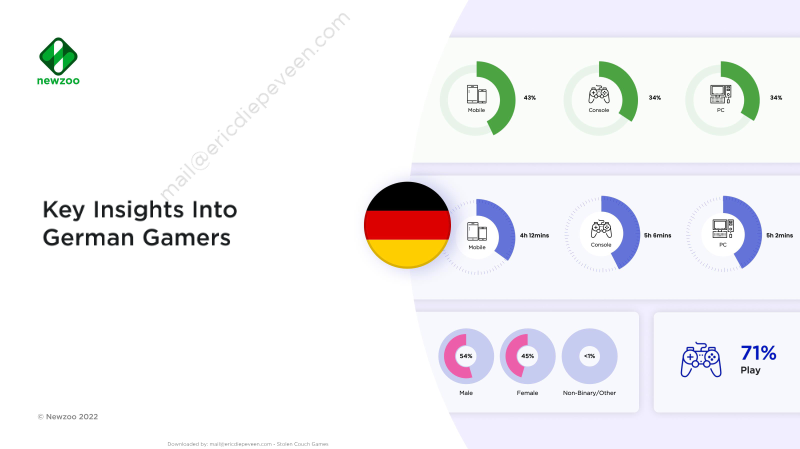
Newzoo · 2022
European Games Developer Federation · 2022