Reports in the Market (Overall) category.
The first half of 2021 marked a period of unprecedented financial activity in the global video game industry, characterized by a fourfold increase in deal value compared to the same period in 2020. Total transaction value for closed deals reached $44.2 billion across 471 transactions, while the inclusion of announced deals brought the cumulative value to $50.2 billion. This surge was driven primarily by massive mergers and acquisitions and record-breaking public offerings, signaling a robust period of consolidation and capital influx across gaming, platform technology, and esports segments.
Mergers and acquisitions emerged as the primary growth engine, totaling $22.4 billion in value. This figure surpassed the entirety of 2020, fueled by "mega-deals" such as Microsoft’s $7.5 billion acquisition of ZeniMax and ByteDance’s $4 billion acquisition of Moonton. Public offerings also reached an all-time high of $17.1 billion, supported by high-profile IPOs and direct listings from companies like Roblox, AppLovin, and Playtika. Private investments contributed $4.6 billion, with late-stage venture capital accounting for 65% of that total. Notable trends included a strategic shift toward PC and console targets in the M&A space and the rapid emergence of blockchain-powered gaming, which saw 24 deals exceeding $476 million.
Geographically and strategically, Tencent maintained its dominant position by closing 53 deals, focusing heavily on PC and console studios. Other major players like Electronic Arts and Embracer Group aggressively expanded their portfolios through multi-billion dollar acquisitions. While the first quarter of 2021 saw the highest concentration of activity, the second quarter experienced a slight cooling in public markets as several newly listed companies faced share price declines. Data for these findings was compiled through a methodology tracking closed transactions via public media, business partnerships, and S&P Capital IQ, excluding pure gambling and betting entities.
During the first half of 2021, China-headquartered publishers ascended to the global leadership position in the mobile gaming market, capturing 23% of overseas consumer spend. This 47% year-over-year growth resulted in $8 billion in revenue, driven by a strategic expansion into both established markets like Germany and emerging regions such as Chile and Egypt. The industry landscape is currently defined by a shift toward hybridization, where developers integrate casual mechanics into core genres to broaden audience appeal and sustain engagement.
The 4X March-Battle subgenre remains a dominant global force, leading consumer spend across major economies including the United States and the United Kingdom. While mature titles in the 4X and M3-Meta categories continue to drive massive revenue growth, emerging opportunities are surfacing in high-growth subgenres like Luck Battle and Merge Saga. These "Score Leaders" demonstrate significant increases in consumer spending despite declining download rates, suggesting a market pivot toward deeper monetization of existing user bases rather than raw acquisition.
The market is also experiencing a surge in specialized categories, most notably the Idol Training subgenre, which saw triple-digit growth in both spending and downloads during the first half of the year. In contrast, Puzzle RPGs faced declines in performance, likely due to shifting privacy policies impacting user acquisition strategies. To navigate these fluctuations, publishers are increasingly leveraging "Nijigen" or anime-style aesthetics and gacha monetization models. By combining these thematic elements with cross-subgenre mechanics and social features, developers are successfully maintaining competitive advantages in an increasingly crowded global marketplace.
The 2021 Key Facts report, a joint publication by ISFE and EGDF, provides a comprehensive analysis of the European video game industry’s market performance, player demographics, and social impact. Covering the 2021 calendar year with comparative data from 2020, the report focuses on the European Union and broader European markets, including the United Kingdom. Data is derived from Ipsos, GameTrack, and Games Sales Data (GSD), utilizing surveys and retail tracking across more than 20 European nations.
The findings indicate a stable market valued at €23.3 billion, maintaining the significant revenue gains achieved during the 2020 pandemic lockdowns. While the total number of players grew by 6% to reach 52% of the European population, average weekly playtime decreased to 9 hours, returning to pre-pandemic levels. The digital ecosystem dominates the sector, accounting for 81% of total revenue, driven largely by app-based gaming and in-game extras. Demographically, the average player age is 31.3 years, and women represent nearly 48% of the total player base.
Beyond economic metrics, the report emphasizes the industry’s commitment to social responsibility and sustainability. It highlights the widespread adoption of the PEGI age rating system and the effectiveness of parental control tools, noting a significant decrease in unauthorized in-game spending by minors. The document also outlines industry-wide initiatives to improve workforce diversity, where women currently make up 22% of employees, and details environmental efforts such as the Green Game Jam and the Games Consoles Voluntary Agreement to reduce energy consumption. Finally, the report identifies esports as a high-growth segment, with global revenues surpassing $1 billion in 2021.
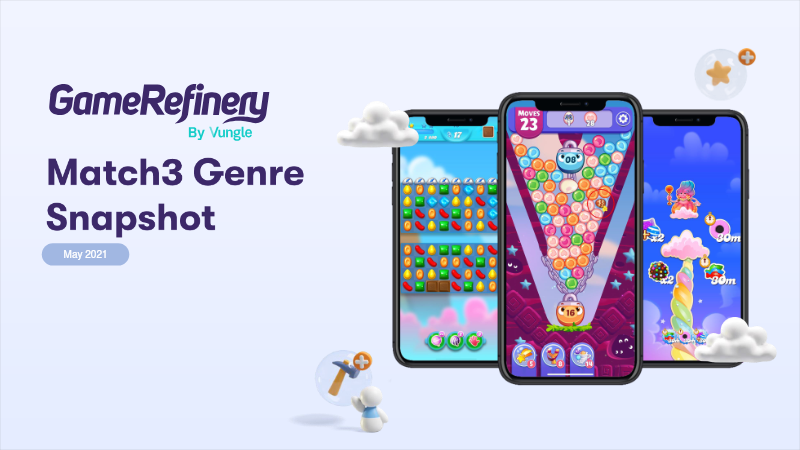
The Match3 subgenre represents the largest segment of the US iOS mobile gaming market, accounting for approximately 16% of total revenue as of mid-2021. While established titles have dominated the charts for years, the landscape is evolving through the integration of complex meta-layers and sophisticated monetization strategies. Notably, every new Match3 title that entered the top 500 grossing rankings between late 2019 and early 2021 utilized traditional swapping mechanics, signaling a preference for familiar core gameplay enhanced by modern secondary features.
Meta-elements, particularly customization and decoration, have become essential components of modern Match3 success. Recent megahits like Royal Match and Project Makeover demonstrate this trend by blending core puzzle mechanics with narrative progression and aesthetic choices. Beyond gameplay, monetization has shifted toward loss aversion mechanics and diverse live operations. Data indicates that recurring live events, special event rewards, and limited-time in-app purchase offers have the highest impact on revenue. Social features, including guild mechanics and "send/ask help" systems, further bolster engagement and retention within the subgenre.
Player motivation analysis, based on a survey of over 7,000 mobile gamers across major English-speaking markets, reveals distinct psychological drivers. While traditional titles like Candy Crush Saga rely heavily on the "Thinking & Solving" and "Completing Milestones" drivers, the broader Match3 market is increasingly leaning into "Customization & Decoration." This shift highlights a move away from pure puzzle-solving toward a more expressive and multi-layered player experience. The findings suggest that future growth in the category depends on balancing core puzzle mastery with social competition and deep meta-progression.
This analysis outlines the primary trends shaping the global games, esports, and mobile markets for 2021. The central thesis posits that while the COVID-19 pandemic accelerated engagement and spending, these behaviors have become permanent habits that will sustain market growth even as lockdowns ease. By the end of 2021, the global games market is projected to reach $189.3 billion in revenue, supported by a player base of 2.8 billion people, with significant growth emerging from Southeast Asia and the Middle East.
The scope of the findings covers PC, console, and mobile segments across major global regions, including North America, Europe, China, and emerging markets. Key data points include the rise of cloud gaming, which is expected to surpass $1 billion in annual revenue for the first time, and the rapid expansion of 5G technology, with 5G-ready active smartphones forecasted to grow from 5% in 2020 to 16% (700 million units) by the end of 2021. In the esports sector, mobile titles like PUBG Mobile and Garena Free Fire are now challenging traditional PC giants in viewership, signaling a shift toward mobile-first competitive gaming.
Methodologically, the findings are derived from proprietary market models and consumer research. The analysis highlights several structural shifts: the evolution of games into "metaverse" social platforms for non-gaming events, the disruption of mobile marketing due to the removal of Apple’s Identifier for Advertisers (IDFA), and the increasing pressure on traditional app store revenue-share models. Furthermore, the industry is noted to be prioritizing diversity, inclusion, and reduced toxicity in response to social movements and player demand. Ultimately, the convergence of platforms and the expansion of gaming IP into broader entertainment media are identified as the defining characteristics of the industry's trajectory.
The global mobile gaming landscape has entered a period of sustained growth following the pandemic, with overseas consumer spending reaching $36 billion in the first half of 2021. This represents a 73% increase since 2018, a trend largely spearheaded by China-based publishers who now command a 23% share of the international market. To sustain this trajectory, the industry is shifting toward hybridization, a strategy that blends core mechanics from disparate subgenres to broaden player demographics and optimize revenue streams. By integrating casual elements like farming or social multiplayer features into hardcore frameworks, developers are successfully diversifying their monetization models beyond traditional structures.
Market performance in early 2021 reveals that while Strategy, RPG, and Match subgenres remain the primary revenue drivers, high-growth categories such as Luck Battle and Merge-Saga are emerging as significant leaders. The 4X March-Battle subgenre, in particular, saw a 51% year-over-year increase in consumer spend, fueled by strong performance in the United States, Japan, and Germany. Additionally, the Idol Training subgenre experienced an explosive 129% surge in spending, highlighting the rising influence of Asian cultural themes and "Nijigen" aesthetics in the global market.
Despite these gains, the industry faces challenges from evolving user privacy policies, which contributed to a 12% contraction in Puzzle RPG spending. In response, successful developers are increasingly utilizing hybrid tactics such as Gacha monetization, home design meta-layers, and social connectivity to maintain engagement. The transition toward these multifaceted game designs suggests that the future of mobile gaming lies in the ability to merge deep, mid-core progression systems with accessible, casual mechanics to capture a more diverse and resilient global audience.
The global games market experienced unprecedented acceleration between February 2020 and May 2021, driven by the unique social and economic conditions of the COVID-19 pandemic. This period saw the addition of 173 million new or returning players, bringing the global total to nearly 3 billion. While veteran players—those active before the pandemic—accounted for the majority of market growth by increasing their playtime by 42%, new and returning players represent a significant demographic shift, with 53% of this group being female.
The industry reached $175.8$ billion in revenue in 2021, with mobile gaming accounting for 52% of the total. Projections indicate a compound annual growth rate of 8.7%, with the market expected to surpass $218 billion by 2024. Key drivers for this continued expansion include the rise of gaming subscription services, which provide low-barrier entry points for new players, and the evolution of games into social hubs or "metaverses." These persistent virtual worlds facilitate non-gaming experiences such as virtual concerts and identity expression through avatars, effectively competing with traditional social media.
Engagement is increasingly defined by content consumption beyond active play. Live-streaming audiences are expected to reach 920 million by 2024, and players report a higher intent to continue watching gaming content than to increase their spending or playtime. Furthermore, the industry is moving toward a platform-agnostic future. Cross-platform play and cloud gaming are dissolving traditional hardware barriers, a trend reinforced by global semiconductor shortages and game development delays that have hampered the console and PC segments more than mobile.
This analysis is based on a Newzoo study commissioned by Google, utilizing market sizing models and a survey of over 16,900 respondents across 16 countries in North America, Latin America, Europe, the Middle East, Africa, and Asia-Pacific. The findings suggest that while new players may be less "sticky" than veterans, long-term retention will depend on fostering a holistic gaming culture that integrates social interaction, viewership, and multi-platform accessibility.
Role-playing games emerged as the dominant force in the mobile gaming industry in 2020, generating $18.5 billion in revenue and capturing over 21% of the global market share. This financial success is heavily concentrated in East Asia, specifically China, Japan, and South Korea, which collectively account for 72% of the genre's total earnings. The market is characterized by a heavy reliance on established intellectual properties from anime, film, and legacy PC franchises, which facilitate organic user acquisition and long-term retention. While Eastern markets are dominated by titles like Lineage, Western audiences gravitate toward major media brands such as Marvel and Star Wars, though original titles can achieve success through aggressive influencer marketing and high-quality creative campaigns.
The monetization landscape for the genre is currently shifting toward hybrid models that integrate traditional gacha-based in-app purchases with rewarded video advertisements. Data indicates that 83% of players are receptive to opt-in ads, and developers are increasingly utilizing battle passes to diversify revenue streams beyond high-spending "whales." These strategies, combined with robust live-ops and cross-media collaborations, have proven effective in maintaining engagement among the genre's core demographic of younger, high-income males.
To navigate modern privacy-related tracking challenges, successful developers are prioritizing early user value signals and optimizing for return on ad spend through interactive playable advertisements. By tailoring game design and monetization to regional preferences—leveraging data from major industry analysts—developers can better address the distinct behavioral patterns of Eastern and Western players. Ultimately, the integration of cross-platform play and sophisticated hybrid monetization remains essential for sustaining growth in this highly competitive and lucrative segment of the mobile industry.
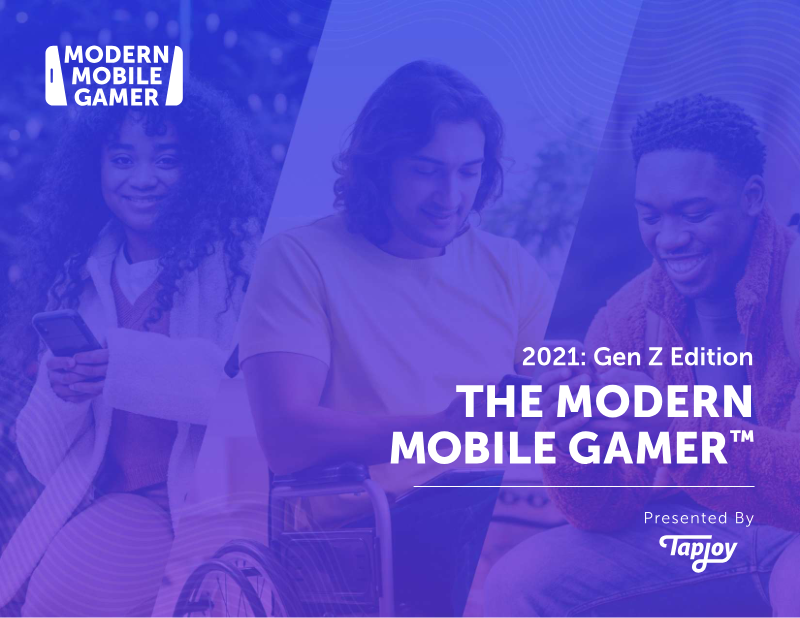
This analysis examines the mobile behaviors, gaming habits, and advertising preferences of Generation Z, defined as individuals born in 1997 or later. Based on a February 2021 survey of 7,103 U.S. consumers aged 18–24 on the Tapjoy network, the findings characterize this demographic as "digital natives" who view the smartphone as their primary device for entertainment, social connection, and commerce. The study utilizes opt-in participation and rewarded survey methodology to gather data on a generation that currently represents $140 billion in buying power.
Key findings indicate that Gen Z is heavily invested in the mobile ecosystem, with 86% using mobile as a gaming platform—significantly higher than the 42% who use consoles. The COVID-19 pandemic accelerated these trends, as 71% of respondents reported playing more mobile games in 2020. Beyond gaming, the demographic is highly active in mobile commerce; 68% shop via mobile one to four times per week, frequently purchasing to-go food, retail items, and subscription services. Socially, Gen Z favors Instagram and TikTok over Facebook and increasingly rejects traditional gender stereotypes in marketing.
The research concludes that Gen Z has a unique, high-standard relationship with advertising. They largely reject intrusive, non-skippable, or inauthentic content, preferring ads that offer a value exchange. Consequently, 54% of respondents prefer rewarded ads over other formats, and 53% engage with rewarded mobile game ads—outperforming engagement rates on Instagram (38%) and TikTok (23%). To successfully reach this audience, brands must prioritize humor, social and environmental awareness, and opt-in experiences that respect the user's digital autonomy.
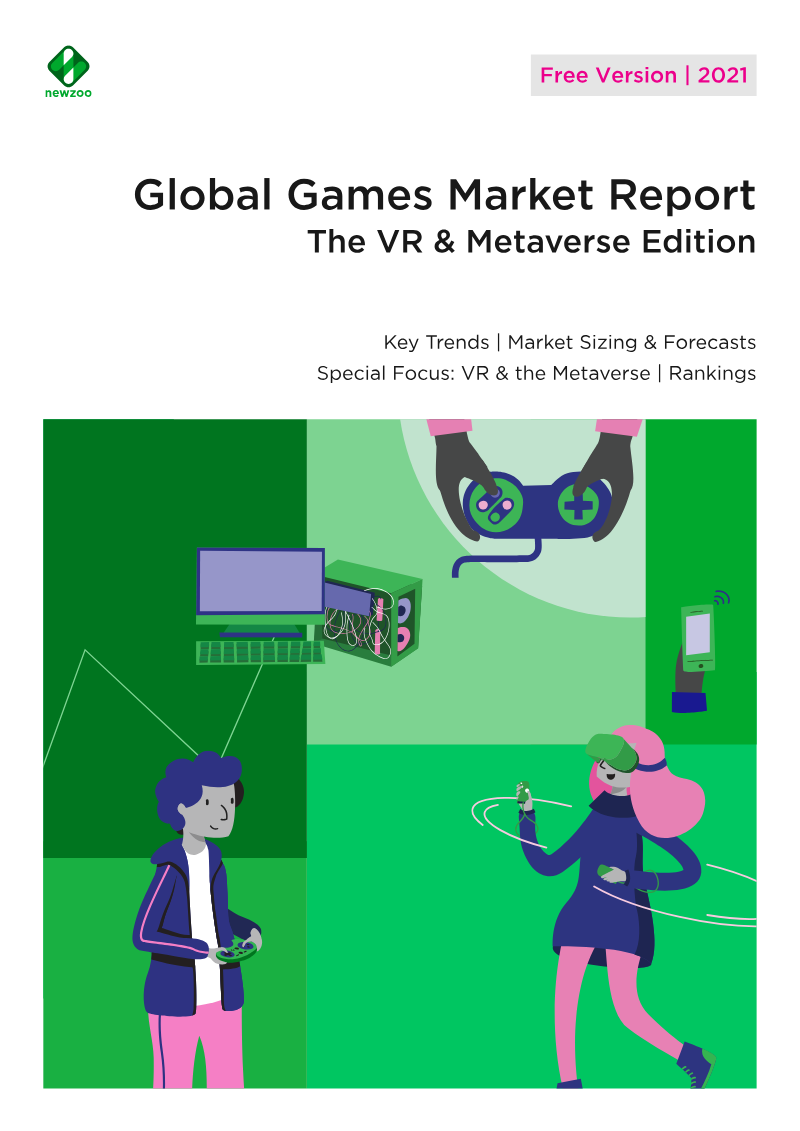
The global games market is projected to generate $175.8 billion in 2021, representing a marginal 1.1% year-on-year decline. This temporary contraction is primarily driven by pandemic-related supply chain disruptions, hardware shortages, and significant delays in AAA game releases, which have disproportionately impacted the console and PC segments. Despite these challenges, mobile gaming continues to expand, accounting for $90.7$ billion or 51% of total market revenue. The Asia-Pacific region remains the dominant force in the industry, contributing over half of all global revenue and supporting 55% of the world’s three billion players.
The long-term outlook for the industry remains robust, with total revenues expected to surpass $218 billion by 2024. This growth is fueled by the permanent acceleration of the metaverse trend, which has transitioned video games from mere entertainment products into essential social hubs. This shift has revitalized the virtual reality sector, particularly following the commercial success of the Oculus Quest 2, and has spurred a wave of consolidation through high-profile mergers and acquisitions. While privacy changes such as the removal of Apple’s IDFA present new hurdles for mobile marketing, the segment’s 4.4% growth indicates continued resilience.
Strategic decision-making in this evolving landscape relies on granular performance metrics and consumer insights across dozens of global markets. By tracking key performance indicators such as monthly active users and retention rates for thousands of titles, stakeholders can navigate the complexities of game development and transaction advisory. Ultimately, the integration of social connectivity, immersive hardware, and mobile accessibility ensures that the gaming industry will continue its upward trajectory beyond the immediate disruptions of the early 2020s.
This analysis explores the trajectory of the global games, esports, and mobile markets for 2021, forecasting a year of sustained engagement despite the easing of pandemic-related lockdowns. The primary thesis suggests that while the explosive growth of 2020 will normalize, gaming habits have become deeply ingrained, positioning the global market to reach 2.8 billion players and $189.3 billion in revenue. Growth is expected to be particularly robust in emerging markets such as Southeast Asia and the Middle East.
Key findings highlight a significant shift toward platform agnosticism and the "metaverse." Cloud gaming is projected to surpass $1 billion in annual revenue for the first time, driven by high-fidelity experiences like Cyberpunk 2077 that bypass expensive hardware requirements. Simultaneously, games are evolving into social platforms for non-gaming events, exemplified by virtual concerts in Fortnite and Roblox. In the hardware sector, supply chain disruptions will continue to limit next-generation console availability, while AAA software delays are expected as the long-term impacts of remote development manifest.
The mobile segment faces a pivotal transition due to Apple’s removal of the Identifier for Advertisers (IDFA), which is expected to disrupt traditional user acquisition and push publishers toward IP-based games and creative marketing. Despite these hurdles, 5G penetration is set to triple, with 16% of active smartphones becoming 5G-ready by year-end. Additionally, Chinese developers are increasingly exporting high-budget, immersive mobile experiences like Genshin Impact to Western markets.
In the esports and streaming sectors, mobile titles are beginning to outperform traditional PC giants in viewership. Organizations are diversifying into lifestyle brands and content-creator collectives to mitigate risk. Furthermore, the industry is placing a heightened focus on social responsibility, with major stakeholders collaborating to reduce toxicity and improve diversity and inclusion in response to growing consumer demand for representative content.
Gaming has evolved into a primary form of entertainment that transcends age groups, though engagement patterns vary significantly by generation. Younger cohorts, specifically Gen Z and Millennials, now prioritize gaming over traditional media like television or social media, spending approximately 25% of their leisure time on the medium. While 81% of Gen Z identifies as gamers, the hobby maintains a strong foothold among older populations, with 42% of Baby Boomers participating. This data suggests that gaming has become a focal point for global leisure, offering brands extensive opportunities to reach diverse audiences across 33 surveyed markets.
The depth of engagement is highly correlated with age. Younger generations exhibit multi-dimensional behaviors, including viewing game-related content, participating in online communities, and utilizing games as social hubs. For Gen Z and Millennials, streamers and content creators serve as major cultural influences, with over two-thirds of these groups both playing and watching gaming video content. In contrast, older generations like Gen X and Baby Boomers engage more casually, primarily using mobile platforms to fill time or unwind. Their motivations are largely practical, often seeking out reviews or "tips and tricks" rather than social or competitive experiences.
The industry is currently shifting toward the metaverse, characterized by virtual spaces that host non-gaming activities such as concerts and social gatherings. Approximately 70% of Gen Z gamers expect to spend time in game worlds without actively playing the main game, signaling a move toward digital persistence and self-expression. While younger players favor sandbox and battle royale genres that empower creativity, all generations express interest in metaverse features like free advertiser-sponsored content and avatar customization. This research, based on a sample of over 72,000 respondents, concludes that gaming is no longer just a pastime but a foundational component of modern social identity and digital interaction.