
Splash Damage
Connections
Each row is a game or company named alongside Splash Damage, each column a document, oldest first. A mark means that document names it. Select a row to see those documents.
Its games in the library
 Gears of WarGame · Epic Games · 2006 · 75 documents
 Batman: Arkham OriginsGame · WB Games Montréal · 2013 · 3 documents
 ScumGame · Gamepires · 2025 · 4 documents
 Gears 5Game · The Coalition · 2019 · 4 documents
 Beyond WordsGame · MindFuel Games · 2026 · 2 documents
 Gears TacticsGame · Splash Damage · 2020 · 3 documents
 BrinkGame · Splash Damage · 2011 · 5 documents
- Return to Castle WolfensteinGame · 2 documents
Documents
No published documents yet
Reports about Splash Damage
10 documents by other writers name Splash Damage in the title or summary.
- Founded
- 2001
- Country
- United Kingdom
- Games
- Brink, Gears Tactics, Return to Castle Wolfenstein, Wolfenstein: Enemy Territory, Enemy Territory: Quake Wars, Brink: Spec Ops, Dirty Bomb
Company data from IGDB.com
How Undead Labs Saved Itself and State of Decay from Oblivion
Undead Labs, the developer behind the State of Decay franchise, recently transitioned from an Xbox-owned studio to an independent entity following a management-led buyout.
- Undead Labs transitioned to an independent studio through a management-led buyout from Microsoft, facilitated by the creation of an acquisition vehicle called Full Measure.
- Following the acquisition, the studio implemented significant staff layoffs to establish a durable cost structure necessary for independent operations.
- State of Decay 3 remains in development and is scheduled for release in 2027, with the studio maintaining its commitment to launch the title day-one on Xbox Game Pass.
How Undead Labs saved itself and State of Decay from oblivion
Undead Labs has successfully navigated a complex transition from a Microsoft-owned entity to an independent, employee-owned studio.
- Undead Labs transitioned from a Microsoft-owned entity to an independent, employee-owned studio to ensure the long-term viability of the State of Decay franchise.
- The studio implemented a workforce reduction to align operational costs with its new independent model while issuing stock options to remaining staff to foster shared ownership.
- The State of Decay franchise has reached a milestone of 25 million players, with significant growth driven by the discoverability and scale of Xbox Game Pass.

Is Xbox making the right decisions? Plus, how AI is (and isn’t) transforming game localization
Xbox is currently executing a major organizational reset aimed at improving profit margins and stabilizing its portfolio.
- Xbox is undergoing a major organizational reset, cutting 206 positions and consolidating development efforts under the Activision and Bethesda umbrellas.
- The company is shifting its strategic focus to core franchises, including the transfer of the Halo intellectual property to Activision.
- As part of its restructuring to improve profit margins, Xbox is divesting studios such as Ninja Theory and Undead Labs.

The shooter that Tencent abandoned: Wardogs hits 2m sales in one weekend
The tactical shooter Wardogs has emerged as a significant commercial success, achieving 2 million unit sales during its opening weekend.
- The tactical shooter Wardogs achieved 2 million unit sales during its opening weekend, reaching profitability shortly after launch.
- Bulkhead successfully launched Wardogs independently after losing support from Tencent and navigating a period of organizational instability.
- The studio’s operational model prioritizes internal autonomy and a developer-led creative vision, explicitly rejecting external publisher influence and industry trends.
RuneScape CEO: We Want to Be Bigger than World of Warcraft
Jagex is undergoing a strategic transformation to establish the RuneScape franchise as the preeminent force in the massively multiplayer online gaming sector, with the explicit objective of surpassing World of Warcraft in global market share.
- Jagex has rebranded itself as "Jagex: The RuneScape Company," selling off its non-RuneScape game, Scum, and its developer, Gamepires, to focus exclusively on the RuneScape franchise.
- The company's strategy, RS25, has three main goals: stabilize the declining RuneScape MMO, heavily invest in the successful Old School RuneScape, and fully release the survival game RuneScape: Dragonwilds.
- Old School RuneScape has broken multiple records across major metrics in the last 12 months, experiencing an "unbelievable kind of heater."
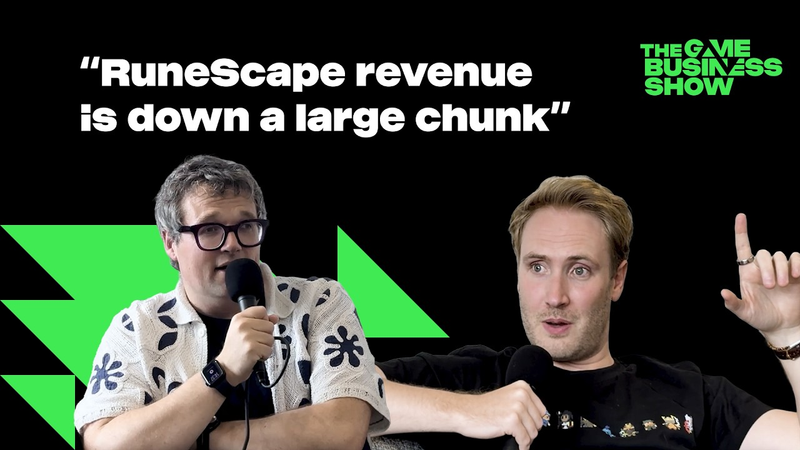
RuneScape CEO: We want to be bigger than World of Warcraft
Jagex is undergoing a strategic transformation to solidify its position as a premier global gaming entity by centering all operations exclusively on the RuneScape franchise.
- Jagex has launched the 'RS25' strategy, a £200 million investment initiative aimed at modernizing the RuneScape franchise and establishing it as the world’s leading MMO brand within five years.
- The company is pivoting to a single-franchise focus by divesting non-core assets to prioritize the long-term health and growth of RuneScape.
- Jagex intends to leverage its historical player base of 300 million users to drive expansion into Asian markets and launch the new title 'Dragon Isles' on console platforms.

Resident Evil Requiem's 5m sales: How Capcom did it
The gaming industry is currently navigating a period of significant structural transition, marked by increased regulatory scrutiny of international investments, the failure of live-service models like Highguard, and evolving platform strategies from major publishers.
- Resident Evil Requiem achieved 5 million unit sales in under one week, marking the fastest launch in the franchise's history.
- The title reached a peak of 344,414 concurrent players on Steam, underscoring the critical role of PC and handheld hardware like the Steam Deck in driving high-volume sales.
- Capcom generated significant pre-launch momentum by securing over one million wishlists through a platform-agnostic marketing strategy that avoided exclusive deals.

GoldenEye and TimeSplitters creators return: “Maybe this isn’t what we should be doing”
The modern gaming industry is currently defined by a fundamental tension between the instability of large-scale production and the enduring dominance of legacy content.
- Over 50% of all current gaming activity is dedicated to titles that are at least six years old, highlighting the market's heavy reliance on legacy content.
- New game releases, excluding annualized sports franchises, are struggling to capture even 1% of the active player base.
- Major publishers are increasingly pivoting toward remakes and established live-service ecosystems to secure revenue as consumers prioritize massive backlogs over new, full-priced titles.
Major Layoffs Hit Splash Damage
UK-based game developer Splash Damage has initiated a studio-wide consultation process, resulting in an undisclosed number of staff layoffs.
- UK-based game developer Splash Damage has initiated a studio-wide consultation process resulting in an undisclosed number of layoffs.
- The company cited the need to remain agile and adaptable in a challenging market as the primary driver for the workforce reduction.
- Splash Damage, which has an estimated headcount between 51 and 200 employees, has committed to providing support to affected staff during the transition.
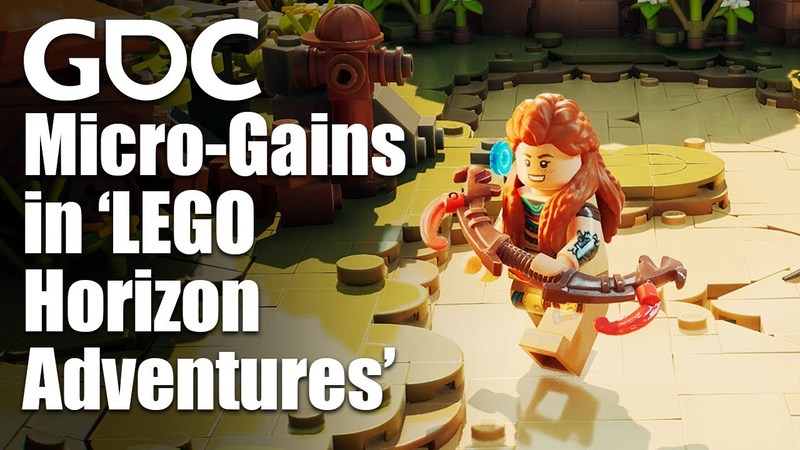
Building Big Impact, One Brick at a Time: Marginal Gains in 'LEGO Horizon Adventures'
The philosophy of marginal gains, popularized by British cycling’s transformation into a dominant global force, serves as a powerful framework for game development.
- The principle of marginal gains suggests that if you improve a process by 1% every day, you will be 37 times better after one year due to the compounding effect of incremental improvements.
- Studio Gobo implemented a 'feedback tracker' on Confluence for each game biome to capture minor 'toe stubbers'—small friction points that were not significant enough to be classified as formal bugs.
- Small, cross-functional teams, such as the three-person 'boss pods' used in LEGO Horizon Adventures, demonstrated significantly faster iteration speeds compared to larger development teams.