Return to Castle Wolfenstein
Game
2 documents in the library are about Return to Castle Wolfenstein, from writers such as DiGRA and Naavik. Each has a summary and key insights with the page they come from.
Connections
Each row is a game or company named alongside Return to Castle Wolfenstein, each column a document, oldest first. A mark means that document names it. Select a row to see those documents.
Documents about Return to Castle Wolfenstein
Naavik55 min
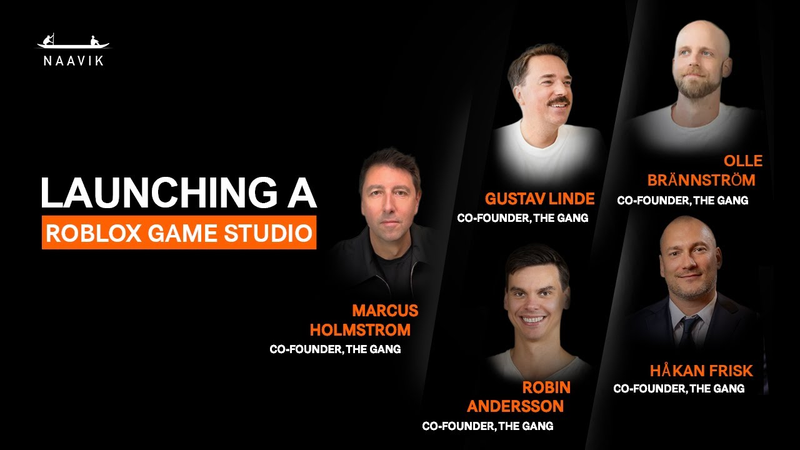
Launching a Roblox Game Studio with The Gang
The Gang has evolved from a five-person startup into a 220-person organization by capitalizing on the rapid development capabilities of the Roblox platform.
- The Gang scaled from a five-person startup in 2020 to a 220-person organization by leveraging the rapid development cycles of the Roblox platform.
- The studio employs a dual-track business model that balances revenue-stable branded experiences for partners like Netflix and the NHL with the development of original IP.
- Operational strategy mandates a strict separation between client-facing brand work and original game development to maintain focus and discipline.
NaavikJul 2025
Whitepaper15 pages
Apocalypse the Spielberg Way: Representations of Death and Ethics in Saving Private Ryan, Band of Brothers and the Videogame Medal of Honor: Frontline
Kingsepp's paper compares how death and ethics are represented in Steven Spielberg's Saving Private Ryan and Band of Brothers and in the 2002 video game Medal of Honor: Frontline.
- The paper argues that Spielberg's Saving Private Ryan and Band of Brothers depict death in hyperrealistic, emotionally intimate ways that invite viewers to reflect on mortality and moral ambiguity, whereas Medal of Honor: Frontline (2002) adopts a postmodern model in which enemy corpses vanish.
- The game's vanishing corpses are read as a symbolic ritual of conquering death, casting enemies as an abundant, disease-like threat to be continually exterminated in pursuit of heroic reward.
- The author suggests the disappearing corpses may partly stem from technical constraints such as limited memory ('byte economy'), noting that the earlier game Return to Castle Wolfenstein shows corpses can be preserved.
DiGRAJan 2003