Serious Games Society
Serious Games Society is an organization focused on shaping the future of serious games and connecting people in the serious game space. It publishes reports and articles on serious games, game-based learning, and gamification.
Documents
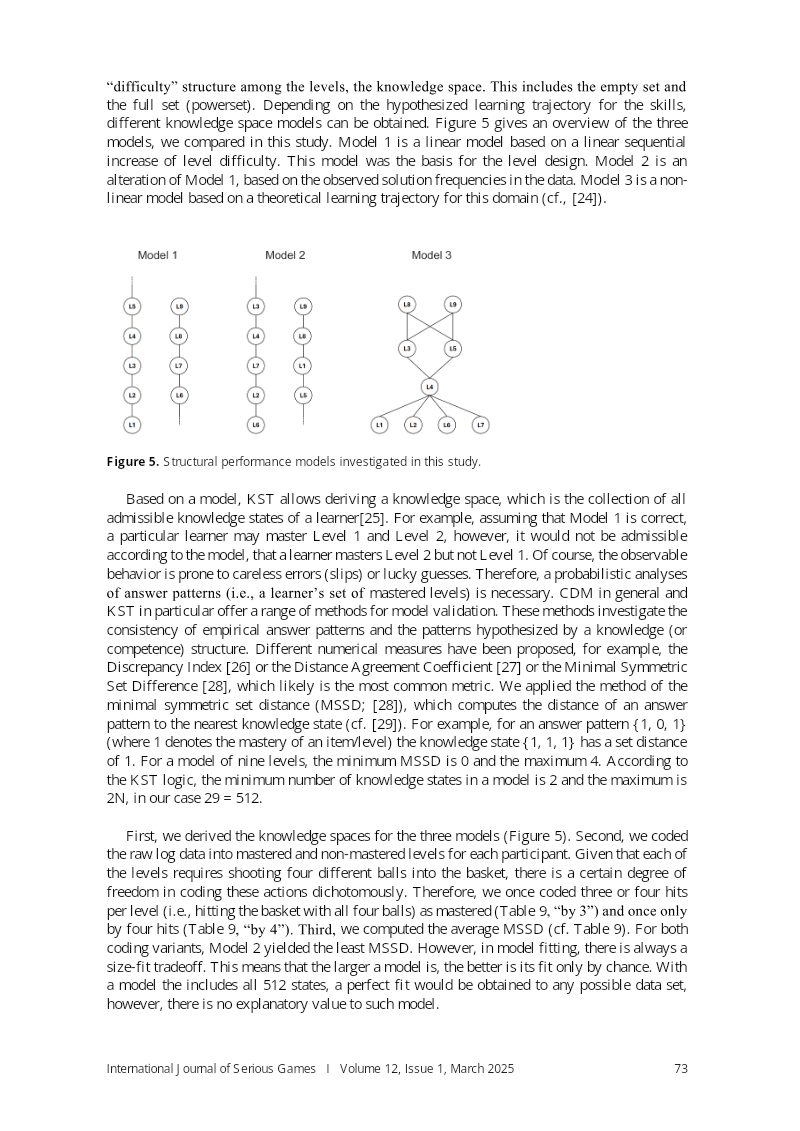
Gamification in Physics Education: Play Your Way to Better Learning
Gamification serves as a potent mechanism for enhancing student engagement and motivation within physics education, particularly when integrated into interactive digital environments like physics-based simulations.
- Gamification significantly increases student time-on-task and engagement levels in physics education compared to traditional instructional methods.
- The correlation between gamified learning and improved standardized test scores is inconsistent, suggesting that game-based motivation does not automatically equate to higher academic performance.
- Knowledge acquisition through gamification is moderate and likely requires repeated exposure to be effective, serving as a support tool rather than a replacement for traditional pedagogy.
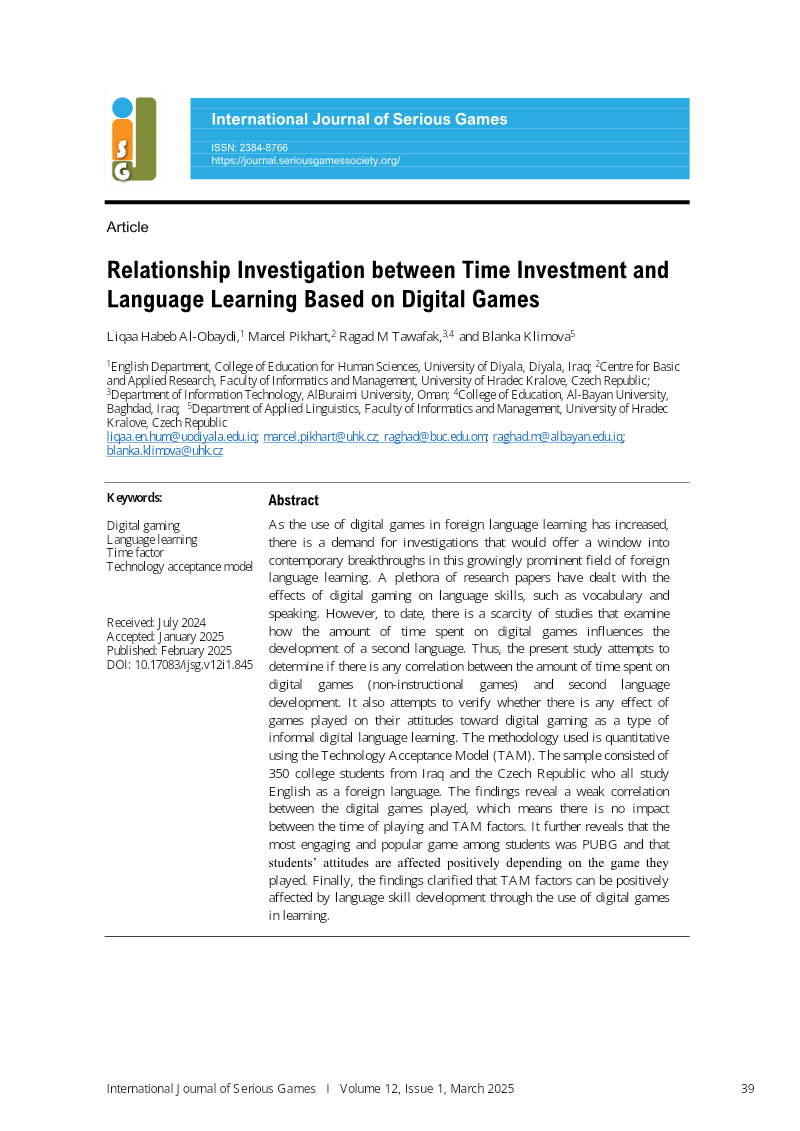
Relationship Investigation between Time Investment and Language Learning Based on Digital Games
Digital games serve as effective, informal tools for second language acquisition, though their educational value is determined by qualitative factors rather than the sheer duration of engagement.
- Total time spent gaming does not correlate significantly with second language acquisition, indicating that duration is a poor metric for measuring educational progress.
- The effectiveness of game-based learning is driven by qualitative factors, specifically the learner's perceived usefulness of the platform and the game's interactive, narrative-rich mechanics.
- Research involving 350 university students in Iraq and the Czech Republic confirms that meaningful interaction and specific game design are more critical to language development than frequency of play.
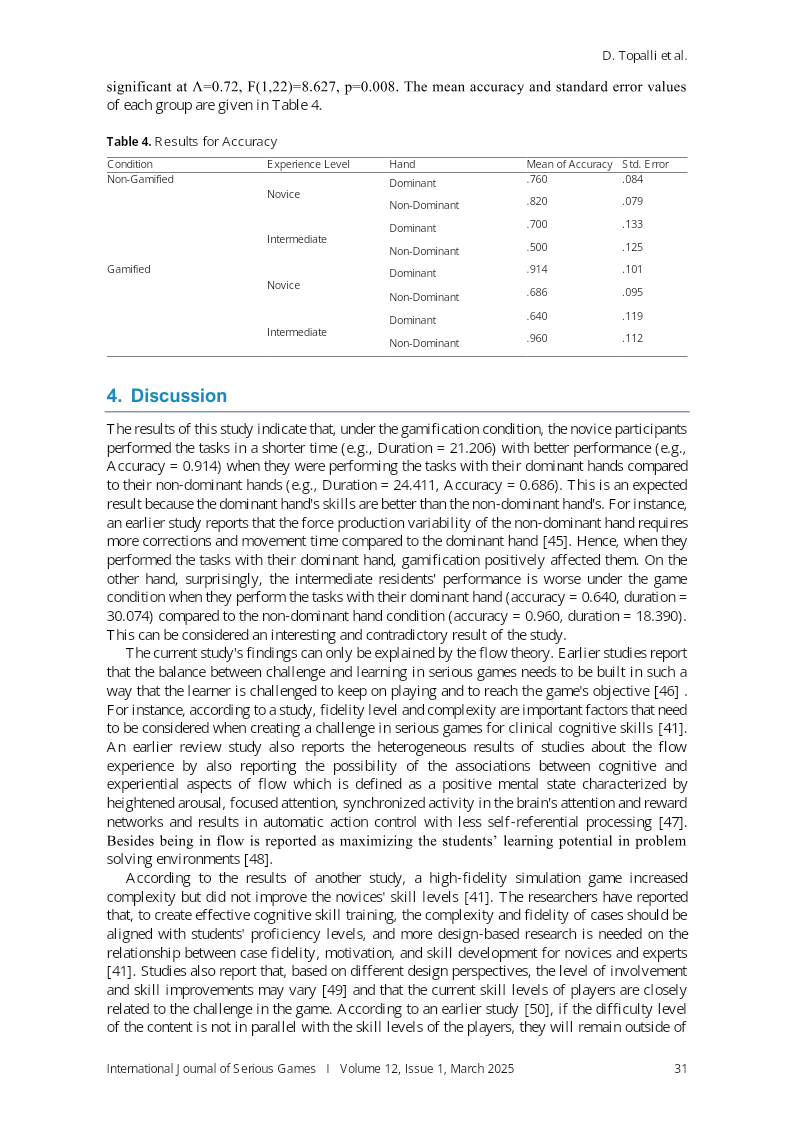

Influence of Gamification on Skill-Based Training of Surgical Residents
Gamification serves as a potent pedagogical tool in surgical education, significantly enhancing the technical proficiency and cognitive engagement of residents during endoscopic simulation training.
- Gamification significantly improves technical proficiency and cognitive engagement in surgical residents by integrating game-based mechanics into haptic-based endoscopic simulations.
- The effectiveness of gamified training is highly dependent on the learner's existing skill level, requiring adaptive curriculum design to prevent cognitive overload or disengagement.
- Performance gains are most pronounced when task difficulty is meticulously calibrated to the trainee's proficiency, as evidenced by improvements in both dominant and non-dominant hand conditions among novices.
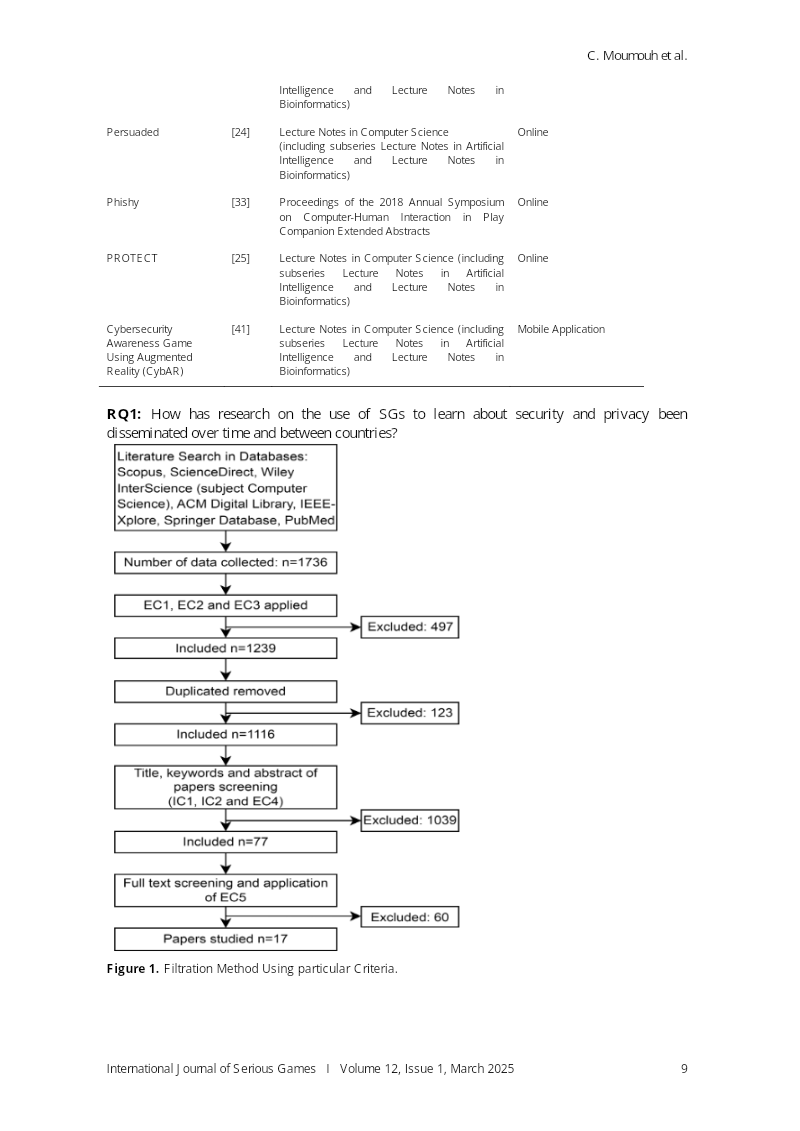
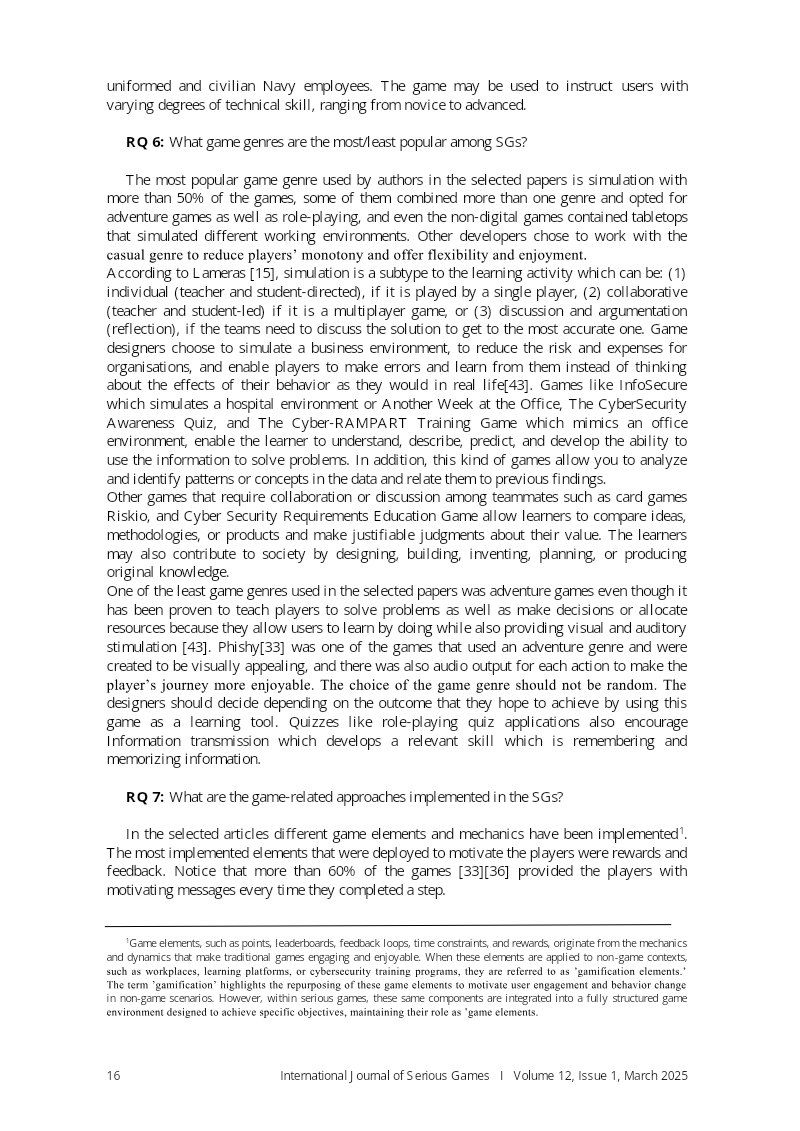
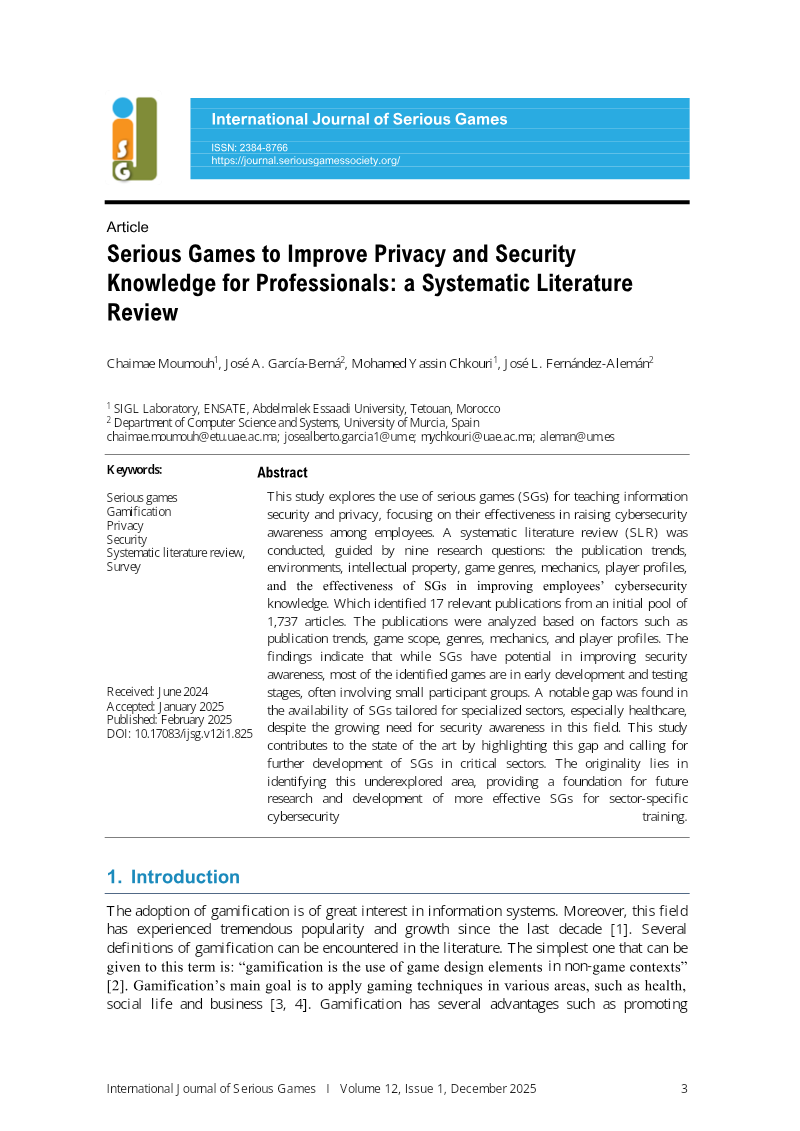
Serious Games to Improve Privacy and Security Knowledge for Professionals: A Systematic Literature Review
Serious games serve as a potent pedagogical tool for enhancing cybersecurity and privacy awareness among professionals, offering risk-free environments where users can learn from simulated errors.
- Serious games effectively improve cybersecurity and privacy awareness by providing risk-free, simulated environments that utilize role-playing and competitive mechanics to enhance critical thinking.
- The industry currently lacks standardized design frameworks, which prevents the consistent measurement of long-term efficacy across different professional environments.
- There is a significant gap in sector-specific applications, as current offerings focus on general awareness rather than the nuanced, high-stakes requirements of industries like healthcare.
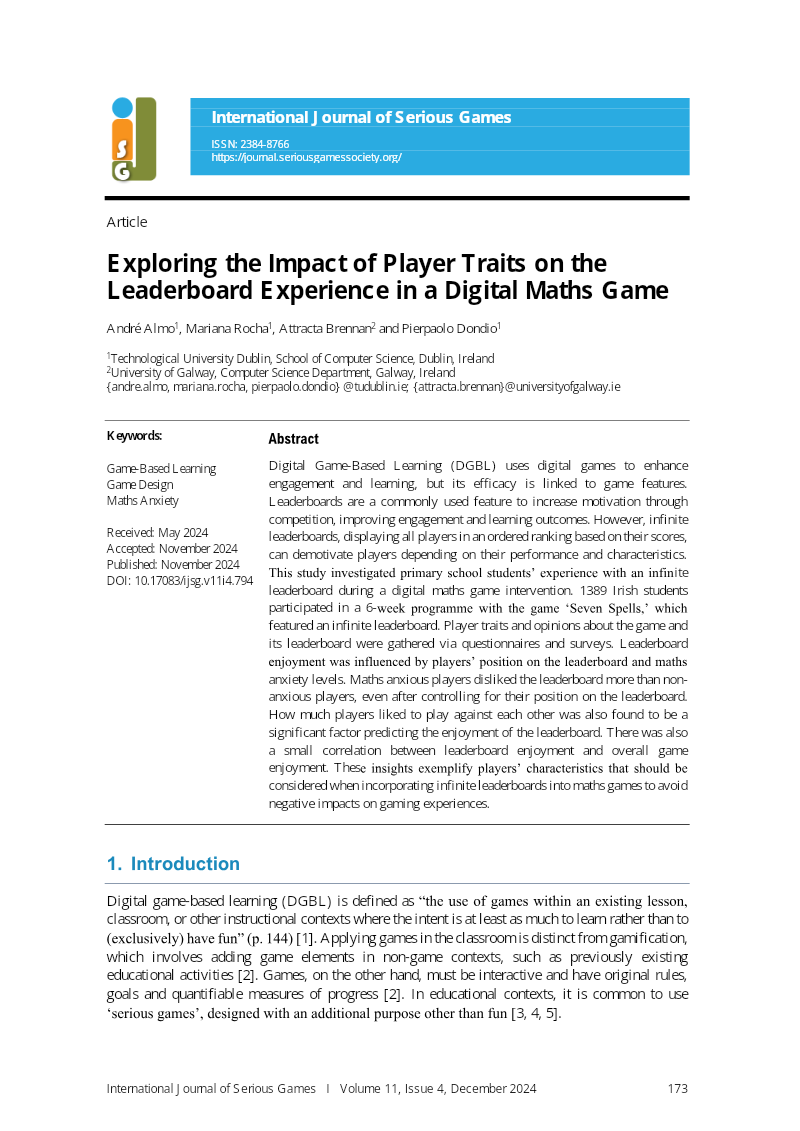
Exploring the Impact of Player Traits on the Leaderboard Experience in a Digital Maths Game
The integration of infinite leaderboards within digital mathematics games serves as a double-edged sword for student engagement, functioning as a powerful motivational tool for some while simultaneously alienating others.
- Mathematics anxiety is a primary determinant of negative leaderboard sentiment, consistently undermining engagement regardless of a student's actual academic performance.
- Leaderboard enjoyment is fundamentally driven by relative social standing rather than intrinsic learning goals, with rank serving as the critical bridge between ability and satisfaction.
- While 80% of the 1,300 surveyed students report a positive experience with infinite leaderboards, the remaining 20% face alienation due to the mechanics of social comparison.
Can Mobile Games Be an Option for Teaching Algebra?
Mobile game-based learning serves as a viable pedagogical tool for teaching algebra to seventh-grade students, particularly those who struggle with traditional mathematics instruction but possess high digital gaming proficiency.
- Mobile games effectively increase student motivation and mental processing speeds in seventh-grade algebra, particularly for students who struggle with traditional instruction.
- While mobile platforms improve student attitudes toward mathematics, they do not inherently teach formal mathematical reasoning or replace the need for explicit instruction.
- Research indicates that students using mobile algebra games often rely on trial-and-error strategies rather than developing new cognitive approaches to problem-solving.
A Bird Matching Game: Difficulty, Rewards, and Intrinsic Motivation
The primary objective of this research is to evaluate the efficacy of various engagement mechanics—specifically point-based reward systems versus educational content—and the role of self-selected difficulty in fostering intrinsic motivation.
- Granting players the autonomy to self-select difficulty levels is a more effective driver of intrinsic motivation and engagement than traditional reward systems.
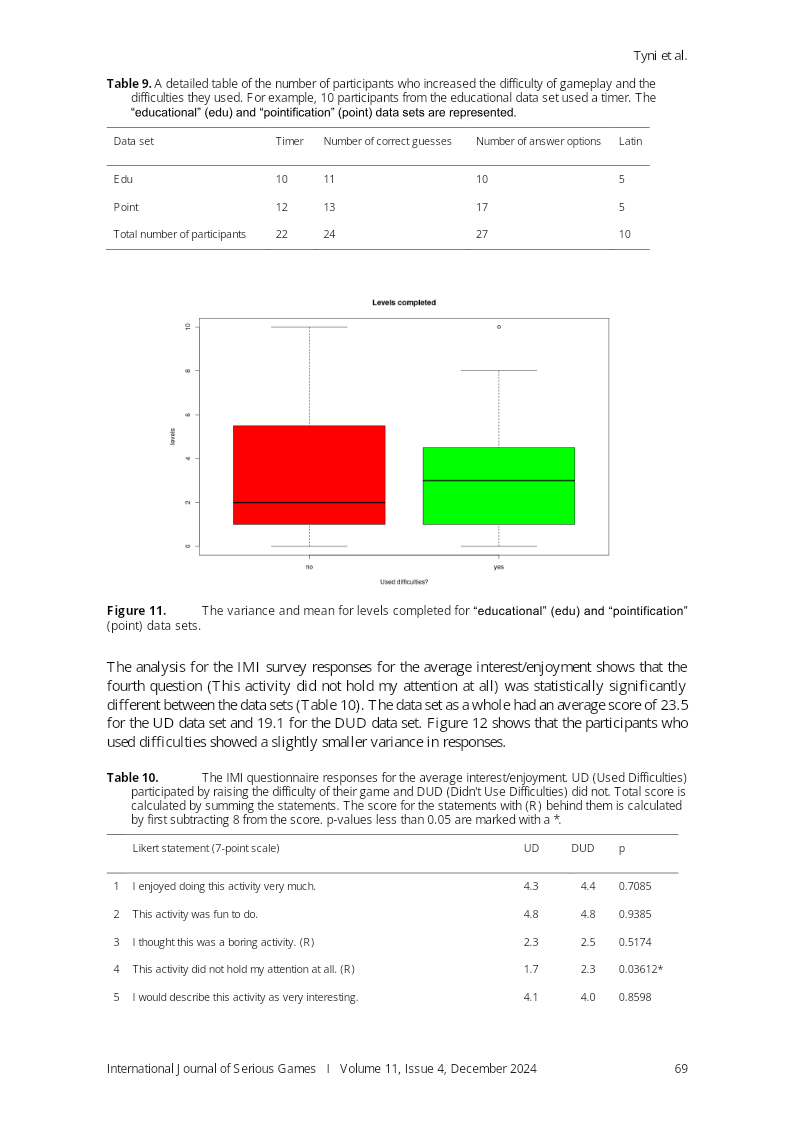
- Participants who voluntarily increased game difficulty reported significantly higher scores on the Intrinsic Motivation Inventory, specifically regarding perceived effort and task importance.
- Extrinsic reward structures, including gamification elements like badges and points as well as educational content, showed no statistically significant impact on player motivation or progression.

A Linear Programming Methodology for Evaluating Game Attributes in Serious Games
Serious games often lack standardized, objective evaluation frameworks, leading to subjective assessments of design effectiveness.
- A new linear programming methodology provides a quantitative framework to objectively evaluate serious game attributes like immersion, feedback, challenge, and autonomy.
- The framework was validated using survey data from 255 participants to minimize discrepancies between individual attribute ratings and overall user evaluations.
- Users exhibit cognitive bias by disproportionately prioritizing knowledge improvement and concentration while neglecting other essential design components.
Transdisciplinarity in Serious Gaming Design for Improved Crisis Preparedness
Serious games serve as a critical bridge between academic theory and operational practice in the context of complex socio-technical challenges.
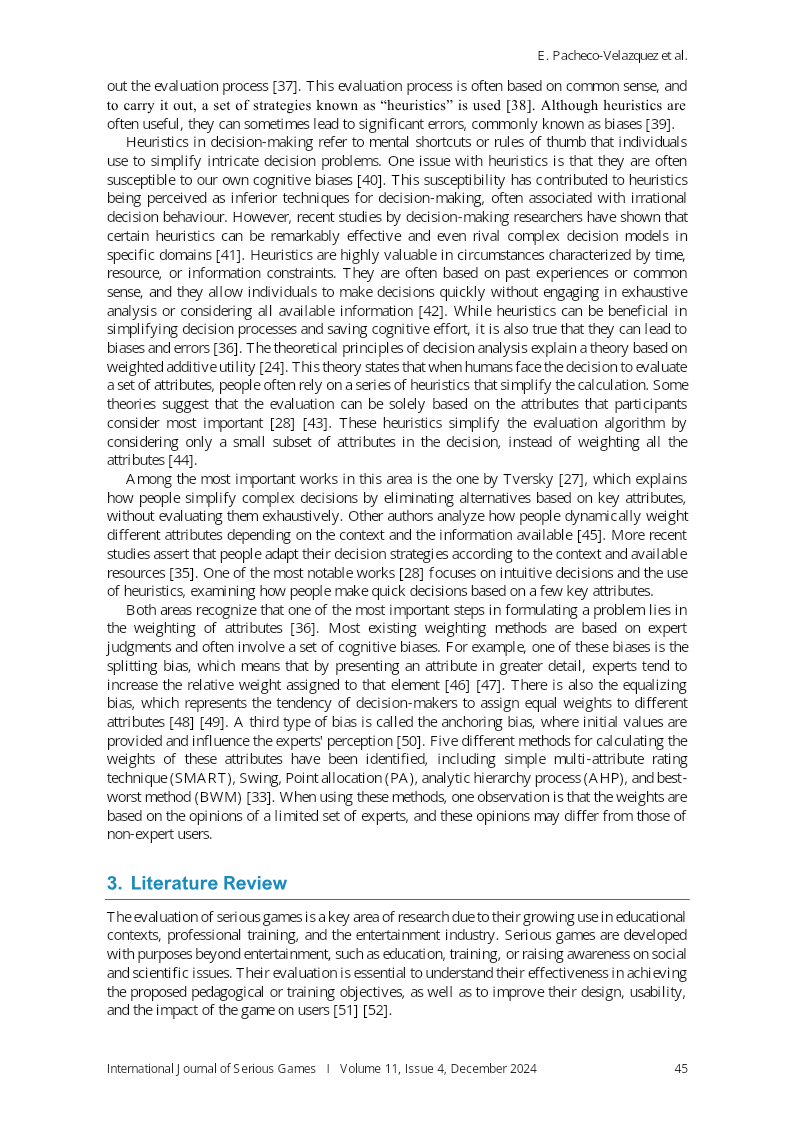
- A transdisciplinary design framework, integrating academic research with human factor engineering, effectively bridges the gap between theoretical models and operational crisis management.
- The Command, Control, Coordination, and Communication (C3C) game utilizes a modular structure based on Hierarchical Task Analysis to simulate all-hazard environments for risk and resource assessment.
- The C3C wargame format functions as a stress-testing tool for existing emergency plans by forcing decision-makers to navigate complex inter-organizational coordination in high-stakes scenarios.
Game Elements Improve Affect and Motivation in a Learning Task
Game elements serve as a powerful affective scaffold in educational settings, significantly enhancing learner motivation and emotional engagement even when they fail to produce measurable improvements in cognitive performance.
- Gamification significantly boosts learner motivation and emotional engagement, yielding medium to large positive effects on user experience.
- Game elements do not inherently improve cognitive performance, efficiency, or learning efficacy despite their positive impact on affect.
- Designers must balance the motivational benefits of gamification against the increased cognitive load that game elements introduce to the learning environment.
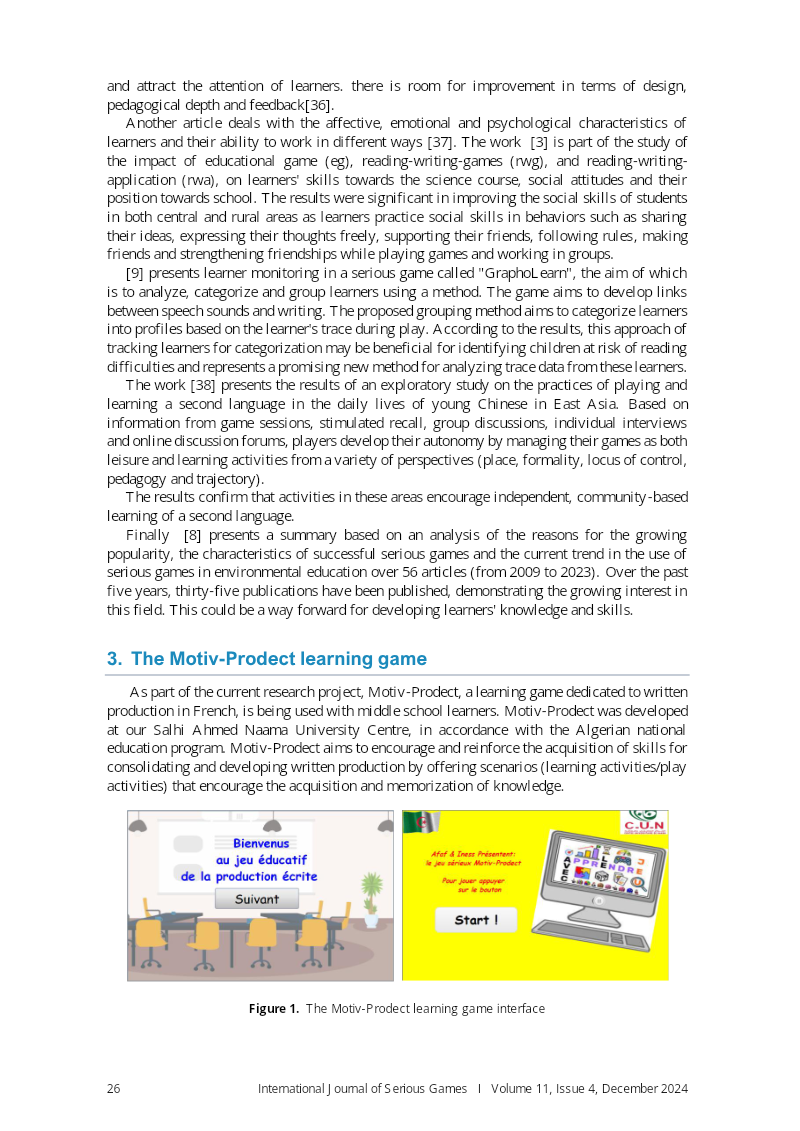
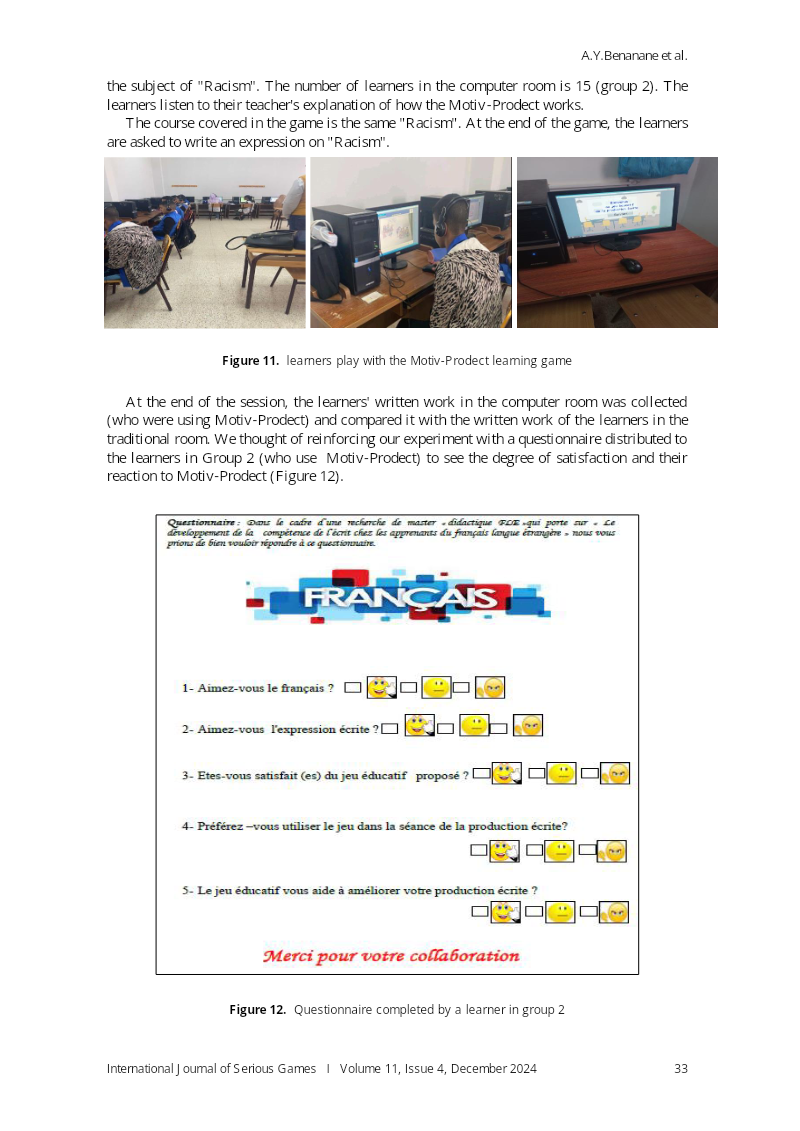
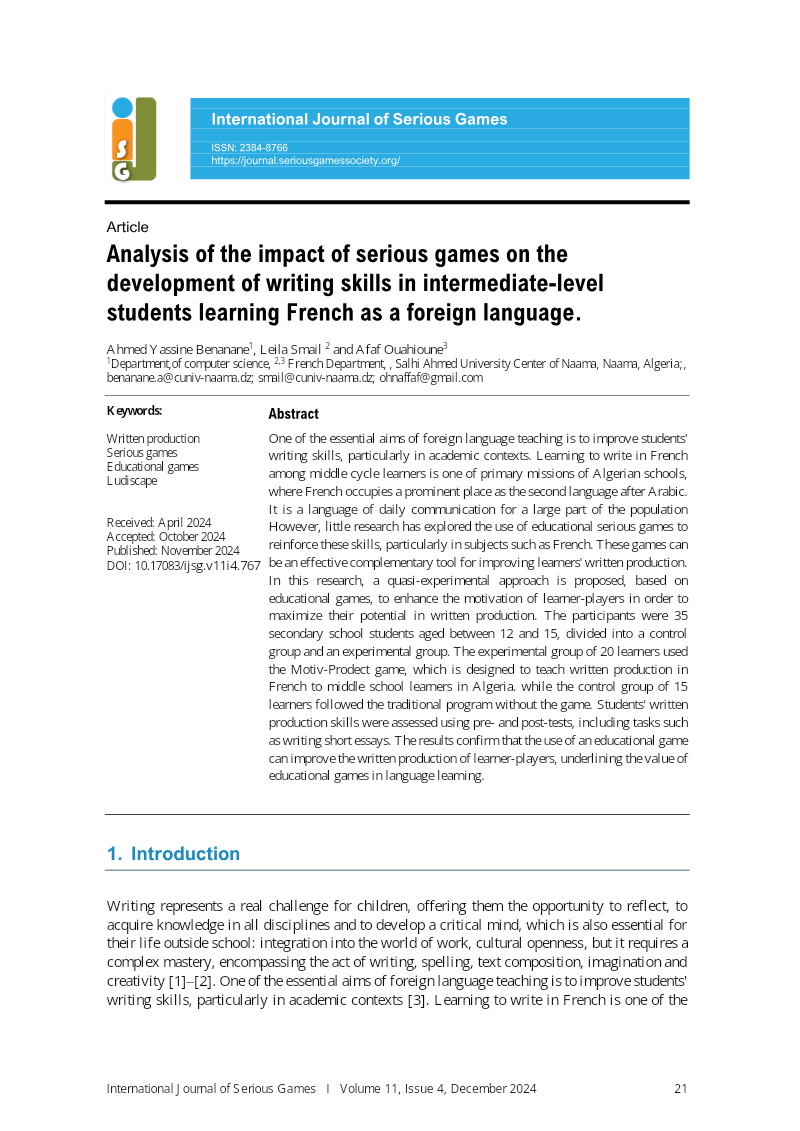
Analysis of the Impact of Serious Games on the Development of Writing Skills in Intermediate-Level Students Learning French as a Foreign Language
Serious games serve as a potent pedagogical intervention for improving written proficiency in foreign language acquisition.
- Students using the Motiv-Prodect gamified platform consistently outperformed peers in traditional classrooms, achieving higher quiz scores and demonstrating superior textual coherence and situational appropriateness in written French.
- Gamified learning environments effectively reduce student anxiety related to writing tasks while fostering the intrinsic motivation required for autonomous skill development.
- A study of 35 Algerian middle school students confirms that integrating game mechanics directly correlates with enhanced critical thinking and linguistic output.
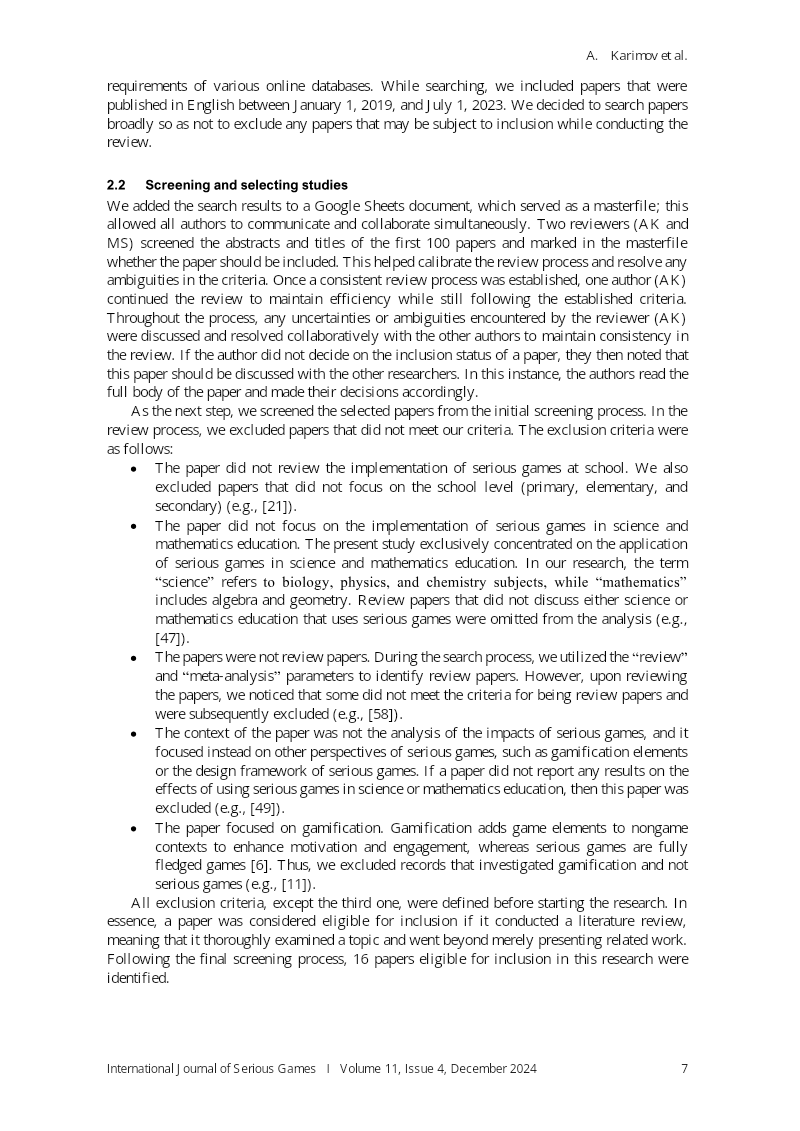
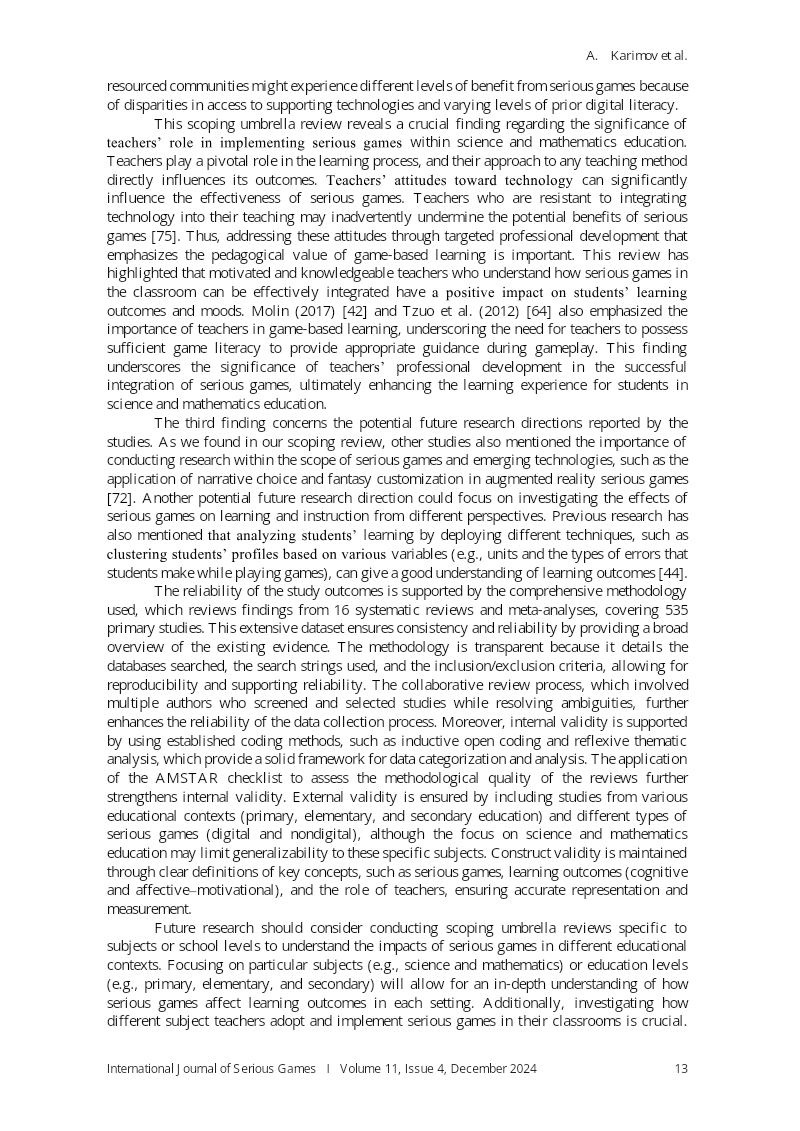
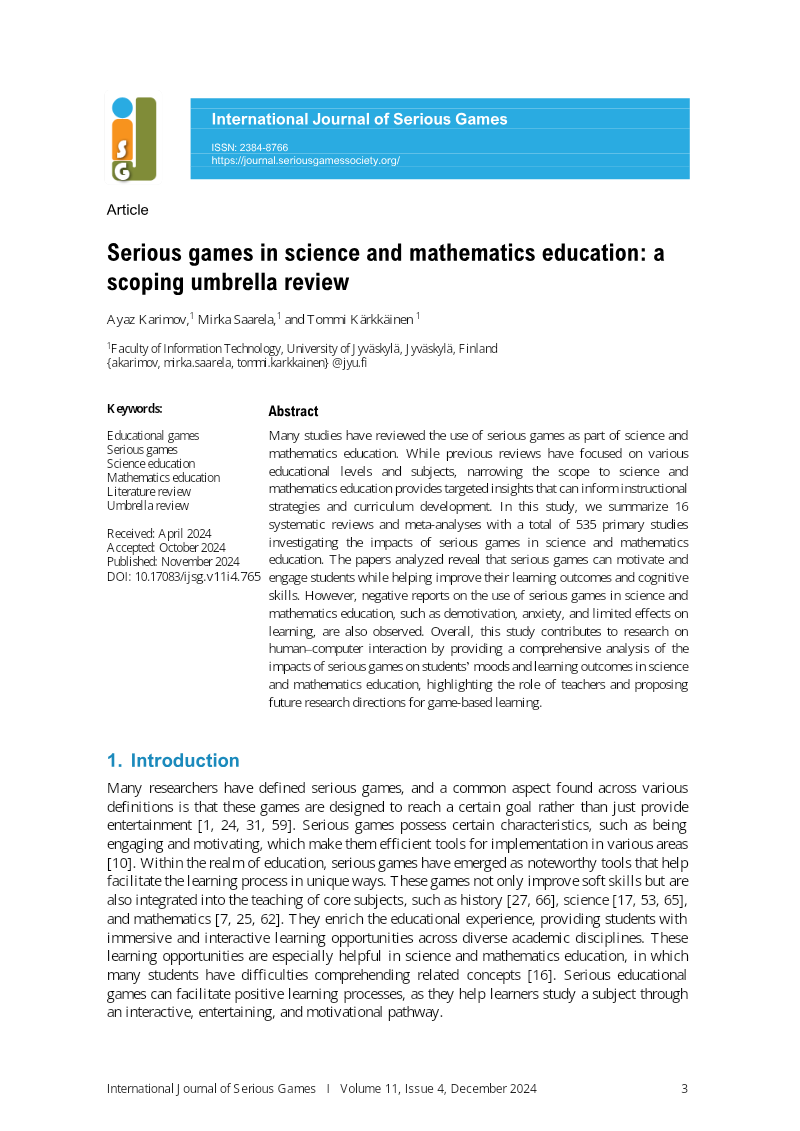
Serious Games in Science and Mathematics Education: A Scoping Umbrella Review
Serious games serve as a significant pedagogical tool for enhancing science and mathematics education, primarily by fostering student motivation, engagement, and cognitive development.
- Serious games significantly enhance science and mathematics education by boosting student motivation, engagement, and academic self-confidence, based on a synthesis of 16 systematic reviews and 535 primary studies.
- The effectiveness of serious games is highly variable, as poor design or implementation can trigger negative outcomes such as student anxiety, demotivation, and feelings of failure.
- Successful integration requires high teacher proficiency and game literacy to ensure educational objectives remain the priority over the gaming experience.