International Journal of Role-Playing
Open-access peer-reviewed journal on role-playing games, larp and related play forms, now hosted by Uppsala University.
Documents
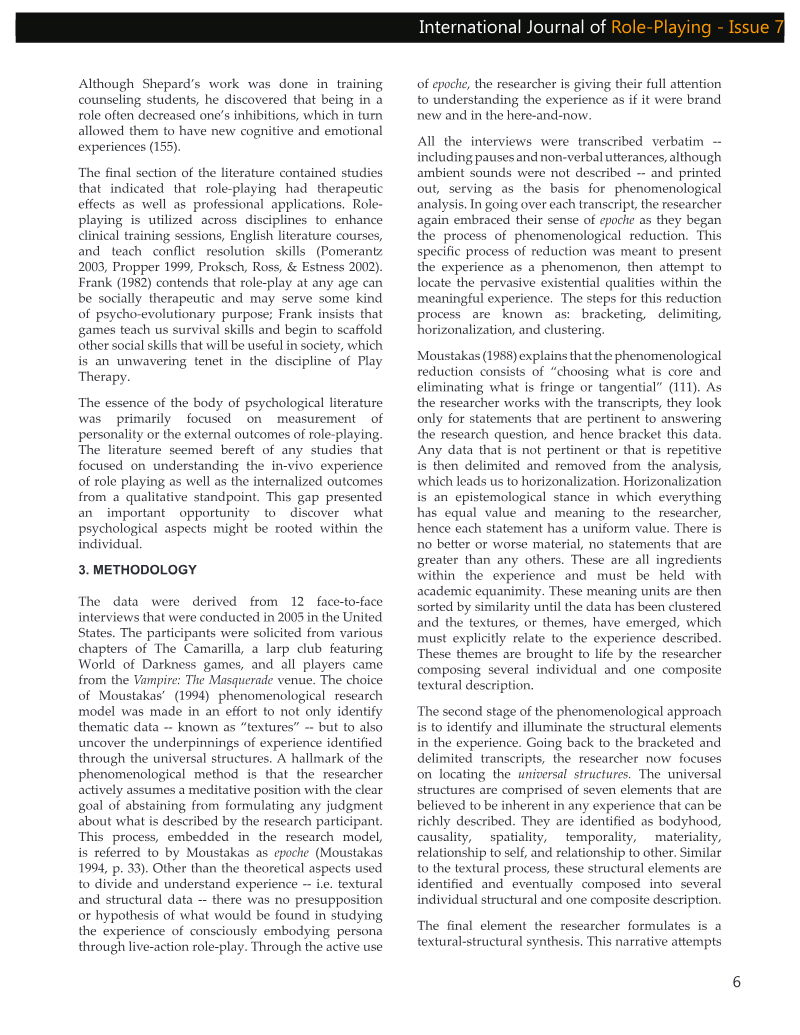
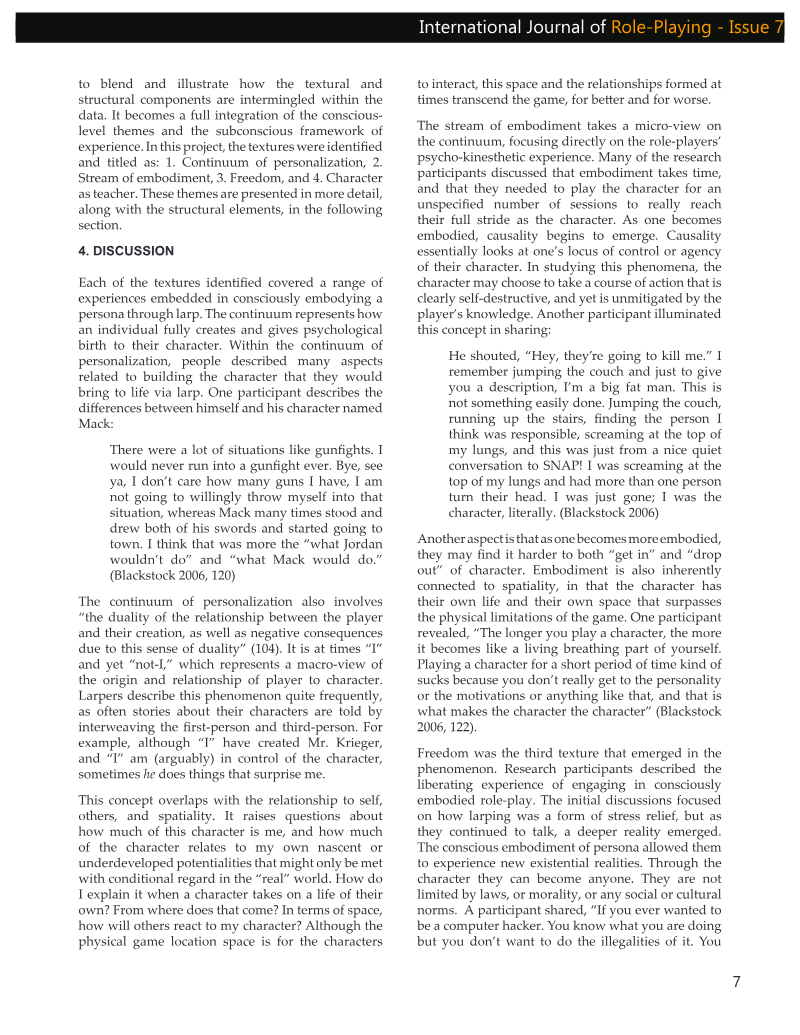
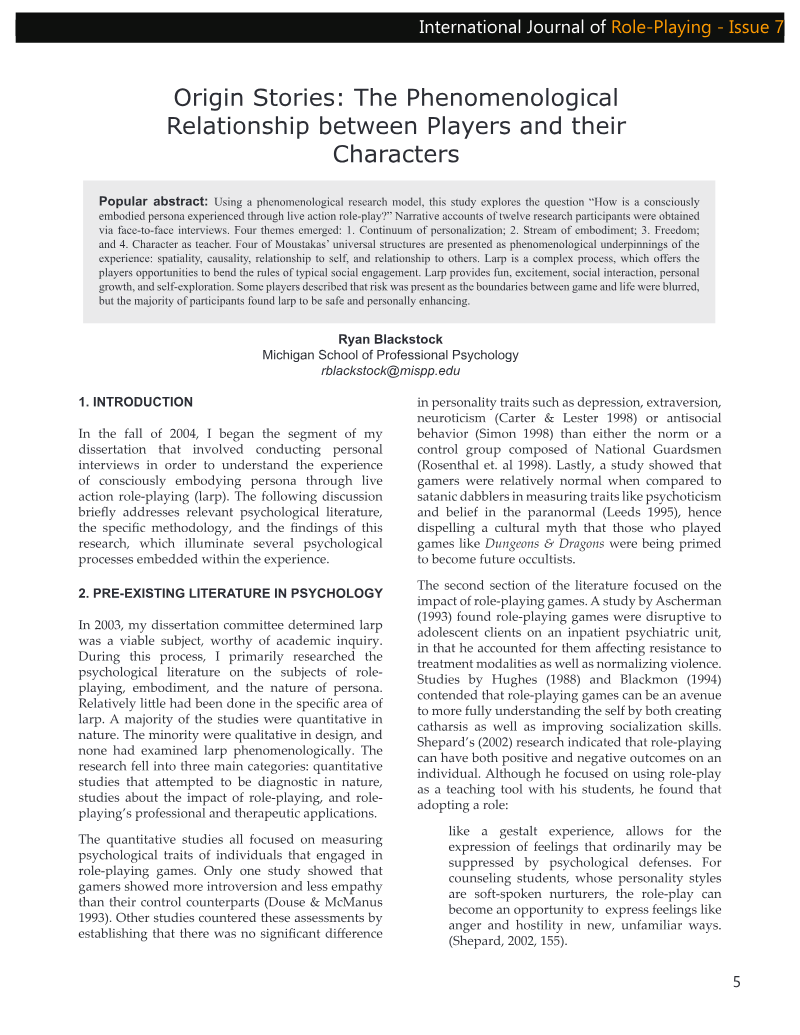
Origin Stories: The Phenomenological Relationship Between Players and Their Characters
This phenomenological study by Ryan Blackstock examines how individuals experience consciously embodying a persona through live action role-play (larp).
- The study used a phenomenological method (Clark Moustakas' model) with face-to-face interviews of twelve participants from a World of Darkness larp club, conducted in the United States in 2005.
- It identified four experiential themes: a continuum of personalization, a stream of embodiment (the psycho-kinesthetic process of becoming a character and difficulty exiting that state), freedom from ordinary social, moral, and cultural constraints, and character as teacher for social skills, emotional insight, and therapeutic reflection.
- Four universal structures of experience, spatiality, causality, relationship to self, and relationship to others, are presented as underpinning these themes.
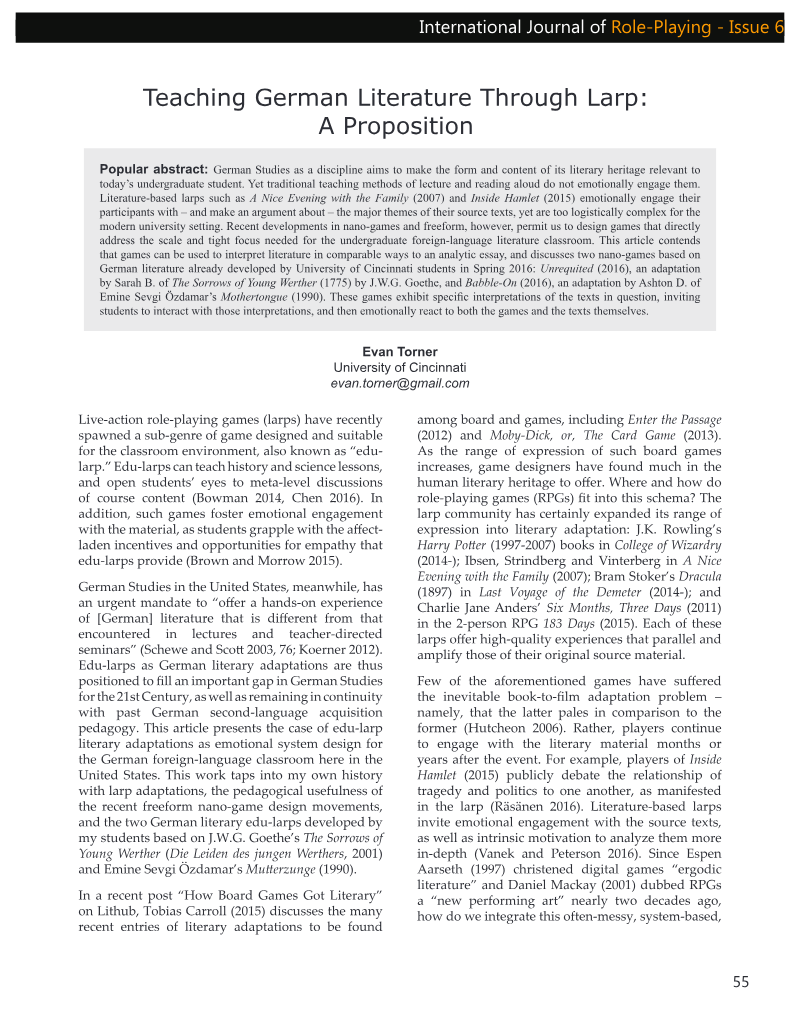
Teaching German Literature Through Larp: A Proposition
This article proposes that live-action role-playing games, specifically short "nano-games" and freeform formats, can teach German literature in ways comparable to an analytic essay, while generating the emotional engagement that traditional lectures and read-aloud methods often fail to produce.
- The article argues that live-action role-playing, specifically short nano-games and freeform formats, can teach German literature as effectively as an analytic essay while producing stronger emotional engagement than lectures or read-aloud methods.
- The author contends that full-scale literary larps are too logistically demanding for undergraduate foreign-language classrooms, whereas compact nano-games are tightly focused and adaptable to small groups.
- The core claim is that game design itself can serve as a form of literary interpretation: students first experience a text's themes through play, then reflect critically on both the game and the source.
One Way to Create Educational Games
This paper argues that improvisational theatre games, long used to train actors, can be adapted to train professionals in other fields.
- Improv games, long used to train actors, can be adapted to train professionals in other fields by building simple, teachable skills such as observation, teamwork, confidence, and cultural understanding within a meaningful context.
- Improv games are short, rule-bound exercises with a clear end condition, and they rarely involve character creation by designers, distinguishing them from larp and jeepform.
- Skills are built through repetition, since knowledge only becomes skill after repeated play; the director selects games, tailors them to students' abilities, and retires them once mastered.
A Physical Presence in Simulation: Scratch at the Surface of Complexity
This paper, by J. Tuomas Harviainen, examines how physical presence shapes simulations and educational games, particularly live-action role-playing (larp) and related physical simulations.
- Physical simulations such as live-action role-playing (larp) offer a visceral, first-person experience that few other media match, but they are an efficient and enjoyable yet imprecise learning tool whose success depends heavily on deliberate design.
- Embodied participation confines players to a single viewpoint with limited vision, so other characters' motivations and complexities may remain hidden, a risk especially significant in military, political, or medical simulations.
- The 'Fog of Larp' describes how information fails to reach all participants equally, producing multiple competing truths within the play space.
Arts-Based Inquiry with Art Educators through American Freeform
This paper summarizes Jason Cox's dissertation on applying American freeform role-playing, a form of larp, as an arts-based research method with professional and pre-service art educators.
- Jason Cox's dissertation applies American freeform role-playing, a form of larp, as an arts-based research method with professional and pre-service art educators, producing what the author calls participatory arts-based inquiry.
- Five players, including the author, collaboratively designed a fictional suburban private school with economic diversity, a well-regarded arts program, and recent leadership change, then played "What to Do About Michael?" across eleven scenes, developing over twenty characters using eight meta-techniques such as the "ball of yarn" and "locked-eyes" methods.
- Participants concluded that power in educational settings is context-specific and tied to the identity of an authority role, and that collective authority often suppressed individual voices and flexibility.
We Need to Talk: A Literature Review of Debrief
This literature review examines the concept of debriefing across several fields, with the aim of grounding and improving the reflective practice that follows live-action roleplay (larp).
- The central thesis is that larp debriefs are non-therapeutic transitional tools that move players out of a fictional frame and reinstate their social reality after play.
- Simulation learning is the closest structural parallel to larp debriefing, following a sequence of awareness, critical analysis, and new perspective mediated by an expert, and engaging cognitive, affective, and psychomotor learning domains.
- Psychological debriefing shows mixed and often negative results when applied to trauma victims such as burn patients and people exposed to acute stress, but the review argues these findings do not generalize to larp because larp debriefs happen in groups immediately after play.
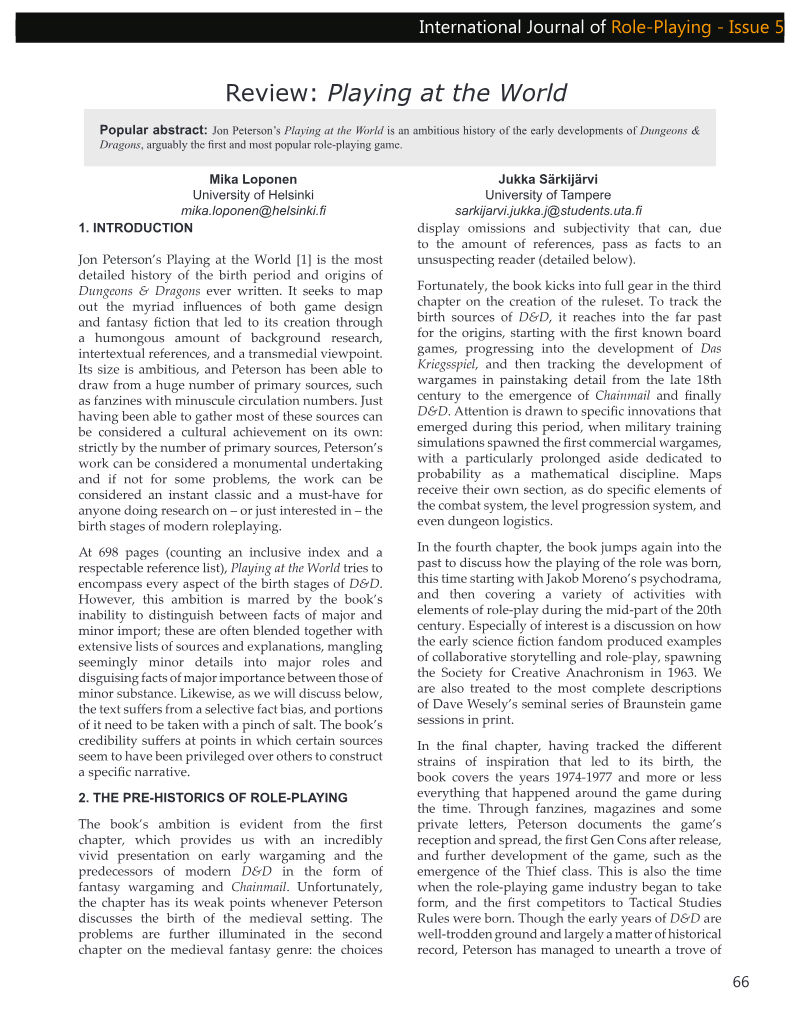
Review: Playing at the World
Jon Peterson's Playing at the World is presented as an extensive history of the origins of Dungeons & Dragons, tracing the game's roots through early wargaming, fantasy fiction, psychodrama, and collaborative storytelling.
- Jon Peterson's Playing at the World is an extensive history of Dungeons & Dragons' origins, covering roughly the late eighteenth century through 1977, from Kriegsspiel and early wargaming through Chainmail, the rise of role-play, and the game's early growth in the mid-1970s.
- The book draws on a large body of primary sources, including fanzines, magazines, and private correspondence, which reviewers regard as a major achievement and a valuable resource for researchers.
- Reviewers consider the middle chapters on rules mechanics, the evolution of gaming, and the development of role-playing to be the book's strongest and most engaging sections.
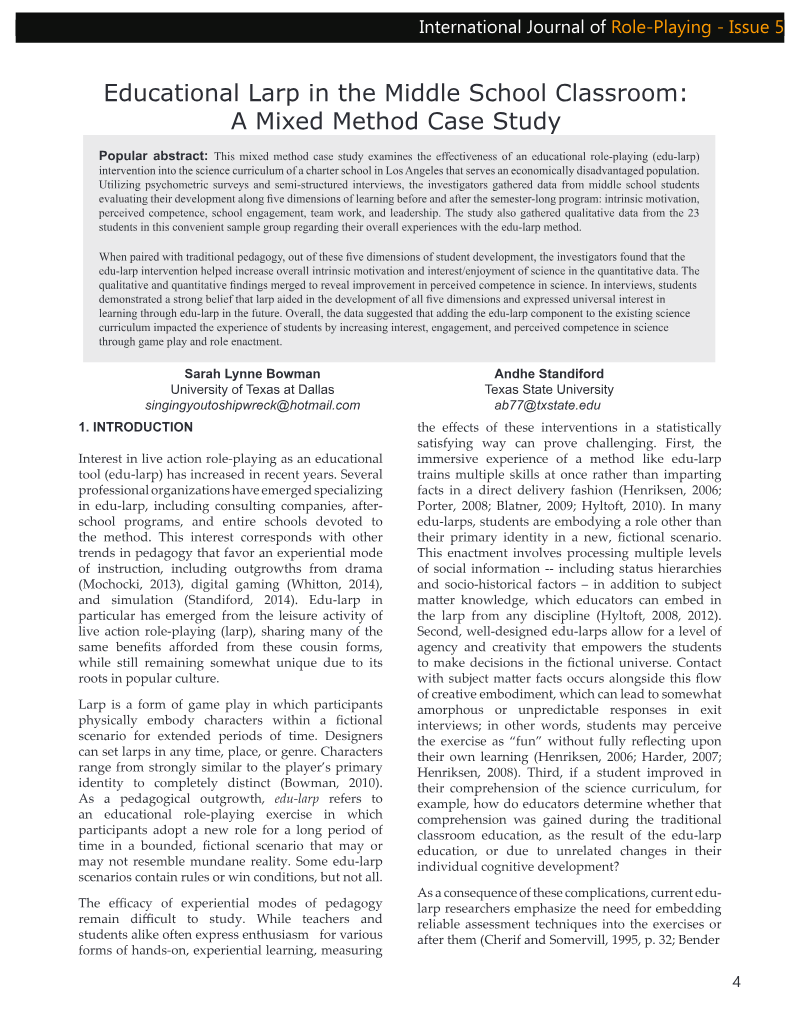
Educational Larp in the Middle School Classroom: A Mixed Method Case Study
A mixed-method case study examines whether educational live-action role-play (edu-larp) can strengthen middle school students' engagement with science.
- A mixed-method quasi-experimental study of roughly 23–24 eighth-grade-level students at a Los Angeles charter school, serving economically disadvantaged students, tested edu-larp across eight role-play scenarios in a semester-long science curriculum.
- Students showed significant pre-to-post increases in intrinsic motivation and interest in science, with validated surveys and interviews converging on these gains.
- Perceived science competence improved, and students who initially rated themselves as low-competence showed notable gains.
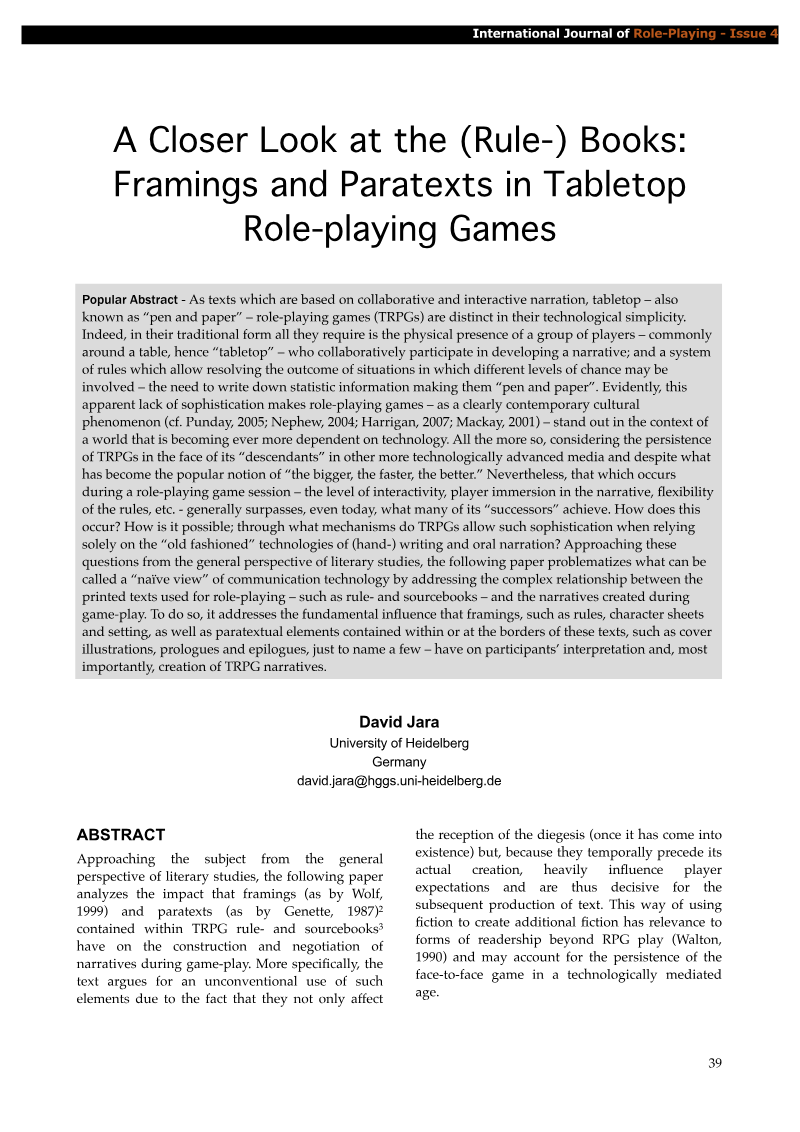
A Closer Look at the (Rule-) Books: Framings and Paratexts in Tabletop Role-playing Games
David Jara's paper examines how the paratextual and framing elements of tabletop role-playing game (TRPG) rulebooks shape the interactive narratives players build during play, despite the technological simplicity of the medium.
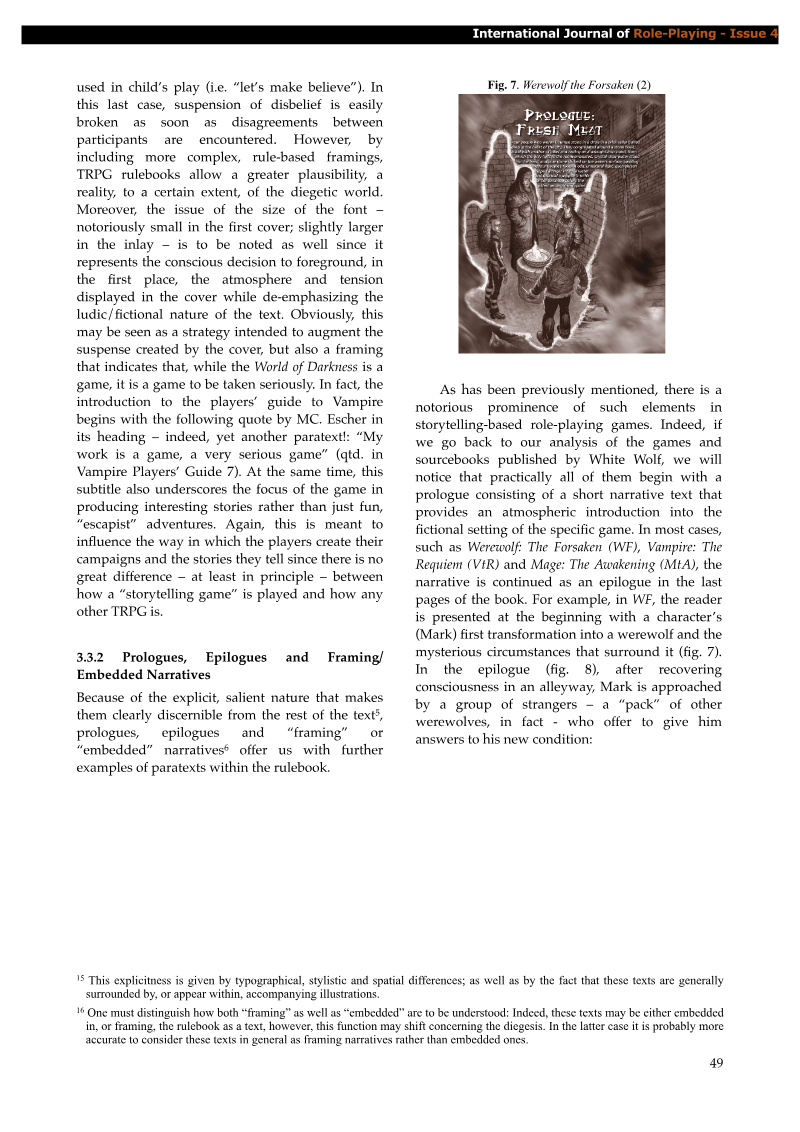
- Rulebooks shape player-created narratives before play begins, through rules, setting information, genre labels, cover art, and titles that establish expectations about fictional worlds and themes.
- Jara's concept of 'genesic framing' holds that framing devices incite the production of text rather than merely shaping its reception, extending authorial control over play beyond the rulebook writers' formal roles.
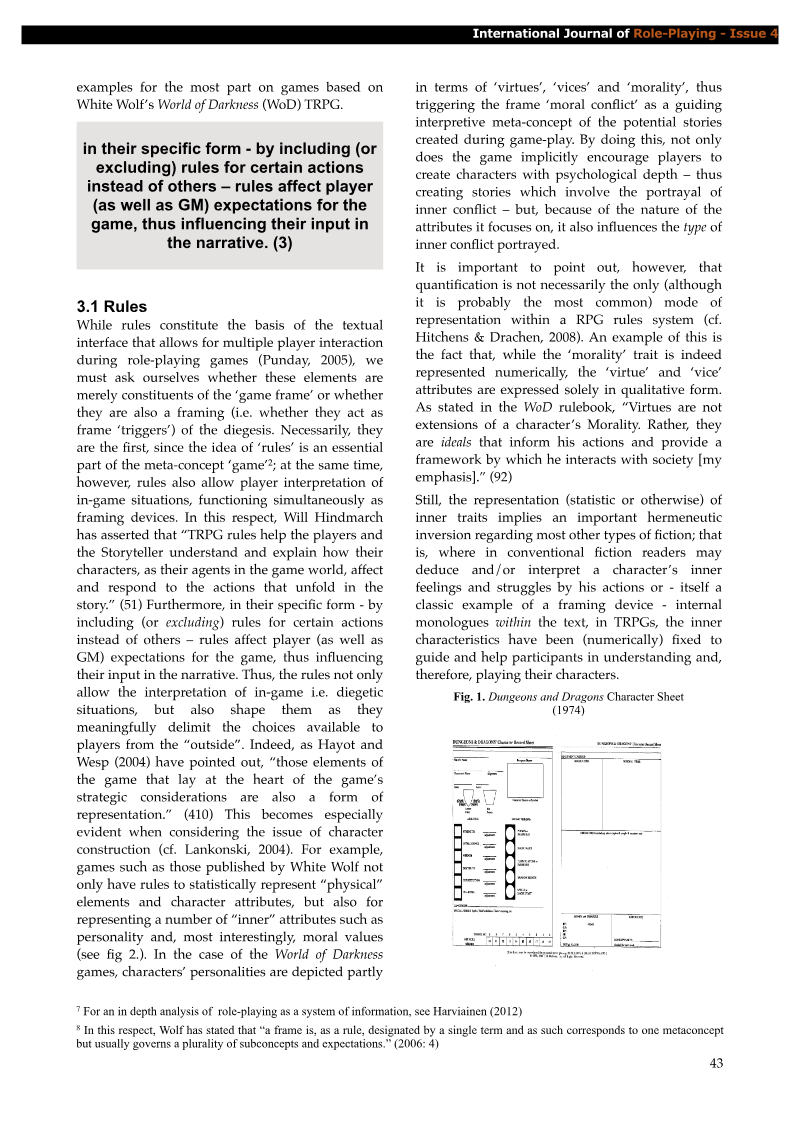
- White Wolf's World of Darkness illustrates how mechanics like Humanity and Virtues act as both game systems and framing devices that steer players toward inner conflict and moral themes.
The Self-Perceived Effects of the Role-Playing Hobby on Personal Development: A Survey Report
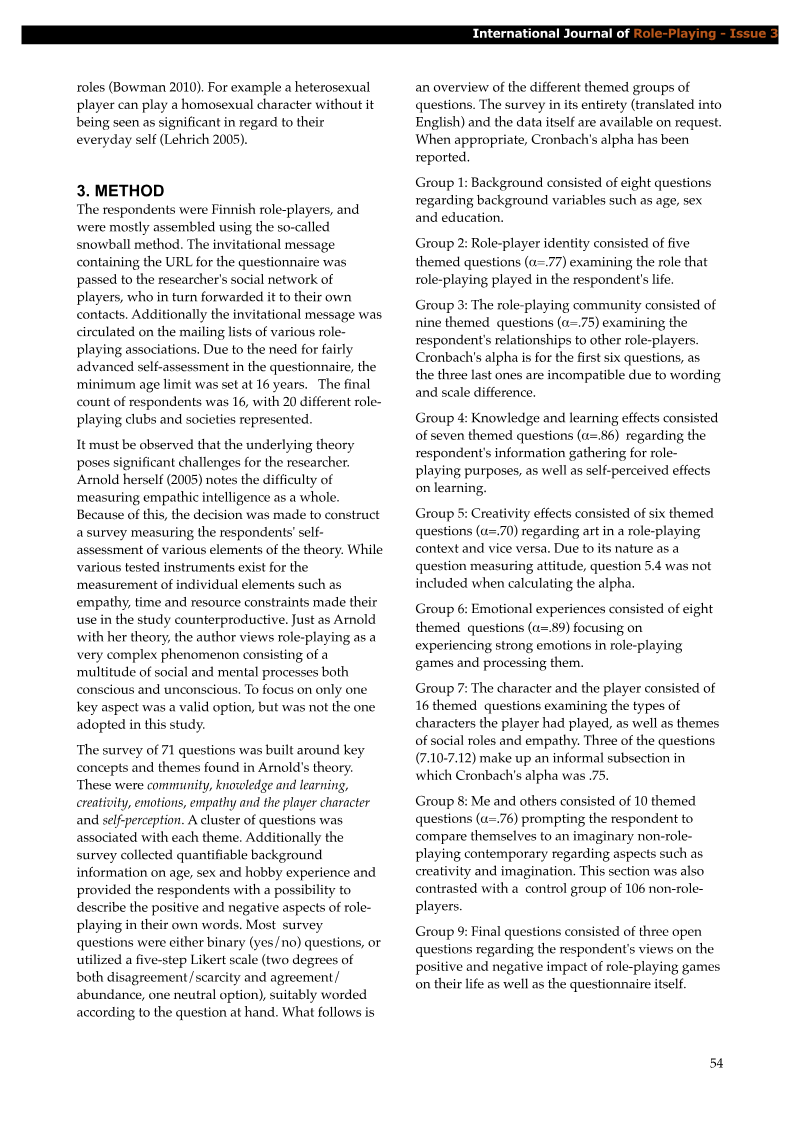
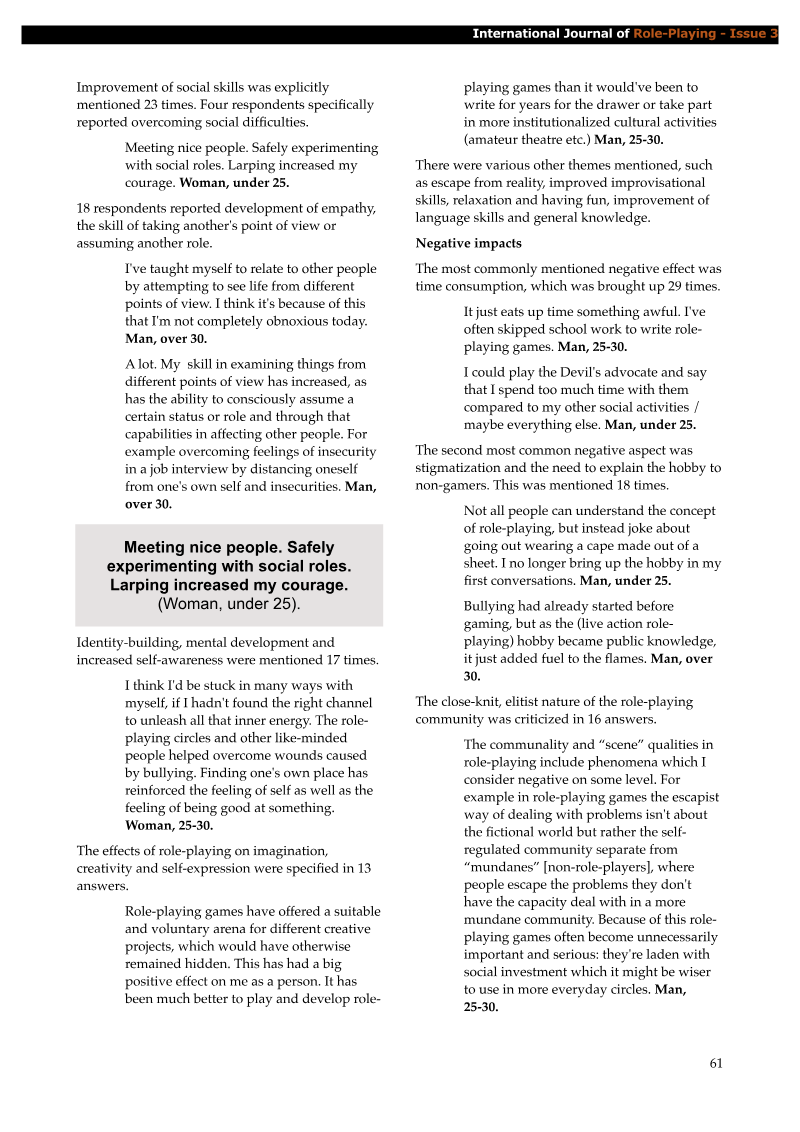
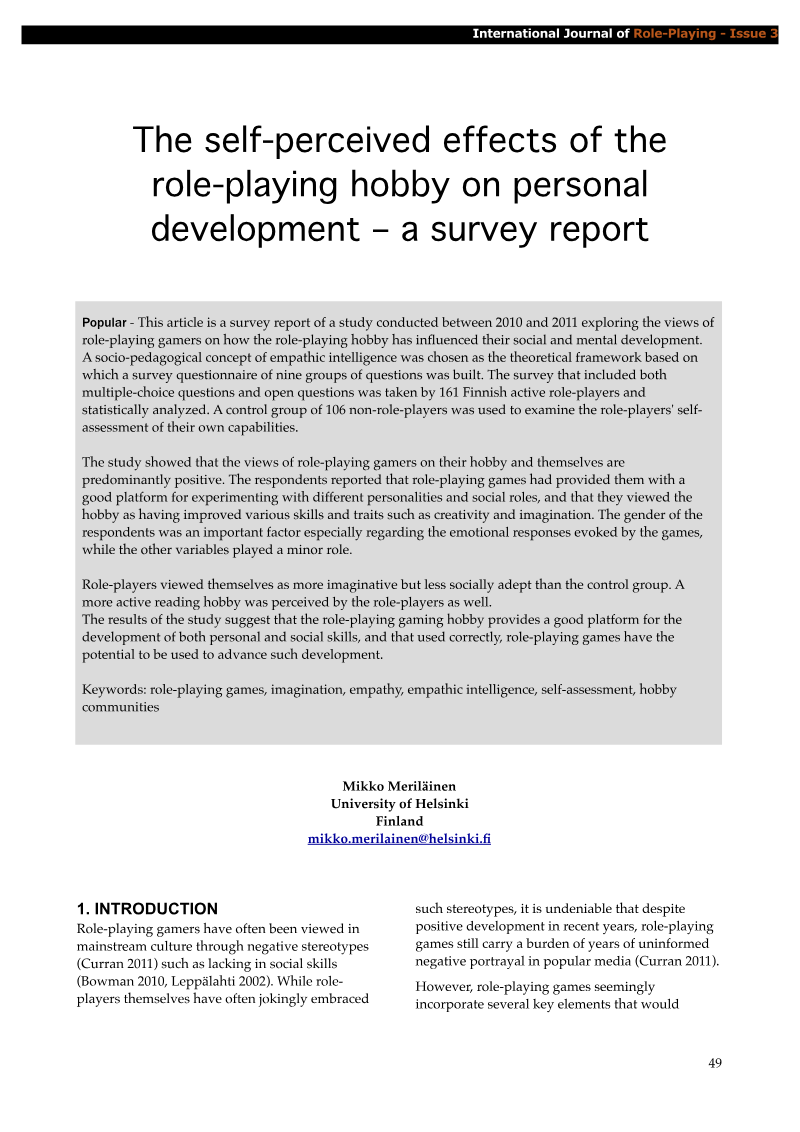
A 2010–2011 survey by Mikko Meriläinen examines whether role-playing games shape personal and social development, using Arnold's concept of empathic intelligence as its theoretical framework.
- A 2010–2011 Finnish survey by Mikko Meriläinen compared 161 active role-players with 106 non-role-players and a student choir control group, using Arnold's concept of empathic intelligence as its framework.
- Role-players were overwhelmingly positive about the hobby's social effects: 87% reported forming significant relationships through it and 82.6% perceived a positive effect on their social development.
- Over 70% of role-players believed the hobby enhanced their imagination, over 73% credited it with improving creativity, and more than half reported increased empathy.
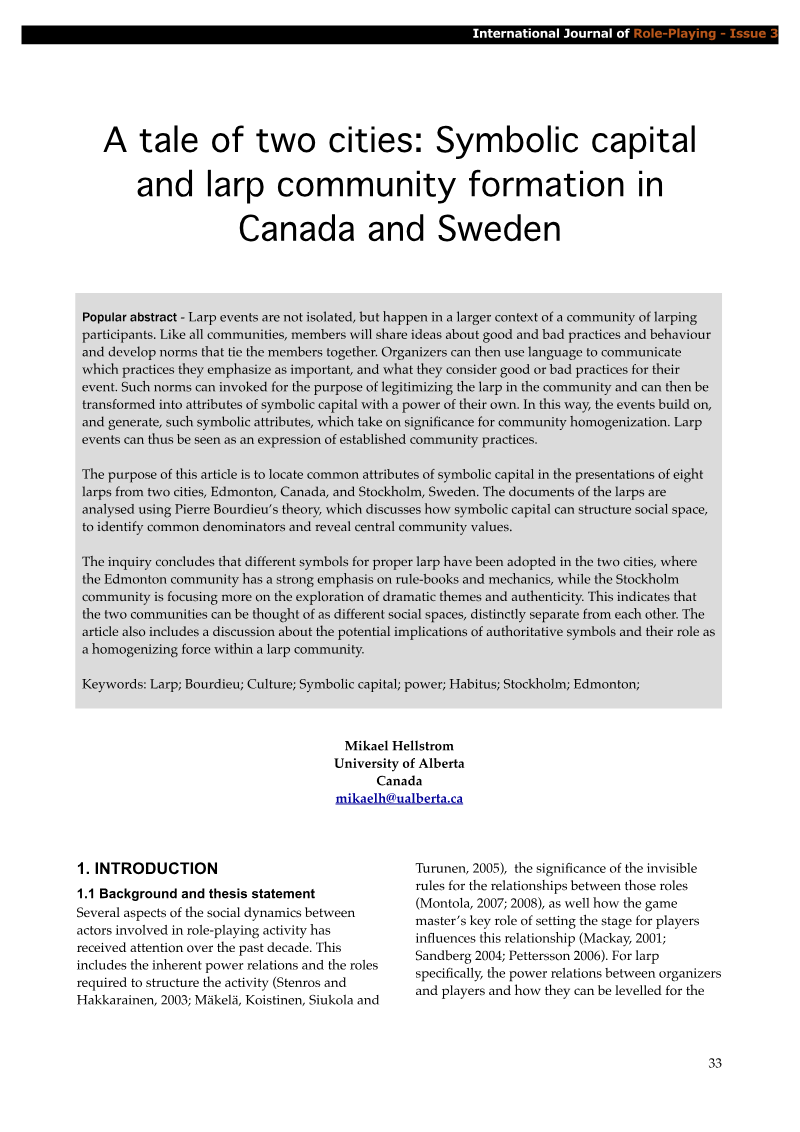
A Tale of Two Cities: Symbolic Capital and Larp Community Formation in Canada and Sweden
This study examines how larp (live action role-playing) communities in Edmonton, Canada, and Stockholm, Sweden, deploy symbolic capital to structure their social spaces, drawing on Pierre Bourdieu's theory of habitus and capital.
- Symbolic capital in larp communities both fosters cohesion and exerts a homogenizing pressure on what participants and organizers consider acceptable play, a tension the study frames through Bourdieu's theory of habitus and capital.
- Edmonton larps center on game mechanics, with thick rulebooks serving as the key artefact and as an authoritative marker of quality and fairness, though this also reflects a top-down, mistrustful organizational structure.
- Stockholm larps consistently foreground dramatic themes, social realist drama, and authenticity, with organizers often acting as directors who define a central narrative, while mechanics carry far less weight.
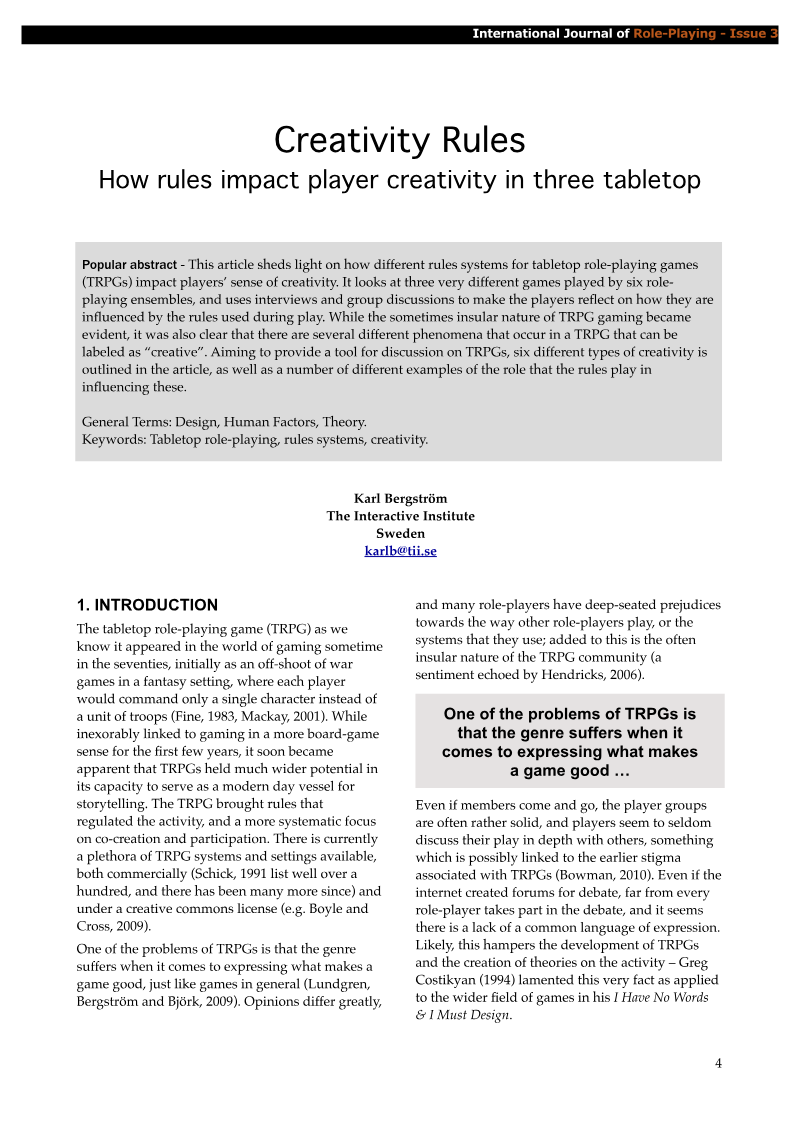
Creativity Rules: How Rules Impact Player Creativity in Three Tabletop Role-Playing Games
Karl Bergström's study examines how rules systems shape players' perceived creativity in tabletop role-playing games, a question the author notes has lacked any formal measure, so the research relies instead on players' own accounts of their experiences.
- The relationship between rules and creativity is complex: a system's openness does not map straightforwardly onto the quality of creative output.
- The most consequential mechanism shaping creativity is diegetic control, meaning the degree to which rules govern what happens inside the fiction, alongside consistency and randomness.
- Respondents were divided on whether rules enable or stifle creativity; complexity in systems like D&D was often a barrier for newcomers, even as it supplied structure players found useful.