This paper summarizes Jason Cox's dissertation on applying American freeform role-playing, a form of larp, as an arts-based research method with professional and pre-service art educators. The central aim is to show how collaboratively played games can create a community of play in which participants examine relationships within educational communities such as schools. The work positions role-play as an embodied, reflective practice that encourages participants to move beyond their own perspectives and to loosen barriers of understanding related to time, location, and social status.
The methodology combined arts-based educational research and a/r/tography with participatory action research, producing what the author calls "participatory arts-based inquiry through American freeform." The study involved five players, including the author, who collaboratively designed a fictional suburban private school with economic diversity, a well-regarded arts program, and recent leadership change. Their game, "What to Do About Michael?", placed participants as teachers and administrators responding to a student's violent incident. Across eleven scenes, over twenty characters were developed using eight meta-techniques, including the "ball of yarn" and "locked-eyes" methods. Data came from session videos, reflective dialogue, visual artifacts, and entry and exit interviews, analyzed through grounded theory and rhizomatic mapping and checked through member validation.
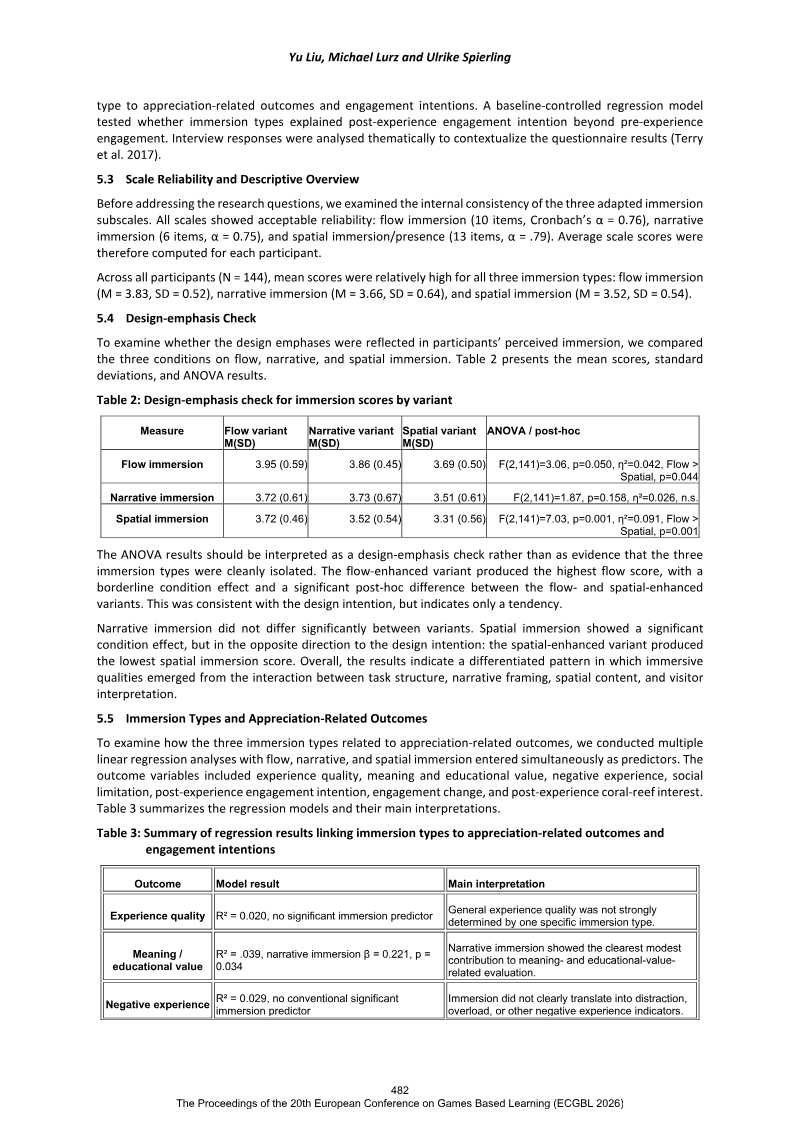
Key findings center on power and authority. Participants concluded that power in educational settings is context-specific and tied to the identity of an authority role, and that collective authority often suppressed individual voices and flexibility. Participants described education as an ongoing negotiation between structure and uncertainty, and reported that embodied play gave them insight into lives they could not otherwise access, with one participant noting that no textbook or traditional class could have provided that learning. Participants also suggested that the techniques hold promise for teacher preparation and professional development.