
gamevironments
Open-access journal from the University of Bremen on video games, religion and culture, with articles, interviews and research reports.
Documents

Mapping Methods: Visualizing Visual Novels Cultural Production in Japan
This study maps how Otome and Boys' Love visual novel merchandise circulates through the urban fabric of Ikebukuro, Tokyo, drawing on fieldwork conducted between 2009 and 2016.
- The study maps Otome and Boys' Love visual novel merchandise (acrylic straps, badges, drama CDs) circulating through Ikebukuro, Tokyo, based on fieldwork conducted between 2009 and 2016.
- The author argues the games' cultural production forms a localized "game environment" in which the collecting logic of the games is mirrored in the goods, treating the games as urban phenomena rather than software to analyze.
- Fans navigate a cyclical, interdependent recycling ecosystem of limited-edition releases, recycle shops, fanzine gatherings, and cafés, forming layered walking routes that followed the district's transformation into "Otome-Road" after 2004.

Post-Digital Games: The Influence of Nostalgia in Indie Games' Graphic Regimes
Frank G. Bosman's article examines how the Assassin's Creed series reinterprets Christian mythology through a rationalistic-reductionist lens, treating the games as "playable texts" and applying cultural theology and reception-history methods.
- The article analyzes how the Assassin's Creed series reinterprets Christian mythology through a rationalistic-reductionist lens, treating the games as "playable texts" and applying cultural theology and reception-history methods rather than commercial or industry analysis.
- The franchise recasts miracles and sacred relics as products of an extinct advanced civilization, the Isu, within an "Ancient Astronauts" meta-narrative in which Templars and Assassins contend over Pieces of Eden.
- The series inverts Genesis by reading Adam and Eve's expulsion as liberation and locating the origins of the Templar-Assassin conflict in Cain, drawing on Gnostic traditions such as Marcionism.
Developing Time: Representing Historical Progression Through Level Structures
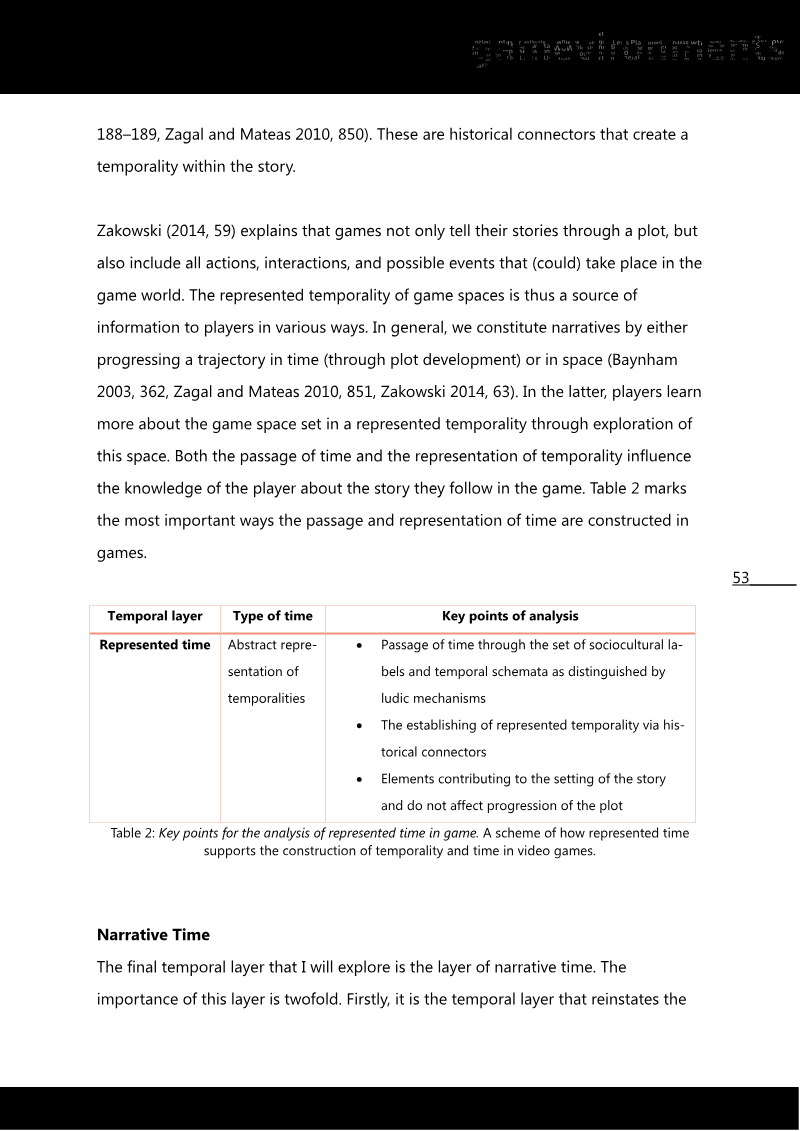
Azrioual's analysis examines how historical video games represent the passage of time through their level structures, focusing on a comparison between Call of Duty: World at War (2008) and Assassin's Creed (2007).
- The study proposes a threefold framework for historical games: ludic time (mechanical rules and play structure), represented time (sociocultural labels and historical connectors that situate a game in an era), and narrative time (the emplotment of events into a coherent story).
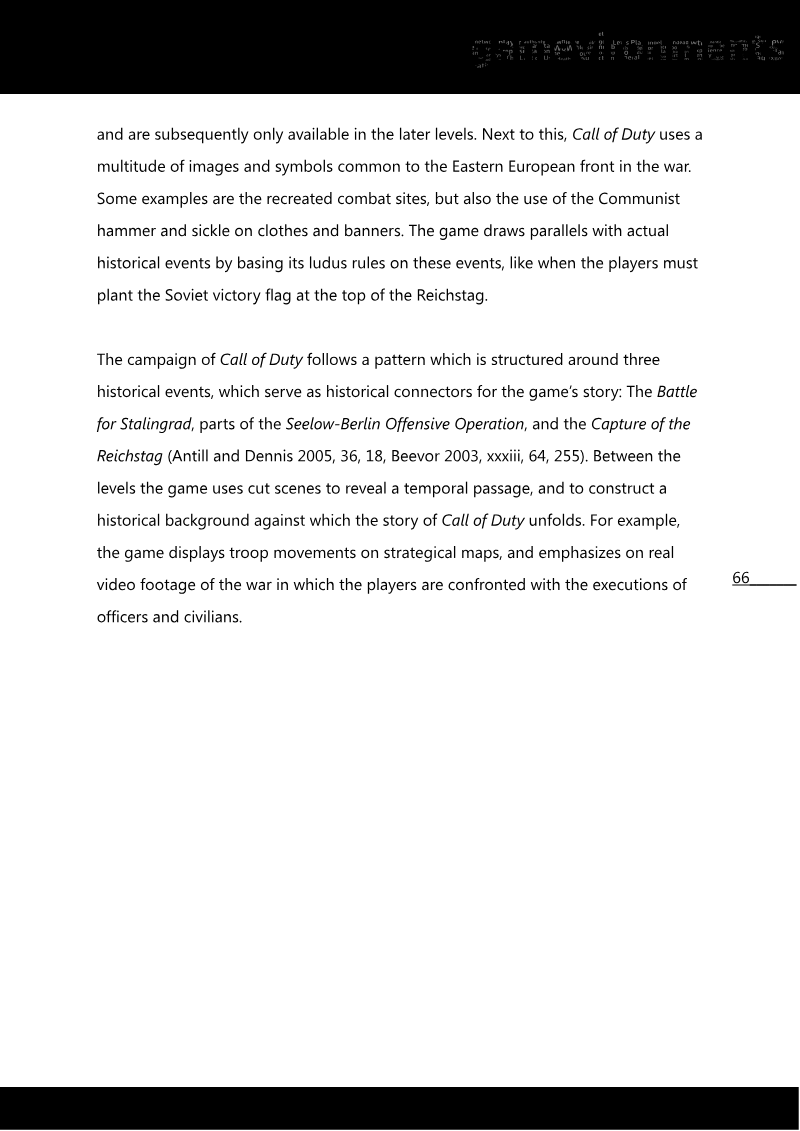
- Call of Duty: World at War re-enacts historical events with linear, objective-gated levels that reset to specific dates and locations between 1942 and 1945, following the Stalingrad-to-Berlin chronology.
- The analysis argues that Call of Duty's chronological, already-resolved historical trajectory can foster moral disengagement in players, framing violence within a familiar narrative.

Religion, Games, and Othering: An Intersectional Approach
Kathrin Trattner's study examines how religion, particularly Islam, functions as a marker of "othering" in video games, arguing that religious difference rarely operates in isolation and becomes fully visible only when analyzed alongside race, nationality, culture, and gender.
- The study argues that religious 'othering' in video games, particularly of Islam, rarely operates alone and becomes fully visible only when analyzed intersectionally alongside race, nationality, culture, and gender.
- The central case study, the post-9/11 military shooter Medal of Honor: Warfighter (2012), equates Islam, the Middle East, and terrorism through its narrative, Orientalist imagery, and largely civilian-free virtual geographies.
- Comparing eras, the author finds a shift from 1980s and 1990s depictions that relied on exoticism toward post-2001 portrayals that construct enemies through explicitly religious narrative framing.
Gamevironments of the Past
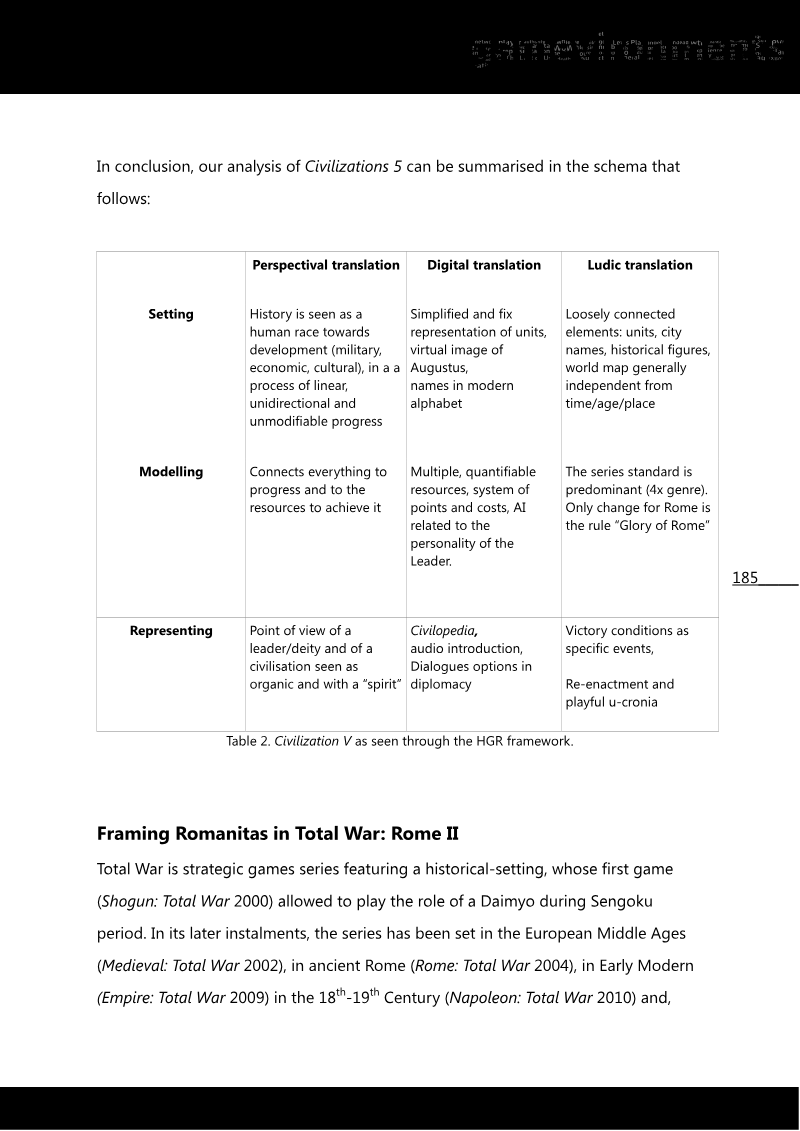
"Gamevironments of the Past" examines how digital strategy games translate historical content into interactive experiences, arguing that history in games is never a neutral transcription of the past but a product of interpretive choices shaped by the present, by the constraints of digital media, and by the demands of play.
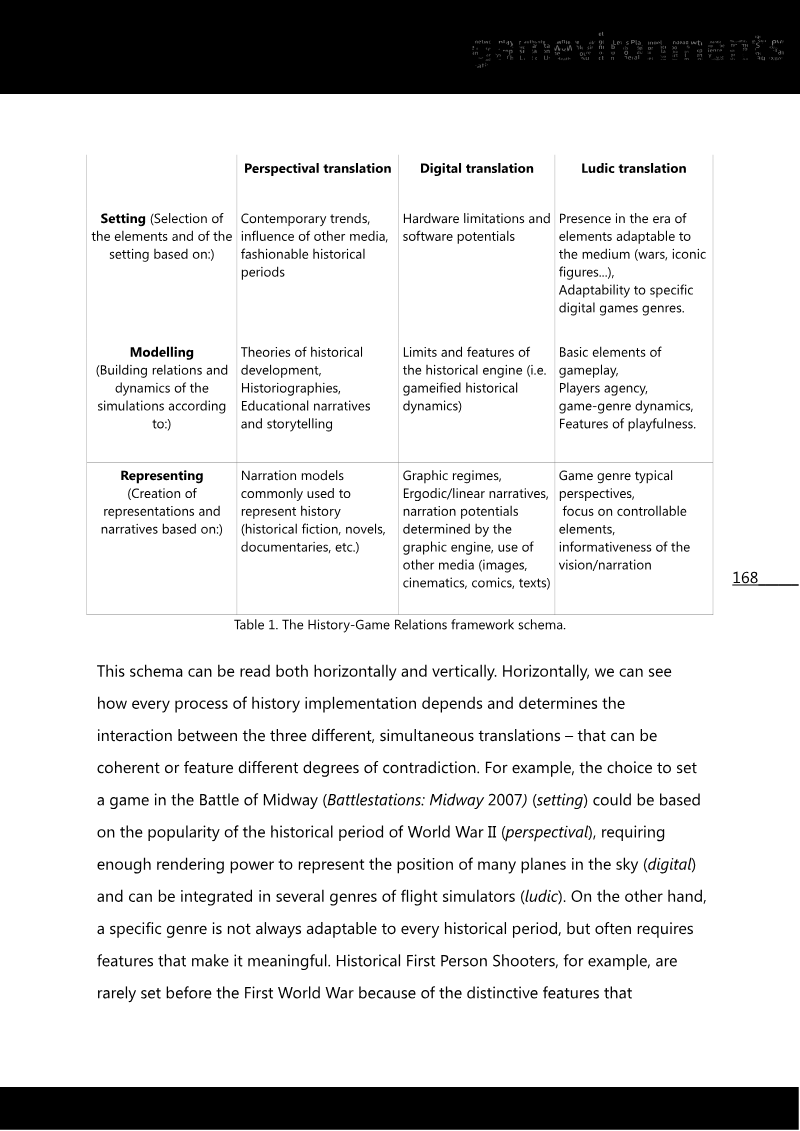
- The History-Game Relations (HGR) framework analyzes game history through three historiographic procedures (setting, modelling, and representing) and three simultaneous translations (perspectival, digital, and ludic), making it a tool for examining how these layers interact coherently or contradictorily within a title.
- The authors argue that history in games is never a neutral transcription of the past but the product of interpretive choices shaped by the present, the constraints of digital media, and the demands of play.
- Civilization V presents history as a linear, positivistic race toward development, freely recombining civilizations, leaders, and events into a counterfactual "u-chronic" history, and reduces units, cities, and leaders to fixed quantifiable variables.

Post-Digital Games: The Influence of Nostalgia in Indie Games' Graphic Regimes
Mattia Thibault's paper examines how nostalgia shapes the visual styles of indie games, framing their turn toward retro, pixel, hand-drawn, and analogue aesthetics as a post-digital reaction against the photorealism that dominates AAA productions.
- Mattia Thibault argues that indie games' turn toward retro, pixel, hand-drawn, and analogue aesthetics is a post-digital reaction against AAA photorealism, forming a heterogeneous alternative within digital game design rather than a simple replacement for it.
- Three forces drive the shift: budget and technological constraints that make photorealistic rendering unaffordable for small studios, nostalgia for the perceived Golden Age of gaming, and a wider cultural desire for experiences that slow down or enhance the passage of time.
- Drawing on non-photorealistic rendering research and Lauteren's application of Barthes and Caillois, the paper argues that stylized graphics can heighten believability and immersion rather than diminish them.
Ghost in the Cartridge: Nostalgia and the Construction of the JRPG Genre
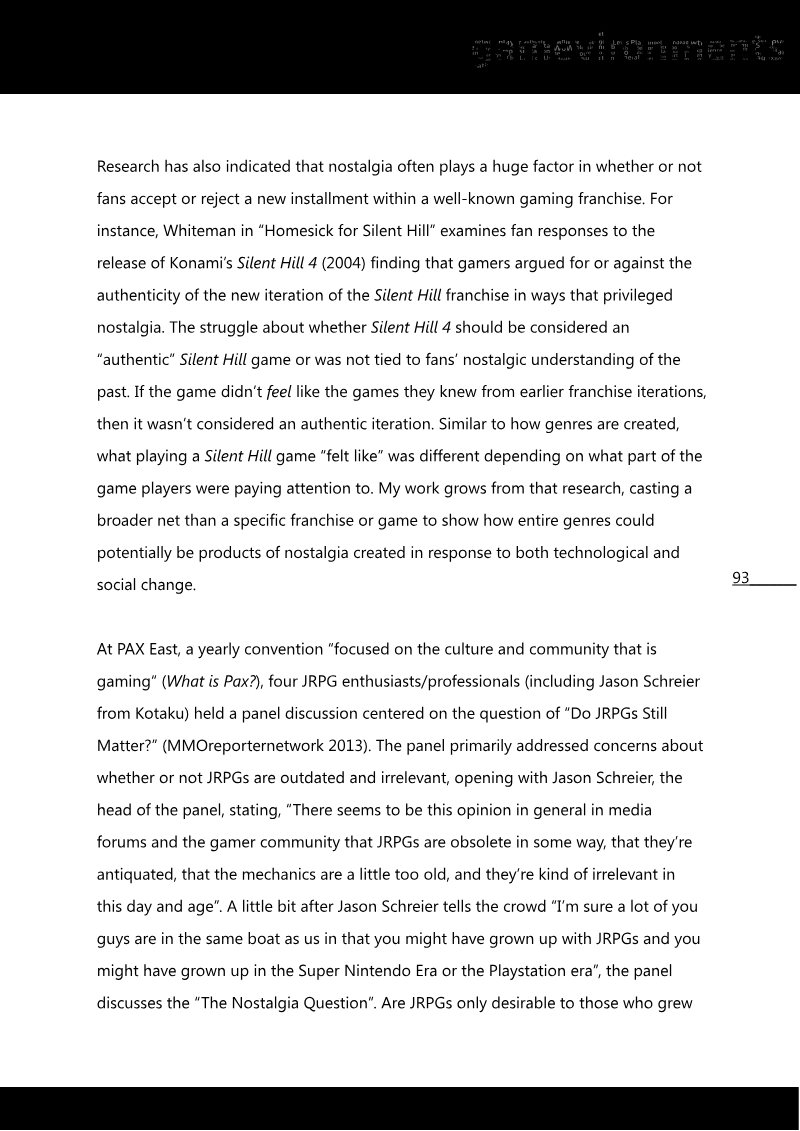
The JRPG label, this analysis argues, is less a statement about national origin than a vehicle for nostalgia and identity negotiation among gamers.
- The JRPG label is argued to reflect nostalgia and identity negotiation among gamers more than national origin, and it arose partly by historical accident from Japanese developers dominating console RPGs while Western developers focused on PC RPGs.
- The division the label originally tracked blurred during the Xbox era as console and computer platforms converged, yet the term persisted and is now applied even to Western-developed games.
- Online communities have no consensus definition of a JRPG beyond a vague sense that players "know it when they see it," and that intuition is anchored in emotional experiences tied largely to 1980s and 1990s games.
Gamevironments of the Past: A Broad Take on Games and History
This report by Xenia Zeiler examines the Indian indie game development scene as of 2016, focusing on the tension between commercial market realities and creative ambitions around cultural heritage.
- Smartphones have become the dominant gaming platform in India, while console and PC gaming remain niche.
- Successful Indian mobile titles since 2015 have been overwhelmingly card and casino games, particularly the Teen Patti family, with mythology-, animation-, or film-tied titles tending to have short lifespans.
- Earlier large-scale Indian heritage games, such as Hanuman: Boy Warrior (2009), largely failed, making the current wave of indie heritage projects notable.

Methods for Analyzing Let's Plays: Context Analysis for Gaming Videos on
This methods guide presents a six-question context-analysis matrix (who, what, when, where, why, how) for studying Let's Play videos on YouTube, adapted from the historical-critical method.
- The report argues that context analysis must precede content analysis of Let's Play videos, using a six-question matrix (who, what, when, where, why, how) adapted from the historical-critical method.
- Context for gaming videos operates on three levels: the game itself, the Let's Play video and its channel, and the accompanying comment section.
- Archiving is treated as a prerequisite for this research, because games, software, hardware, video files, channel pages, and comments can change or disappear, and standard mirroring tools alter original web content in ways that undermine scholarly reliability.

Extending the Dimensions of the Social World through Game Worlds
Tuckett's paper applies Alfred Schutz's phenomenology of the social world, particularly his "dimensions of the social world" organized around proximity to one's "Here and Now," to multiplayer video games.
- Tuckett extends Alfred Schutz's phenomenology of the social world to multiplayer video games, arguing that existing extensions such as Shanyang Zhao's model for internet interaction fail to describe relations within game-worlds, which are real finite provinces of meaning rather than half-real fiction.
- The paper uses first-person shooters as its focal case because of their large player bases (Call of Duty reportedly reaches about 125 million monthly users) and their explicit player-versus-player design, which makes the Other's Otherness visible.
- Its central conceptual contribution is the 'andsociate' relation, a one-sided observation in which one player perceives another who does not perceive them, a structure the author argues competitive FPS games actively encourage by keeping opponents in each other's blind spots.

Current Key Perspectives in Video Gaming and Religion
This special issue, edited by Gregory Grieve, Kerstin Radde-Antweiler, and Xenia Zeiler and published in 2015, brings together a series of theses from scholars across religious studies, media studies, and game studies to map current thinking about the relationship between video games and religion.
- Religious studies should take video games seriously because, like religions, games construct ordered worlds that shape how people understand reality, identity, and community.
- Using Minecraft as its central case, the essay argues that the game's emphasis on construction, rule-based coherence, and open-ended creativity offers players a form of respite from a chaotic world.
- Fan practices, online communities, and religiously inflected creative works extend Minecraft's influence into offline life, as illustrated by a Christian Let's Play series and a Catholic blogger's use of in-game metaphors.

Interview with Third Faction
Third Faction is a collective of artists, performers, and game players who stage interventions in synthetic environments, primarily World of Warcraft and Second Life, to challenge hierarchical game structures, corporate Terms of Service, and dominant narratives of conflict.
- Third Faction is an artist and player collective formed in World of Warcraft in 2008 that stages interventions in virtual worlds (primarily WoW and Second Life) to challenge hierarchical game structures, corporate Terms of Service, and dominant conflict narratives.
- The collective argues that virtual-world social dynamics mirror real-world power, prejudice, and human rights issues, framing its work through the Universal Declaration of Human Rights and theories of discipline and normalization.
- Its flagship project "/hug" modeled a humanitarian NGO in WoW's Azeroth, encouraging players to donate resources to disadvantaged characters and subvert competitive mechanics; it was exhibited at the Laguna Art Museum in 2009.