1 free read left. Create a free account for unlimited reading + AI research.
Create free accountWhitepaper gamevironments
1 free read left. Create a free account for unlimited reading + AI research.
Create free accountWhitepapergamevironments
The study proposes ludic time, represented time and narrative time as a framework for historical games.
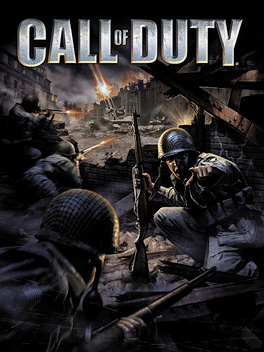
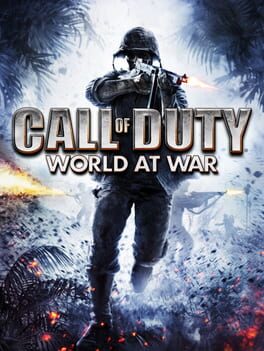
Azrioual's analysis examines how historical video games represent the passage of time through their level structures, focusing on a comparison between Call of Duty: World at War (2008) and Assassin's Creed (2007). Its central tension is that historical games must simultaneously depict a past setting and mark the progression of narrative time, and the study addresses this through a threefold framework distinguishing ludic time (the mechanical rules and bubbles that structure play), represented time (sociocultural labels and historical connectors that situate a game in an era), and narrative time (the emplotment of events into a coherent story). The scope is limited to single-player titles with embedded narratives, excluding online multiplayer games whose lack of predefined plot makes them unsuitable for this kind of analysis.
The core finding is that the two games handle historical time in fundamentally different ways. Call of Duty re-enacts historical events, with linear, objective-gated levels that each reset to a specific point in the chronology, anchored to particular dates and locations between 1942 and 1945, from Stalingrad to Berlin. Its period-accurate weaponry and its revenge narrative, built around the trauma of Stalingrad and the Reichstag flag-raising, follow the Seelow-Berlin offensive in chronological order. The study argues that this structure can foster moral disengagement in players, as the historical trajectory frames violence within a familiar and already-resolved narrative.
Assassin's Creed, by contrast, develops its story between real events. Set in 1191, its fictional narrative is bracketed by the siege of Acre and the battle of Arsuf, and it inserts invented episodes such as the Masyaf siege and a fabricated Assassin-Templar meeting. Its "ripple" system, in which completed levels permanently alter the game world across all temporal instances, gives it a dynamic relationship to time that makes it reliant on represented temporality rather than chronological progression. The analysis concludes that the two games reflect distinct approaches to historical representation, with one re-enacting the past and the other constructing a story within its gaps.
gamevironments · 2023
gamevironments · 2023
gamevironments · 2023
gamevironments · 2023
DiGRA · 2026