1 free read left. Create a free account for unlimited reading + AI research.
Create free accountWhitepaper gamevironments
1 free read left. Create a free account for unlimited reading + AI research.
Create free accountWhitepapergamevironments
Distilling the key insights…
Luersen's 2021 article, "Inaudible Systems, Sonic Users," argues that sound design in digital games functions as a sonic user interface and deserves the same critical attention that visual interfaces have long received. Working through a media-archaeological lens, the author treats interfaces not as neutral windows onto content but as relational thresholds that encode cultural imaginaries, and traces game sound's genealogy back to earlier audiovisual formats, particularly cinema. The central claim is that immersion, far from being a natural property of auditory experience, is a historically constructed effect inherited from stereophonic and surround systems.
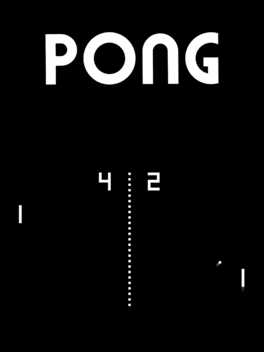
The analysis distinguishes two lineages within game sound. Immersive, cinema-derived models place the player at the gravitational center of a spherical auditory space, a positioning the author links to an anthropocentric, "homophilic" design bias. Platform and arcade-style games, by contrast, rely on repetitive, looping feedback sounds descended from coin-operated machines, with Pong (1972) cited as a representative example. Tracing these conventions further back to Prohibition-era electromechanical devices and pinball scoring sounds, the author shows how sonic signs now link player actions to meanings of success and failure.
A key finding concerns the drive toward invisible interfacing. Game sound often masks or synchronizes the player's physical environment, from clicking input peripherals to the "death fade" in Spec Ops: The Line, to produce a sense of control. LucasArts' iMUSE system is presented as an exemplar of responsive design in which the system's agency remains opaque while appearing to answer the player's gestures intelligently.
The article concludes that game sound interfaces embody broader technocultural tendencies, in which bodies are quantified and made productive within ergonomic, post-industrial logics. Contrasting "straight" interfaces, valued for effectiveness and predictability, with "ludic" interfaces that foreground playfulness and critical awareness, the author argues that game sound already shapes non-ludic applications such as automotive audio, making alternative models of sound interfacing a pressing subject for further study.

gamevironments · 2023

gamevironments · 2023

gamevironments · 2023

gamevironments · 2023
Thomas Brush · 2025