1 free read left. Create a free account for unlimited reading + AI research.
Create free accountArticle gamevironments
1 free read left. Create a free account for unlimited reading + AI research.
Create free accountArticlegamevironments
Distilling the key insights…
This study examines how historical video games shape the interest in and understanding of history among undergraduate history students, with particular attention to whether the perceived impact of games differs by player gender and game genre. Drawing on a survey of 172 students at the University of Winchester, collected over two academic years, the research argues that games influence players unevenly and that genre, rather than gender alone, is a more direct driver of their historical impact. Strategy and conceptual simulations are associated with building formative historical thinking, while action-adventure realist simulations more often spark interest in the past.
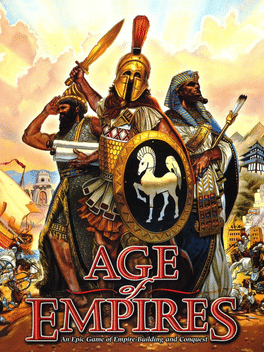
Among the public-sphere sources surveyed, games ranked lowest on average in influencing both interest and knowledge, a finding offset by a distinctive bimodal response pattern in which respondents were either strongly affected or barely affected. The clearest disparity appeared along gender lines: male respondents rated games far more highly than female respondents, with 52.4 percent of men versus 29.5 percent of women describing games as highly influential on their knowledge. Hybrid and simpler titles such as Total War and Age of Empires were reported as particularly effective at inspiring interest and knowledge.
The authors caution that gender is a correlate rather than a sole cause of these differences. Men's preference for historically common strategy and action genres, differences in reported play time, and the broader social gendering of gaming all appear to contribute. Because genre preferences were not collected for most of the sample, the findings are acknowledged as partly inconclusive, and the authors recommend that educators treat game influence as varied and individual rather than assume uniform effects across a cohort.
European Conference on Games Based Learning (ECGBL) · 2026